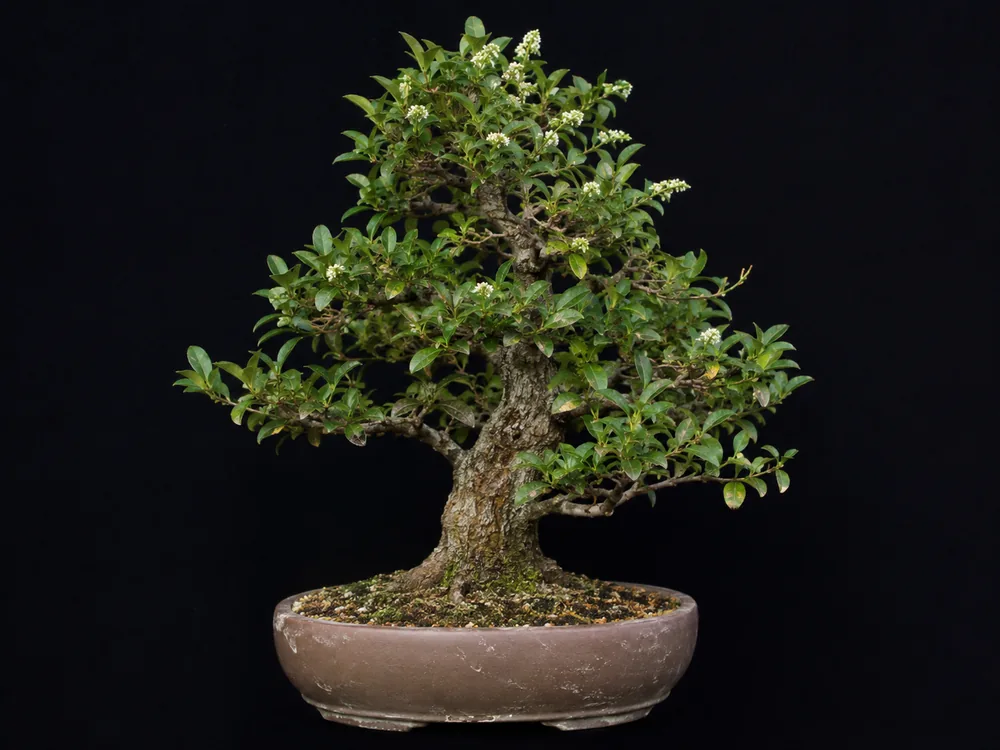
Japanese Privet Bonsai Care
Ligustrum japonicum
Zones 8 to 10, indoor or out. The Japanese (Wax-leaf) Privet is a tough, fast, beginner-friendly evergreen. Most are lost to drying out.
Oleaceae (olive family) · Evergreen broadleaf shrub/tree
Japanese Privet quick reference
| USDA zones | 8–10 (indoor-capable in cooler zones) |
|---|---|
| Indoor / outdoor | Indoor-capable — best outdoors; bright spot indoors |
| Light | Bright — direct sun at least part of the day |
| Water | Thirsty — keep slightly moist; water often in summer |
| Soil | Basic free-draining bonsai mix |
| Repot | Annually in spring (vigorous) |
| Frost | Fairly hardy; damage below ~6 °C if kept as houseplant |
| Mature height (as bonsai) | Shrub to 6 m; 20-50 cm as bonsai |
| Growth rate | Fast |
| Season of interest | White summer flowers, year-round glossy leaves |
| Leaf reduction | Good |
| #1 cause of death | Drying out (thirsty); root rot from overwatering |
Overview & Character
The Japanese (Wax-leaf) Privet is a tough, fast, beginner-friendly evergreen — often called virtually indestructible — with glossy leaves, smooth pale bark, and clusters of fragrant white flowers. It back-buds prolifically, takes drastic pruning, and the more it is cut the finer the branches and smaller the leaves become, so it develops ramification quickly.
It is thirstier than most bonsai (water often, daily or more in summer) and grows vigorously, allowing 2–3 hard cutbacks a year. Fairly hardy outdoors, it also tolerates indoor conditions in a bright spot. An ideal forgiving species for building structure fast.
Identification
Foliage: Glossy, leathery, opposite ovate evergreen leaves ~5–10 cm, dark green with a paler midrib and a smooth margin; thick and waxy (hence 'wax-leaf').
Bark & trunk: Smooth, pale grey-tan, developing a fine mature texture; trunks thicken fast.
Growth habit / form: Vigorous, dense, twiggy evergreen shrub/small tree; suits informal upright and broom styles.
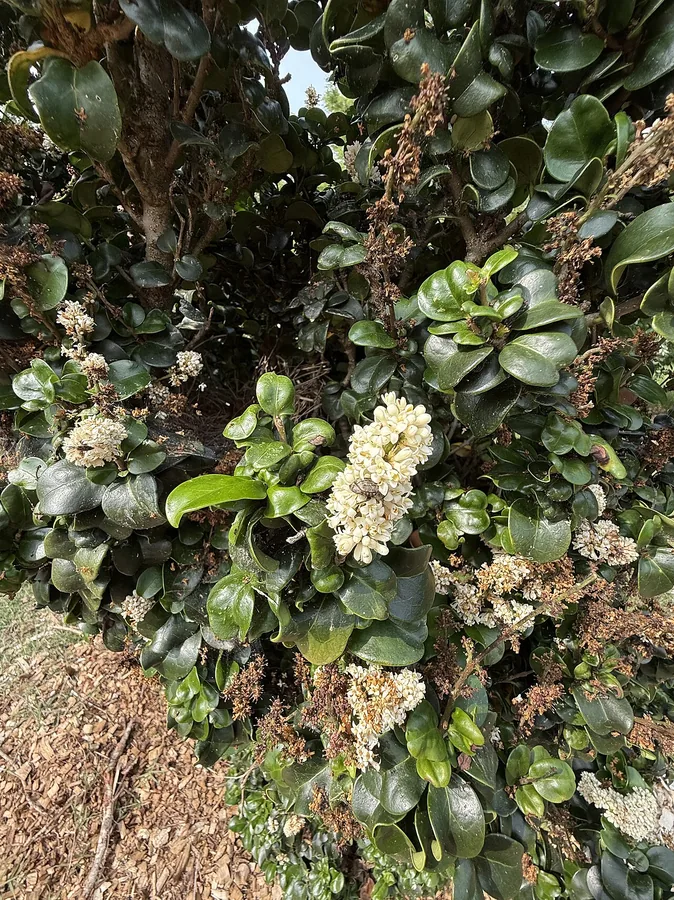
Flowers / fruit: Clusters (panicles) of small, fragrant creamy-white flowers in early summer, followed by blue-black berries.
Look-alikes & how to tell them apart: Closely related to Chinese Privet (L. sinense) and Glossy Privet (L. lucidum); Japanese Privet has the thickest, glossiest, most leathery leaves of the common privets — the heavy wax-leaf texture is the tell. (Privet leaves/berries are toxic if eaten.)
Climate & USDA Zone
Hardy in USDA zones 8–10, and fairly cold-tolerant outdoors. As a houseplant-kept bonsai it can be damaged below ~6 °C. It is best grown outdoors in most climates and overwintered with light frost protection where colder; it also tolerates indoor culture in a bright position.
Light
Bright position with direct sun at least part of the day. Strong light keeps growth compact, leaves small, and flowering good; it tolerates some shade but is best in sun.
Watering
Privet is thirstier than most bonsai — keep the soil slightly moist, watering as soon as the top ~1 cm feels dry.
- In summer this often means daily, sometimes twice daily; several times a week in winter.
- Don't let it dry out (it wilts and drops leaves), but avoid constant waterlogging.
- Free drainage with frequent watering is the balance.
Soil & Root Care
Soil: A basic free-draining bonsai mix (akadama / pumice / lava).
Repotting:
- Frequency: annually in spring as buds extend — it is vigorous and fills pots fast.
- Tolerates substantial root-pruning well.
- Aftercare: keep moist and sheltered; it re-establishes quickly.
Feeding
Feed solid organic fertilizer every ~4 weeks, or a weekly liquid feed, through the growing season; its vigor and frequent cutbacks call for steady feeding. Ease off in winter. Don't feed freshly repotted trees.
Pruning & Styling
- Cut back hard 2–3 times a year: privet back-buds prolifically, and the more it is cut the finer the twigs and smaller the leaves become — ideal for fast ramification.
- It tolerates drastic pruning into old wood and re-buds readily.
- Wiring: young shoots are flexible; wire when needed and watch for bite on fast-thickening branches.
- Suits informal upright and broom styles.
Propagation & Cuttings
Ease: Very easy. Best methods: cuttings (all types); seed.
Ligustrum japonicum roots from softwood, semi-hardwood, or hardwood cuttings at high rates with minimal effort, and seed from the dark berries germinates freely (a short cold stratification helps). It layers and suckers too. For bonsai this effortless propagation, fast thickening, and strong back-budding make it excellent, forgiving material; cutting-grown plants build ramification quickly and tolerate heavy pruning and root work.
Pests
- Aphids
- Scale insects and whitefly
- Privet/vine weevil (larvae eat roots)
- Spider mites (dry conditions)
Treat with horticultural oil, insecticidal soap, or appropriate systemics; catch infestations early.
Disease, Fungus & Infection
Tough and largely trouble-free; problems are mostly cultural:
- Drying out — wilting/leaf drop from missed watering (its thirst makes this the main risk).
- Root rot — from overwatering/poor drainage.
- Leaf spot / honey-fungus — fungal issues in damp, stagnant conditions; improve airflow.
Prevention: bright light, frequent watering with free drainage, airflow, pest checks.
Most Common Causes of Death
1. Drying out. Thirstier than most bonsai — a missed watering wilts it; keep slightly moist (often daily in summer). 2. Root rot from overwatering. Keep moist but well-drained — frequent watering, not standing water. 3. Vine weevil grubs eating roots. Inspect/treat. 4. Hard frost on indoor-kept plants. Protect below ~6 °C if grown as a houseplant. 5. Neglect during vigorous growth. It grows fast — trim and water to keep it in shape. (Berries/leaves toxic if eaten.)
Seasonal Calendar
- Spring: Repot (annually, as buds extend); resume feeding; hard cutback to build ramification; bright light.
- Summer: Bright sun; water often (daily+ in heat); fragrant flowers; second cutback; feed.
- Autumn: Berries form; taper feeding/water; third light cutback if vigorous.
- Winter: Bright spot; keep slightly moist (water several times a week); protect below ~6 °C if indoors.
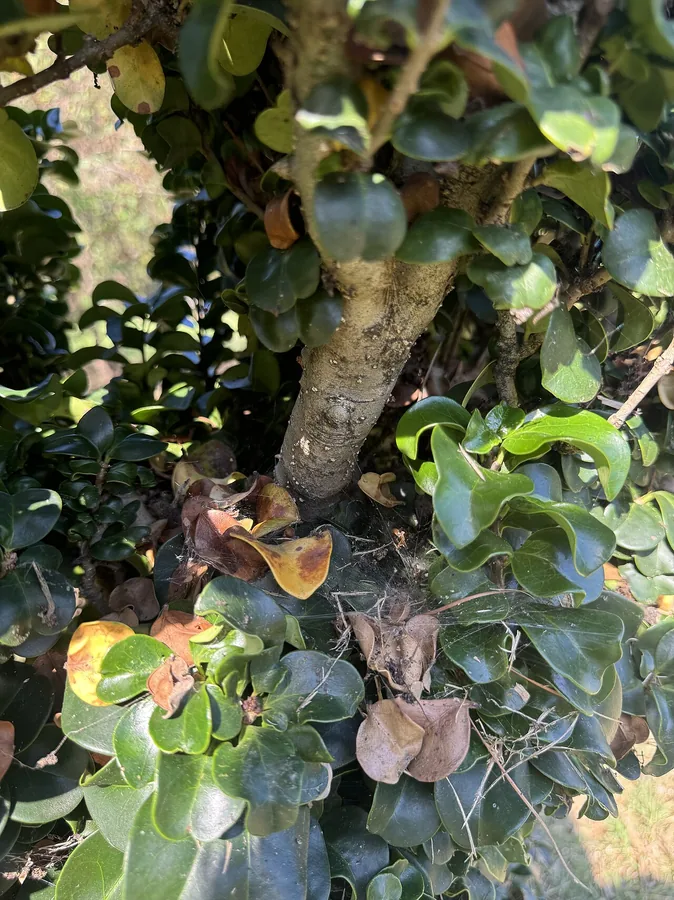
Close-up photo reference
Compare your tree against these to confirm the species and spot problems early.


Sources
Where to buy a Japanese Privet bonsai
We don’t stock Japanese Privet at the moment. These species need similar care and we have them now — they are the closest match in our catalogue.
- Glossy Privet — similar care, in stock now
- Calamondin Orange — similar care, in stock now
Browse all bonsai trees for sale or find a species matched to your climate and space.
- All species
- Shop bonsai trees, tools & supplies
- How to Water a Bonsai (Without Killing It)
- Bonsai Soil: What to Buy, What to Mix, and What It Costs
- Why Bonsai Die After Repotting: Diagnosing a Failed Repot
- Pruning vs. Pinching: Shaping Your Bonsai
- Overwintering Bonsai: Cold-Season Care
- Indoor Bonsai Light and Humidity: Making a Windowsill Actually Work
- Root Rot on bonsai
- Overwatering on bonsai
- Underwatering (Drought Stress) on bonsai
- Winter / Frost Damage on bonsai
- Spider Mites on bonsai
- Glossy Privet bonsai care
- Chinese Privet bonsai care
- Bahama Berry bonsai care
- Calamondin Orange bonsai care