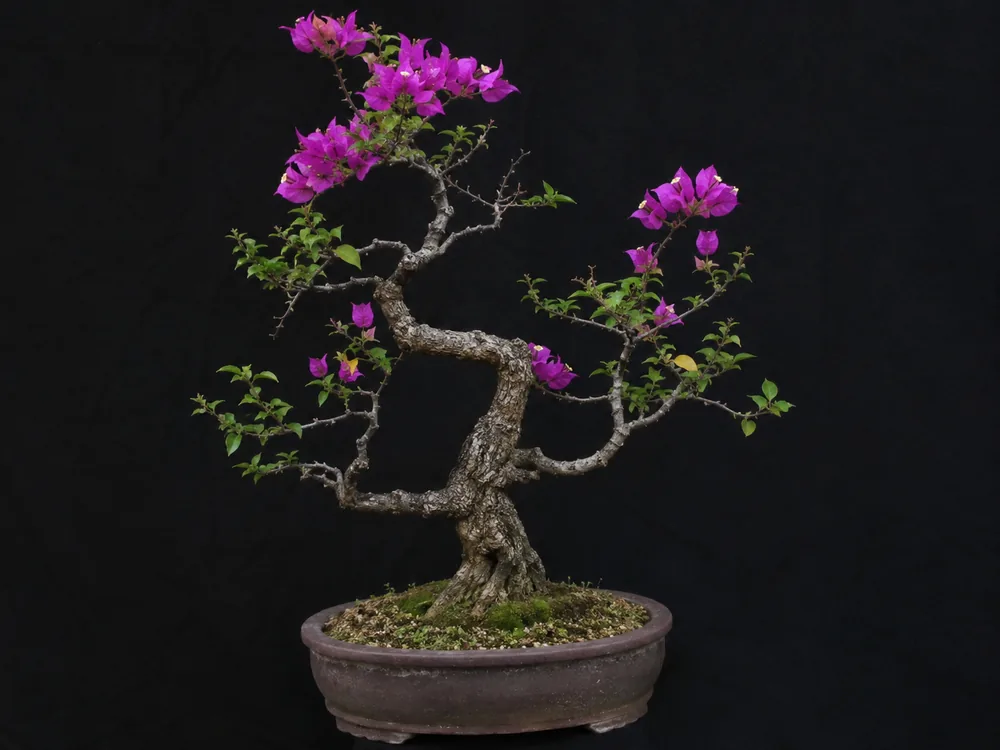
Bougainvillea Bonsai Care
Bougainvillea
4 Bougainvillea bonsai in stock, from $114.95 Shipped direct from our nursery partners, with a 48-hour live-arrival guarantee. See the trees
Zones 9 to 11, outdoor. A flowering machine, a vigorous, thorny subtropical vine grown for its dazzling. Most are lost to overwatering.
Nyctaginaceae (the four-o'clock family) · Subtropical/tropical, evergreen, thorny flowering vine/shrub trained as bonsai
Bougainvillea quick reference
| USDA zones | 9–11 (frost-free); can stay outdoors year-round only in zone 10+ |
|---|---|
| Indoor / outdoor | Outdoor in warm seasons/climates; must come indoors or to a warm bright space below ~50°F. Not a happy permanent low-light indoor tree |
| Light | Full sun, 6–8 hours direct daily — intense light is essential for flowering |
| Water | Dry-leaning. Prefers drier soil and air; water thoroughly then let it approach dry. A slight dry stress actually triggers blooming |
| Soil | Gritty, well-draining, largely inorganic substrate to prevent root rot |
| Repot | Every 2–3 years (young plants yearly), in late spring/early summer during active warm growth |
| Frost | None — frost-tender; keep above ~50°F (10°C), ideally 50–59°F in winter |
| Mature height (as bonsai) | Vine-shrub to 12 m; 20-50 cm as bonsai |
| Growth rate | Fast |
| Season of interest | Vivid pink/magenta bracts spring-autumn |
| Leaf reduction | Good - reduces with pruning |
| #1 cause of death | Overwatering / root rot (often combined with cold) |
Overview & Character
Bougainvillea is a flowering machine — a vigorous, thorny subtropical vine grown for its dazzling, long-lasting display. The "flowers" people admire are actually papery colored bracts (in magenta, purple, red, orange, pink, white, or bicolors) surrounding the small, true trumpet-shaped flowers that grow in clusters of three. As a bonsai it offers fast growth, a chunky characterful trunk, evergreen foliage, and the most spectacular bloom of almost any bonsai species.
The trade-offs are simple and important: it is completely frost-tender, it hates wet feet, and it actually flowers better when slightly stressed — kept lean, sunny, and on the dry side. The most common ways people fail with bougainvillea are killing it with kindness (overwatering, overfeeding, fussing) and exposing it to cold. Get it hot, bright, and a touch dry, and it rewards you lavishly.
Identification
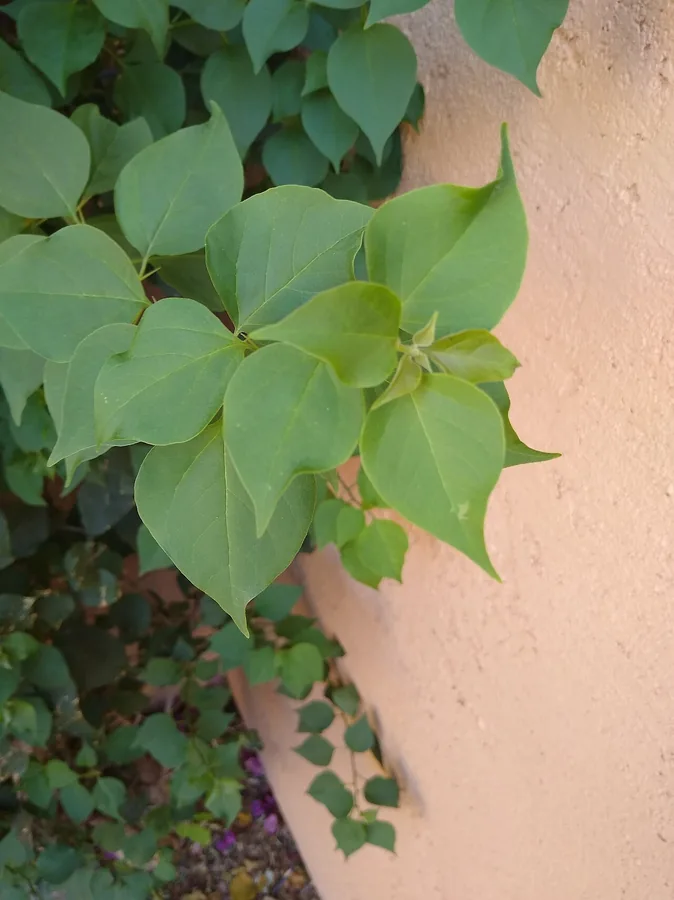
Foliage: Simple, oval-to-heart-shaped, pointed leaves, alternate, mid-green and often slightly hairy, with smooth (entire) margins. Evergreen in warmth (may drop leaves under drought or cold stress).
Bark & trunk: Brown bark that becomes rough, ridged, and characterful with age; trunks thicken into chunky, gnarled forms. The stems bear sharp curved thorns (modified spines at the leaf axils) — a reliable ID feature.
Growth habit/form: A vigorous, scrambling/climbing thorny vine or shrub that throws long whippy shoots needing constant control.
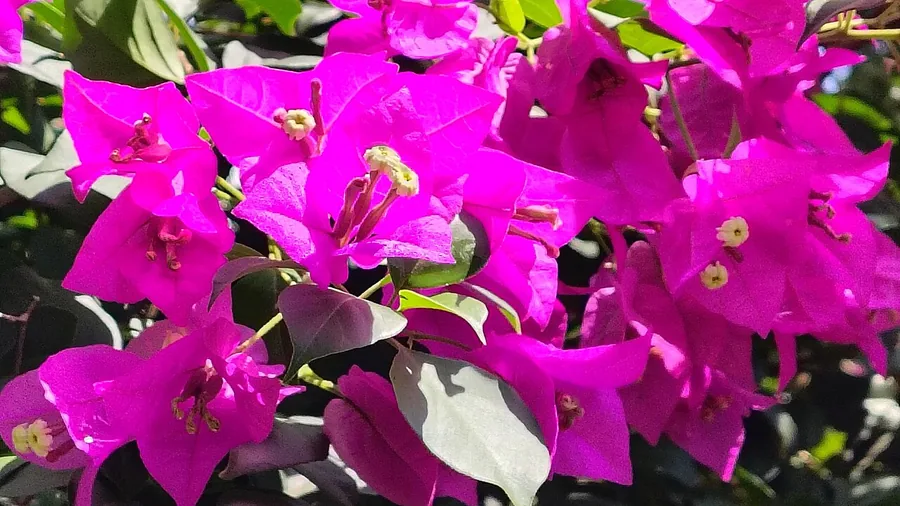
Flowers/fruit (key ID feature): The dazzling display is not petals but papery, brightly colored bracts — magenta, purple, red, orange, pink, white, or bicolors — borne in clusters of three, each bract surrounding a small, slender, creamy-white tubular true flower. This trio of papery bracts around tiny trumpet flowers is unmistakable. Long blooming through the warm season on new growth; fruit is an inconspicuous small dry achene, rarely seen.
Look-alikes & how to tell them apart: Nothing else combines papery colored bracts in threes, tiny tubular true flowers, and curved thorns. If you see the colorful "flowers" are actually thin papery bracts and the stems carry hooked thorns, it is bougainvillea.
Climate & USDA Zone
A subtropical/tropical plant hardy only in USDA zones 9–11, and able to live outdoors year-round only in zone 10 and warmer (frost-free). It cannot tolerate frost at all. In cooler zones it is grown outdoors in the warm months and brought into a warm, bright space for winter, kept above about 50°F (10°C) — ideally 50–59°F (10–15°C). It wants high light and heat, so any indoor wintering should be in the brightest, warmest spot available, returning it outdoors as early as it is safely warm in spring.
Light
Full, intense sun is critical. Aim for 6–8 hours of direct sunlight daily, especially during the growing season. Light is the single biggest driver of flowering — a bougainvillea in insufficient light grows leaves and vines but produces few or no bracts. This high light demand is also why it struggles as a permanent indoor bonsai: ordinary indoor light is rarely enough to keep it blooming.
Watering
Distinctly on the DRY side — this is one of the few bonsai you can and should let approach dryness. Bougainvillea prefers drier soil and drier air. Water thoroughly when the soil has gotten dry, then allow it to dry out again before the next watering. Constant soil wetness is dangerous: it leads directly to root rot, fungal problems, increased pest susceptibility, and death.
Beyond mere tolerance, a deliberate slight dry stress is a flowering trigger — easing back on water (along with full sun and lean feeding) is part of how growers force bloom. The balance: water deeply when dry so the plant doesn't truly desiccate, but never keep it constantly moist. When in doubt with bougainvillea, lean dry.
Soil & Root Care
Use a gritty, fast-draining, largely inorganic substrate (pumice/lava/akadama-type mixes or similar) to guard against the root rot it is so prone to. Avoid water-retentive, organic, peaty soils. Repot every 2–3 years (young, vigorous plants may need it yearly), in late spring or early summer when temperatures are warm and the tree is in active growth — repotting into cold conditions risks rot. The roots can be coarse and somewhat brittle; handle carefully. After repotting, shelter the tree from full sun and wind for 1–2 weeks while it recovers.
Feeding
Feed lean, not rich. Bougainvillea flowers best under lean nutrition, and excess nitrogen produces lush growth and thorns at the expense of bracts. Use a fertilizer lower in nitrogen and relatively higher in phosphorus/potassium during the blooming season, and avoid overfeeding. Feed through the warm growing season; reduce or stop in cooler/dormant winter conditions. Combined with full sun and slightly dry conditions, restrained feeding is the recipe for heavy flowering.
Pruning & Styling
Bougainvillea flowers on new growth (new wood) — this dictates pruning strategy. Because blooms form on fresh shoots, well-timed pruning encourages a flush of new growth that then blooms.
- Do major/structural pruning and shaping in late winter or early spring, before the new growth flush begins. This sets up vigorous new shoots that will carry the bracts, without sacrificing blooms already in progress.
- After a flowering flush, the tree can be cut back to encourage another wave of new growth and a repeat bloom — bougainvillea will often flower multiple times in a long warm season.
- Pinch and trim during the growing season to build ramification, but remember each cut both shapes and resets bloom sites, so time it with the flowering rhythm.
Wire while shoots are young and pliable; older wood becomes stiff and brittle. Beware the sharp thorns when handling and wiring. As a natural vine it produces long whippy growth that needs frequent direction and trimming.
Propagation & Cuttings
Ease: Easy. Best methods: hardwood and semi-hardwood cuttings.
Bougainvillea is propagated almost entirely from cuttings. Take firm semi-hardwood or hardwood cuttings (pencil-thick, 10–20 cm) in spring or the warm season, dip in 0.3% IBA, and keep warm (25 °C+) and only lightly moist — over-wet mix rots them. Rooting takes a few weeks to a couple of months and can be erratic, so start several. Air-layering thicker branches in warm weather is very reliable and yields instant trunk size. Seed is rarely used (many cultivars are sterile). For bonsai, cuttings and layers keep flower colour true and build bulk fast.
Pests
Common pests, especially indoors or in dry conditions, include aphids, spider mites, mealybugs, whitefly, scale, and caterpillars (bougainvillea looper caterpillars chew the leaf margins). Treat with insecticidal soap, neem, or appropriate controls, and improve conditions — pests tend to exploit weak or stressed plants. Good airflow and proper (lean, bright, dry-ish) culture keep most pests at bay.
Disease, Fungus & Infection
Bougainvillea is generally disease-resistant when grown correctly. Its dominant disease risk is root rot from overwatering and poor drainage (see causes of death). A weakened or overly wet plant can also develop powdery mildew and fungal leaf spots. Prevention is almost entirely cultural: keep it on the dry side, use free-draining inorganic soil, give full sun and good airflow, and don't overwater or overfeed.
Most Common Causes of Death
1. Overwatering / root rot. The top killer; it actually blooms best with slight dryness — water only when the soil is fairly dry, never soggy. 2. Frost / cold damage. Frost-tender (zones 9–11); protect indoors below ~50°F (10°C) in winter. 3. No bloom from too much water/shade/nitrogen. Needs full sun, slight water stress, and low-nitrogen feed to flower; lush wet shade gives leaves not bracts. 4. Root disturbance shock. Brittle, sensitive roots resent heavy root work — repot carefully and infrequently. 5. Pests. Aphids, mealybug, and caterpillars (bougainvillea looper) — treat early.
Seasonal Calendar
- Spring: Repot carefully if due (after frost); resume feeding; prune to shape — flowers on new wood.
- Summer: Full sun and heat; water on the dry side to trigger bracts; light low-N feeding; bloom flushes.
- Autumn: Reduce water/feeding; bring indoors before cold.
- Winter: Keep warm and bright (>50°F); water sparingly; semi-rest.
Close-up photo reference
Compare your tree against these to confirm the species and spot problems early.


Sources
Buy a Bougainvillea bonsai
- Large Flowering Bougainvillea Bonsai, 18 Years Old (Pink pixie) — $114.95
- Flowering Bougainvillea Bonsai, Exposed Roots, 12 by 22 Inches (Pink pixie) — $425.00
- Flowering Bougainvillea Bonsai, Exposed Roots, 13 by 22 Inches (Pink pixie) — $495.00
- Flowering Bougainvillea Bonsai, Exposed Roots, 16 by 26 Inches (Pink pixie) — $595.00
- All species
- Shop bonsai trees, tools & supplies
- How to Water a Bonsai (Without Killing It)
- Bonsai Soil: What to Buy, What to Mix, and What It Costs
- Why Bonsai Die After Repotting: Diagnosing a Failed Repot
- Pruning vs. Pinching: Shaping Your Bonsai
- Overwintering Bonsai: Cold-Season Care
- Indoor Bonsai Light and Humidity: Making a Windowsill Actually Work
- Root Rot on bonsai
- Overwatering on bonsai
- Underwatering (Drought Stress) on bonsai
- Winter / Frost Damage on bonsai
- Insufficient Light (Etiolation) on bonsai
- Black Olive bonsai care
- Natal Plum bonsai care
- Orange Jasmine bonsai care
- Powder Puff bonsai care