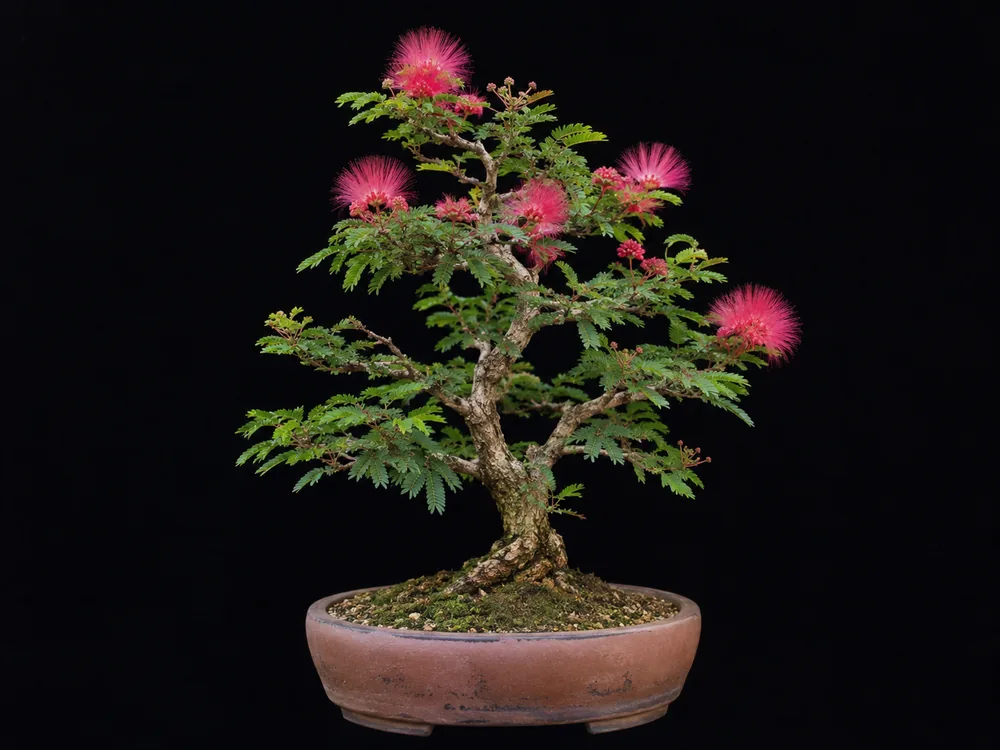
Powder Puff Bonsai Care
Calliandra haematocephala
1 Powder Puff bonsai in stock, from $98.95 Shipped direct from our nursery partners, with a 48-hour live-arrival guarantee. See the trees
Zones 9 to 11, indoor or out. A tropical legume shrub grown as bonsai for two delights: fine. Most are lost to drying out.
Fabaceae (legume family) · Tropical evergreen flowering shrub
Powder Puff quick reference
| USDA zones | 9–11 (grow indoors / under glass in cooler zones) |
|---|---|
| Indoor / outdoor | Indoor-capable — outdoors above ~55 °F, in over winter |
| Light | Full sun — 4–6+ hours; all-day direct light indoors |
| Water | Likes water — keep moist in growth; never fully dry |
| Soil | Well-draining mix with some organic matter |
| Repot | Every 2–3 years, mid-summer |
| Frost | Tender — protect from frost |
| Mature height (as bonsai) | 3-6m wild; 25-50cm as bonsai |
| Growth rate | Fast; tropical, frost-tender |
| Season of interest | Red powder-puff flowers; fine ferny foliage |
| Leaf reduction | Tiny leaflets reduce well; fast ramification |
| #1 cause of death | Cold damage; drying out; root rot from overwatering |
Overview & Character
The Powder Puff is a tropical legume shrub grown as bonsai for two delights: fine, feathery mimosa-like compound foliage that folds at night, and spectacular powderpuff flowers — silky hemispherical pompoms of long red (or pink/white) stamens. It is fast, free-flowering, and rewarding, popular as an indoor flowering bonsai that summers outdoors.
It wants full sun, generous water in growth, warmth, and frost protection. It flowers on growth so timing pruning matters if you want bloom. With bright light and steady moisture it grows quickly and blooms repeatedly.
Identification
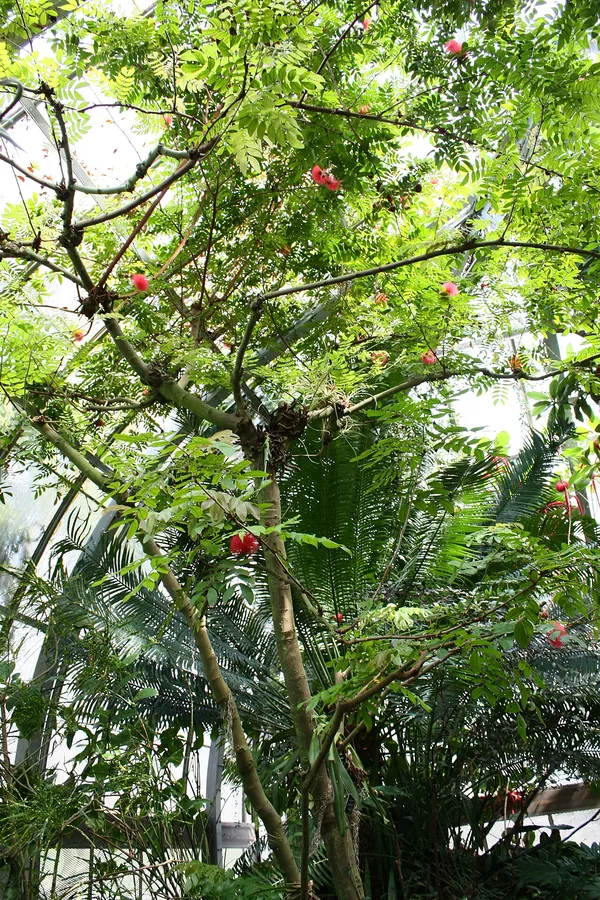
Foliage: Fine, bipinnate compound leaves with many small leaflets, feathery and fern-like; the leaflets fold together at night (nyctinasty), a legume trait.
Bark & trunk: Grey-brown, smooth on young wood, roughening with age.
Growth habit / form: Fast, twiggy, spreading evergreen shrub; suits informal upright, broom, and flowering shrub styles.
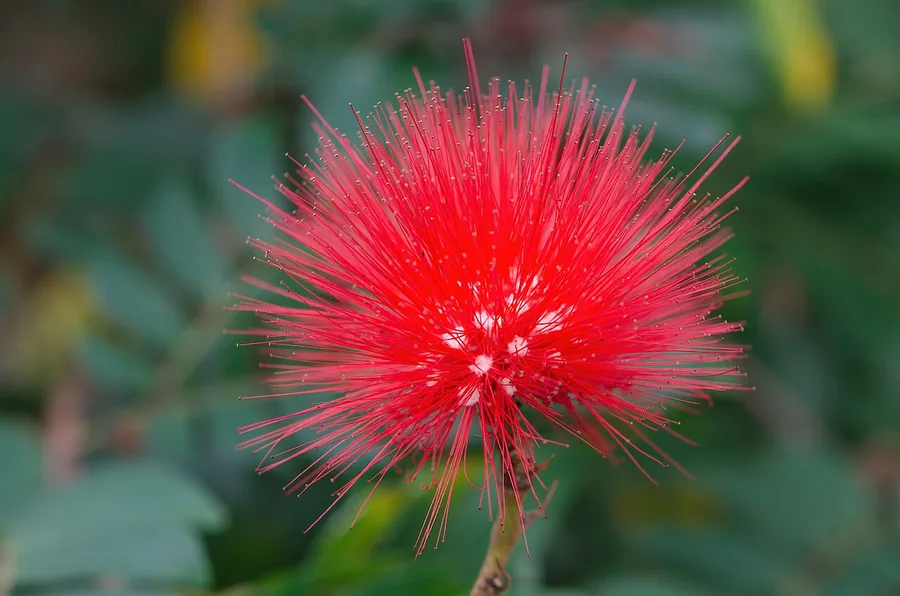
Flowers / fruit: The signature feature — silky, hemispherical powderpuff blooms of long red (sometimes pink/white) stamens, like little firework pompoms, borne through warm months.
Look-alikes & how to tell them apart: The feathery fold-at-night foliage resembles Mimosa (Albizia) and other legumes; the round pompom flowers of long colored stamens are the instant tell for Calliandra (Mimosa has fluffier pink puffs on a much larger tree; Brazilian Rain Tree has thorns and white puffs).
Climate & USDA Zone
Hardy outdoors in USDA zones 9–11. It is frost-tender; in cooler zones grow it as an indoor/greenhouse bonsai, outdoors when nights stay above ~55 °F and brought in before cold. It loves heat, sun, and humidity.
Light
Full sun — at least 4–6 hours. Outdoors it wants full sun; indoors give an all-day direct-sun window. Strong light drives compact growth and abundant flowering; shade reduces both.
Watering
Likes plenty of water in growth — keep moist; never let it dry out fully.
- Outdoors in summer it may need daily watering; indoors with decent humidity, a few times a week.
- Avoid waterlogging; provide free drainage.
- A humidity tray helps when kept indoors over winter.
Soil & Root Care
Soil: A well-draining bonsai mix with some organic matter (leaf mold/composted bark) to hold moisture.
Repotting:
- Frequency: every 2–3 years, ideally in mid-summer when the tropical plant is least fragile (it dislikes cool-season root work).
- Moderate root-pruning; keep warm and moist afterward.
- Aftercare: bright, warm, humid, and evenly moist while recovering.
Feeding
Feed at least monthly (or slow-release pellets every 1–2 months) through the growing season; a little extra phosphorus supports flowering. Ease off in winter. Don't feed freshly repotted trees.
Pruning & Styling
- Trimming: trim new growth back to shape; it back-buds and ramifies readily and takes frequent trimming.
- Flowering: blooms on new growth in warmth — frequent light trimming keeps it tidy while still flowering; avoid removing all developing buds if you want bloom.
- Wiring: young shoots are flexible; wire carefully and remove before bite.
- Suits informal upright, broom, and flowering shrub styles.
Propagation & Cuttings
Ease: Easy. Best methods: seed; semi-hardwood cuttings.
Calliandra haematocephala grows readily from fresh seed — scarify or soak the hard seed and sow warm; germination is good. Semi-hardwood cuttings root at moderate-to-good rates in warm, humid conditions with hormone, and air-layering works. Keep everything tropical-warm. For bonsai the ferny leaves and red powder-puff flowers are the draw; cuttings keep good forms, and the plant is vigorous, back-budding and flowering young once established in a warm, bright spot.
Pests
- Aphids and mealybugs (especially indoors)
- Spider mites (hot, dry indoor air)
- Scale insects
- Whitefly
Treat with horticultural oil, insecticidal soap, or appropriate systemics; catch infestations early.
Disease, Fungus & Infection
Generally healthy in good culture; problems are mostly cultural:
- Root rot — from overwatering/poor drainage.
- Leaf drop — from drying out or cold (stress).
- Sooty mold — on honeydew from sap-suckers; control the pests.
Prevention: full sun, warmth, even moisture with free drainage, humidity, and pest control.
Most Common Causes of Death
1. Cold damage. Frost-tender — protect from frost; bring in below ~50–55 °F. 2. Drying out. Keep moist in growth; don't let it dry fully. 3. Root rot from overwatering. Keep moist but well-drained. 4. Low light indoors. Leggy growth and few flowers; give all-day direct sun. 5. Cool-season root work / repotting shock. Repot in mid-summer when it is strongest.
Seasonal Calendar
- Spring: Resume feeding; trim to shape; move outdoors once nights stay above ~55 °F; full sun.
- Summer: Full sun; water generously (daily in heat); repot if due (mid-summer); feed; powderpuff flowers.
- Autumn: Taper feeding/water; bring indoors before cold nights.
- Winter: Bright, warm window; keep lightly moist; humidity tray; minimal feeding.
Close-up photo reference
Compare your tree against these to confirm the species and spot problems early.


Sources
Buy a Powder Puff bonsai
- All species
- Shop bonsai trees, tools & supplies
- How to Water a Bonsai (Without Killing It)
- Bonsai Soil: What to Buy, What to Mix, and What It Costs
- Why Bonsai Die After Repotting: Diagnosing a Failed Repot
- Pruning vs. Pinching: Shaping Your Bonsai
- Overwintering Bonsai: Cold-Season Care
- Indoor Bonsai Light and Humidity: Making a Windowsill Actually Work
- Root Rot on bonsai
- Overwatering on bonsai
- Underwatering (Drought Stress) on bonsai
- Winter / Frost Damage on bonsai
- Insufficient Light (Etiolation) on bonsai
- Black Olive bonsai care
- Orange Jasmine bonsai care
- Sea Grape bonsai care
- Bahama Berry bonsai care