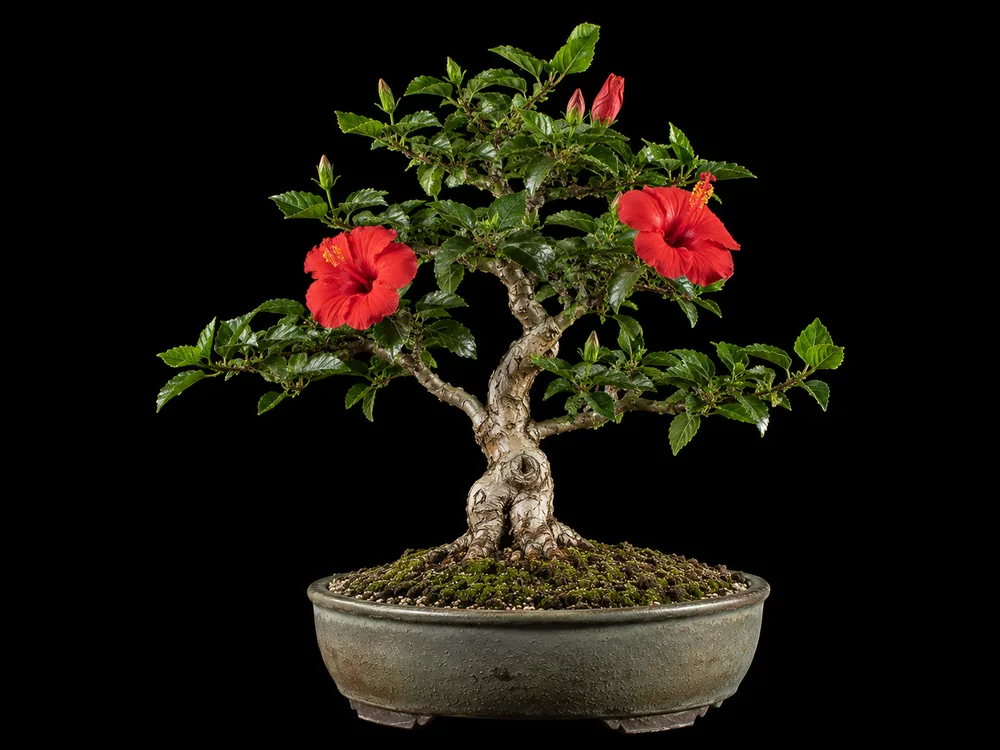
Tropical Hibiscus Bonsai Care
Hibiscus rosa-sinensis
4 Tropical Hibiscus bonsai in stock, from $76.95 Shipped direct from our nursery partners, with a 48-hour live-arrival guarantee. See the trees
Zones 9 to 11, indoor or out. Grown as bonsai for its enormous, showy trumpet flowers in brilliant reds, pinks, oranges. Most are lost to overwatering.
Malvaceae (mallow family) · Tropical evergreen flowering shrub
Tropical Hibiscus quick reference
| USDA zones | 9–11 (grow indoors / under glass in cooler zones) |
|---|---|
| Indoor / outdoor | Indoor-capable — outdoors in warmth, protected from frost |
| Light | Full sun — up to 8 hours for best flowering |
| Water | Keep evenly moist — drops buds if it dries out |
| Soil | Free-draining, neutral (pH 6.5–7.5) mix |
| Repot | Every 2–3 years, summer |
| Frost | Tender — protect below ~50 °F; damaged below ~35 °F |
| Mature height (as bonsai) | Shrub to 3m in nature; bonsai usually 25-50cm. |
| Growth rate | Fast (tender, vigorous). |
| Season of interest | Summer for large showy trumpet flowers. |
| Leaf reduction | Poor; leaves and blooms remain large. |
| #1 cause of death | Cold damage; bud/leaf drop from drying; root rot |
Overview & Character
The Tropical Hibiscus is grown as bonsai for its enormous, showy trumpet flowers in brilliant reds, pinks, oranges, yellows, and whites, set against glossy dark leaves. It is vigorous and takes hard pruning, building ramification quickly, and is a popular flowering indoor/patio bonsai for warm, bright spots — best at medium-to-large sizes given its large flowers and leaves.
It demands lots of sun, even moisture, warmth, and frost protection. Crucially, if the roots dry out it drops its flower buds, so steady watering during budding is essential. Flowers are short-lived individually but produced in succession through the warm season.
Identification
Foliage: Glossy, dark green, broadly ovate leaves ~5–10 cm with coarsely toothed margins, alternate; lush and tropical-looking.
Bark & trunk: Grey-brown, smooth on young wood, roughening with age.
Growth habit / form: Vigorous, upright, twiggy evergreen shrub; suits informal upright and flowering shrub styles, generally medium-to-large.
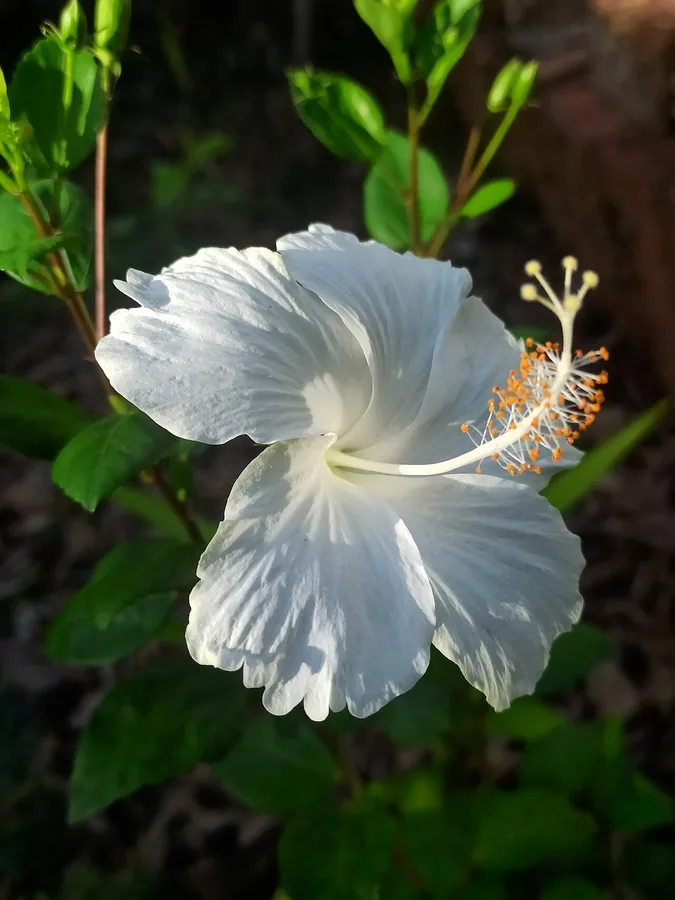
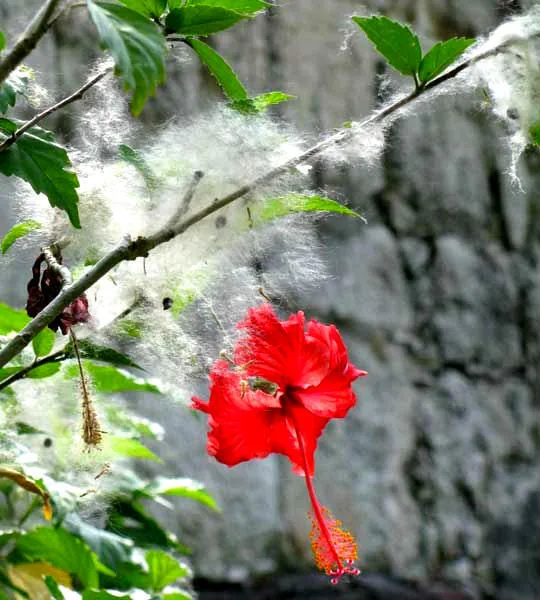
Flowers / fruit: The signature feature — large (often 10–15 cm) five-petalled trumpet flowers with a long central staminal column, in vivid reds, pinks, oranges, yellows, whites, and bicolors; each lasts a day or two, borne in succession.
Look-alikes & how to tell them apart: The big trumpet flower with a protruding staminal column is classic Hibiscus; distinguished from hardy Rose of Sharon (Hibiscus syriacus, deciduous, smaller flowers, cold-hardy) by glossy evergreen leaves, larger flowers, and tropical tenderness.
Climate & USDA Zone
Hardy outdoors in USDA zones 9–11. Tropical and frost-tender — protect below ~50 °F and expect damage/death below ~35 °F. In cooler zones grow as an indoor/greenhouse bonsai, summered outdoors and brought in before cold. Prefers neutral water (pH ~6.5–7.5).
Light
Full sun — up to 8 hours for best flowering. Give the brightest possible position (south window indoors, supplement with grow lights); flowering drops off sharply in low light.
Watering
Keep the soil evenly moist — drying out makes it drop flower buds.
- Water thoroughly as soon as the soil begins to dry; in heat and full bloom it is thirsty (often daily).
- Avoid both drying out (bud drop) and waterlogging (root rot); provide free drainage.
- Use neutral water where possible.
Soil & Root Care
Soil: A free-draining, roughly neutral bonsai mix (akadama / pumice / lava).
Repotting:
- Frequency: every 2–3 years, in summer when the warm-season plant is strongest; older specimens less often.
- It takes fairly robust root work; keep warm and moist afterward.
- Aftercare: bright, warm, evenly moist while re-establishing.
Feeding
Feed once a month with solid organic fertilizer, or weekly with a balanced liquid feed, through the growing season (a higher-potassium feed supports flowering). Ease off in winter. Don't feed freshly repotted trees.
Pruning & Styling
- Trimming: prune branches and shoots considerably and frequently while developing to build ramification; on mature trees shorten new shoots to 1–2 leaves.
- Flowering: blooms on new growth — regular light trimming keeps it shapely while still producing flushes of bloom.
- Wiring: young shoots are flexible; wire carefully and watch for bite on fast-thickening branches.
- Suits informal upright and flowering shrub styles (medium-to-large).
Propagation & Cuttings
Ease: Moderate. Best methods: semi-hardwood cuttings; air-layering; grafting.
Hibiscus rosa-sinensis roots from semi-hardwood cuttings in the warm season with hormone under humidity at moderate rates — single-flowered types root more easily than doubles, which are often grafted or air-layered. Air-layering is reliable for trunk size. Seed won't come true. Keep everything tropical-warm. For bonsai the large flowers are the draw (blooms come on new wood, so prune to shape then let it flower); cuttings and layers keep flower form true, and the plant back-buds and grows fast.
Pests
- Aphids (heavy on buds/new growth)
- Whitefly and mealybugs (especially indoors)
- Spider mites (hot, dry indoor air)
- Scale insects
Treat with horticultural oil, insecticidal soap, or appropriate systemics; catch infestations early.
Disease, Fungus & Infection
Generally healthy in good culture; problems are mostly cultural:
- Bud drop — from drying out, cold, or sudden change (the classic complaint; cultural).
- Root rot — from overwatering/poor drainage.
- Sooty mold — on honeydew from sap-suckers; control the pests.
- Chlorosis (yellow leaves) — from cold, overwatering, or nutrient issues.
Prevention: full sun, warmth, even moisture with free drainage, prompt pest control.
Most Common Causes of Death
1. Cold damage. Tender — protect below ~50 °F; likely death below ~35 °F. 2. Bud/leaf drop from drying out. Keep evenly moist, especially while budding/flowering. 3. Root rot from overwatering. Keep moist but sharply drained. 4. Low light indoors. Few or no flowers and weak growth; give up to 8 hours of sun. 5. Sudden environmental shock. Big light/temperature swings drop buds; acclimate gradually.
Seasonal Calendar
- Spring: Resume feeding; trim to build structure; move outdoors after frost; full sun.
- Summer: Full sun; keep evenly moist (daily in heat); repot if due (summer); feed; flowers in succession.
- Autumn: Taper feeding/water; bring indoors before nights drop below ~50 °F.
- Winter: Bright, warm window; keep lightly moist; minimal feeding; watch for pests.
Close-up photo reference
Compare your tree against these to confirm the species and spot problems early.


Sources
Buy a Tropical Hibiscus bonsai
- Flowering Sea Hibiscus Variegated Bonsai, 15 Years Old (Hibiscus tiliaceus) — $76.95
- Flowering Dwarf Sleeping Hibiscus Bonsai, 12 Years Old (Malvaviscus alboretus 'Compactus') — $81.95
- Flowering Sea Hibiscus Bonsai, 9 Years Old (Hibiscus tiliaceus) — $87.95
- Flowering Tropical Red Hibiscus Trunk Bonsai, Braided Trunks, 12 Years Old (Rosa sinsensis) — $124.95
- All species
- Shop bonsai trees, tools & supplies
- How to Water a Bonsai (Without Killing It)
- Bonsai Soil: What to Buy, What to Mix, and What It Costs
- Why Bonsai Die After Repotting: Diagnosing a Failed Repot
- Pruning vs. Pinching: Shaping Your Bonsai
- Overwintering Bonsai: Cold-Season Care
- Indoor Bonsai Light and Humidity: Making a Windowsill Actually Work
- Root Rot on bonsai
- Overwatering on bonsai
- Underwatering (Drought Stress) on bonsai
- Winter / Frost Damage on bonsai
- Insufficient Light (Etiolation) on bonsai
- Bahama Berry bonsai care
- Black Olive bonsai care
- Downy Jasmine bonsai care
- Ming Aralia bonsai care