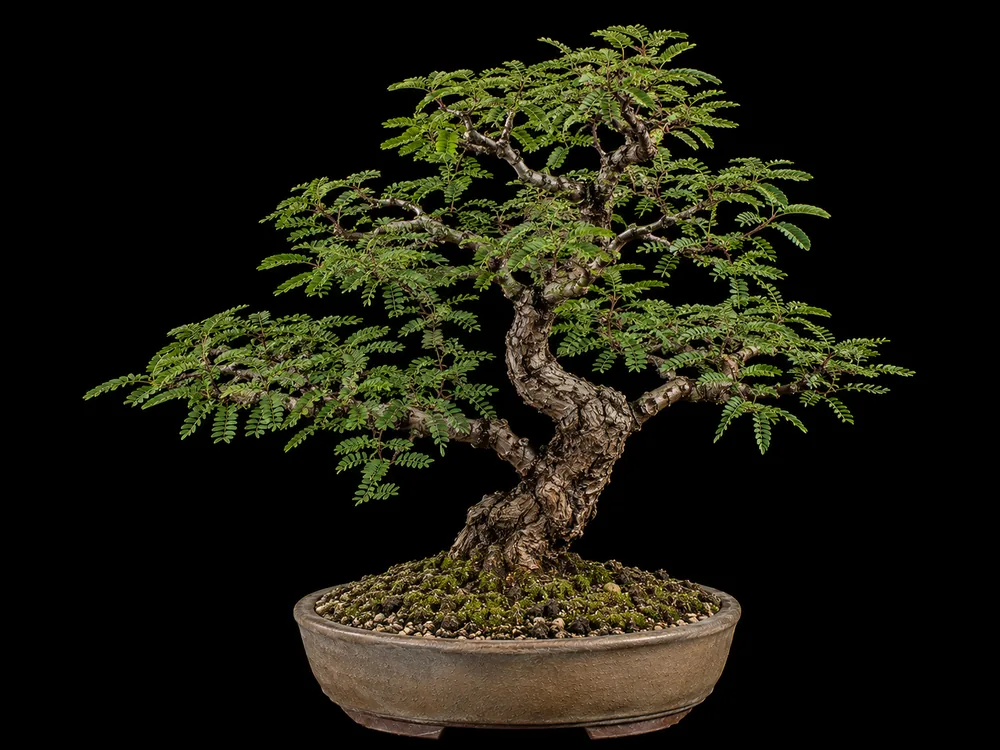
Texas Ebony Bonsai Care
Ebenopsis ebano
Zones 9 to 11, indoor or out. A slow-growing, drought-adapted legume tree from south Texas and northeastern Mexico. Most are lost to overwatering.
Fabaceae (legume family) · Evergreen broadleaf tree
Texas Ebony quick reference
| USDA zones | 9–11 (grow indoors / under glass in cooler zones) |
|---|---|
| Indoor / outdoor | Indoor-capable — outdoors in warmth; bright frost-free spot where cold |
| Light | Full sun — essential; all-day light indoors |
| Water | Dry slightly between waterings — let the surface dry; not soggy |
| Soil | Free-draining bonsai mix |
| Repot | Every 3–4 years (slow grower), late spring/early summer |
| Frost | Tender — protect from frost (some short cold tolerance when established) |
| Mature height (as bonsai) | Tree to 10m in nature; bonsai commonly 20-50cm. |
| Growth rate | Slow. |
| Season of interest | Year-round dark evergreen leaflets; zigzag twigs. |
| Leaf reduction | Good; small compound leaflets stay compact. |
| #1 cause of death | Root rot from overwatering; cold damage |
Overview & Character
The Texas Ebony is a slow-growing, drought-adapted legume tree from south Texas and northeastern Mexico, excellent for shohin and midsize bonsai. It offers small, neat, dark-green bipinnate leaves, a dense zig-zagging twiggy structure, and very hard, durable wood that takes outstanding deadwood (jin/shari). Outdoors it bears fragrant cream puff-flower spikes and persistent woody pods.
Being drought-adapted, it prefers to dry slightly between waterings and is killed mainly by overwatering and cold. It loves full sun and warmth. Its slow growth means infrequent repotting and patient development, but its fine ramification and hard wood reward the wait.
Identification
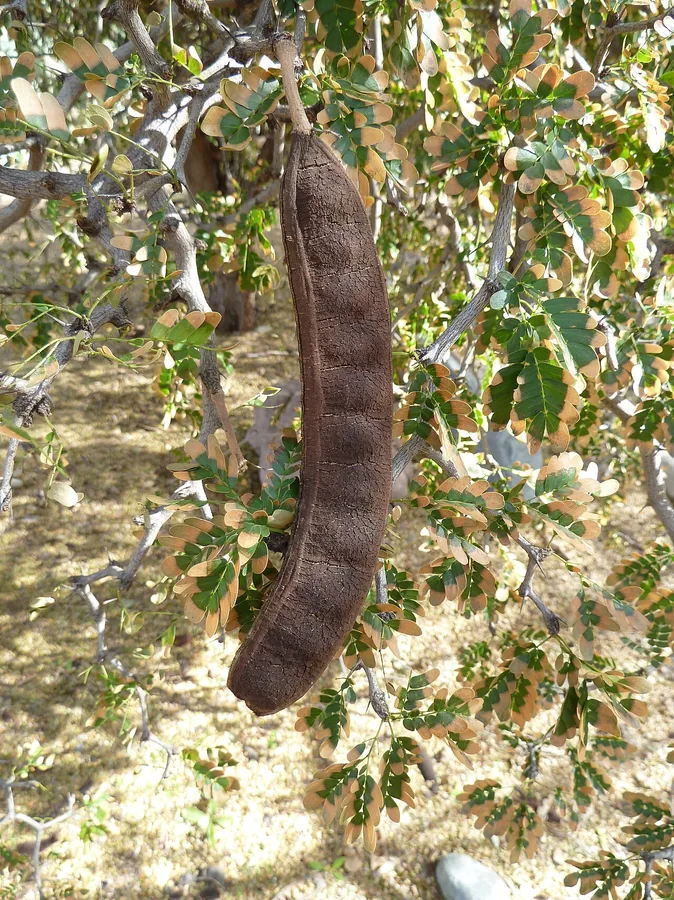
Foliage: Small, dark-green bipinnate compound leaves with few rounded leaflets; dense and neat; the zig-zag twigs often carry small paired spines at the nodes (a legume trait).
Bark & trunk: Grey, smooth when young, roughening with age; the wood is famously hard and dark — superb for durable deadwood.
Growth habit / form: Slow, dense, intricately twiggy with characteristic zig-zag branching; ideal for shohin/midsize informal upright and deadwood styles.
Flowers / fruit: Fragrant, cream-to-yellow puff/spike flowers in warm months (outdoors), followed by thick, woody, persistent dark seed pods; rarely flowers as an indoor bonsai.
Look-alikes & how to tell them apart: The small bipinnate leaves, zig-zag spiny twigs, and very hard wood distinguish it; resembles other thorny legumes (e.g. Brazilian Rain Tree) but is slower, denser, and bears thick woody pods rather than the rain tree's curled pods.
Climate & USDA Zone
Hardy outdoors in USDA zones 9–11 (established trees take brief light cold, but it is essentially frost-tender). In cooler zones grow it as an indoor/greenhouse bonsai, summered outdoors and brought in before frost. It thrives in heat and full sun and is very drought-adapted.
Light
Full sun is essential — it wants abundant direct light for tight, healthy growth. Indoors, give a bright south- or west-facing window with all-day light; low light gives weak, sparse growth.
Watering
Let the soil dry out a little between waterings — do not overwater.
- Water thoroughly, then allow the surface to dry before watering again; it is drought-adapted and resents constantly wet soil.
- Overwatering causes root rot and yellowing/dropping leaves.
- Sharp drainage is important.
Soil & Root Care
Soil: A basic free-draining bonsai mix (akadama / pumice / lava).
Repotting:
- Frequency: every 3–4 years — it is slow-growing, so repot infrequently.
- Timing: late spring/early summer in warmth.
- Moderate root-pruning; keep warm and on the drier side afterward to avoid rot.
- Aftercare: bright, warm, lightly watered while re-establishing.
Feeding
Feed with a balanced fertilizer at half strength weekly during active growth; in mild autumn/winter (above ~55 °F, still growing) feed every 2–3 weeks. Don't feed freshly repotted or dormant/cold trees.
Pruning & Styling
- Trimming: its slow, dense, zig-zag growth builds fine ramification with regular trimming back to shape; pinch new growth.
- Deadwood: the very hard wood makes excellent, durable jin/shari — a design strength.
- Wiring: young shoots are workable; mind the spines and protect the bark; much shaping is by clip-and-grow given the slow pace.
- Suits shohin/midsize informal upright and deadwood-feature styles.
Propagation & Cuttings
Ease: Easy from seed. Best methods: seed; cuttings.
Ebenopsis ebano grows readily from seed — scarify or soak the hard seed and sow warm; germination is good. Semi-hardwood cuttings root at moderate rates in warm, humid conditions with hormone. Keep young plants warm/frost-protected. For bonsai the tiny dark evergreen bipinnate leaves, zig-zag thorny twigs, and dense habit are the draw; seedlings develop steadily (slow to moderate), and the plant back-buds and tolerates hard pruning, building compact ramification over time.
Pests
- Spider mites (hot, dry indoor air)
- Scale insects and mealybugs
- Aphids
- Whitefly
Treat with horticultural oil, insecticidal soap, or appropriate systemics; catch infestations early.
Disease, Fungus & Infection
Tough and largely trouble-free; problems are mostly cultural:
- Root rot — from overwatering/poor drainage; the main risk (yellowing, dropping leaves).
- Leaf drop — from cold or sudden change (stress).
- Leaf spot — fungal spotting in damp, stagnant conditions; improve airflow.
Prevention: full sun, dry-between-waterings discipline, sharp drainage, warmth, airflow.
Most Common Causes of Death
1. Root rot from overwatering. The top killer — let it dry between waterings; never keep it soggy. 2. Cold damage. Tender — protect from frost; bring in before cold. 3. Low light indoors. Weak, sparse growth; give full/all-day sun. 4. Over-frequent root work on a slow tree. Repot only every 3–4 years. 5. Constantly wet soil / poor drainage. Use a free-draining mix.
Seasonal Calendar
- Spring: Resume feeding (half-strength weekly); trim to shape; repot if due (late spring/early summer); full sun; move outdoors after frost.
- Summer: Full sun; dry slightly between waterings; feed; fine-twig development; flowers outdoors.
- Autumn: Taper care; bring indoors before frost; mild-climate feeding every 2–3 weeks if still growing.
- Winter: Bright, warm spot; water sparingly (dry between); protect from cold; minimal feeding.
Close-up photo reference
Compare your tree against these to confirm the species and spot problems early.

Sources
Where to buy a Texas Ebony bonsai
We don’t stock Texas Ebony at the moment. These species need similar care and we have them now — they are the closest match in our catalogue.
- Black Olive — similar care, in stock now
- Bougainvillea — similar care, in stock now
- Buttonwood — similar care, in stock now
Browse all bonsai trees for sale or find a species matched to your climate and space.
- All species
- Shop bonsai trees, tools & supplies
- How to Water a Bonsai (Without Killing It)
- Bonsai Soil: What to Buy, What to Mix, and What It Costs
- Why Bonsai Die After Repotting: Diagnosing a Failed Repot
- Pruning vs. Pinching: Shaping Your Bonsai
- Overwintering Bonsai: Cold-Season Care
- Indoor Bonsai Light and Humidity: Making a Windowsill Actually Work
- Root Rot on bonsai
- Overwatering on bonsai
- Underwatering (Drought Stress) on bonsai
- Winter / Frost Damage on bonsai
- Insufficient Light (Etiolation) on bonsai
- Black Olive bonsai care
- Bougainvillea bonsai care
- Buttonwood bonsai care
- Chinese Elm bonsai care