Sago Palm Bonsai Care
Cycas revoluta
1 Sago Palm bonsai in stock, from $91.95 Shipped direct from our nursery partners, with a 48-hour live-arrival guarantee. See the trees
Zones 9 to 10, indoor. Let us be clear about what this is. Most are lost to overwatering.
Cycadaceae · Cycad — an ancient gymnosperm lineage. Not a palm, and not a conventional bonsai subject
Sago Palm quick reference
| USDA zones | 9–10 outdoors; 8b in sheltered microclimates. Potted plants indoors elsewhere |
|---|---|
| Indoor / outdoor | Indoors or in a protected container in most of the US; outdoors year-round only in zone 9+ |
| Light | Bright indirect light; acclimatise gradually to any direct sun |
| Water | Let it dry between waterings. Never water into the crown — it rots at the base |
| Soil | Gritty, sandy, sharply draining. Never moisture-retentive |
| Repot | Rarely — every 3 years or more. It grows too slowly to need it often |
| Frost | Established outdoor plants take brief dips to 15–20°F; foliage burns from about 28°F. Keep potted plants above freezing |
| Mature height (as bonsai) | Several feet of trunk over many decades; 30–90 cm as a potted specimen over 20+ years |
| Growth rate | Extremely slow — usually one flush of new fronds a year |
| Season of interest | The annual spring or summer leaf flush; the sculptural trunk year-round |
| Leaf reduction | Not applicable — it does not ramify. Compact fronds come from total defoliation, not pruning |
| #1 cause of death | Root and crown rot from overwatering — overwhelmingly the commonest failure, especially in a shallow bonsai pot |
Overview & Character
Let us be clear about what this is. Cycas revoluta is not a palm — palms are flowering monocots, and cycads are a far older seed-plant lineage more closely related to conifers. It is also not a bonsai subject by the standards applied to the rest of this library. It does not branch. It does not back-bud. It cannot be wired. There is no ramification to build and no leaf reduction to achieve through pruning.
What it is is a long-established Japanese container-tree tradition — sotetsu — grown for the sculptural quality of an aged, armoured trunk topped by a rigid crown of dark green fronds. Judged on that, it is genuinely handsome and genuinely ancient-looking, and a well-grown specimen represents decades of patience.
If you want to practise bonsai technique, this is not the plant. If you want a striking, architectural, extremely long-lived container specimen and you have no pets or young children, it is a reasonable thing to own.
Identification
Trunk: Stout, shaggy, covered in the diamond-patterned scars of old frond bases — a texture often compared to a pineapple. Grows a few centimetres a year at best.
Foliage: Stiff, dark green, glossy pinnate fronds radiating in a symmetrical crown. The leaflets are narrow, needle-like, sharp-tipped, and roll downward at the margins — revoluta, from which the species takes its name.
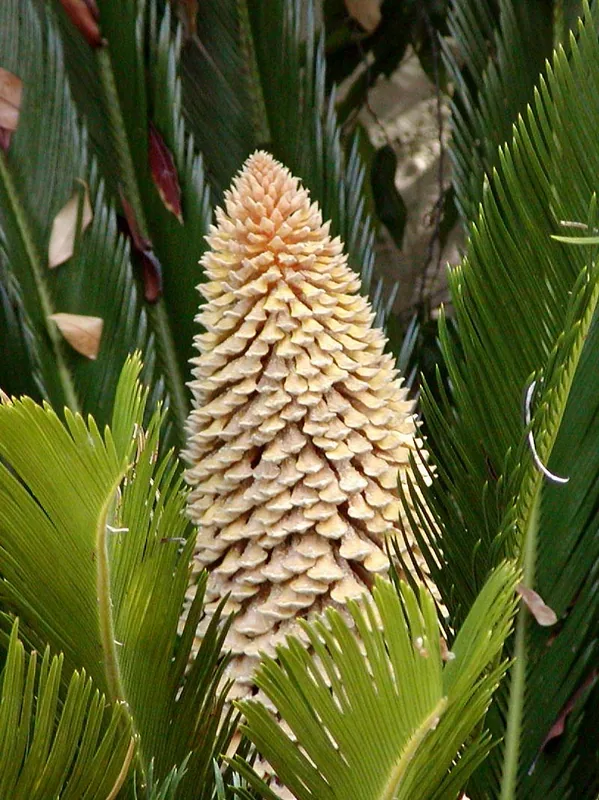
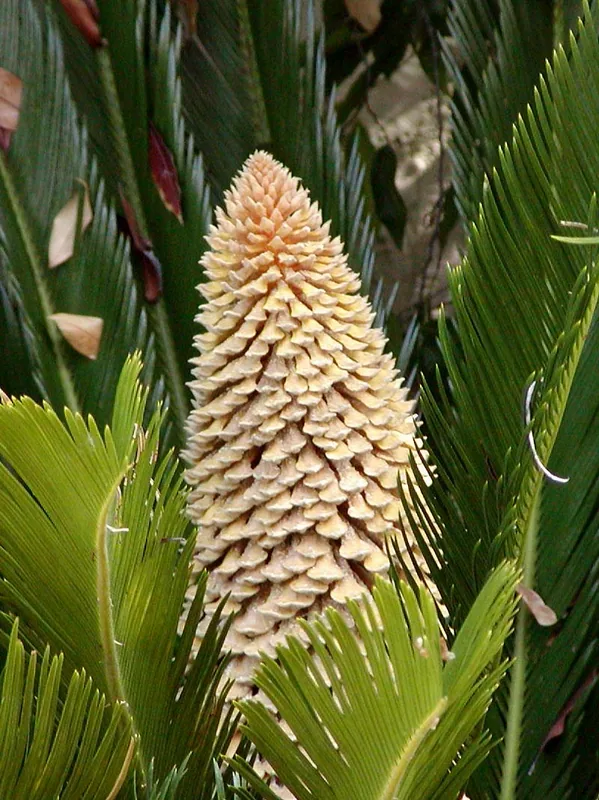
Reproductive structures: Dioecious. Mature males form a tall upright pollen cone; females form a low, fuzzy, orange-brown structure carrying large red-orange seeds. Those seeds are the most toxic part of the plant.
Look-alikes: Other Cycas species; Zamia species (coontie, also toxic); and true palms, which lack both the armoured trunk and the rigid revolute leaflets.
Climate & USDA Zone
Zones 9–10 outdoors, with survival in sheltered zone 8b sites. Established garden plants tolerate brief dips to 15–20°F, but foliage damage starts around 28–32°F, and a plant in a bonsai pot has none of the root insulation a garden plant enjoys. Keep potted specimens above freezing.
Light
Bright indirect light. It will take direct sun, but move it into full exposure gradually — fronds that developed in shade scorch if suddenly moved into strong summer sun.
Watering
Let it dry between waterings, and never water into the crown.
This is the whole game with a sago. Water the soil, let it dry down properly, then water again. Water pooling in the crown where the fronds emerge causes crown rot, which is usually fatal and usually invisible until it is far advanced. Reduce watering considerably in winter.
Soil & Root Care
Gritty and sharply draining — a sandy, mineral mix with a little organic matter. Nothing water-retentive. Because it grows so slowly, repotting every three years or more is plenty; do it in spring, and disturb the roots as little as you can.
Feeding
Light feeding through the growing season only. Watch for manganese deficiency, which shows as stunted, frizzled, yellowing new fronds — the condition growers call "frizzle top". It is treatable with manganese sulphate and is a genuine, documented problem in this species rather than a general nutrient grumble.
Pruning & Styling
There is very little to do, and that is the honest answer.
- You cannot wire the trunk. It is rigid.
- It does not back-bud or branch from pruning. Cutting does not produce new growth points the way it does on a tree.
- Routine work consists of removing old, yellowed or damaged fronds at the base.
- Leaf-size control, where it is attempted, is done by stripping all the fronds in late spring so the next flush regrows shorter and more compact. This is a real technique but it is a blunt one, and it costs the plant a full year of photosynthesis.
- Some growers wire soft, unfurling new leaves briefly to shape the crown. Leaves mark easily, so this is delicate work.
Propagation & Cuttings
Ease: Slow but straightforward. Best methods: basal offsets ("pups"); seed.
Pups form around the base of established plants and can be removed and rooted — much faster than seed and true to the parent. Seed germinates but takes many months and needs consistent warmth. Handle seeds with gloves and keep them away from animals and children.
Pests
Cycad aulacaspis scale (Aulacaspis yasumatsui) is the serious one — a devastating pest of this species worldwide, appearing as a white crust on fronds and trunk and capable of killing established plants. Treat early and thoroughly. General scale and mealybugs also occur.
Disease, Fungus & Infection
Root and crown rot, usually Phytophthora, driven by overwatering and poor drainage. Manganese deficiency ("frizzle top") is nutritional rather than infectious but presents alarmingly. Both are avoidable with the right substrate and watering discipline.
Most Common Causes of Death
1. Root or crown rot from overwatering. By a distance the commonest killer, and the restricted soil volume of a bonsai pot makes it worse, not better. 2. Water sitting in the crown. A specific version of the above, and specifically avoidable. 3. Cycad aulacaspis scale. Capable of killing a mature plant if left unmanaged. 4. Freezing. Potted roots have no insulation; keep it above freezing regardless of what the zone map says about garden plants. 5. Manganese deficiency. Rarely kills quickly, but progressively weakens the plant.
Seasonal Calendar
- Spring: Repot if genuinely due; the annual leaf flush usually begins; resume light feeding.
- Summer: Bright light, water when dry, watch for scale.
- Autumn: Reduce watering; bring under cover before frost.
- Winter: Bright, frost-free, and dry. Overwatering a dormant sago in winter is the classic way to lose one.
Toxicity, Safety & Handling
Every part of this plant is poisonous, and the seeds are the worst. The ASPCA lists Cycas revoluta as toxic to dogs, cats and horses; the toxic principle is cycasin.
- One or two seeds can kill a dog. Veterinary sources report fatality rates around 50% in dogs that ingest sago palm material, and the ASPCA's poison control data places it among the leading causes of fatal plant poisoning in dogs in the United States.
- Signs include vomiting, bloody stool, increased thirst, bruising, liver damage and liver failure.
- There is no antidote. Treatment is supportive only.
- It is toxic to humans as well.
If you have a dog, a cat, or a small child who puts things in their mouth, buy a different tree. If you already own one, put it where none of them can reach it. In the United States, the ASPCA Animal Poison Control Center is on (888) 426-4435.
Close-up photo reference
Compare your tree against these to confirm the species and spot problems early.

Sources
- Sago Palm — ASPCA Toxic and Non-toxic Plants
- Sago Palm Is Toxic To Dogs — Pet Poison Helpline
- Toxicology Brief: Cycad toxicosis in dogs — dvm360
- Cycas revoluta — Missouri Botanical Garden Plant Finder
Buy a Sago Palm bonsai
- All species
- Shop bonsai trees, tools & supplies
- How to Water a Bonsai (Without Killing It)
- Bonsai Soil: What to Buy, What to Mix, and What It Costs
- Why Bonsai Die After Repotting: Diagnosing a Failed Repot
- Pruning vs. Pinching: Shaping Your Bonsai
- Overwintering Bonsai: Cold-Season Care
- Indoor Bonsai Light and Humidity: Making a Windowsill Actually Work
- Root Rot on bonsai
- Overwatering on bonsai
- Winter / Frost Damage on bonsai
- Leaf Scorch / Sunburn on bonsai
- Scale Insects on bonsai
- Buddhist Pine bonsai care
- Desert Rose bonsai care
- Kingsville Boxwood bonsai care
- Natal Plum bonsai care