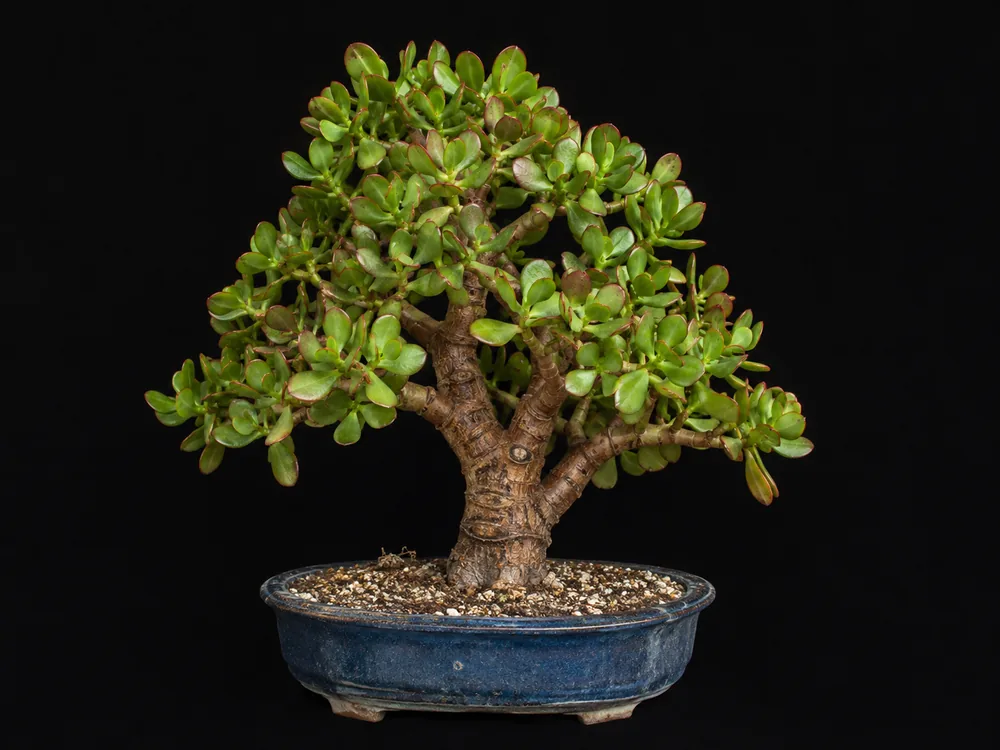
Jade Plant Bonsai Care
Crassula ovata
Zones 10 to 11, indoor or out. A classic succulent grown as an easy, forgiving bonsai, valued for plump glossy leaves. Most are lost to overwatering.
Crassulaceae (stonecrop family) · Succulent shrub
Jade Plant quick reference
| USDA zones | 10–11 (grow indoors in cooler zones) |
|---|---|
| Indoor / outdoor | Indoor-capable — outdoors in warmth; keep above ~40 °F |
| Light | Bright light — 4+ hours direct sun |
| Water | Dry out between waterings — a succulent; water sparingly |
| Soil | Very free-draining, gritty/cactus mix |
| Repot | Every 2–3 years, warm season |
| Frost | None — damaged below ~40 °F / 5 °C |
| Mature height (as bonsai) | Succulent to 3 m; 15-40 cm as bonsai |
| Growth rate | Moderate |
| Season of interest | Year-round fleshy leaves, white winter flowers |
| Leaf reduction | Limited - thick succulent leaves |
| #1 cause of death | Root/stem rot from overwatering; cold-wet soil |
Overview & Character
The Jade Plant is a classic succulent grown as an easy, forgiving bonsai, valued for plump glossy leaves, thick trunks that develop quickly, and very low watering demands. It is one of the most beginner-friendly bonsai subjects: hard to underwater, easy to prune, and tolerant of a range of light.
Treat it as a succulent — bright light and a real dry-down between waterings. Its only serious enemy is overwatering (especially cold-and-wet), which causes soft rot. It is frost-tender and usually grown indoors or as a patio plant. Note it is a different species from the also-common Dwarf Jade (Portulacaria afra).
Identification
Foliage: Thick, fleshy, glossy obovate (egg-shaped) leaves in opposite pairs, jade-green often edged red in strong sun; smooth margins; stores water (a succulent).
Bark & trunk: Thick green succulent stems maturing to brown, papery, trunk-like bark that thickens fast for an aged look.
Growth habit / form: Stout, branching succulent shrub with a naturally tree-like form; suits informal upright and clip-and-grow succulent bonsai.
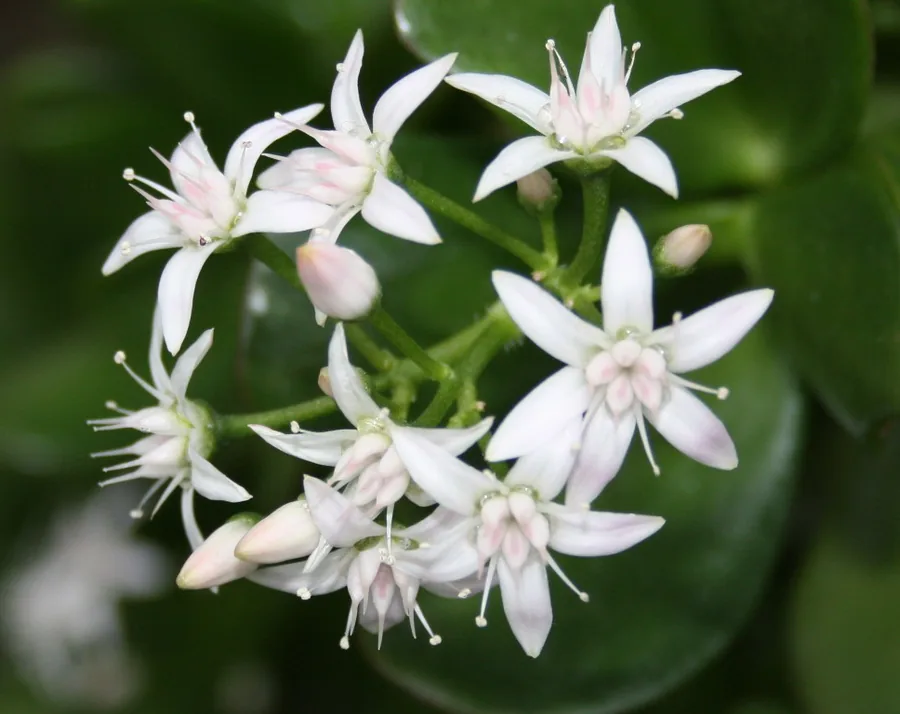
Flowers / fruit: In good light and a cool dry winter rest, clusters of small white-pink star flowers in late winter/early spring.
Look-alikes & how to tell them apart: Often confused with **Dwarf Jade (Portulacaria afra)** — Crassula has larger, rounder, thicker opposite leaves and stiffer growth, while Portulacaria has smaller leaves, reddish thin stems, and a more pendulous, finer habit better suited to refined bonsai.
Climate & USDA Zone
Hardy outdoors only in frost-free USDA zones 10–11. It is frost-tender and commonly grown indoors; keep it above ~40 °F / 5 °C. It loves warmth and bright light and stores water for drought.
Light
Bright light — at least 4 hours of direct sun. A bright window or full sun outdoors gives compact growth and red leaf edges; low light makes it leggy and soft. It tolerates a range of light but is best and sturdiest in strong light.
Watering
Water sparingly and let the soil dry out between waterings — it is a succulent.
- Water thoroughly, then wait until the soil is dry (leaves go very slightly soft/wrinkled when it is genuinely thirsty — a useful cue).
- In a cool winter rest it may need water only every ~2–3 weeks.
- Overwatering is the main danger — never keep it wet, especially when cold.
Soil & Root Care
Soil: A very free-draining, gritty/inorganic (cactus-type) mix; sharp drainage is essential.
Repotting:
- Frequency: every 2–3 years, in the warm growing season.
- Let cut roots callus and keep the mix on the dry side afterward to prevent rot.
- Aftercare: bright, warm, and watered only lightly until re-established.
Feeding
Feed about monthly from spring through autumn with a diluted balanced (or succulent) fertilizer; stop in the cool/dormant winter. Don't feed freshly repotted or stressed plants.
Pruning & Styling
- Pruning: very easy — cut stems back to a lateral branch in spring to build a compact, branching, tree-like form; it back-buds well.
- Wiring: stems are brittle and swell fast — wire briefly and gently, or (better) shape mostly by clip-and-grow.
- Let pruning wounds dry; avoid working a wet plant.
- Suits informal upright and succulent clip-and-grow styles.
Propagation & Cuttings
Ease: Very easy. Best methods: cuttings; leaf cuttings.
Crassula ovata roots from cuttings with almost no effort — take a stem or even a single leaf, let the cut callus for a day or two, then set in gritty, barely-moist mix; roots form in weeks without hormone. Keep warm and on the dry side to prevent rot. Seed is rarely used. For bonsai, cuttings quickly build the thick trunks and pads this succulent is loved for, and pruned pieces root into new plants — an ideal, forgiving beginner subject (though brittle, so wire gently).
Pests
- Mealybugs (the classic jade pest — in leaf axils)
- Aphids on flowers/new growth
- Scale insects
- Spider mites (dry conditions)
Treat with horticultural oil, insecticidal soap, or appropriate systemics; catch infestations early.
Disease, Fungus & Infection
Very tough; nearly all problems are cultural:
- Root and stem rot — from overwatering, poor drainage, or cold-wet soil; the dominant killer (soft, mushy, blackening tissue).
- Leaf drop — from cold, sudden change, or extreme drought stress.
- Edema — corky bumps on leaves from erratic overwatering; ease back on water.
Prevention: water like a succulent, sharp drainage, warmth, and bright light.
Most Common Causes of Death
1. Root/stem rot from overwatering. The top killer — let it dry between waterings; never keep it wet. 2. Cold-wet soil. Combine cold + wet and it rots fast; keep warm and on the dry side in winter. 3. Frost / cold damage. Tender — keep above ~40 °F. 4. Too little light. Leggy, weak, floppy growth; give bright direct light. 5. Working/repotting a wet plant. Let wounds and roots dry to avoid rot.
Seasonal Calendar
- Spring: Resume light feeding; prune to shape (cut to laterals); repot if due (warm season); bright light.
- Summer: Full/bright sun; water sparingly with full dry-downs; feed monthly; outdoors in warmth.
- Autumn: Taper water/feeding; bring indoors before nights drop below ~40 °F.
- Winter: Bright, cool-ish dry rest; water rarely (~every 2–3 weeks); no feeding; may flower.
Close-up photo reference
Compare your tree against these to confirm the species and spot problems early.

Sources
Where to buy a Jade Plant bonsai
We don’t stock Jade Plant at the moment. These species need similar care and we have them now — they are the closest match in our catalogue.
- Buddhist Pine — similar care, in stock now
- Clusia — similar care, in stock now
- Dwarf Jade / Elephant Bush — similar care, in stock now
Browse all bonsai trees for sale or find a species matched to your climate and space.
- All species
- Shop bonsai trees, tools & supplies
- How to Water a Bonsai (Without Killing It)
- Bonsai Soil: What to Buy, What to Mix, and What It Costs
- Why Bonsai Die After Repotting: Diagnosing a Failed Repot
- Pruning vs. Pinching: Shaping Your Bonsai
- Overwintering Bonsai: Cold-Season Care
- Indoor Bonsai Light and Humidity: Making a Windowsill Actually Work
- Root Rot on bonsai
- Overwatering on bonsai
- Underwatering (Drought Stress) on bonsai
- Winter / Frost Damage on bonsai
- Insufficient Light (Etiolation) on bonsai
- Buddhist Pine bonsai care
- Clusia bonsai care
- Dwarf Jade / Elephant Bush bonsai care
- Dwarf Umbrella Tree (Dwarf Schefflera) bonsai care