Parrot's Beak Bonsai Care
Gmelina philippensis
3 Parrot's Beak bonsai in stock, from $68.95 Shipped direct from our nursery partners, with a 48-hour live-arrival guarantee. See the trees
Zones 9 to 11, outdoor. Parrot's Beak earns its name honestly. Most are lost to cold damage.
Lamiaceae (mint family; formerly placed in Verbenaceae) · Tropical evergreen flowering shrub or small tree, usually spiny; naturally cascading
Parrot's Beak quick reference
| USDA zones | 9–11 outdoors year-round; indoor or greenhouse everywhere else |
|---|---|
| Indoor / outdoor | Outdoors through the warm season; indoors for winter |
| Light | Full sun to bright partial sun; the brightest window you have if kept indoors |
| Water | Consistently moist, never bone-dry — but the mix must drain freely |
| Soil | Well-draining bonsai mix; it tolerates heavier soil in the wild, not in a pot |
| Repot | Every 1–2 years — it grows fast and fills a pot quickly |
| Frost | None. Stressed below about 55°F (13°C); frost kills it |
| Mature height (as bonsai) | To 5–7 m in the wild; 15–50 cm as bonsai |
| Growth rate | Fast |
| Season of interest | Yellow beak-shaped flowers from overlapping bracts through much of the warm season, followed by small yellow fruit |
| Leaf reduction | Good — compact growth and leaves that reduce with training |
| #1 cause of death | Cold over winter — it is stressed below 55°F, which is warmer than most people's idea of "safe indoors" |
Overview & Character
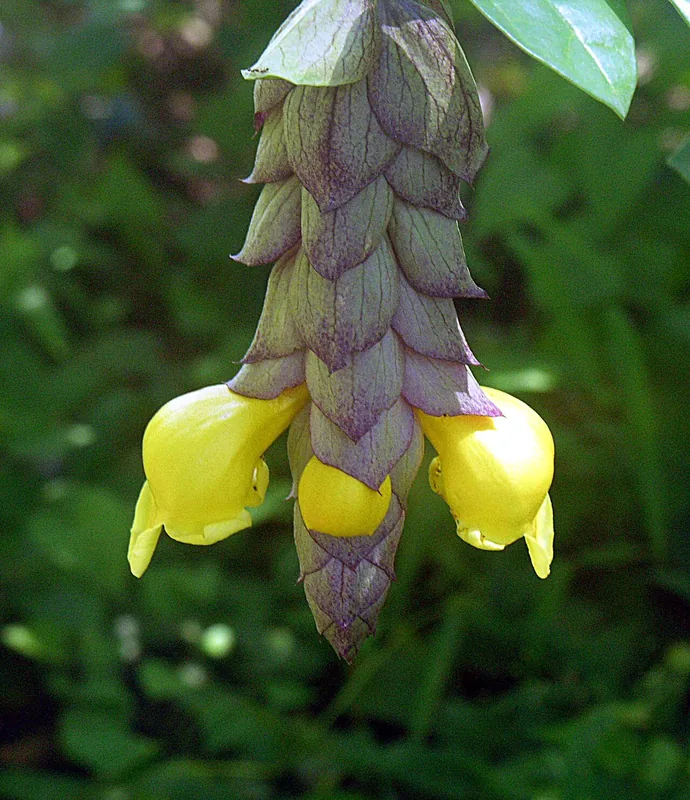
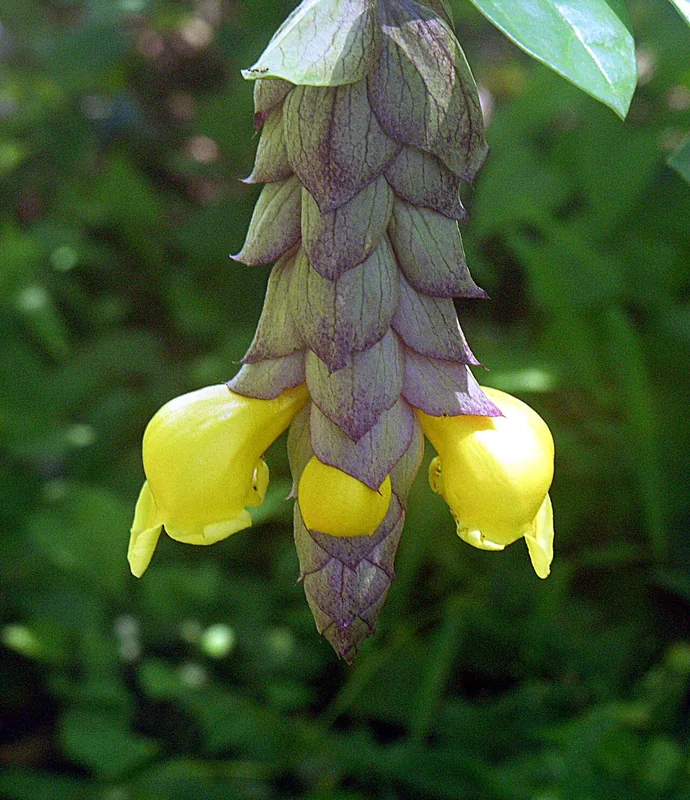
Parrot's Beak earns its name honestly. The flowers are yellow, curved and hooked, emerging one after another from a chain of overlapping papery bracts, and the whole inflorescence dangles like a string of small beaks. Nothing else in a bonsai collection looks like it.
The plant behind the flowers is a fast, spiny, scrambling tropical shrub with a naturally pendulous branch habit — which makes it a genuinely good cascade and semi-cascade subject rather than one that has to be forced into the shape. It grows quickly enough to reward a beginner with visible progress, and flowers on new shoots, so the pruning that keeps it in shape also keeps it blooming.
The catch is winter. Sources agree it is stressed below 55°F, which is warmer than a lot of hallways, porches and spare rooms.
Identification
Foliage: Variable — oval through to a distinctly lobed, ivy-like or "duck-foot" shape, often on the same plant. Evergreen in warmth.
Bark & trunk: Textured, developing genuine character with age. The trunk thickens faster than most tropicals of this size.
Growth habit: Straggling and scrambling in the wild, naturally pendant in cultivation. Branches are armed with spines.
Flowers & fruit: Bright yellow, tubular, hooked flowers emerging sequentially from a pendulous chain of overlapping bracts. Fruit is a small pear-shaped yellow drupe, roughly 2 cm.
Look-alikes: Once it flowers, effectively none — the bracted, beaked inflorescence is unmistakable. Out of flower, the spines plus the variable ivy-shaped leaves are the combination to look for.
Climate & USDA Zone
Zones 9–11 outdoors year-round. Elsewhere it is a warm-season outdoor tree and a winter houseguest. Treat 55°F (13°C) as the point below which it starts to suffer rather than the point at which it is fine, and move it indoors well before autumn nights get close to that.
Light
Full sun to bright partial sun outdoors. Indoors, the brightest position available — a south-facing window, ideally supplemented. It flowers on new growth, and new growth in poor light is sparse, pale and reluctant to bloom.
Watering
Consistently moist, freely draining. This one wants more water than most of the tropicals on this site: keep the rootball evenly damp through the growing season and do not let it dry out hard. What it will not tolerate is standing water — moist and airy, not wet and airless. A fast grower in a small pot in summer sun may need checking twice a day. Cut back substantially in winter when growth slows.
Soil & Root Care
A free-draining bonsai mix. Because it grows fast, expect to repot every one to two years while the tree is developing, in spring. It handles root work reasonably well for a tropical, but keep it warm and lightly moist afterwards and out of harsh sun until it pushes new growth.
Feeding
Feed generously through the growing season — a balanced fertiliser every two weeks, or a weaker feed more often. Fast growth needs fuel, and flowering draws on reserves. Taper off in autumn and stop over winter unless the tree is genuinely still growing under good light.
Pruning & Styling
Prune often. It grows fast, and left alone it will run to long whippy shoots that ruin the silhouette. Regular trimming builds branching and, because flowers form on new shoots, keeps it blooming rather than costing you the display.
The natural pendant habit suits cascade, semi-cascade and weeping informal upright styles. Wire young growth; the spines make wiring genuinely uncomfortable, so gloves are sensible.
Honest gap: we could not find authoritative documentation on this species' wiring tolerance, brittleness or back-budding on old wood. Treat old branches with normal caution until you know how your own tree behaves.
Propagation & Cuttings
Ease: Moderate. Best methods: cuttings; air-layering; seed.
Cuttings and air-layers both work and preserve the parent's form. Seed is produced in a single-seeded pod and germinates in a well-drained mix, but is slower and gives you no control over habit.
Pests
We could not find pest data specific to Gmelina philippensis in any horticultural authority — the bonsai trade sheets say only "treat like any tree". Based on general tropical shrub behaviour, aphids, scale and mealybugs are the reasonable things to watch for, particularly indoors in winter, but we are flagging this as an expectation rather than documented fact.
Disease, Fungus & Infection
Likewise undocumented for this species. Root rot from a waterlogged mix is the predictable cultural failure and the one worth guarding against.
Most Common Causes of Death
1. Cold. Stressed below 55°F, killed by frost. The most common way this tree is lost is being left somewhere "indoors" that is actually cold — an unheated porch, a conservatory, a windowsill behind closed curtains. 2. Root rot. From a mix that holds water, compounded by the tree's genuine need for consistent moisture — it is easy to overshoot. 3. Drying out. A fast grower in a small pot in summer will wilt quickly if you miss a watering in hot weather. 4. Starvation and neglect of pruning. Not fatal, but a fast grower left unfed and untrimmed becomes a leggy, flowerless mess.
Seasonal Calendar
- Spring: Repot if due; hard structural prune before growth accelerates; resume feeding; outdoors once nights are above 55°F.
- Summer: Full sun, generous water and feed, frequent trimming. Main flowering period.
- Autumn: Indoors early — before nights approach 55°F, not 40°F.
- Winter: Brightest spot in a genuinely warm room, reduced water, minimal feed.
Toxicity, Safety & Handling
The branches are spiny. This is a real consideration for repotting and wiring — wear gloves — and worth thinking about if the tree will sit where small children or pets can reach it. No internal toxicity is documented; the Useful Tropical Plants database records no known hazards.
Close-up photo reference
Compare your tree against these to confirm the species and spot problems early.
.jpg)
Sources
- Gmelina philippensis — Wikipedia
- Gmelina philippensis — Useful Tropical Plants
- Gmelina philippensis — Top Tropicals Plant Encyclopedia
Buy a Parrot's Beak bonsai
- All species
- Shop bonsai trees, tools & supplies
- How to Water a Bonsai (Without Killing It)
- Bonsai Soil: What to Buy, What to Mix, and What It Costs
- Why Bonsai Die After Repotting: Diagnosing a Failed Repot
- Pruning vs. Pinching: Shaping Your Bonsai
- Overwintering Bonsai: Cold-Season Care
- Indoor Bonsai Light and Humidity: Making a Windowsill Actually Work
- Root Rot on bonsai
- Underwatering (Drought Stress) on bonsai
- Winter / Frost Damage on bonsai
- Scale Insects on bonsai
- Aphids on bonsai
- Bahama Berry bonsai care
- Downy Jasmine bonsai care
- Ming Aralia bonsai care
- Sea Grape bonsai care