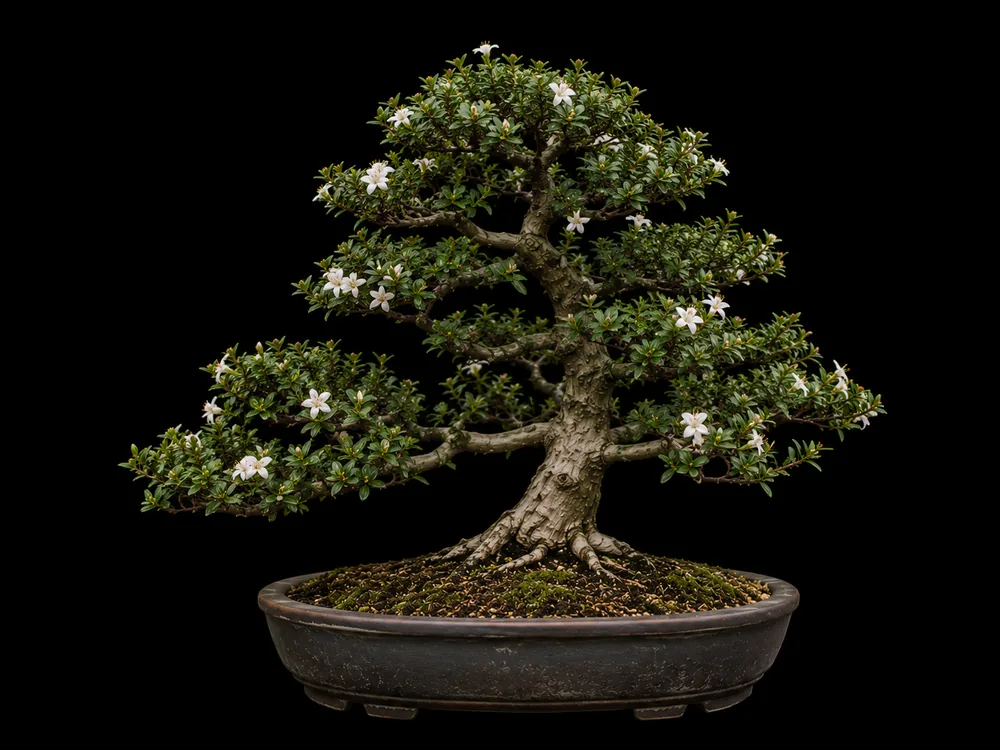
Serissa / Snow Rose Bonsai Care
Serissa japonica
8 Serissa / Snow Rose bonsai in stock, from $39.95 Shipped direct from our nursery partners, with a 48-hour live-arrival guarantee. See the trees
Zones 9 to 11, indoor. The Serissa, or Snow Rose, is a charming small-leaved evergreen smothered in tiny white. Most are lost to overwatering.
Rubiaceae (the coffee/madder family) · Subtropical, evergreen, small-leaved flowering shrub; tender — grown indoors or as a warm-climate outdoor bonsai
Serissa / Snow Rose quick reference
| USDA zones | 9–11 (frost-tender; outdoors year-round only in warm, frost-free zones) |
|---|---|
| Indoor / outdoor | Indoor (or outdoors in warm seasons/climates). Frost-tender; keep 50–68°F. Despises being moved |
| Light | Bright light — high light gives more flowers; bright indirect indoors, tolerates some sun |
| Water | Moist but well-drained — a narrow middle. Hates wet roots AND hates drying out completely |
| Soil | Standard well-draining bonsai mix; must not stay waterlogged |
| Repot | Every ~2 years; prune roots only moderately (cut roots smell unpleasant) |
| Frost | None — will die below roughly 50–55°F (10–13°C) |
| Mature height (as bonsai) | Shrub to 1m in nature; bonsai typically 15-40cm. |
| Growth rate | Moderate (indoor, sensitive to change). |
| Season of interest | Spring to autumn for small white star flowers. |
| Leaf reduction | Good; tiny leaves reduce well with pinching. |
| #1 cause of death | Improper watering (over- or under-watering) → root rot or stress death; plus shock leaf-drop from any change |
Overview & Character
The Serissa, or Snow Rose, is a charming small-leaved evergreen smothered in tiny white (sometimes pink or double) star-like flowers — hence "Tree of a Thousand Stars." It can bloom 2–3 times a year, and in good conditions almost continuously from spring to autumn, which makes it a beloved indoor flowering bonsai. It naturally forms fine twiggy ramification and a pale, characterful, gnarled trunk.
It is also famously, notoriously fussy — and this guide will be honest about that. Serissa is a drama queen: it responds to any change — in watering, light, temperature, or even just being moved to a new spot — by sulking and dropping its leaves. This leaf-drop is alarming but usually a stress reaction rather than death; the plant typically recovers once conditions stabilize, provided the roots are sound. One more quirk: the roots (and the plant when bruised, reflected in the old name foetida, "fetid") smell unpleasant when cut at repotting. For all its temperament, a settled, undisturbed Serissa in a stable bright warm spot is rewarding and floriferous.
Identification
Foliage: Very small (roughly 5–15 mm), narrow oval, glossy dark green leaves carried in opposite pairs and tight clusters along fine twigs — the tiny leaf is a key feature for such a small-leaved bonsai. Evergreen. Variegated (cream-edged) cultivars exist. A telltale: the leaves and roots emit a distinctly unpleasant smell when bruised or cut (the old name foetida means "fetid").
Bark & trunk: Pale grey-white, smooth bark that becomes attractively gnarled and characterful with age — the light trunk color is distinctive.
Growth habit/form: A dense, fine-twigged evergreen shrub that ramifies readily and back-buds on old wood.
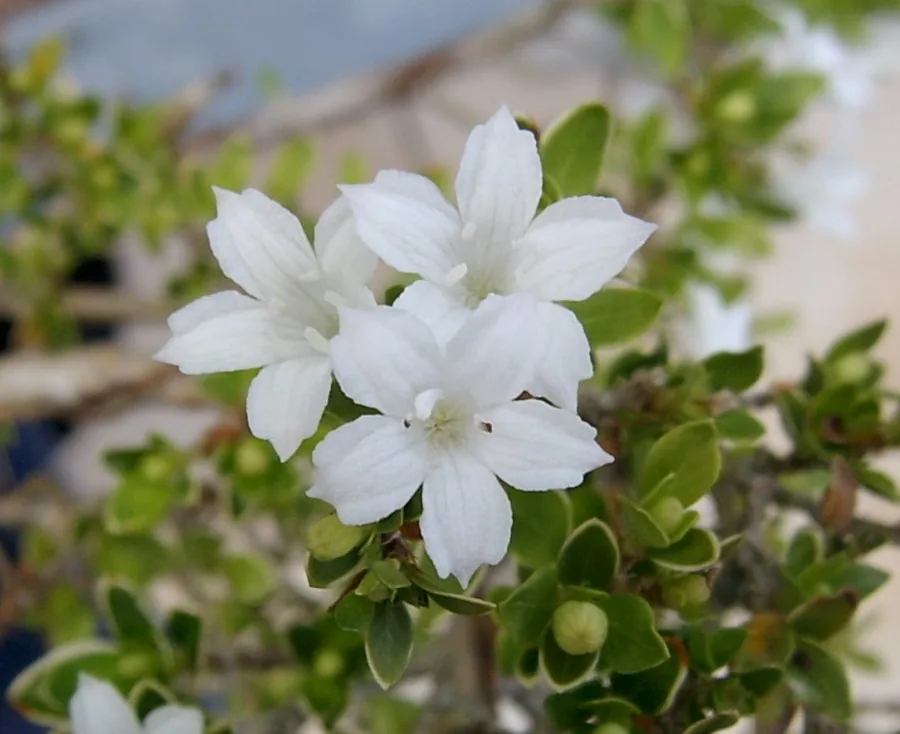
Flowers/fruit (key ID feature): Masses of tiny (about 1 cm), white (sometimes pink-tinged or double) funnel/star-shaped flowers with 4–6 pointed lobes, smothering the plant — hence "Tree of a Thousand Stars." It blooms repeatedly, 2–3 times a year or near-continuously spring to autumn in good conditions, on new growth. Fruit is insignificant.
Look-alikes & how to tell them apart: The combination of tiny leaves + small white star-shaped flowers + the foul smell when roots/foliage are bruised is diagnostic — no common look-alike shares the odor. Versus boxwood or other small-leaved evergreens (no showy flowers, no smell), the constant scattering of little white stars and the fetid bruised-tissue scent confirm Serissa.
Climate & USDA Zone
A frost-tender subtropical, hardy only in USDA zones 9–11 and able to live outdoors year-round only in genuinely warm, frost-free climates. It will die in cold — generally below about 50–55°F (10–13°C). In winter it wants temperatures between roughly 50°F (10°C) and 68°F (20°C). For most growers this makes it an indoor bonsai (or one summered outdoors and brought in well before any cold), kept away from frost, cold drafts, and sudden temperature swings.
Light
Serissa wants bright light, and better light directly means more flowering. Outdoors it enjoys sun (with protection from the harshest midday heat); indoors give it the brightest spot available — bright, mostly indirect light, ideally with some direct sun. It can survive in lower light but grows weak and flowers poorly. Crucially, because Serissa reacts badly to change, find one good bright location and leave it there — do not keep relocating it chasing light, as the moves themselves trigger leaf-drop.
Watering
Moist but well-drained — a deliberately narrow target, and the hardest part of growing Serissa. It strongly dislikes wet roots, yet bone-dry compost will also kill it. The rule of thumb: water thoroughly, then wait until the soil has nearly (not completely) dried out before watering again. Keep the rootball moist but never soggy, and never let it dry out fully.
This tight window is exactly why improper watering is the leading cause of Serissa deaths — both overwatering (root rot) and underwatering (drought death) are common, and the plant punishes either error first with leaf-drop. Use your finger to judge soil moisture rather than a fixed schedule, and adjust to season and indoor conditions. Consistency matters as much as quantity: erratic watering itself stresses the plant.
Soil & Root Care
Use a standard, well-draining bonsai soil that holds some moisture but never stays waterlogged — drainage is essential given how sensitive Serissa is to wet roots. Repot about every 2 years, pruning the roots only moderately (it dislikes heavy root disturbance, and the cut roots emit a notably bad odor). Expect some leaf-drop after repotting as part of its change-shock response; keep it warm, stable, and lightly shaded while it recovers. Don't bare-root or aggressively reduce the roots at once.
Feeding
Feed regularly but gently through the active growing season to support the heavy, repeat flowering — a balanced bonsai fertilizer at modest strength works well, with options leaning toward phosphorus/potassium to encourage blooms. Because Serissa can flower nearly year-round in good indoor conditions, light feeding can continue while it is actively growing, easing off in cooler/low-light winter periods. Avoid overfeeding, which (as with most stress factors) the plant resents.
Pruning & Styling
Serissa is a vigorous twiggy grower and takes well to clip-and-grow ramification. It produces flowers on new growth, and because it can bloom repeatedly through the season, pruning is balanced against flowering:
- Young trees / development: trim shoots back to about 2 leaves once they have extended to 4–5 leaves, building dense ramification.
- Older / flowering trees: trim more lightly while they are in flower so you don't constantly cut off blooms, then prune thoroughly after a flowering flush to reshape and stimulate the next wave of new growth and flowers.
Serissa back-buds readily, even on old wood, so it recovers well from pruning. Wire carefully — the branches are relatively brittle and the bark marks. As always, do major work when the plant is healthy and settled, not while it is already sulking from some other change.
Propagation & Cuttings
Ease: Easy. Best methods: cuttings; air-layering.
Serissa japonica (snow rose) roots readily from softwood and semi-hardwood cuttings almost year-round in warmth with light hormone, and air-layers easily. Seed is seldom used. Keep it warm and stable — Serissa famously drops leaves when stressed by change, cold, or drought. For bonsai the tiny leaves, white flowers, and rugged pale bark suit shohin; cuttings develop fast and the plant back-buds and ramifies densely, though it can be temperamental about environmental change.
Pests
Indoor and warm conditions invite the usual suspects: aphids (including root aphids), spider mites (especially in dry indoor air — raise humidity to deter them), scale, woolly aphids/mealybugs, and whitefly. Treat with insecticidal soap, neem, or an appropriate pesticide, and increase humidity to discourage mites. Inspect regularly, since a stressed, sulking Serissa is more pest-prone.
Disease, Fungus & Infection
Serissa's main disease risk is root rot from overwatering and poor drainage (see causes of death). In humid, poorly ventilated indoor conditions it can also develop powdery mildew and fungal leaf spots. Prevention is cultural: get the watering right, ensure good drainage, provide air circulation, and avoid leaving foliage wet and crowded. Note that sudden leaf yellowing/drop is far more often a stress reaction (a move, a temperature swing, a watering error) than an actual infection — diagnose conditions before reaching for chemicals.
Most Common Causes of Death
1. Improper watering. The leading cause of death; a narrow window — root rot if too wet, collapse if too dry — keep evenly moist with good drainage. 2. Shock leaf-drop from any change. Famously fussy — a move, temperature swing, draft, or watering change makes it drop leaves; keep conditions stable. 3. Cold / frost. Frost-tender; keep warm (>50°F) and draft-free in winter. 4. Low light / low humidity indoors. Give the brightest spot and raise humidity; dim dry rooms cause decline. 5. Pests. Aphids, scale, spider mites, and mildew (fix mildew with airflow, not by drying it out).
Seasonal Calendar
- Spring: Repot if due; resume feeding; light pruning; small white star flowers may appear.
- Summer: Bright light (outdoors in warm, stable weather); keep evenly moist; long bloom; watch pests.
- Autumn: Bring indoors before cool nights to a bright, stable, draft-free spot.
- Winter: Warm and bright indoors; steady moisture and humidity; expect some leaf drop after the move.
Close-up photo reference
Compare your tree against these to confirm the species and spot problems early.

Sources
Buy a Serissa / Snow Rose bonsai
- Small Chinese Flowering White Serissa Bonsai, 6 Years Old (Serissa japonica) — $39.95
- Large Chinese Flowering White Serissa of a Thousand Stars Bonsai, 15 Years Old (Serissa japonica) — $70.95
- Medium Flowering Mount Fuji Serissa Bonsai with Raised Roots, 13 Years Old (Serissa foetida) — $74.95
- Medium Chinese Flowering White Serissa of a Thousand Stars Bonsai, Exposed Roots (Serissa japonica) — $79.95
- Flowering Mount Fuji Serissa Bonsai with Golf Ball, 10 Years Old (Serissa foetida) — $81.95
- Large Chinese Flowering White Serissa of a Thousand Stars Bonsai, Exposed Roots (Serissa japonica) — $109.95
- Large Flowering Mount Fuji Serissa Bonsai with Raised Roots, 17 Years Old (Serissa foetida) — $124.95
- Chinese Flowering White Serissa of a Thousand Stars Bonsai, Trained, 18 Years Old, 18 Inches Tall — $175.00
- All species
- Shop bonsai trees, tools & supplies
- How to Water a Bonsai (Without Killing It)
- Bonsai Soil: What to Buy, What to Mix, and What It Costs
- Why Bonsai Die After Repotting: Diagnosing a Failed Repot
- Pruning vs. Pinching: Shaping Your Bonsai
- Overwintering Bonsai: Cold-Season Care
- Indoor Bonsai Light and Humidity: Making a Windowsill Actually Work
- Root Rot on bonsai
- Overwatering on bonsai
- Underwatering (Drought Stress) on bonsai
- Winter / Frost Damage on bonsai
- Insufficient Light (Etiolation) on bonsai
- Bahama Berry bonsai care
- Black Olive bonsai care
- Bougainvillea bonsai care
- Brazilian Rain Tree bonsai care