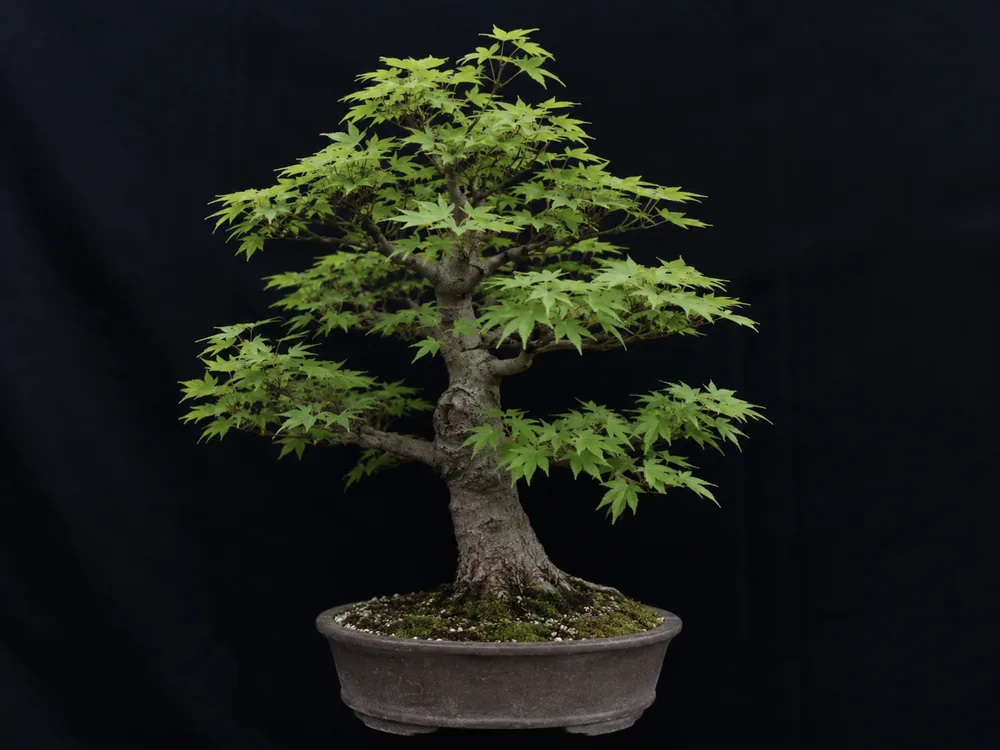
Japanese Maple Bonsai Care
Acer palmatum
43 Japanese Maple bonsai in stock, from $56.95 Shipped direct from our nursery partners, with a 48-hour live-arrival guarantee. See the trees
Zones 5 to 8, outdoor only. One of the most prized of all deciduous bonsai subjects. Most are lost to sun scorch.
Sapindaceae (soapberry family; formerly classed in Aceraceae) · Deciduous broadleaf tree; outdoor bonsai
Japanese Maple quick reference
| USDA zones | 5–8 (some cultivars tolerate 9; protect roots below zone 6 in containers) |
|---|---|
| Indoor / outdoor | Outdoor only — it requires a genuine winter dormancy and will decline indoors |
| Light | Full morning sun with light afternoon shade in summer; protect foliage above ~85 °F (30 °C) to prevent leaf scorch |
| Water | Keep evenly and consistently moist — never let the rootball dry out, but do not leave it waterlogged. On the "wet" side of the spectrum. |
| Soil | Free-draining, slightly acidic mix (e.g. akadama, pumice and lava ~2:1:1); dislikes alkaline/calcareous water |
| Repot | Young trees yearly; established trees every 2–3 years, early spring before bud break |
| Frost | Frost hardy, but protect container roots below about 15 °F (-10 °C); fine twigs are vulnerable |
| Mature height (as bonsai) | Tree to 15 m; 20-60 cm as bonsai |
| Growth rate | Moderate |
| Season of interest | Spring flush, vivid autumn colour |
| Leaf reduction | Excellent with defoliation |
| #1 cause of death | Verticillium wilt (often introduced by dirty tools / summer pruning); also leaf scorch and root drying |
Overview & Character
The Japanese maple is one of the most prized of all deciduous bonsai subjects. It offers everything a bonsai artist could want from a deciduous tree: delicate palmate leaves, fine and easily ramified twigging, smooth grey-green to red bark, and spectacular seasonal color that runs from fresh spring growth (often red-tinged) through summer green to brilliant autumn reds, oranges and golds. The genus contains hundreds of cultivars, many selected for leaf shape, color or dwarf habit. For bonsai, green-leaved seed-grown forms and cultivars such as 'Deshojo', 'Kiyohime', 'Arakawa' (rough bark) and 'Kashima' are popular.
Stylistically the species suits informal upright, broom, twin-trunk, group plantings and forest compositions. Its strength is the airy, twiggy silhouette achievable in winter when the tree is bare — refined ramification is the hallmark of a good maple bonsai.
Identification
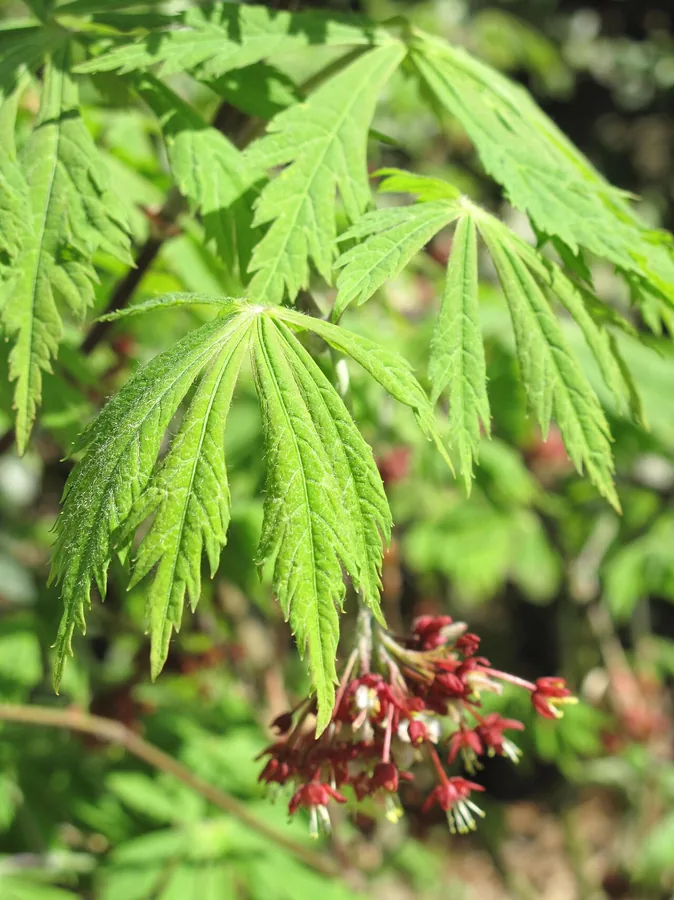
Foliage. Leaves are opposite (a defining maple trait — they emerge in pairs facing each other) and palmate, with 5, 7 or 9 deeply cut, radiating lobes like an open hand; margins are finely and sharply serrated, lobes taper to long points, and blades run roughly 2–5 in (4–12 cm) across (much smaller as bonsai). Color is highly cultivar-dependent: fresh spring growth is often red-tinged, summer foliage green or purple-red, and autumn brings brilliant crimson, scarlet, orange and gold.
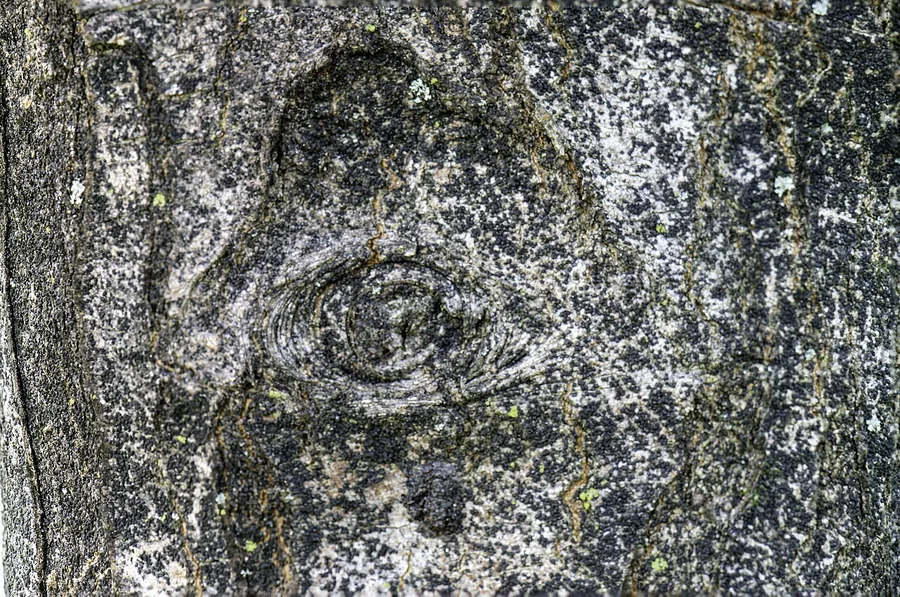
Bark & trunk. Young bark is smooth and green to reddish, maturing to smooth grey or grey-brown; some cultivars (e.g. 'Arakawa') develop rough, corky bark. Trunks are typically slender with elegant taper.
Growth habit / form. A small, rounded, layered deciduous tree with fine, airy, abundantly dividing twigging — the basis of the prized winter silhouette.
Flowers / fruit / seeds. Small reddish-purple flowers in spring give way to paired winged seeds (samaras, "helicopters"); in A. palmatum the two wings spread at a wide, roughly horizontal angle.
Look-alikes & how to tell them apart: Distinguished from trident maple by leaves with 5–9 deep lobes (vs. the trident's 3 shallow lobes) and widely spreading samara wings; distinguished from sycamore/Norway maples by far smaller, more deeply dissected leaves. The reliable maple test is always the opposite leaf arrangement plus paired samaras — elms and zelkova have alternate leaves and no samaras.
Climate & USDA Zone
Acer palmatum is reliably hardy in USDA zones 5–8 in the ground. As a bonsai in a shallow pot the roots are far more exposed, so winter protection becomes important: shelter the tree in a cold frame, unheated greenhouse, or mulched/heeled-in position when temperatures drop below roughly 15 °F (-10 °C). The tree absolutely requires a cold dormant period each winter — do not attempt to keep it indoors as a houseplant. In summer it dislikes extreme heat; above 85 °F (30 °C) move it to a position with bright but indirect light to avoid foliage damage.
Light
Give full sun in spring and autumn for compact growth and good color. In the heat of summer, particularly in hot climates and with red or finely dissected cultivars, provide dappled or afternoon shade — the thin leaves scorch easily, browning at the margins. A bright, airy spot with good air movement keeps the tree healthy and discourages mildew.
Watering
The Japanese maple likes to be kept evenly moist and sits on the wet side of the watering spectrum — but it is not a bog plant. The fine feeder roots die quickly if the rootball dries out, causing leaf wilt, scorch and twig dieback. During the growing season water daily, and on hot days check and water more than once. At the same time the soil must drain freely; standing water suffocates roots and invites rot. Use rainwater or low-calcium water where possible, as the species prefers a neutral to slightly acidic pH and reacts to hard water over time.
Soil & Root Care
Use a free-draining, slightly acidic inorganic-based mix. A classic blend is akadama, pumice and lava rock in roughly 2:1:1 proportions; add a little composted bark for younger trees if needed for moisture retention. Repot young trees annually and established specimens every two to three years, always in early spring just before the buds swell and open. At repotting, comb out the roots and remove no more than about one third of the root mass; maples produce dense fine roots and respond well to regular root work, which in turn supports fine twigging above.
Feeding
Feed from the time the spring leaves harden off through to autumn. Use a balanced organic fertilizer, easing back on nitrogen for refined, mature trees to keep internodes short and leaves small. Avoid heavy feeding immediately after repotting and during the hottest part of summer. A lower-nitrogen, higher-potassium feed in early autumn helps the wood harden before winter.
Pruning & Styling
Maples build ramification through repeated pruning back to one or two pairs of leaves once shoots have extended. During the growing season pinch or cut new shoots back to keep internodes short. Leaf-pruning (partial defoliation) in early summer on healthy, vigorous trees reduces leaf size, encourages a second flush of smaller leaves, improves ramification and intensifies autumn color — only do this on strong trees and not in the same year as a hard repot.
Structural pruning is best done in late winter or, to limit bleeding sap, in autumn after leaf drop. Avoid heavy cuts in the heat of summer, which raises the risk of disease entering wounds. Always seal larger cuts with cut paste. Wire with care: the bark is thin and marks easily, so check wire frequently and remove it before it bites in. Wire is most safely applied in the growing season when branches are slightly more flexible, but watch closely for scarring.
Propagation & Cuttings
Ease: Species easy from seed; cultivars need graft/cuttings/layer. Best methods: seed (species); grafting, cuttings, air-layering (cultivars).
Acer palmatum species grows readily from seed — cold-moist stratify ~3 months (or sow fresh green samaras) and sow in spring; germination is good. Cultivars (dissectum, red forms) don't come true and are side-veneer grafted onto seedling understock in winter, or grown from softwood cuttings in early summer under mist (moderate success) and air-layering in spring (reliable for trunk size). For bonsai, seedlings give the best nebari; layer or graft to keep a chosen leaf form, and expect the species to back-bud freely.
Pests
Aphids are the main nuisance, clustering on soft spring growth and tips. Scale insects (including cottony/woolly scale) and red spider mites can also appear, the latter especially in hot, dry, stagnant air. Caterpillars occasionally chew foliage. Keep air moving, inspect undersides of leaves, and treat early with insecticidal soap, horticultural oil or an appropriate systemic.
Disease, Fungus & Infection
The most serious disease is verticillium wilt, a soil-borne fungus that blocks the tree's vascular system and causes sudden wilting and dieback of branches or whole sections. It is essentially untreatable and can be spread tree-to-tree on contaminated tools. Powdery mildew (white film on leaves) is common in humid, still conditions, and anthracnose and various leaf-spot fungi can disfigure foliage in wet seasons. Tar spot and sooty mould (the latter following aphid honeydew) may also occur. Prevention is built on clean tools, good airflow, avoiding summer wounding, and sealing cuts.
Most Common Causes of Death
1. Verticillium wilt. The classic maple killer; sterilize tools between trees, avoid hot-summer pruning, seal cuts, and discard confirmed-infected trees. 2. Root drying / underwatering. Fine roots die fast when the rootball dries; water daily in the growing season and recheck on hot days. 3. Overwatering / root rot. Use a free-draining akadama-based mix; water as the surface begins to dry, not on a fixed schedule. 4. Leaf scorch from heat and sun. Thin leaves crisp above ~85°F in full sun; give afternoon/dappled shade and keep hydrated. 5. Winter root freeze; indoor keeping. Shelter potted roots below ~15°F; grow outdoors — denied dormancy/light it weakens and dies.
Seasonal Calendar
- Spring: Repot if due (early); resume feeding as leaves harden; light shaping; protect tender new growth from late frost.
- Summer: Even moisture (often daily); afternoon shade in heat; defoliate selectively on healthy trees to reduce leaf size.
- Autumn: Enjoy color; taper feeding/water; structural pruning after leaf drop; seal larger cuts.
- Winter: Dormant; shelter potted roots from hard freezes; keep soil from fully drying.
Close-up photo reference
Compare your tree against these to confirm the species and spot problems early.

.jpg)
Sources
Buy a Japanese Maple bonsai
- Small Japanese Green Maple Bonsai, 8 Years Old (Acer palmatum) — $56.95
- Japanese Green Maple Bonsai, Land and Water Pot, 8 Years Old (Acer palmatum) — $64.95
- Small Japanese Red Maple Bonsai, 9 Years Old (Acer palmatum 'Atropurpureum') — $65.95
- Dwarf Japanese Green Maple Bonsai, 12 Years Old (Acer palmatum) — $87.95
- Large Japanese Green Maple Bonsai, 15 Years Old (Acer palmatum) — $102.95
- Large Japanese Red Maple Bonsai, 20 Years Old (Acer palmatum 'Atropurpureum') — $109.95
- Japanese Green Maple Curved "S" Shape Trunk Bonsai, 8 Years Old (Acer palmatum) — $109.95
- Japanese Maple Group Bonsai, Three Tree Forest, 8 Years Old (Acer palmatum) — $114.95
- All species
- Shop bonsai trees, tools & supplies
- How to Water a Bonsai (Without Killing It)
- Bonsai Soil: What to Buy, What to Mix, and What It Costs
- Why Bonsai Die After Repotting: Diagnosing a Failed Repot
- Pruning vs. Pinching: Shaping Your Bonsai
- Overwintering Bonsai: Cold-Season Care
- Indoor Bonsai Light and Humidity: Making a Windowsill Actually Work
- Root Rot on bonsai
- Overwatering on bonsai
- Underwatering (Drought Stress) on bonsai
- Winter / Frost Damage on bonsai
- Leaf Scorch / Sunburn on bonsai
- Amur Maple bonsai care
- Field Maple bonsai care
- Paperbark Maple bonsai care
- Red Maple bonsai care