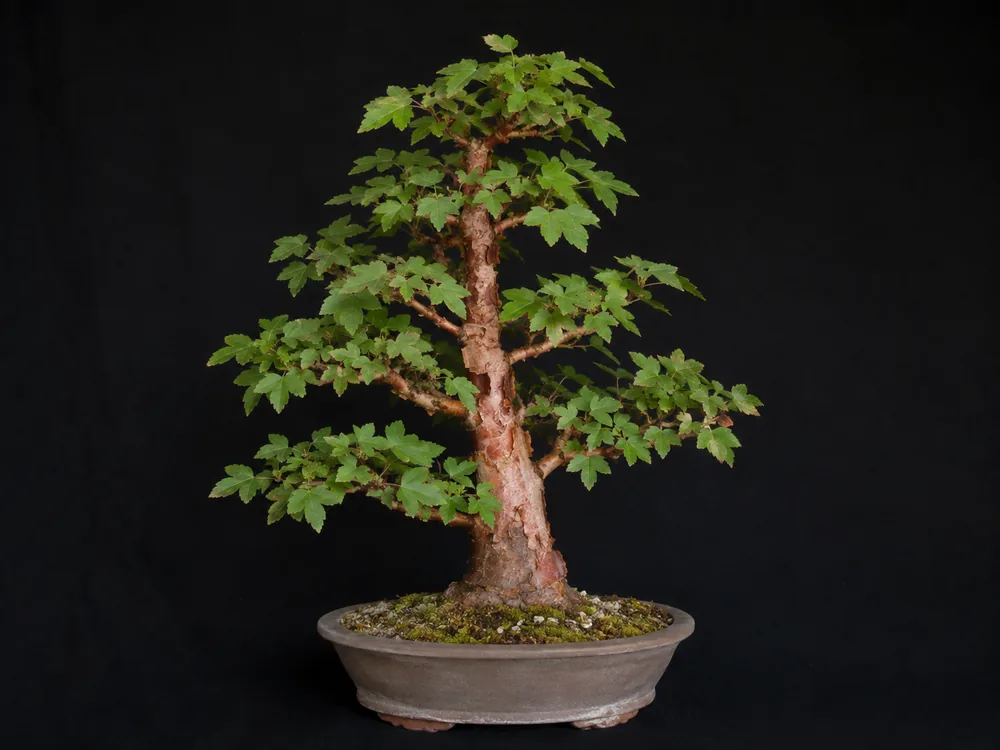
Paperbark Maple Bonsai Care
Acer griseum
1 Paperbark Maple bonsai in stock, from $87.95 Shipped direct from our nursery partners, with a 48-hour live-arrival guarantee. See the trees
Zones 4 to 8, outdoor. Prized above all for its spectacular cinnamon-orange exfoliating bark, which peels in thin, papery. Most are lost to drying out.
Sapindaceae (formerly Aceraceae; maple family) · Deciduous broadleaf tree
Paperbark Maple quick reference
| USDA zones | 4–8 |
|---|---|
| Indoor / outdoor | Outdoor (deciduous; needs seasons and dormancy) |
| Light | Morning sun with afternoon shade; protect from scorch |
| Water | Keep evenly moist — never let it dry out |
| Soil | Free-draining, moisture-retentive bonsai mix |
| Repot | Every 2–3 years (young), 3–4 (older) |
| Frost | Hardy; protect fragile potted roots in hard freeze |
| Mature height (as bonsai) | 8-15m wild; 30-60cm as bonsai |
| Growth rate | Slow to moderate |
| Season of interest | Peeling cinnamon bark; fiery red autumn |
| Leaf reduction | Trifoliate leaves reduce well with defoliation |
| #1 cause of death | Leaf scorch / drying out; winter root freeze |
Overview & Character
The Paperbark Maple is prized above all for its spectacular cinnamon-orange exfoliating bark, which peels in thin, papery, translucent curls to reveal smooth coppery wood beneath — a feature that shows beautifully on a bare winter silhouette. It also offers fine trifoliate leaves and rich red-orange autumn color.
It is a slow, refined deciduous tree (a single spring flush) that builds a beautiful trunk over time. Like most maples it dislikes hot afternoon sun and drying out, both of which scorch its delicate leaves. Patience and steady moisture are the keys; in return it gives one of the most ornamental barks in all of bonsai.
Identification
Foliage: Distinctive compound trifoliate leaves — three leaflets per leaf — each ~3–6 cm, blue-green above and downy grey-green beneath, turning brilliant red and orange in autumn (the genus name griseum means grey, for the leaf undersides).
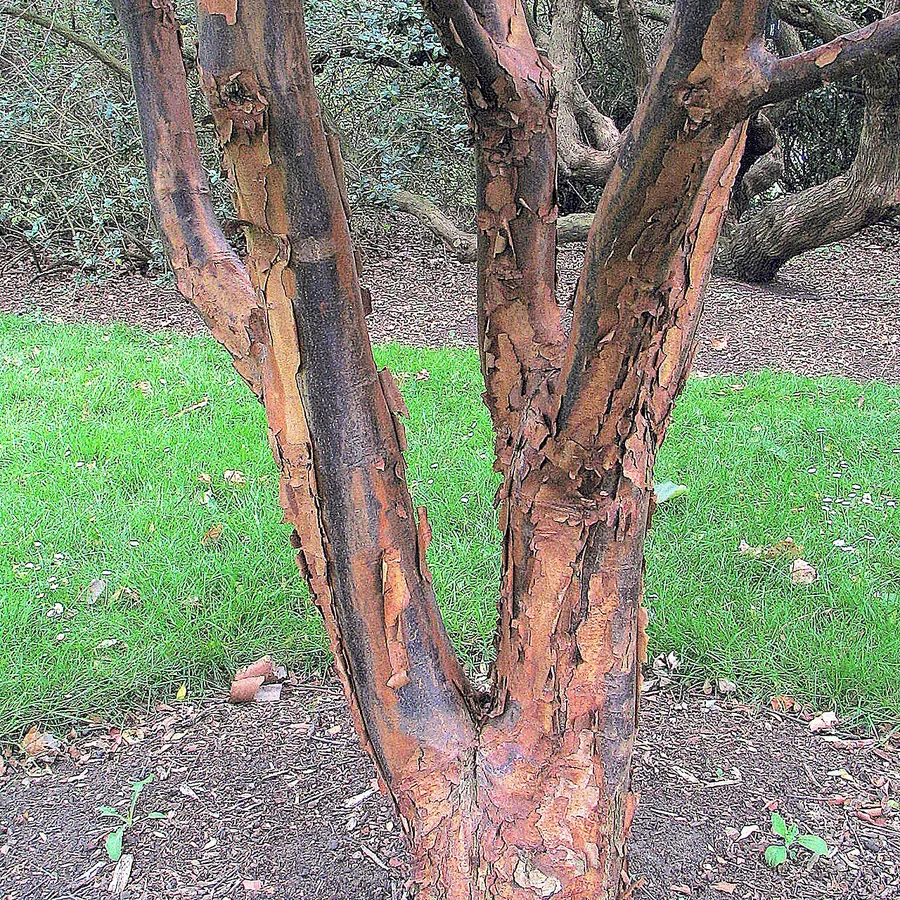
Bark & trunk: The signature feature — cinnamon to coppery-brown bark that exfoliates in thin papery curls, exposing smooth, shining new bark; develops young, even on small trunks.
Growth habit / form: Slow, upright, with an oval, refined crown; single spring flush. Suits informal upright and trunk-feature styles that show the bark.
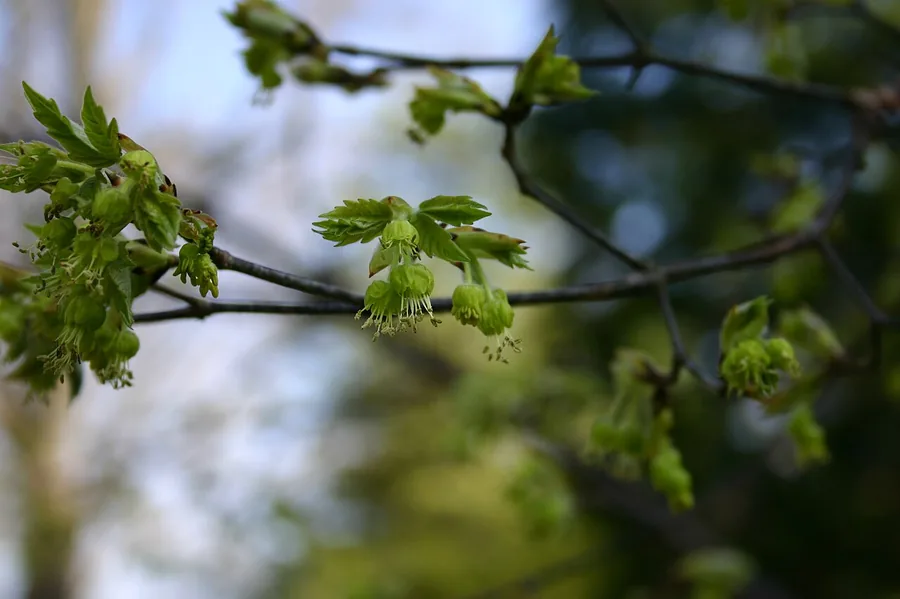
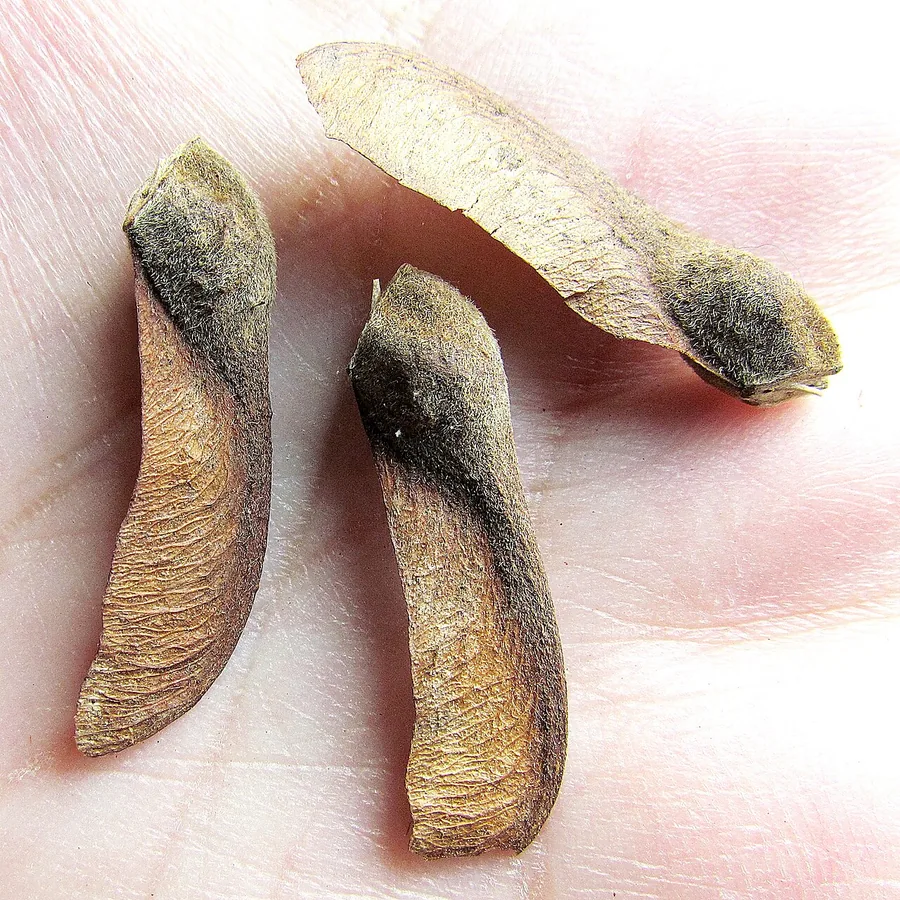
Flowers / fruit: Small greenish flowers in spring, followed by paired winged samaras (~3 cm); seed is often low-viability.
Look-alikes & how to tell them apart: The peeling cinnamon bark plus trifoliate leaves is nearly unique among maples; other trifoliate maples (e.g. Acer triflorum) have rougher, less papery bark. The exfoliating paper-curl bark is the instant tell.
Climate & USDA Zone
Hardy in USDA zones 4–8. Deciduous and dormancy-dependent, grown outdoors year-round. The tree is cold-hardy, but as with all potted maples the fine roots are more frost-sensitive than the top — protect the pot in hard freezes. It dislikes hot, dry, exposed sites.
Light
Morning sun with afternoon shade is ideal. Full hot-afternoon sun scorches the delicate leaves, browning the margins. Give bright light for good autumn color, but shelter from intense midday/afternoon heat and drying wind.
Watering
Keep the soil evenly moist at all times — never let it dry out.
- Maples are thirsty in growth; water before the surface dries, often daily in summer heat.
- Drying out causes rapid leaf scorch and dieback; soggy soil rots the fine roots — aim for consistently moist with free drainage.
- Reduce in autumn and keep just-moist in winter dormancy.
Soil & Root Care
Soil: A free-draining but moisture-retentive bonsai mix (akadama / pumice / lava) suits its need for steady moisture without waterlogging.
Repotting:
- Frequency: every 2–3 years for younger trees; every 3–4 as they mature.
- Timing: early spring before bud break.
- Root-prune moderately; the fine roots resent rough handling.
- Aftercare: shelter from sun/wind, keep evenly moist while re-establishing.
Feeding
Feed through the growing season with a balanced fertilizer (slow-release pellets work well, applied sparingly every 1–2 months); ease off late so growth hardens for winter. Avoid heavy nitrogen, which coarsens leaves. Don't feed freshly repotted or dormant trees.
Pruning & Styling
- Trimming: Trim new growth back to 1–2 leaf pairs, but never strip all new growth; it is slow and single-flush, so work conservatively.
- Defoliation: generally avoided/limited on a single-flush slow maple; a partial leaf-cut can reduce leaf size if the tree is strong.
- Wiring: the bark is thin and marks/peels easily — wire carefully with protection, or shape mainly by directional pruning; best in the dormant season.
- Suits informal upright and trunk-feature styles that showcase the bark.
Propagation & Cuttings
Ease: Difficult. Best methods: seed (low viability); grafting; air-layering.
Acer griseum is notoriously hard to propagate — most seed is empty (parthenocarpic), so viability is very low; sow large batches of cleaned seed with warm-then-cold stratification and expect few seedlings. Softwood cuttings root poorly, so choice plants are grafted onto Acer understock, and air-layering (spring) is a reliable way to clone an established tree. For bonsai the peeling cinnamon bark is the prize; layering or grafting is usually more dependable than the difficult seed.
Pests
- Aphids (on new growth)
- Scale insects
- Spider mites (hot, dry conditions)
Treat with horticultural oil, insecticidal soap, or appropriate systemics; catch infestations early.
Disease, Fungus & Infection
Generally healthy if not stressed; risks are mostly maple-typical:
- Verticillium wilt — soil-borne fungus causing sudden branch wilt/dieback; use clean soil/tools, remove affected wood.
- Leaf scorch — from hot sun, wind, or drying out (cultural, not infectious); the most common problem.
- Root rot — from waterlogged soil.
- Tar spot / leaf spot — cosmetic fungal spotting in damp conditions; improve airflow, clear fallen leaves.
Prevention: even moisture, afternoon shade, free drainage, and clean tools.
Most Common Causes of Death
1. Leaf scorch / drying out. The top issue — keep evenly moist and shelter from hot afternoon sun and wind. 2. Winter freezing of fragile potted roots. Cold-hardy tree, frost-sensitive potted roots — shelter the pot. 3. Root rot from waterlogging. Keep moist but well-drained. 4. Verticillium wilt. Use clean soil and tools; remove and destroy affected branches. 5. Over-aggressive work on a slow, single-flush tree. Don't defoliate hard or stack heavy pruning with repotting.
Seasonal Calendar
- Spring: Repot if due (before bud break); leaves emerge; resume feeding; morning sun.
- Summer: Keep evenly moist (daily in heat); afternoon shade to prevent scorch; light trimming.
- Autumn: Brilliant red-orange color; taper feeding/water as it goes dormant.
- Winter: Dormant/leafless — enjoy the peeling bark; protect potted roots; keep just-moist.
Close-up photo reference
Compare your tree against these to confirm the species and spot problems early.



Sources
Buy a Paperbark Maple bonsai
- All species
- Shop bonsai trees, tools & supplies
- How to Water a Bonsai (Without Killing It)
- Bonsai Soil: What to Buy, What to Mix, and What It Costs
- Why Bonsai Die After Repotting: Diagnosing a Failed Repot
- Pruning vs. Pinching: Shaping Your Bonsai
- Overwintering Bonsai: Cold-Season Care
- Indoor Bonsai Light and Humidity: Making a Windowsill Actually Work
- Root Rot on bonsai
- Underwatering (Drought Stress) on bonsai
- Winter / Frost Damage on bonsai
- Leaf Scorch / Sunburn on bonsai
- Spider Mites on bonsai
- Amur Maple bonsai care
- Field Maple bonsai care
- Japanese Maple bonsai care
- Vine Maple bonsai care