
Vine Maple Bonsai Care
Acer circinatum
Zones 5 to 8, outdoor only. A graceful native of the Pacific Northwest. Most are lost to sun scorch.
Sapindaceae (the soapberry family, which includes all maples) · Deciduous broadleaf tree/large shrub; outdoor bonsai
At a glance
- Type
- Deciduous
- Leaves
- Deciduous
- USDA zones
- 5 to 8
- Indoor or outdoor
- Outdoor
- Growth rate
- Moderate
- Bonsai popularity
- Tier 3
Close-up photo reference
Compare your tree against these to confirm the species and spot problems early.
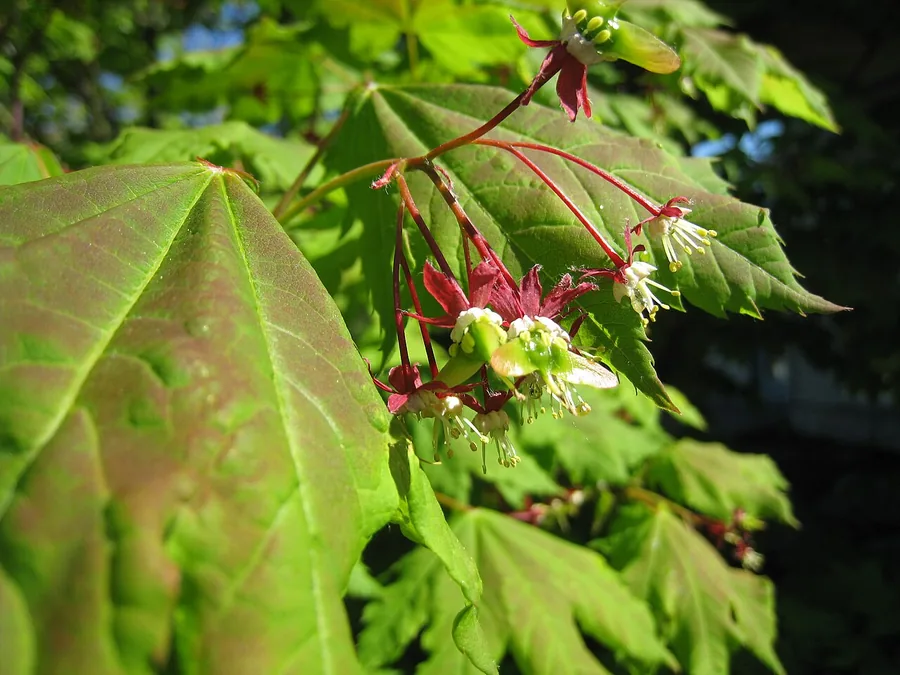

Vine Maple quick reference
| USDA zones | 5 to 8 |
|---|---|
| Indoor / outdoor | Outdoor only; a forest-understory tree that needs a cool winter dormancy |
| Light | Part shade to dappled light; protect from hot, direct afternoon sun |
| Water | Consistently moist; a woodland species that dislikes drying out |
| Soil | Free-draining but moisture-retentive mix (akadama, pumice, lava with some organic) |
| Repot | Every 2 to 3 years for young trees; every 3 to 4 years once mature |
| Frost | Hardy in the ground; protect potted roots from hard freezes below about 23°F (-5°C) |
| Mature height | 10 to 20 ft (3 to 6 m) as a tree or large shrub [s3] |
| Growth rate | Moderate [s4] |
| Season of interest | Red, orange and yellow fall color in sun; red-sepaled spring flowers; red samaras [s3] [s4] |
| Leaf reduction | Not rated by the sources we checked |
| #1 cause of death | Leaf scorch and stress from too much hot direct sun plus drying out |
Overview & Character
The vine maple is a graceful native of the Pacific Northwest, growing as an understory tree and large shrub beneath the great conifer forests from British Columbia down through Oregon and northern California. Its name comes from its sprawling, vine-like habit: in deep shade it leans, arches and layers where its branches touch the ground, giving it a wonderfully natural, twisting character that bonsai artists prize for informal, windswept and multi-trunk clump styles. The nearly circular, many-lobed leaves are delicate and elegant, and in autumn they turn vivid shades of yellow, orange and scarlet, often the more brilliant reds when the tree gets a little sun.
Because it evolved in the moist, cool shade of the forest floor, vine maple is a shade-and-moisture lover, and this defines its care. It is smaller and more shrubby than the sugar or red maple, which keeps its foliage in good proportion at modest bonsai sizes, and its naturally slender, sinuous branches take movement readily. The trade-off is that it is more sensitive to heat and strong sun than most maples; its thin leaves scorch easily. Grown in dappled light, kept steadily moist, and given a genuine but not brutal winter, it is a distinctive and lovely tree.
Identification
Foliage: opposite leaves that are almost circular in outline, 1 1/4 to 5 in (3 to 12 cm) across, with seven to nine (sometimes up to eleven) shallow, sharply toothed lobes radiating from the base; the "circinatum" name refers to this rounded shape. Autumn color ranges from gold to fiery scarlet. Bark and trunk: smooth, thin, greenish to pale brown bark, often with a slight bloom on young shoots; the trunk and branches are slender and flexible. Growth habit: multi-stemmed, arching and sprawling, vine-like in shade, more upright in the open. Flowers and samaras: small flowers with reddish-purple sepals and white petals appear in spring; the paired samaras are widely spread, held in a nearly straight line (close to 180°), and often flush red.
Look-alikes & how to tell them apart: Vine maple's nearly circular, seven-to-nine-lobed leaf is distinctive and separates it from the five-lobed sugar and red maples and from the Japanese maple's more deeply cut palmate leaf. Its widely spread, almost horizontal paired samaras are also characteristic. Like all maples, it has opposite leaves and paired samaras, which distinguishes it from the alternate-leaved elms and hackberries.
Climate & USDA Zone
Vine maple is at home in USDA zones 5 to 8 and is well suited to cool, damp maritime climates like its native Pacific Northwest. It needs a real but not extreme winter dormancy and is strictly an outdoor tree. It struggles in regions with hot, dry summers and intense sun, where its thin foliage scorches; in such climates it must be given shade and steady moisture, or it may simply not be a good match. It is less heat-tolerant than red maple and less sun-demanding than sugar maple.
Light
Unlike most maples, vine maple prefers part shade to dappled light; it is a forest-understory species. Bright, filtered light or morning sun with afternoon shade gives the best results and the healthiest foliage. A little sun encourages stronger red autumn color, but hot, direct afternoon sun will scorch the delicate leaves. In cool, overcast maritime climates it can take more sun; in hot climates keep it well shaded. Deep shade produces the natural arching habit but weaker color, so aim for bright dappled light as the balance.
Watering
Vine maple is a moisture lover from a damp forest floor, so keep it consistently and evenly moist at all times. It does not tolerate drying out; its thin leaves show stress quickly as scorched, crisped margins. Water thoroughly whenever the surface begins to dry; daily in the growing season and more often in warm weather. As always, pair this with a draining mix so the roots still breathe; the goal is reliably damp, never waterlogged. Higher humidity suits it. Cut back watering in winter to keep the root ball merely from drying out.
Soil & Root Care
Use a free-draining yet moisture-retentive bonsai mix: akadama, pumice and lava rock with a somewhat higher organic fraction to hold the steady moisture this woodland tree wants. Vine maple has fine, fibrous roots and is a moderate grower. Repot young trees every 2 to 3 years and mature ones every 3 to 4 years, in early spring as the buds begin to swell. Rake out old soil gently, trim heavy and circling roots, and take no more than about a third of the roots at a time. Its multi-trunk, clump-forming nature makes it excellent for developing group and root-connected plantings.
Feeding
Feed moderately for steady rather than forced growth, starting after the spring leaves have hardened and continuing through the season, easing off in any summer heat and stopping before dormancy. A balanced organic fertilizer is ideal for this understory tree, which does not want a heavy nitrogen push. As with other maples, over-feeding inflates the leaf size and coarsens the fine, delicate ramification that gives vine maple its charm. A lower-nitrogen feed late in the season supports root reserves and autumn color.
Pruning & Styling
Vine maple's slender, flexible, naturally sinuous branches make it superb for informal upright, windswept, cascade-leaning and multi-trunk clump styles. Do structural pruning in late winter while dormant and seal larger cuts. In the growing season, let shoots extend then cut back to one or two leaf pairs to build ramification; it back-buds well. The thin, pliable wood wires easily, especially on young shoots, but the smooth bark marks readily, so watch wire closely and remove it before it bites. Its layering tendency can be used deliberately to create new trunks.
Seasonal Calendar
- Spring: Repot as buds swell (every 2 to 3 years). Enjoy the delicate spring flowers. Let new growth extend, then pinch and cut back once leaves harden. Begin light feeding after leaf-out. Watch for aphids.
- Summer: Keep in dappled light with afternoon shade; water consistently and maintain humidity to prevent scorch and mites. Feed moderately, easing off in heat.
- Autumn: Enjoy the gold-to-scarlet color. Taper and then stop feeding. Do light clean-up pruning and clear fallen leaves.
- Winter: Fully dormant. Protect roots from hard freezes. Do structural pruning and wiring in late winter, sealing large cuts. Water only enough to prevent drying out.
Care calendar by month
- Repot and root-prune: March
- Prune, wire and shape: February, June to July
- Feed: April to September
- Air-layer or take cuttings: May to June
Propagation & Cuttings
Ease: Moderate. Best methods: seed; layering; softwood cuttings.
Acer circinatum grows from its samaras: cold-moist stratify ~2 to 3 months (or sow fresh) before spring sowing; germination is fair. Its low, sprawling branches layer naturally where they touch soil, so layering is a reliable route, and softwood cuttings in early summer root at moderate rates with IBA. For bonsai the delicate rounded leaves, multi-trunk habit, and red-orange autumn color are the appeal; layers and seedlings develop well, and it prefers cool, shaded roots like other woodland maples.
Pests
Aphids colonize soft new growth and leave honeydew and sooty mold; wash them off or use insecticidal soap. Scale insects appear as bumps on stems and are treated with horticultural oil. Spider mites thrive in hot, dry air and stipple the leaves; this is a real risk if the tree is kept too sunny and dry, so maintain humidity and hose the foliage. Caterpillars may chew leaves occasionally. Keeping the tree in its preferred cool, moist, shaded conditions naturally limits many pests.
Disease, Fungus & Infection
Verticillium wilt, a soil-borne fungus, is the most dangerous disease: it causes abrupt wilting and dieback of branches with no cure, so prune out affected wood, sterilize tools, and remove badly infected trees. Anthracnose and leaf-spot fungi cause blotching in wet, still, crowded conditions: provide airflow, water so the foliage dries, and clear fallen leaves. Powdery mildew can appear in stagnant air. Sun-scorched, weakened tissue is more prone to secondary infection, so keeping the tree cool, shaded and unstressed is itself a form of disease prevention.
Most Common Causes of Death
1. Leaf scorch and stress from too much hot direct sun plus drying out. As a shade-loving understory tree with thin leaves, vine maple is easily cooked; scorched, stressed foliage cascades into decline. Grow it in dappled light with afternoon shade and keep it consistently moist. 2. Verticillium wilt. A fatal soil-borne fungus. Use clean soil and tools, keep the tree vigorous, and remove infected material promptly. 3. Missing winter dormancy from indoor keeping. Vine maple needs a genuine cool winter; kept indoors it weakens and dies. Overwinter outdoors with root protection. 4. Drought and a dried-out root ball. Its moisture-loving roots do not recover well from full desiccation. Never let the pot dry out during the growing season. 5. Root freeze in the pot. Hardy in the ground but the potted roots are exposed; protect below about 23°F (-5°C), while still giving it the cold it needs.
Sources
- Bonsai Empire: Maple care
- Wikipedia: Acer circinatum
- Oregon State University Landscape Plants: Acer circinatum
- NC State Extension: Acer circinatum (Vine Maple), North Carolina Extension Gardener Plant Toolbox
Where to buy a Vine Maple bonsai
We don’t stock Vine Maple at the moment. These species need similar care and we have them now, they are the closest match in our catalogue.
- Japanese Maple, similar care, in stock now
- Paperbark Maple, similar care, in stock now
Browse all bonsai trees for sale or find a species matched to your climate and space.
- All species
- Shop bonsai trees, tools & supplies
- How to Water a Bonsai (Without Killing It)
- Bonsai Soil: What to Buy, What to Mix, and What It Costs
- Why Bonsai Die After Repotting: Diagnosing a Failed Repot
- Pruning vs. Pinching: Shaping Your Bonsai
- Overwintering Bonsai: Cold-Season Care
- Indoor Bonsai Light and Humidity: Making a Windowsill Actually Work
- Root Rot on bonsai
- Underwatering (Drought Stress) on bonsai
- Winter / Frost Damage on bonsai
- Leaf Scorch / Sunburn on bonsai
- Powdery Mildew on bonsai
- Amur Maple bonsai care
- Field Maple bonsai care
- Japanese Maple bonsai care
- Paperbark Maple bonsai care