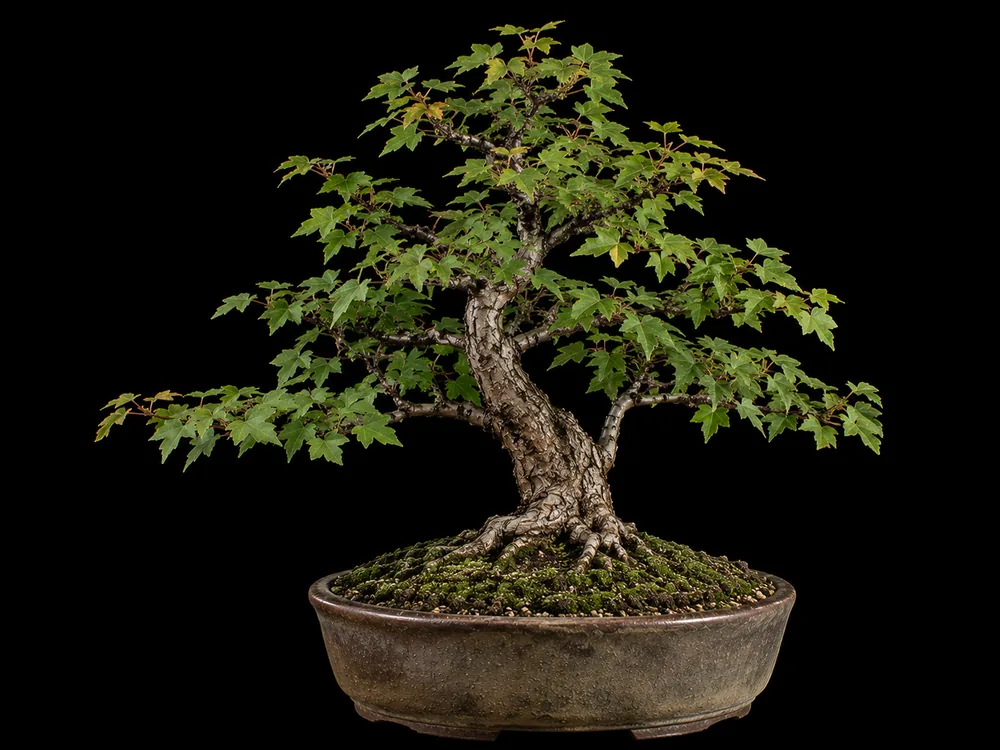
Trident Maple Bonsai Care
Acer buergerianum
2 Trident Maple bonsai in stock, from $88.95 Shipped direct from our nursery partners, with a 48-hour live-arrival guarantee. See the trees
Zones 5 to 9, outdoor only. One of the most rewarding and forgiving deciduous species. Most are lost to overwatering.
Sapindaceae (soapberry family; formerly Aceraceae) · Deciduous broadleaf tree; outdoor bonsai
Trident Maple quick reference
| USDA zones | 5–9 (commonly cited as ideal around zone 5; vigorous in warmer zones too) |
|---|---|
| Indoor / outdoor | Outdoor only — requires winter dormancy |
| Light | Full sun for compact, vigorous growth; tolerates heat better than Acer palmatum |
| Water | Keep evenly moist; a thirsty, vigorous drinker in summer — water generously but do not waterlog. Slightly to the wet side. |
| Soil | Free-draining mix, pH about 5–7 (e.g. akadama / pumice / lava) |
| Repot | Young trees yearly; established trees every 2–3 years, early spring before buds open |
| Frost | Hardy to roughly 28 °F (-2 °C) reliably; protect container roots below that — sustained hard freezes cause dieback in twigs and trunk |
| Mature height (as bonsai) | Tree to 20m in nature; bonsai often 20-60cm. |
| Growth rate | Fast (excellent for beginners). |
| Season of interest | Autumn for orange-red foliage; fine winter ramification. |
| Leaf reduction | Excellent; leaves reduce strongly with defoliation. |
| #1 cause of death | Overwatering / root rot; also winter root freeze and verticillium/anthracnose dieback |
Overview & Character
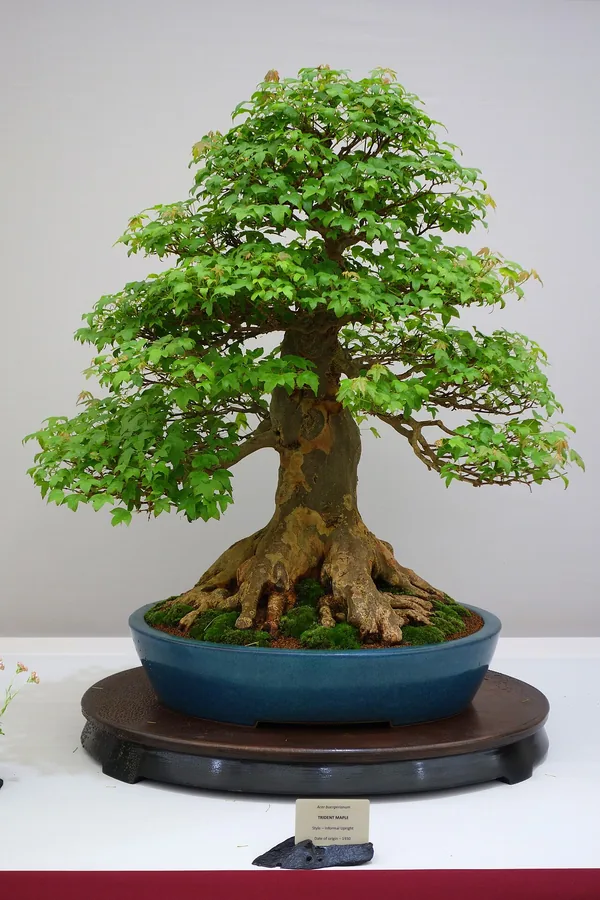
The trident maple is one of the most rewarding and forgiving deciduous species for bonsai, especially for developing thick trunks and powerful nebari (surface roots). Its three-lobed leaves (the "trident" shape) reduce well with leaf-pruning, it builds ramification quickly, and it produces strong, attractive surface roots that make it a favourite for root-over-rock plantings. Bark on older specimens flakes attractively in patches of grey, orange and brown. Autumn color ranges from yellow and orange to deep red.
Because it grows fast and back-buds freely (often even on old wood), the trident maple is excellent for trunk thickening, broom style, informal upright, group plantings and root-over-rock compositions. It tolerates hard work and recovers vigorously, making it a great species for intermediate growers building structure.
Identification
Foliage. Leaves are opposite (the maple signature) and distinctively three-lobed — the "trident" shape — with the three forward-pointing lobes shallow and triangular, margins entire to only slightly toothed, and a glossy dark green upper surface paler beneath. Blades are roughly 1.5–3 in (4–8 cm) long (smaller on bonsai). Autumn color runs yellow and orange to deep red.
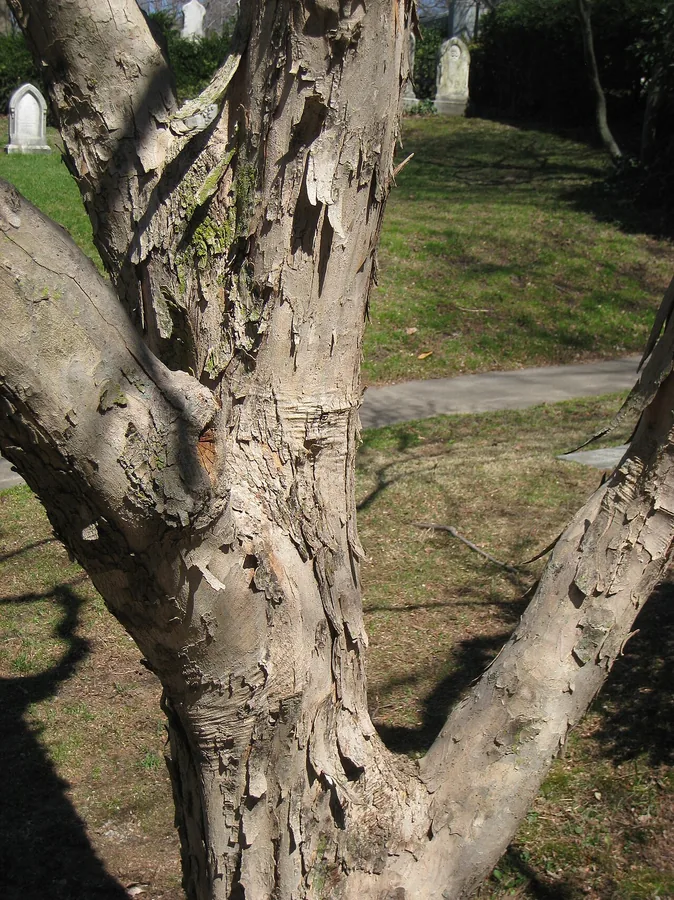
Bark & trunk. A major identifying feature: mature bark flakes and exfoliates in patches of grey, orange and brown, exposing lighter underbark. Trunks thicken readily and develop strong, fused surface roots (nebari) — the species famous for root-over-rock.
Growth habit / form. A vigorous, densely twiggy small tree that back-buds freely even on old wood.
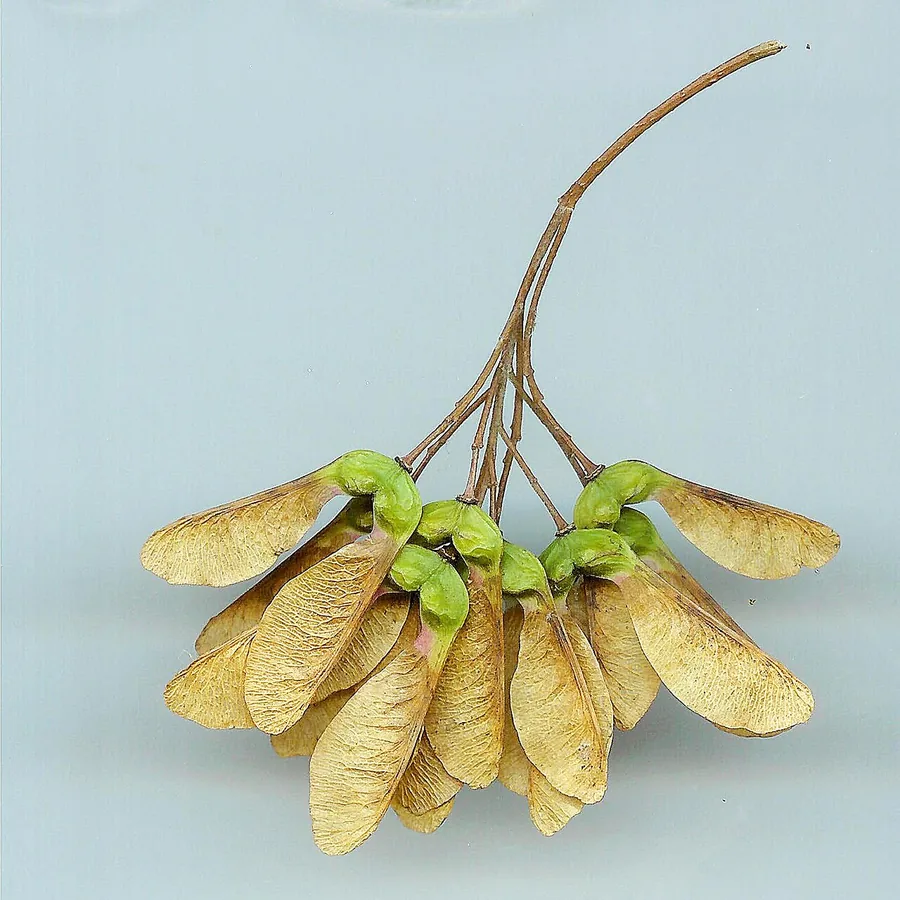
Flowers / fruit / seeds. Small yellow-green flowers in spring; paired winged samaras whose two wings are held close together, nearly parallel/upright (an angle much narrower than A. palmatum's widely splayed wings).
Look-alikes & how to tell them apart: Separated from Japanese maple by its 3 shallow lobes (vs. 5–9 deep lobes), nearly-entire leaf margins, and the narrow near-parallel samara angle. The flaking patchwork bark is also far more pronounced than on most Japanese maples. As with all maples, confirm via opposite leaves and paired samaras.
Climate & USDA Zone
Acer buergerianum is generally grown in USDA zones 5–9, with many references citing zone 5 as an ideal benchmark. Its preferred temperature band is roughly 50–86 °F (10–30 °C). It is somewhat less cold-hardy in a pot than Japanese maple: it dependably tolerates dips to around 28 °F (-2 °C), but sustained hard freezes below that can cause dieback not only in fine twigs but occasionally in branches and the trunk. It must have a winter dormancy and should be grown outdoors year-round, with root protection in cold spells.
Light
Give full sun. The trident maple handles heat and intense light considerably better than the Japanese maple, and full exposure produces short internodes, dense twigging and good autumn color. Only in extreme heat or for freshly leaf-pruned trees is light shade worth providing.
Watering
Trident maples are vigorous, thirsty drinkers and sit on the moist/wet side of the spectrum — but they are also notably sensitive to standing water. During the growing season they consume a great deal of water; daily watering is required, often twice a day in hot weather. The rule is "water generously, but never waterlog." Let the mix stay evenly moist; do not let it dry out completely, and do not leave it sodden, since the species is prone to root rot. Rainwater or low-calcium water is preferable to hard water.
Soil & Root Care
Use a well-draining mix with a pH between roughly 5 and 7 — a standard akadama/pumice/lava blend works well. Repot young trees yearly in spring before the buds open; established trees every two to three years, and large old specimens less often. Trident maples produce dense, vigorous root systems and tolerate substantial root reduction — you can remove up to about one third (sometimes more on very strong, young trees) at repotting. This species is ideal for developing flat, radial nebari; careful root arrangement at successive repots pays off enormously.
Feeding
Feed heavily during development to drive trunk and branch thickening: a balanced organic fertilizer applied regularly from when spring leaves harden through to autumn. For refined, finished trees reduce nitrogen to keep leaves small and internodes short. Stop or reduce feeding right after repotting and ease off in the peak of summer heat. A potassium-rich autumn feed helps harden growth before winter.
Pruning & Styling
The trident maple ramifies quickly. Let new shoots extend to several pairs of leaves, then cut back to one or two pairs; repeat through the season. Leaf-pruning / partial defoliation in early summer on vigorous trees reduces leaf size, balances vigour, encourages a finer second flush and improves autumn color. Because the species back-buds readily even on older wood, hard structural cuts in late winter are usually rewarded with new shoots — this makes trunk chops and rebuilding very practical. Seal larger cuts with cut paste.
Wire while branches are young and flexible; the bark thickens and the wood lignifies fast, so check wire often and remove it before it bites in, as marks on this species can be slow to disappear. Trident maple is the classic candidate for root-over-rock: roots are wrapped over stone, grown in, and gradually exposed over years.
Propagation & Cuttings
Ease: Easy. Best methods: seed; cuttings; air-layering.
Acer buergerianum is one of the easiest maples to propagate — seed sown after ~2–3 months cold stratification germinates well; softwood cuttings in early summer under mist with IBA root at good rates; and air-layering in spring is very reliable and the go-to for building trunk size and excellent radial nebari. For bonsai it is a top deciduous subject: vigorous, strongly back-budding, fine-ramifying, with small three-lobed leaves and superb surface roots — cuttings and layers develop fast.
Pests
Aphids on soft new growth, scale insects, caterpillars and red spider mites can all occur, mites especially in hot, dry, still air. Inspect regularly, keep airflow good, and treat early with insecticidal soap, horticultural oil or an appropriate systemic.
Disease, Fungus & Infection
Root rot is the most common disease and follows overwatering or poorly draining soil. Verticillium wilt and anthracnose can cause spring growth to emerge and then suddenly die back — verticillium is essentially untreatable and spreads on tools, so sterilise between trees. Powdery mildew and leaf-spot fungi appear in humid, stagnant conditions. Prevention rests on free-draining soil, correct watering, good airflow, clean tools and sealed cuts.
Most Common Causes of Death
1. Overwatering / root rot. Vigorous drinker but rot-prone in soggy soil; free-draining mix and water when the surface dries. 2. Winter root freeze. Potted roots are less hardy than the top; shelter the pot in hard freezes. 3. Root drying / underwatering. Strong summer thirst; a dry-out causes scorch and dieback — water diligently. 4. Leaf scorch / verticillium. Afternoon shade in extreme heat; sterilize tools and seal cuts to avoid wilt. 5. Wire scarring; indoor keeping. Bark thickens fast and wire bites quickly — check often; grow outdoors with dormancy.
Seasonal Calendar
- Spring: Repot if due (early — great for root-over-rock/nebari work); resume feeding; shaping.
- Summer: Even moisture (daily in heat); selective defoliation on vigorous trees; check wire.
- Autumn: Fall color; taper feeding/water; structural pruning after leaf drop.
- Winter: Dormant; shelter potted roots; keep soil from fully drying.
Close-up photo reference
Compare your tree against these to confirm the species and spot problems early.
,_Mount_Auburn_Cemetery.JPG)


Sources
Buy a Trident Maple bonsai
- All species
- Shop bonsai trees, tools & supplies
- How to Water a Bonsai (Without Killing It)
- Bonsai Soil: What to Buy, What to Mix, and What It Costs
- Why Bonsai Die After Repotting: Diagnosing a Failed Repot
- Pruning vs. Pinching: Shaping Your Bonsai
- Overwintering Bonsai: Cold-Season Care
- Indoor Bonsai Light and Humidity: Making a Windowsill Actually Work
- Root Rot on bonsai
- Overwatering on bonsai
- Underwatering (Drought Stress) on bonsai
- Winter / Frost Damage on bonsai
- Leaf Scorch / Sunburn on bonsai
- Amur Maple bonsai care
- Field Maple bonsai care
- Red Maple bonsai care
- Sugar Maple bonsai care