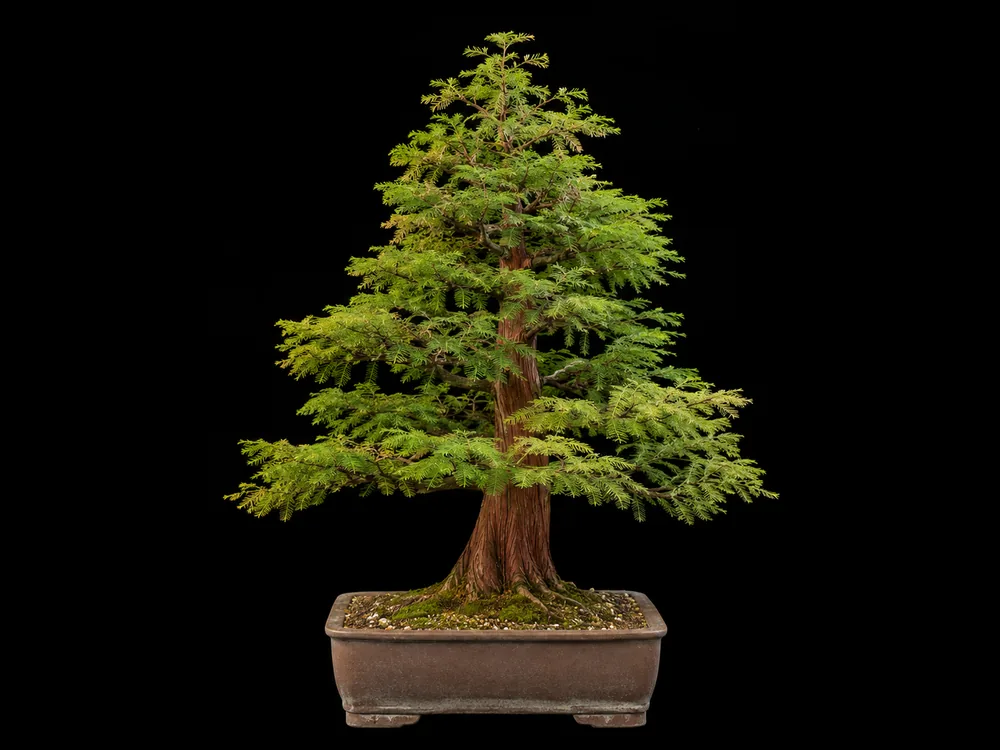
Dawn Redwood Bonsai Care
Metasequoia glyptostroboides
6 Dawn Redwood bonsai in stock, from $49.95 Shipped direct from our nursery partners, with a 48-hour live-arrival guarantee. See the trees
Zones 4a to 8b. A living fossil, known first from fossils and presumed extinct until living trees were discovered. Most are lost to drying out.
Cupressaceae · Deciduous conifer (drops its needles every autumn)
Dawn Redwood quick reference
| USDA zones | 4a–8b (some cultivars to zone 9) |
|---|---|
| Indoor / outdoor | Strictly outdoor — needs full seasons and winter dormancy |
| Light | Full sun for vigorous, healthy growth; light afternoon shade only in extreme heat |
| Water | Strongly water-loving — tolerates wet feet far better than most conifers; never let it dry out |
| Soil | Moisture-retentive yet draining; tolerates heavier, wetter mixes than pines/junipers |
| Repot | Young trees yearly; older trees every 2–3 years, in early spring (it grows fast and roots vigorously) |
| Frost | Excellent when dormant; protect potted roots in severe freezes |
| Mature height (as bonsai) | Tree to 45 m; kept 40-100 cm as bonsai |
| Growth rate | Fast |
| Season of interest | Fresh spring green, russet autumn colour |
| Leaf reduction | Good - deciduous, fine foliage |
| #1 cause of death | Letting the rootball dry out (especially in summer); root rot is possible but far less likely than in other conifers |
Overview & Character
The Dawn Redwood is a living fossil — known first from fossils and presumed extinct until living trees were discovered in China in the 1940s. As a bonsai it is fast, forgiving, and spectacular through the seasons: soft, feathery, fresh-green needles emerge in spring, deepen through summer, then turn glowing russet-orange and bronze before dropping in autumn to reveal a finely twigged winter silhouette. It is closely related to and often confused with the bald cypress; a quick tell is that Dawn Redwood's needles and shoots are arranged in opposite pairs, whereas bald cypress's are alternate.
Dawn Redwood is one of the fastest-growing trees usable for bonsai, which makes it ideal for building trunk girth and developing material quickly. It naturally forms a strong, straight, tapering trunk with handsome reddish, fibrous, fissured bark, and is superb for formal upright and forest/group plantings. Mature trunks often develop attractive buttressing and fluting at the base.
Identification
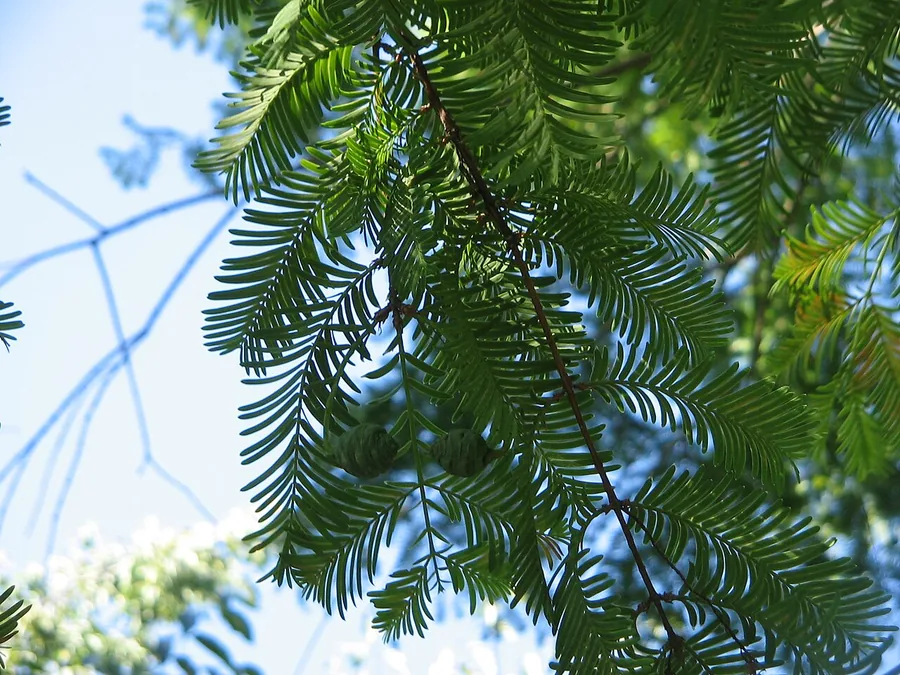
Foliage (the giveaway): Deciduous, soft and feathery. The defining trait: needles and the small side shoots are arranged in OPPOSITE pairs along the twig (each pair directly across from the other), giving a neat, symmetrical, two-ranked feathery look. Bright fresh-green in spring, deepening in summer, turning russet-orange/bronze in autumn before the whole shoots drop.
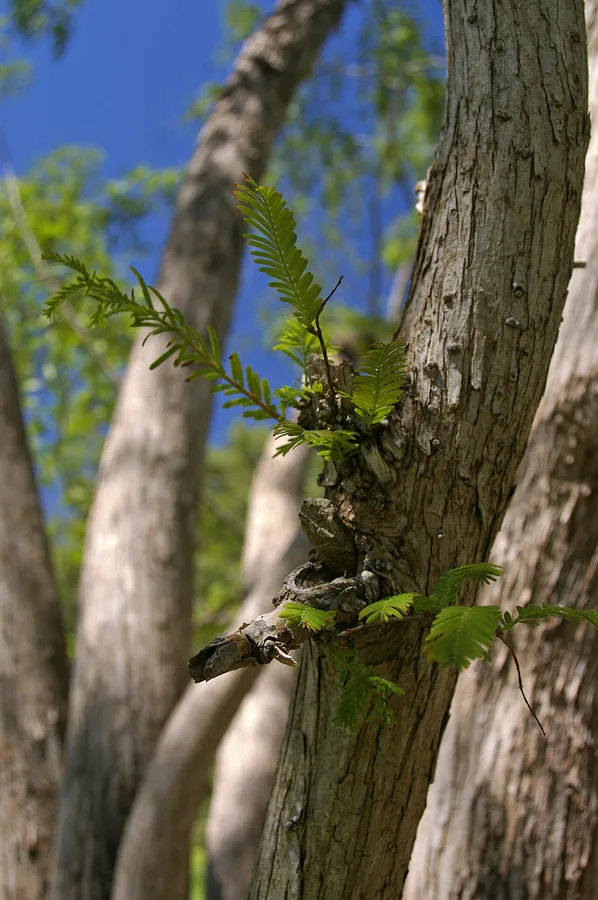
Bark & trunk: Reddish-brown, fibrous, fissured; mature trunks develop strong fluting and armpit-like depressions where branches meet the trunk plus buttressing at the base.
Growth habit / form: Fast-growing, strongly upright, conical with a straight tapering trunk. Cones: Small, pendent, globular-to-oblong, about 1.5–2.5 cm, on long stalks.
Look-alikes & how to tell them apart: The classic confusion is with Bald Cypress (Taxodium distichum). The reliable tell is needle/shoot arrangement: Dawn Redwood = OPPOSITE pairs; Bald Cypress = ALTERNATE (staggered). Dawn Redwood also has the branch "armpit" depressions, while Bald Cypress produces "knees" (pneumatophores) and a more strongly buttressed swamp base.
Climate & USDA Zone
Metasequoia glyptostroboides is hardy across USDA zones 4–8 (some selections to zone 9) and is a true outdoor tree that needs the full cycle of seasons, including a cold winter dormancy. It tolerates a wide climate range, from cold-winter regions to warm summers, provided it gets ample water. Its natural habitat is moist valley bottoms and streamsides, which explains its love of water and its tolerance of damp ground.
Light
Give Dawn Redwood full sun for the strongest, healthiest growth and the best autumn colour. It is a vigorous sun-lover. In climates with very intense summer heat, light afternoon shade can reduce water stress and prevent the delicate foliage from scorching, but in most temperate climates more sun is better.
Watering
Dawn Redwood is strongly water-loving and tolerates "wet feet" far better than pines, junipers, larch, or most other conifers. In the wild it grows in moist valley floors and along streams, so it is built to drink heavily.
- In spring and summer it needs a great deal of water — often twice a day in heat. There is little danger of overwatering during the growing season provided the soil drains, and many growers stand the pot in a shallow tray of water during the hottest months to keep the moisture-hungry roots satisfied.
- The rootball should never be allowed to dry out. Drying out is by far the most likely way to harm or kill a Dawn Redwood — the opposite of the worry you'd have with a pine or juniper.
- After the leaves drop in autumn and through winter dormancy, the tree needs much less water. Reduce to keeping the roots merely damp, not wet. Cold, stagnant, saturated soil over a dormant root system is the only realistic way to cause root rot in this species, so ease off in winter.
In short: in the growing season, water lavishly and don't fear wet feet; in dormancy, just keep it damp.
Soil & Root Care
Because it loves moisture, Dawn Redwood is happy in a more moisture-retentive substrate than most conifers — it does not demand the very sharp, fast-draining mix that pines and junipers need. A blend that holds water well while still allowing some drainage (akadama-based, with organic content acceptable) suits it. It will also tolerate heavier, wetter conditions that would harm a juniper. Still aim for some drainage so the roots get oxygen, especially heading into winter.
Repot in early spring before the buds open. Dawn Redwood is an aggressive, fast root-producer, so young trees often need yearly repotting and older trees every 2–3 years to prevent the pot from filling solid with roots. It tolerates substantial root pruning well thanks to its vigour.
Feeding
Feed generously through the growing season to fuel its fast growth — from spring after the foliage emerges into autumn. A balanced organic fertiliser works well; this is a hungry tree. Reduce or stop feeding as the tree approaches dormancy, and do not feed during winter or immediately after repotting until the tree is clearly growing again.
Pruning & Styling
- Vigorous growth, frequent trimming: Because it grows so fast, Dawn Redwood needs regular trimming in the growing season to keep its shape and build ramification. Cut back extending shoots through spring and summer.
- Structural pruning: Major structural cuts are best made in autumn after leaf drop or in early spring before bud-break, when the branch structure is clearly visible. Note that large wounds can be slow to heal and may leave scars, so plan big cuts carefully.
- Back-budding: It buds back readily, including on older wood, making it easy to rebuild and densify branches.
- Wiring: The wood is somewhat soft and the tree thickens extremely fast, so wire bites in very quickly — wire in the dormant season and check constantly, removing wire before it scars. Many growers rely on clip-and-grow more than heavy wiring.
- Style note: It resists being styled into low, spreading shapes; it naturally wants to be a tall, upright, conical tree, so work with that habit (formal upright, forest).
Propagation & Cuttings
Ease: Very easy. Best methods: hardwood and softwood cuttings; seed.
Metasequoia is one of the easiest conifers to propagate. Hardwood cuttings in late winter and softwood cuttings in summer both root fast and reliably with light hormone; even large cuttings take. Seed germinates readily (surface-sow fresh after brief cold stratification), though viability varies. It grows very quickly. For bonsai this vigour means rapid trunk development and easy replacement material; cutting-grown trees establish fast and are ideal for formal upright and group plantings.
Pests
Dawn Redwood is remarkably trouble-free and is rarely attacked by pests. Occasional issues can include spider mites in hot, dry spells, and general sap-suckers (aphids, scale) now and then. Inspect periodically, rinse the foliage, and treat the rare infestation with horticultural oil or an appropriate product. There is, by and large, very little that seriously threatens a healthy Dawn Redwood.
Disease, Fungus & Infection
Disease is uncommon in Dawn Redwood. Yellowing or browning foliage is far more often a cultural problem — overwatering in dormancy, underwatering in growth, nutrient deficiency, or scorch — than an infection. Fungal problems and root rot are possible but require genuinely waterlogged, stagnant, cold conditions to take hold. Keep the soil draining (especially in winter), maintain airflow, remove any affected material, and the species will generally stay healthy. If a fungal issue does appear, treat with a suitable fungicide and correct the underlying watering/drainage.
Most Common Causes of Death
1. Drying out. The dominant killer — a fast, thirsty, water-loving deciduous conifer; never let the pot dry, water heavily in summer (a water tray helps). 2. Root rot only if stagnant. It tolerates very wet conditions, but truly stagnant/airless soil can still rot roots — keep oxygenated. 3. Insufficient sun. Needs full sun for strong growth. 4. Winter root freeze. Hardy but shelter potted roots in severe freezes. 5. Wrong pruning of opposite buds. Buds/branches are opposite — prune with that symmetry in mind to avoid stiff bar-branches.
Seasonal Calendar
- Spring: Fast flush; repot if due (early); resume heavy feeding; rapid growth — frequent trimming.
- Summer: Full sun; water very generously (tray method fine); frequent trimming for ramification.
- Autumn: Russet/pink autumn color before needle drop (deciduous conifer); taper feeding.
- Winter: Bare dormancy outdoors; keep moist (not bone-dry); protect potted roots; structural pruning while leafless.
Close-up photo reference
Compare your tree against these to confirm the species and spot problems early.


Sources
Buy a Dawn Redwood bonsai
- Redwood Bonsai, 5 Years Old (Metasequoia glyptostroboides) — $49.95
- Redwood Group Bonsai, Three Tree Forest, 8 Years Old (Metasequoia glyptostroboides) — $134.95
- Redwood Bonsai, Coiled Trunk, 13 Years Old (Metasequoia glyptostroboides) — $195.00
- Redwood Bonsai, Trained, 14 Years Old (Metasequoia glyptostroboides) — $235.00
- Redwood 5 Group Bonsai, Five Tree Forest, 8 Years Old (Metasequoia glyptostroboides) — $281.95
- Dawn Redwood 9 Bonsai, Forest Group, 8 Years Old (Metasequoia glyptostrobides) — $295.00
- All species
- Shop bonsai trees, tools & supplies
- How to Water a Bonsai (Without Killing It)
- Bonsai Soil: What to Buy, What to Mix, and What It Costs
- Why Bonsai Die After Repotting: Diagnosing a Failed Repot
- Pruning vs. Pinching: Shaping Your Bonsai
- Overwintering Bonsai: Cold-Season Care
- Indoor Bonsai Light and Humidity: Making a Windowsill Actually Work
- Root Rot on bonsai
- Overwatering on bonsai
- Underwatering (Drought Stress) on bonsai
- Winter / Frost Damage on bonsai
- Leaf Scorch / Sunburn on bonsai
- European Larch bonsai care
- Bald Cypress bonsai care
- Ginkgo (Maidenhair Tree) bonsai care
- American Elm bonsai care