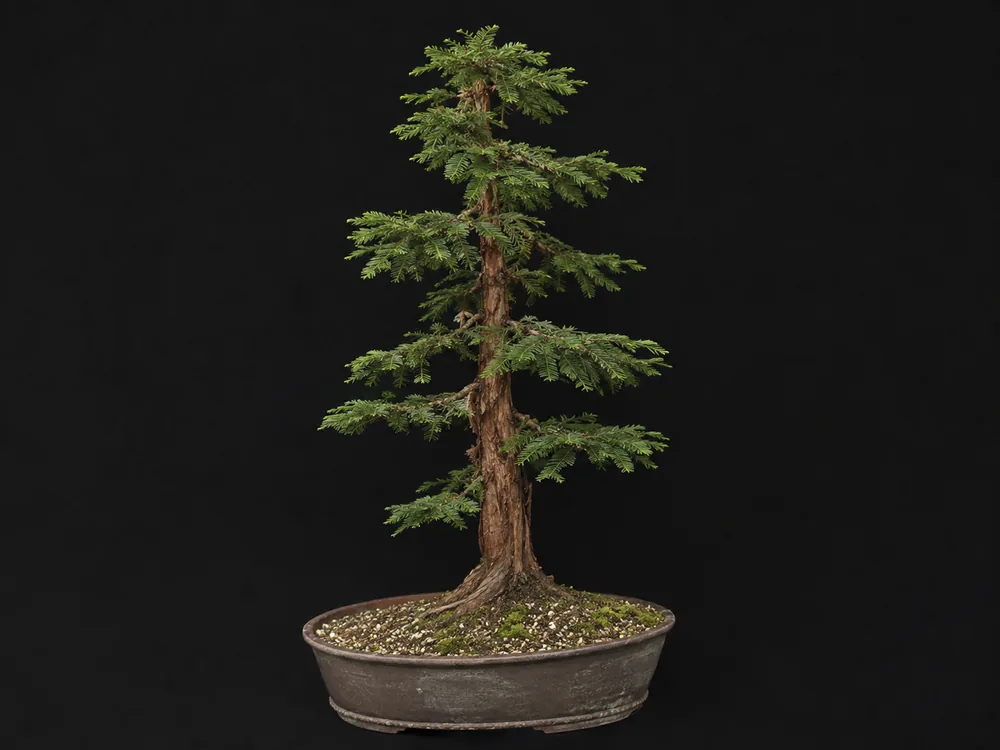
Coast Redwood Bonsai Care
Sequoia sempervirens
Zones 7 to 9, outdoor. One of the tallest living things on Earth, native to the fog belt of the Pacific coast. Most are lost to drying out.
Cupressaceae (cypress family) · Evergreen coniferous tree
Coast Redwood quick reference
| USDA zones | 7–9 (roughly 8–9 ideal; needs protection below freezing) |
|---|---|
| Indoor / outdoor | Outdoor tree; tolerates short indoor stays only with very high humidity |
| Light | Full sun to partial shade; light afternoon shade in hot, dry climates |
| Water | WET — likes consistent, even moisture and high humidity; never let it dry out, but never waterlogged |
| Soil | Free-draining but moisture-retentive mix (akadama/pumice/lava with a bit more organic matter than for junipers) |
| Repot | Young trees every 1–2 years; older trees every 2–4 years, early spring |
| Frost | Low — damaged below 32°F (0°C); shelter in winter in cold climates |
| Mature height (as bonsai) | Tree to 110 m; kept 40-90 cm as bonsai |
| Growth rate | Fast |
| Season of interest | Year-round evergreen, fibrous red bark |
| Leaf reduction | Good - foliage sprays reduce with pruning |
| #1 cause of death | Low humidity / drying out (foliage desiccation), followed by root rot from waterlogging and hard freezes |
Overview & Character
The Coast Redwood is one of the tallest living things on Earth, native to the fog belt of the Pacific coast from southern Oregon to central California. As a bonsai it is prized for its straight, columnar trunk, fibrous reddish bark, soft feathery evergreen foliage, and a naturally formal, towering presence that lends itself beautifully to formal upright and group/forest plantings.
A key trait that makes redwood a forgiving and rewarding bonsai is that it back-buds readily — new shoots emerge freely from older wood and even from the base, so it tolerates and recovers from hard pruning better than many conifers. The trade-off is that it evolved in a cool, foggy, humid, consistently moist environment, so it is decidedly not a dry-loving tree. The single most important thing to understand about redwood is that it wants moisture in the soil and humidity in the air.
Identification
FOLIAGE: Evergreen, soft and feathery. Needles are flat, linear, and arranged in two rows (somewhat yew-like), dark green above with two whitish stomatal bands beneath. Unlike its deciduous cousin the Dawn Redwood (Metasequoia), Coast Redwood keeps its foliage year-round.
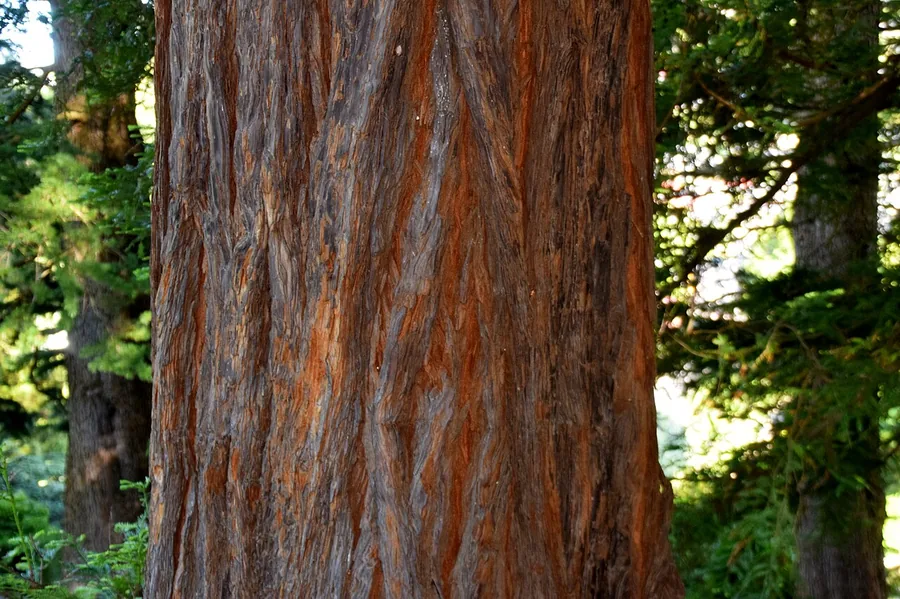
BARK & TRUNK: Trunk is straight and strongly tapering. Bark is thick, fibrous, soft, and reddish-brown, becoming deeply furrowed with age — one of the species' most ornamental features.
GROWTH HABIT/FORM: Strongly upright, columnar, and apically dominant, with a single straight leader. Suckers freely from the base and lignotuber, which can be used to create clumps or new trunks.
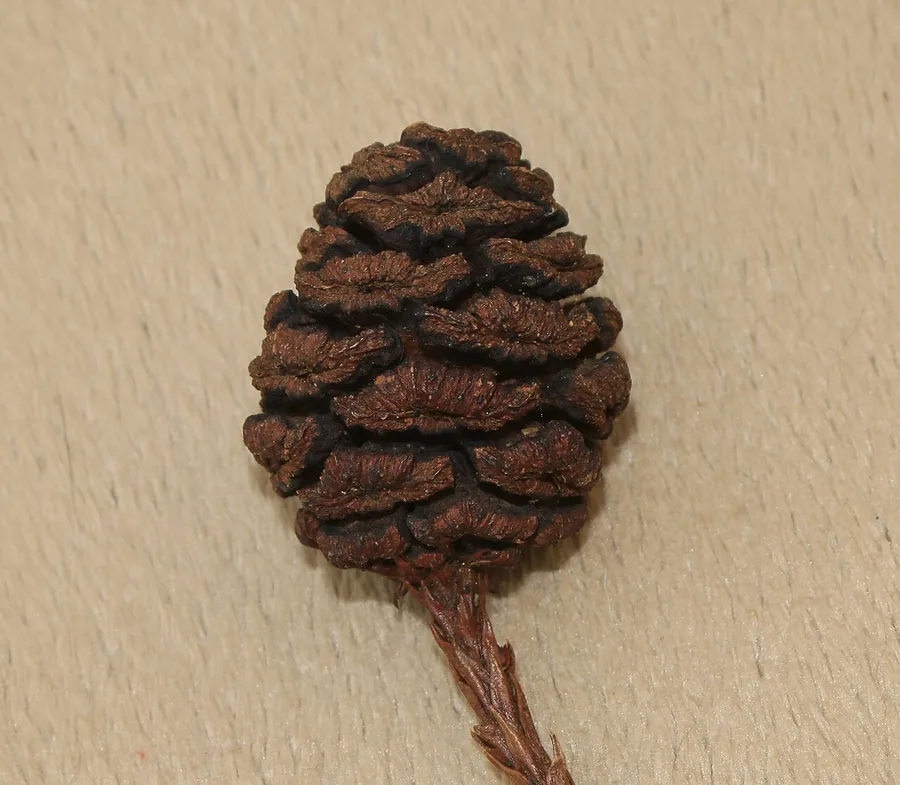
FLOWERS/FRUIT/CONES: Monoecious. Small cones about 1.5–3.5 cm long, ripening in one season. Cones are rarely a styling feature on bonsai.
Look-alikes & how to tell them apart: Most often confused with **Dawn Redwood (Metasequoia glyptostroboides), which is deciduous (drops its needles in autumn, often turning rusty-orange) and has opposite needle and branch arrangement, whereas Coast Redwood is evergreen with alternate arrangement. Also confused with Bald Cypress (Taxodium)**, which is deciduous and swampy/water-loving with knees. If it holds soft, flat, two-ranked needles through winter, it is Coast Redwood.
Climate & USDA Zone
Best in USDA zones 7–9, thriving in the mild, humid, fog-influenced conditions of its native coastal range. It dislikes both hard frost and hot, dry, windy air. In hot interior climates it needs afternoon shade and extra humidity; in cold climates it must be sheltered (cold frame, unheated greenhouse, or garage) once temperatures approach freezing. It is an outdoor tree that needs the seasons, but it does not tolerate deep cold.
Light
Full sun to partial shade. In cool coastal or humid climates it takes full sun well. In hot, dry, or interior climates, give it morning sun and afternoon shade to prevent foliage scorch and moisture stress. Indoors (only as a short-term measure) it needs the brightest possible position plus added humidity.
Watering
This is a WET-side species. Keep the soil consistently and evenly moist — think of the constant fog drip of its native forest. Water when the top layer of soil begins to dry; in summer this often means daily or even twice daily. Never let the rootball dry out fully — desiccation is the fastest way to kill a redwood. At the same time, avoid standing water and constant sogginess, which causes root rot, so the mix must drain freely even while staying moist.
Humidity matters as much as soil moisture. In dry climates, mist the foliage and use a humidity tray; the foliage mass loses water rapidly to dry wind, and low humidity is the classic killer of larger redwood bonsai. Use rainwater or soft water where possible.
Soil & Root Care
Use a free-draining inorganic-based mix (akadama, pumice, lava) but lean slightly more moisture-retentive than you would for junipers — a higher proportion of akadama or a little composted bark helps hold the consistent moisture redwoods want. Roots are vigorous and fibrous. Repot in early spring as buds move: young trees every 1–2 years, older specimens every 2–4 years. Prune roots moderately; redwood recovers well but should not be bare-rooted hard in one go.
Feeding
Feed regularly through the growing season (spring to early autumn). Use a balanced organic or slow-release fertilizer; redwoods are vigorous and respond to steady feeding with strong growth and good back-budding. Taper off in late autumn. Avoid heavy high-nitrogen feeding late in the season, which produces soft, frost-tender growth.
Pruning & Styling
Redwood back-buds strongly, making it one of the more forgiving conifers to develop. Prune to shape in spring through summer; you can cut back to older wood and expect new buds to break, which is excellent for building taper and ramification. Pinch or trim soft new growth to maintain pads and density, but avoid removing all the foliage from a branch at once. Wire carefully — branches are flexible when young but the soft bark marks easily, so pad wire and watch for bite-in. Formal upright, broom, and group/forest styles suit its naturally tall, straight character. The free basal suckering can be harnessed for raft and clump plantings.
Propagation & Cuttings
Ease: Easy from cuttings (unusual for a conifer). Best methods: cuttings; seed.
Unlike most conifers, Sequoia sempervirens roots well from cuttings — take semi-hardwood cuttings in late summer to winter, dip in IBA, and keep humid; rooting is good. It also sprouts vigorously from the base and stumps (basal burls), so rooted suckers are easy. Seed germinates but viability is low; surface-sow fresh seed after brief cold stratification. For bonsai, cuttings clone good forms and the strong basal sprouting supports formal upright and group plantings.
Pests
Generally robust, but watch for:
- Spider mites — especially in hot, dry, low-humidity conditions; cause stippling and bronzing of foliage. Increasing humidity helps prevent them.
- Aphids — on soft new growth.
- Scale insects — on stems and foliage.
- Mealybugs — particularly on stressed or indoor plants.
Treat with horticultural oil, insecticidal soap, or appropriate systemic, and improve airflow and humidity to reduce mite pressure.
Disease, Fungus & Infection
- **Root rot (Phytophthora and others)** — the main disease risk, caused by waterlogged or poorly drained soil. Prevent with free-draining mix and by avoiding constant saturation.
- Fungal needle blights / canker — promoted by poor airflow and persistent wetness on foliage; improve ventilation and avoid crowding.
- Botrytis — can affect dense, damp foliage in stagnant, humid, still air; ensure air movement.
The balance to strike: high ambient humidity is good, but stagnant trapped moisture around the foliage and roots invites fungus. Aim for moist soil and humid but moving air.
Most Common Causes of Death
1. Low humidity / foliage desiccation — the classic redwood killer, especially for larger trees exposed to dry wind. Prevention: mist, use a humidity tray, shelter from drying winds, site in a humid microclimate. 2. Drying out the rootball — even one missed watering in summer heat can be fatal. Prevention: check soil daily in the growing season; water before the soil dries fully; never let it go bone dry. 3. Root rot from waterlogging — constant sogginess in a poorly draining mix suffocates roots. Prevention: use a free-draining mix and water by checking the soil, not by clock alone. 4. Hard freeze damage — roots and branches die back below freezing. Prevention: shelter in a cold frame, unheated greenhouse, or garage when temperatures approach 32°F (0°C). 5. Heat and sun scorch — in hot, dry, interior climates foliage burns and the tree stresses. Prevention: afternoon shade and extra humidity in summer. 6. Keeping it indoors long-term — typical home air is too dry and too dark, leading to slow decline. Prevention: grow it outdoors; only bring it in briefly and only with strong light and high humidity. 7. Spider mite infestation — thrives in dry conditions and can defoliate a weakened tree. Prevention: maintain humidity, inspect regularly, treat early.
Seasonal Calendar
- Spring (Mar–May): Repot as buds move. Resume feeding. Begin structural and developmental pruning; back-budding is strong now. Water increases as growth accelerates.
- Summer (Jun–Aug): Peak watering — possibly daily or twice daily. Maintain humidity and provide afternoon shade in hot climates. Pinch and trim to refine pads. Continue feeding. Watch for spider mites.
- Autumn (Sep–Nov): Reduce feeding and taper off by late autumn. Light tidying only. Begin preparing winter shelter as nights cool.
- Winter (Dec–Feb): Protect from frost — cold frame, unheated greenhouse, or garage. Keep soil lightly moist (not dry, not soaked). No feeding; minimal pruning.
Close-up photo reference
Compare your tree against these to confirm the species and spot problems early.


Sources
- Redwood Bonsai Guide — Bonsai Mirai
- Care guide for Redwood Bonsai (Metasequoia and Sequoia) — Bonsai Empire
- Coastal Redwood Bonsai Care — Eastern Leaf
- An Extensive Care Guide for Redwood Bonsai — Hooked on Bonsai
Where to buy a Coast Redwood bonsai
We don’t stock Coast Redwood at the moment. These species need similar care and we have them now — they are the closest match in our catalogue.
- Buddhist Pine — similar care, in stock now
- Dawn Redwood — similar care, in stock now
Browse all bonsai trees for sale or find a species matched to your climate and space.
- All species
- Shop bonsai trees, tools & supplies
- How to Water a Bonsai (Without Killing It)
- Bonsai Soil: What to Buy, What to Mix, and What It Costs
- Why Bonsai Die After Repotting: Diagnosing a Failed Repot
- Pruning vs. Pinching: Shaping Your Bonsai
- Overwintering Bonsai: Cold-Season Care
- Indoor Bonsai Light and Humidity: Making a Windowsill Actually Work
- Root Rot on bonsai
- Underwatering (Drought Stress) on bonsai
- Winter / Frost Damage on bonsai
- Leaf Scorch / Sunburn on bonsai
- Spider Mites on bonsai
- Buddhist Pine bonsai care
- Dawn Redwood bonsai care
- Gold Arborvitae bonsai care
- Japanese Yew bonsai care