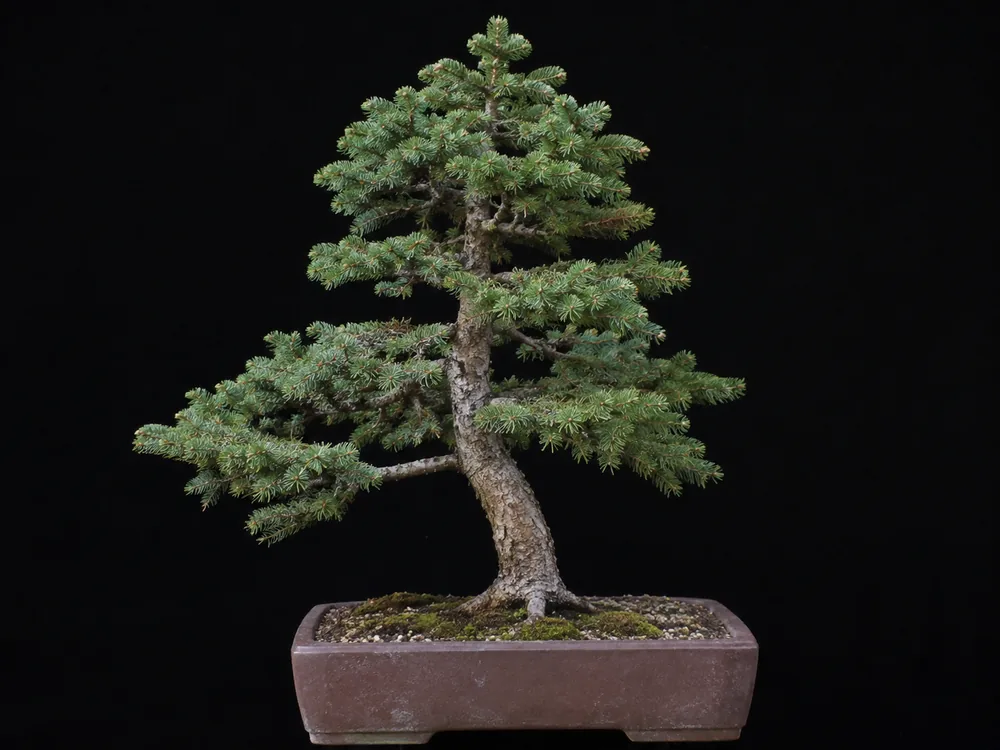
Norway Spruce Bonsai Care
Picea abies
Zones 2 to 7, outdoor only. A hardy, widely available European spruce (the classic Christmas tree) that makes. Most are lost to overwatering.
Pinaceae (pine family) · Evergreen coniferous tree
Norway Spruce quick reference
| USDA zones | 2–7 |
|---|---|
| Indoor / outdoor | Outdoor only — full sun, fresh air, winter cold |
| Light | Full sun; light shade only in fierce heat |
| Water | Evenly moist — water when surface dries; never soggy/dry |
| Soil | Free-draining bonsai mix |
| Repot | Every 2–4 years, early spring |
| Frost | Very hardy; needs dormancy; shelter potted roots in hard freeze |
| Mature height (as bonsai) | 35-55m wild; 30-70cm as bonsai |
| Growth rate | Moderate; back-buds fairly well |
| Season of interest | Year-round; pendulous cones; winter form |
| Leaf reduction | Needles reduce well with pinching new growth |
| #1 cause of death | Cutting to bare wood (no back-bud); root rot; skipped dormancy |
Overview & Character
The Norway Spruce is a hardy, widely available European spruce (the classic Christmas tree) that makes an approachable, beginner-friendly conifer bonsai, with glossy needles, reddish bark, and neat layered branching. Dwarf cultivars are common and well suited to bonsai.
It wants full sun, even moisture, and a genuine winter cold dormancy — skipping dormancy slowly kills it. The key technical points: spruce form whorls of several branches at a node (remove all but one to avoid inverse taper/swelling), and they do not back-bud on old bare wood, so always leave needles and buds on branches you keep and refine by pinching soft spring growth.
Identification
Foliage: Stiff, four-sided needles ~1–2.5 cm borne singly on tiny peg-like bases (pulvini) that stay on the twig after needles fall, making shoots rough; glossy deep green.
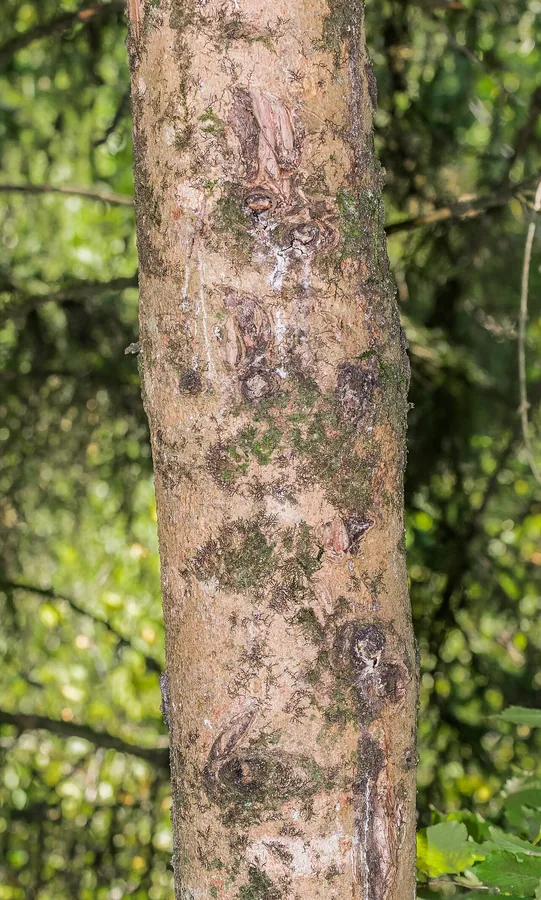
Bark & trunk: Reddish-brown, flaking into thin scales with age.
Growth habit / form: Upright with whorled, layered, often slightly drooping branches; suits formal/informal upright and forest plantings.
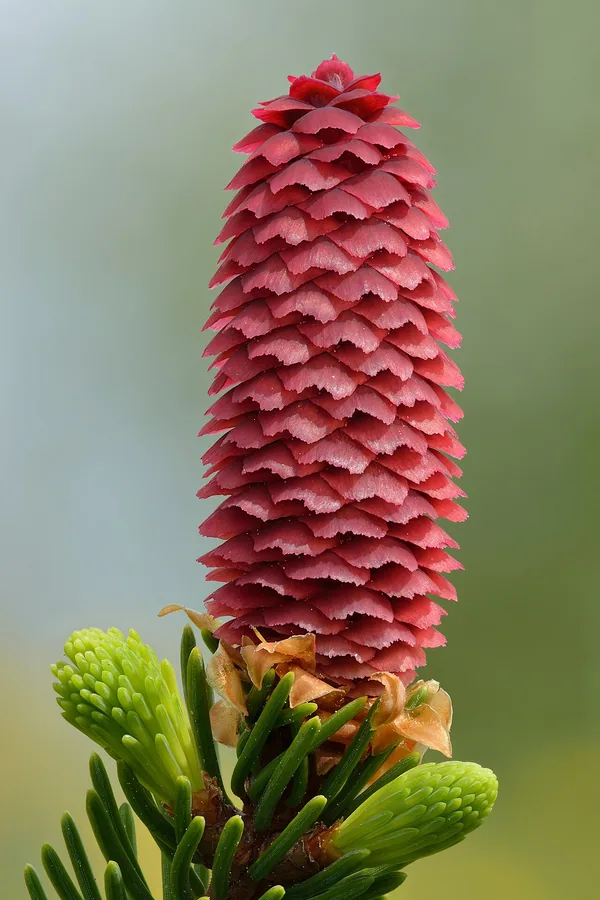
Flowers / fruit: Pendulous, the largest cones of any spruce (~10–18 cm), ripening light brown.
Look-alikes & how to tell them apart: Spruce vs fir/hemlock: spruce has peg-like needle bases (rough twigs) and pendulous whole cones; Norway Spruce specifically has the longest, hanging cones and drooping branchlets. Needles borne singly separate it from bundled-needle pines.
Climate & USDA Zone
Very hardy in USDA zones 2–7. Needs full sun, fresh air, and a real winter cold period; grown outdoors year-round. Skipping its required dormancy causes slow decline. Shelter potted (evergreen) roots from hard freeze + drying wind.
Light
Full sun for compact growth, color, and bud strength; light afternoon shade only in extreme summer heat to prevent needle scorch on a potted tree.
Watering
Keep evenly moist — water thoroughly when the surface dries; never soggy, never bone-dry.
- Often once daily in the growing season, twice in hot windy weather.
- It enjoys consistent moisture but dislikes stagnation; sharp drainage is important.
- In winter water less but never let the rootball dry out (evergreen desiccation risk).
Soil & Root Care
Soil: A free-draining bonsai mix (akadama / pumice / lava), moisture-retentive enough for even moisture.
Repotting:
- Frequency: every 2–4 years (young more often).
- Timing: early spring as buds begin to move.
- Remove up to ~1/3 of roots; do not bare-root; keep some old soil.
- Aftercare: shelter from sun/wind/frost; keep evenly moist while recovering.
Feeding
Apply solid organic fertilizer every ~4 weeks, or a weekly balanced liquid feed, through the growing season; foliar feeding deepens needle color. Ease nitrogen late season. Don't feed freshly repotted or dormant trees.
Pruning & Styling
- Whorl management: spruce throw several branches from one node — leave only one to avoid swelling and inverse taper.
- Pinch soft new shoots in spring while tender to control length and build density (pinch, don't cut, to avoid browned tips).
- No back-budding on bare wood — always leave needles/buds on branches you keep; shorten only to a twig that carries foliage. Structural pruning is best in late spring as buds push and cuts heal fast.
- Wiring: branches are workable; protect the bark; best in the dormant period.
- Suits formal/informal upright and forest plantings.
Propagation & Cuttings
Ease: Difficult from cuttings. Best methods: seed; collected.
Picea abies is grown from seed — cold-moist stratify ~1–2 months and sow in spring; germination is good and it's very hardy, but seedlings are slow. Cuttings root poorly; dwarf cultivars ('Little Gem') are grafted. It is widely collected as alpine yamadori. For bonsai, seedlings, grafted dwarfs, or collected trees are the routes; spruce back-buds modestly, so keep inner growth and refine the layered pads with careful pinching.
Pests
- Spider mites (hot, dry conditions — a major spruce pest)
- Spruce aphids (can cause sudden needle drop)
- Adelgids (woolly, distort growth/galls)
- Scale insects
Treat with horticultural oil, insecticidal soap, or appropriate systemics; catch infestations early.
Disease, Fungus & Infection
- **Root rot (Phytophthora / Pythium)** — from overwatering/poor drainage.
- **Needle cast fungi (Rhizosphaera, etc.)** — needle browning/drop in damp, crowded, low-airflow conditions; improve airflow, remove affected needles.
- Winter desiccation — browning from frozen roots + transpiring foliage in winter wind (cultural); shelter the pot.
Prevention: full sun, sharp drainage, airflow, even watering, winter protection.
Most Common Causes of Death
1. Cutting back to bare wood. Spruce won't back-bud on leafless wood; over-cut branches die. Always leave foliage. 2. Root rot from overwatering / poor drainage. Even moisture with sharp drainage, never soggy. 3. Skipping winter dormancy. Slow decline without real cold — keep it outdoors with a cold rest. 4. Spider mites / aphids / adelgids on a weak tree. Keep vigor up; treat early. 5. Winter desiccation / unprotected potted roots. Shelter roots and foliage from hard freeze and wind.
Seasonal Calendar
- Spring: Repot if due (as buds move); pinch soft new shoots; structural pruning as buds push (late spring); full sun.
- Summer: Even moisture; light afternoon shade in extreme heat; watch for mites/adelgids; feed.
- Autumn: Ease nitrogen; tidy; prepare winter protection.
- Winter: Dormant outdoors (needs cold); shelter potted roots/foliage from hard freeze and wind; wire if needed; keep barely moist (not dry).
Close-up photo reference
Compare your tree against these to confirm the species and spot problems early.


Sources
Where to buy a Norway Spruce bonsai
We don’t stock Norway Spruce at the moment. These species need similar care and we have them now — they are the closest match in our catalogue.
- Spruce — similar care, in stock now
Browse all bonsai trees for sale or find a species matched to your climate and space.
- All species
- Shop bonsai trees, tools & supplies
- How to Water a Bonsai (Without Killing It)
- Bonsai Soil: What to Buy, What to Mix, and What It Costs
- Why Bonsai Die After Repotting: Diagnosing a Failed Repot
- Pruning vs. Pinching: Shaping Your Bonsai
- Overwintering Bonsai: Cold-Season Care
- Indoor Bonsai Light and Humidity: Making a Windowsill Actually Work
- Root Rot on bonsai
- Overwatering on bonsai
- Underwatering (Drought Stress) on bonsai
- Winter / Frost Damage on bonsai
- Leaf Scorch / Sunburn on bonsai
- Spruce bonsai care
- White Spruce bonsai care
- Ezo Spruce bonsai care
- Colorado Blue Spruce bonsai care