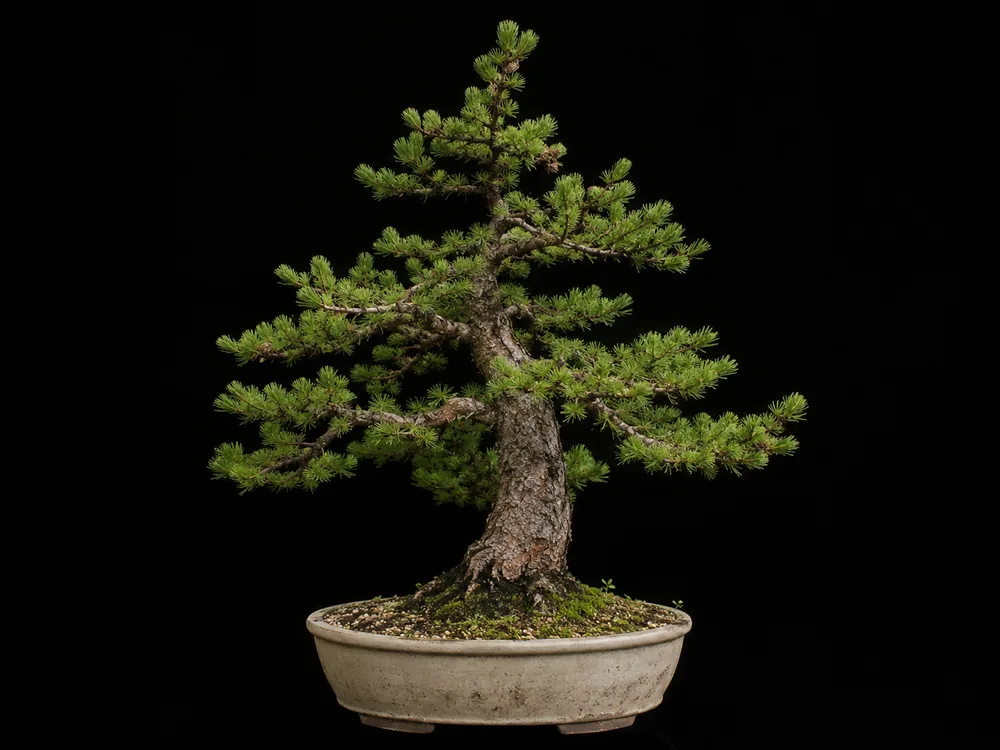
European Larch Bonsai Care
Larix decidua
Zones 2 to 6, outdoor only. A deciduous conifer, it bears soft needles that flush fresh green. Most are lost to drying out.
Pinaceae (pine family) · Deciduous coniferous tree
European Larch quick reference
| USDA zones | 2–6 |
|---|---|
| Indoor / outdoor | Outdoor only — full sun, fresh air, winter cold |
| Light | Full sun; light midday shade in fierce heat |
| Water | Keep moist — water when surface dries; lime-free water |
| Soil | Free-draining, oxygen-rich (avoid heavy clay) mix |
| Repot | Every 2 years (young), 3–5 (older) |
| Frost | Very hardy (to ~−15 °C); protect potted roots in hard freeze |
| Mature height (as bonsai) | Tree to 40 m; kept 30-90 cm as bonsai |
| Growth rate | Fast |
| Season of interest | Fresh spring green, gold autumn, winter cones |
| Leaf reduction | Good - fine deciduous needles |
| #1 cause of death | Drying out; waterlogging/clay-soil root suffocation |
Overview & Character
The European Larch is a deciduous conifer — it bears soft needles that flush fresh green in spring, deepen through summer, turn glowing golden-yellow in autumn, then drop, revealing fine twigging and cones for a delicate winter image. It is fast, hardy, and back-buds well, making it one of the most rewarding and beginner-friendly conifers for bonsai.
It wants full sun, even moisture (with lime-free water), an oxygen-rich free-draining soil, and a cold winter dormancy. Because it actually loses its needles, it tolerates more pruning interaction than evergreen conifers, and its quick response makes it satisfying to develop.
Identification
Foliage: Soft, slender, deciduous needles ~2–4 cm in rosette-like tufts on short spurs (and singly on new shoots); bright green in spring, golden-yellow in autumn, then shed for winter.
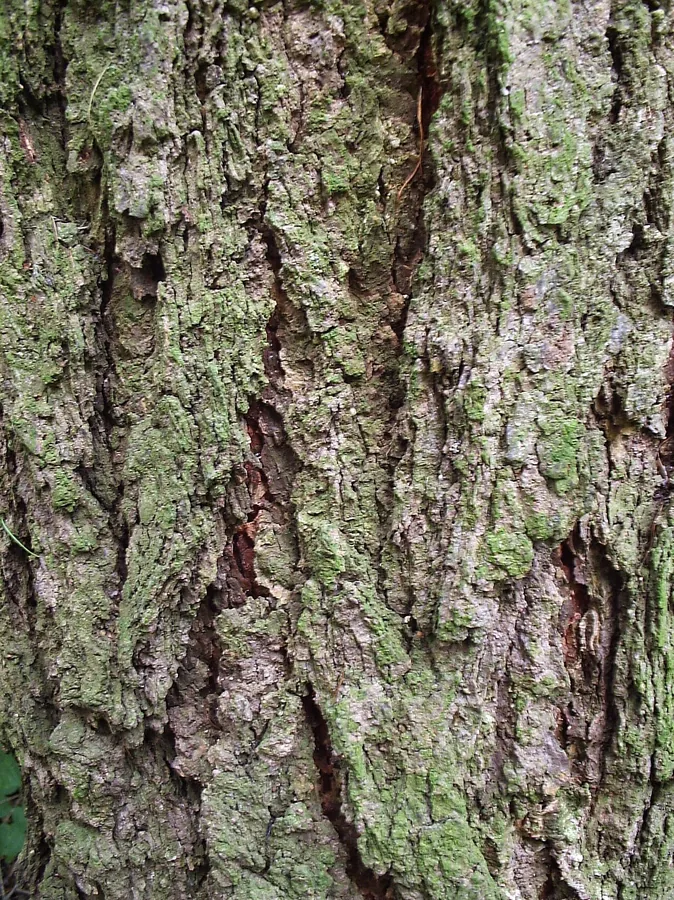
Bark & trunk: Greyish, becoming thick, fissured, and scaly-plated, often with a pinkish-brown inner tone when flaking.
Growth habit / form: Upright with fine, slightly pendulous twigging; classic for informal upright, literati, and group/forest plantings.
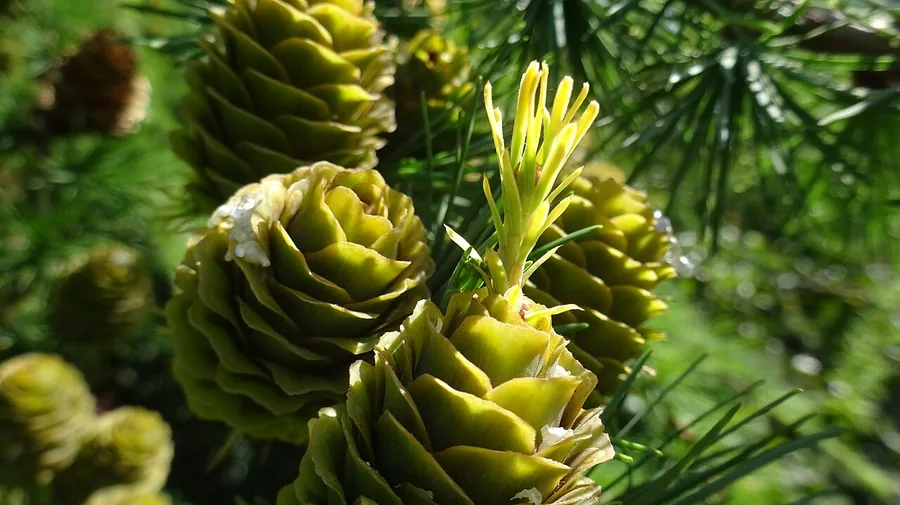
Flowers / fruit: Showy small red female 'larch roses' and yellow male cones in spring; small egg-shaped woody cones persist on bare winter twigs.
Look-alikes & how to tell them apart: As a deciduous conifer it resembles Golden Larch (Pseudolarix) and Dawn Redwood; distinguish from Dawn Redwood by alternate (not opposite) needles and persistent upright cones, and from Golden Larch by smaller cones and needle arrangement.
Climate & USDA Zone
Very hardy in USDA zones 2–6 (a true alpine tree, cold to about −15 °C). Needs full sun and a cold winter dormancy; grown outdoors year-round. Prefers cool summers; protect potted roots in hard freezes. Dislikes calcareous (limey) water and soil.
Light
Full sun, preferably with light shade during the hottest summer hours. Strong light keeps growth compact and gives the best autumn gold; shade weakens it.
Watering
Keep moist — water thoroughly when the soil begins to dry; larch likes moisture but needs oxygen at the roots.
- Avoid clay-heavy, airless soils that stay sodden; the roots need both water and air.
- Use lime-free (low-mineral) water — larch dislikes calcareous water.
- Reduce after needle drop, but don't let the rootball dry out in dormancy.
Soil & Root Care
Soil: A free-draining, oxygen-rich bonsai mix (akadama / pumice / lava); avoid dense clay components.
Repotting:
- Frequency: young every 2 years; older every 3–5 years.
- Timing: late winter/early spring before buds open, or in autumn after needle drop.
- Tolerates moderate root-pruning well.
- Aftercare: keep moist (lime-free), sheltered while re-establishing.
Feeding
Feed every ~2 weeks from spring once needles appear until mid-summer with a balanced feed (e.g. 10-10-10), then switch to a low-nitrogen feed in late summer to harden wood and roots for winter. Don't feed freshly repotted or dormant trees.
Pruning & Styling
- Pinch back soft new shoots in spring to 2–3 needle tufts to keep growth compact; it back-buds well.
- Structural pruning is best in early spring before growth or in autumn after needle drop (the bare structure is easy to see).
- Wiring: best in winter dormancy before the fragile buds swell; protect the bark.
- Suits informal upright, literati, and group/forest plantings.
Propagation & Cuttings
Ease: Moderate. Best methods: seed; cuttings (tricky); collected.
Larix decidua grows from seed — short cold-moist stratification (3–4 weeks) then spring sowing; germination is fair and seedlings grow quickly for a conifer. Softwood cuttings root only at low-to-moderate rates and are not the main route. Larch is widely collected as mountain yamadori. For bonsai, seedlings and collected trees are best; this deciduous conifer back-buds well and takes hard work, so it develops fine ramification and dramatic deadwood on collected stock.
Pests
- Larch adelgid (woolly white sap-suckers on needles/shoots)
- Aphids
- Spider mites (hot, dry conditions)
- Sawfly larvae / caterpillars (chew needles)
Treat with horticultural oil, insecticidal soap, or appropriate systemics; catch infestations early.
Disease, Fungus & Infection
- Root rot / suffocation — from waterlogged, airless (clay) soil; a leading risk.
- **Larch canker (Lachnellula)** — sunken cankers/dieback on stems; prune out, sanitize.
- Needle cast fungi — needle browning in damp, stagnant conditions; improve airflow.
Prevention: oxygen-rich free-draining soil, lime-free even moisture, airflow, sanitation.
Most Common Causes of Death
1. Drying out. Larch needs steady moisture; a dry-out damages the fine roots. 2. Waterlogging / clay-soil suffocation. Roots need oxygen — use an open, free-draining mix. 3. Calcareous (limey) water or soil. Causes decline; use lime-free water. 4. Larch canker / adelgid on a weak tree. Keep vigor up; prune out canker; treat pests. 5. Unprotected potted roots in hard freeze. Very hardy, but shelter the pot.
Seasonal Calendar
- Spring: Repot if due (before buds open); fresh green flush and red 'larch roses'; begin feeding; pinch soft shoots; full sun.
- Summer: Keep moist (lime-free); light midday shade in fierce heat; switch to low-nitrogen feed late summer.
- Autumn: Golden needles then drop; structural pruning after needle drop; repot option.
- Winter: Dormant/bare (cones on twigs); wire before buds swell; keep just-moist; protect potted roots.
Close-up photo reference
Compare your tree against these to confirm the species and spot problems early.


Sources
Where to buy a European Larch bonsai
We don’t stock European Larch at the moment. These species need similar care and we have them now — they are the closest match in our catalogue.
- Dawn Redwood — similar care, in stock now
- Bald Cypress — similar care, in stock now
Browse all bonsai trees for sale or find a species matched to your climate and space.
- All species
- Shop bonsai trees, tools & supplies
- How to Water a Bonsai (Without Killing It)
- Bonsai Soil: What to Buy, What to Mix, and What It Costs
- Why Bonsai Die After Repotting: Diagnosing a Failed Repot
- Pruning vs. Pinching: Shaping Your Bonsai
- Overwintering Bonsai: Cold-Season Care
- Indoor Bonsai Light and Humidity: Making a Windowsill Actually Work
- Root Rot on bonsai
- Underwatering (Drought Stress) on bonsai
- Winter / Frost Damage on bonsai
- Spider Mites on bonsai
- Aphids on bonsai
- Japanese Larch bonsai care
- Dawn Redwood bonsai care
- Bald Cypress bonsai care
- Ginkgo (Maidenhair Tree) bonsai care