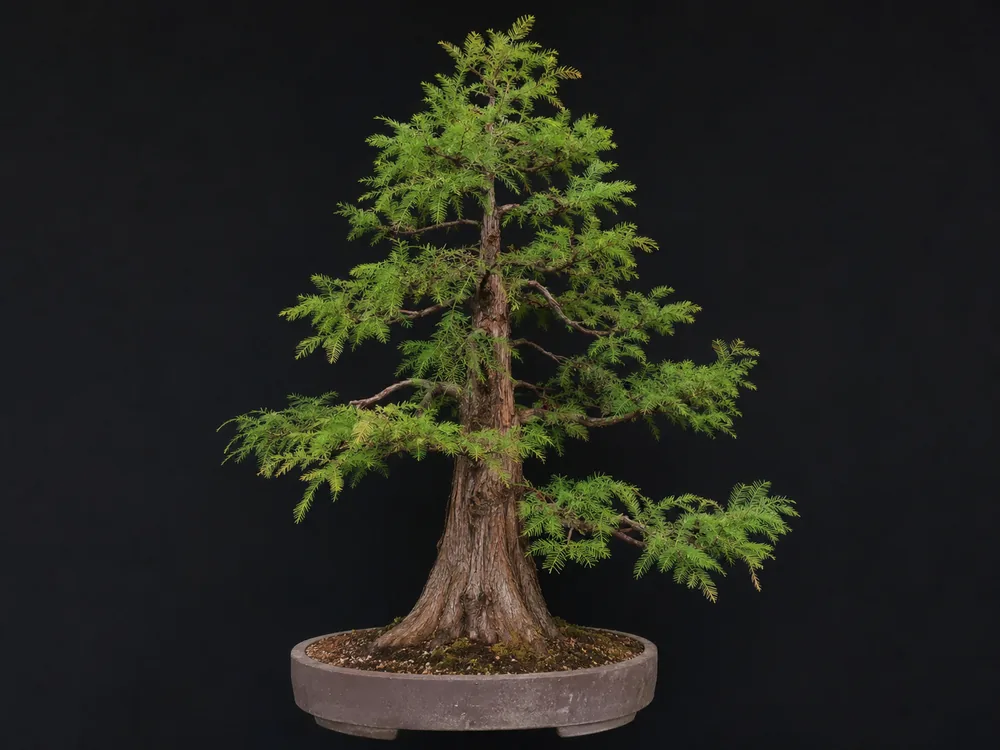
Bald Cypress Bonsai Care
Taxodium distichum
2 Bald Cypress bonsai in stock, from $91.95 Shipped direct from our nursery partners, with a 48-hour live-arrival guarantee. See the trees
Zones 5a to 11, outdoor. The iconic tree of the southern American swamps. Most are lost to drying out.
Cupressaceae · Deciduous conifer (drops its needles every autumn)
Bald Cypress quick reference
| USDA zones | 5a–11 (some sources cite 4–10; very adaptable) |
|---|---|
| Indoor / outdoor | Outdoor tree; needs sun, fresh air, and seasonal change |
| Light | Full sun — it is a true sun-lover and thrives in heat |
| Water | Extremely water-loving — thrives in wet soil and can even stand in shallow water; the swamp conifer of this library |
| Soil | Moisture-retentive (tolerates water-holding, even heavier mixes) but should still drain to avoid stagnation |
| Repot | Young trees yearly; older trees every 2–3 years, in early spring |
| Frost | Good; protect potted roots in hard freezes, especially northern-grown stock |
| Mature height (as bonsai) | Tree to 35 m; kept 40-100 cm as bonsai |
| Growth rate | Fast |
| Season of interest | Coppery-orange autumn, bare winter form |
| Leaf reduction | Good - fine deciduous needles reduce well |
| #1 cause of death | Surprisingly, root rot from a *stagnant/poorly-draining* mix, or letting the rootball dry out — it tolerates wet, but not airless |
Overview & Character
The Bald Cypress is the iconic tree of the southern American swamps, naturally growing in standing water and famous for the "knees" (pneumatophores) that rise from its roots in waterlogged ground. As a bonsai it brings drama and a strong sense of place: a powerful, fluted, buttressed trunk; fine, soft, feathery needles that emerge bright green in spring; and a glowing copper-orange autumn display before the needles drop to reveal a delicate winter silhouette. The bark is reddish-brown and fibrous, peeling in long strips with age.
It is vigorous, heat-loving, and forgiving, and it lends itself beautifully to the tall, slender "flat-top" style that mimics old swamp trees, as well as formal upright and forest/group plantings. Its near-unique tolerance of saturated soil makes it one of the easiest conifers to keep watered — you essentially cannot give a healthy, growing bald cypress too much water.
Identification
Foliage (the giveaway): Deciduous, soft and feathery. The defining trait: needles and the small side shoots are arranged ALTERNATELY (staggered) along the twig, not in matched pairs — the needles are also slightly thinner and more pointed than Dawn Redwood's. Bright green in spring, turning a glowing copper-orange in autumn before the whole shoots drop.
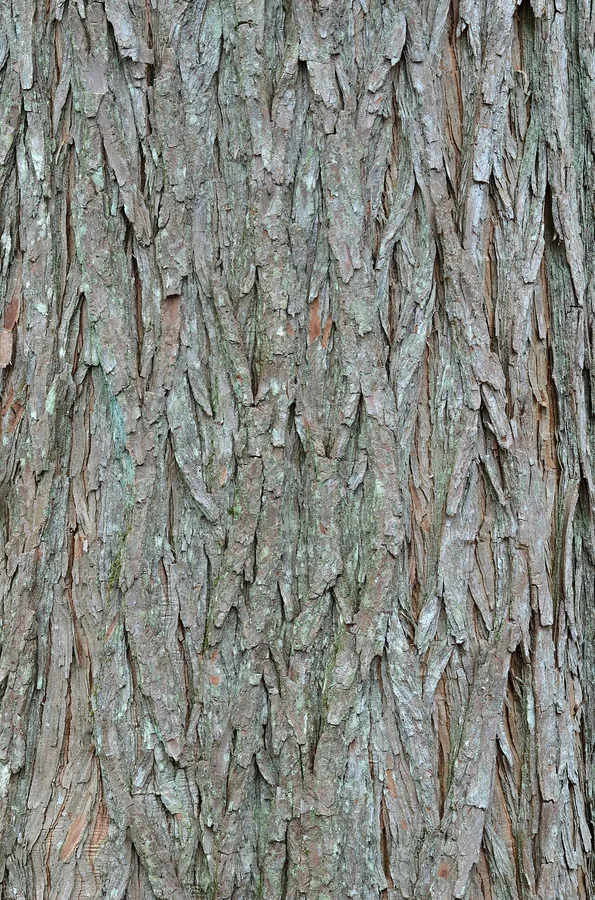
Bark & trunk: Reddish-brown, fibrous, peeling in long strips; mature trunks are powerfully fluted and buttressed, and trees in wet ground produce woody "knees" (pneumatophores) rising from the roots — a near-unique feature.
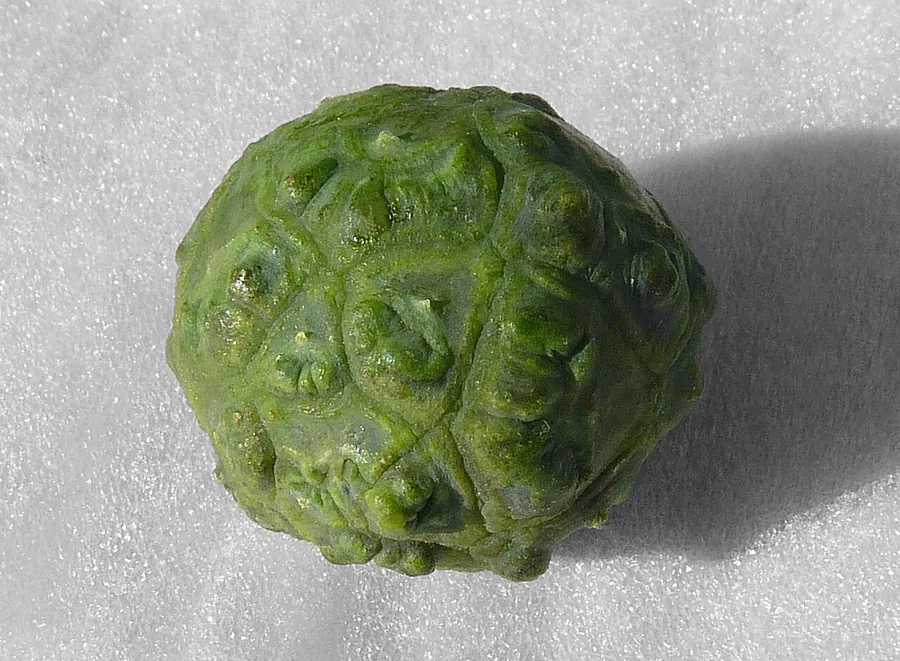
Growth habit / form: Vigorous, heat-loving swamp tree; classically built into the tall, slender "flat-top" style. Cones: Rounded, woody, about 2–3.5 cm, green ripening to brown, breaking up when mature.
Look-alikes & how to tell them apart: The classic confusion is with Dawn Redwood (Metasequoia glyptostroboides). The reliable tell is needle/shoot arrangement: Bald Cypress = ALTERNATE (staggered); Dawn Redwood = OPPOSITE pairs. Bald Cypress additionally produces "knees" and a strongly buttressed base, whereas Dawn Redwood shows "armpit" depressions where branches meet the trunk.
Climate & USDA Zone
Taxodium distichum is highly adaptable, hardy across USDA zones 5–11 (some references extend the range to zones 4–10). It revels in heat and humidity, which makes it one of the best conifers for warm southern climates where many other species struggle. It is an outdoor tree and benefits from the full seasonal cycle, including a winter dormancy. In the colder end of its range, protect the potted roots from hard freezes, as container roots are more exposed than they would be in the ground.
Light
Give Bald Cypress full sun. It is a genuine sun-and-heat lover and grows strongest, healthiest, and most compact in maximum light. It does not need or want shade in normal conditions — abundant sun produces the best growth and the finest foliage.
Watering
Bald Cypress is the most water-loving species in this library — it thrives in wet soil and can even stand in shallow water. This is the swamp tree; it tolerates "wet feet" to a degree no pine, juniper, or larch ever could.
- In the growing season it is a thirsty tree and should be kept moist at all times. In summer it needs a great deal of water; if you cannot water often enough during the day, a classic technique is to stand the pot in a shallow bowl/tray of water so the roots never dry out. This is normal and safe for an actively growing bald cypress.
- An important nuance: although it adapts to swampy, waterlogged soil, it is not actually necessary or beneficial to keep it standing permanently in water year-round. Standing-water culture is a useful summer convenience, not a requirement, and should be eased off as growth slows.
- In winter, after the needles drop, the tree needs much less water. Reduce watering and remove it from any standing-water tray, but never let the rootball dry out completely.
The headline for bald cypress: water it heavily, embrace wet feet in summer, and you will rarely go wrong on moisture — the real risk is the soil going stagnant, not merely wet (see below).
Soil & Root Care
Bald Cypress is happy in a moisture-retentive substrate and tolerates heavier, more water-holding mixes than most conifers. Even so — and this is the key subtlety — the mix should still drain and stay open enough for some oxygen exchange. "Tolerates wet" is not the same as "tolerates dead, stagnant, compacted muck." Because the tree is watered so frequently, a poorly draining or compacted soil can turn anaerobic and cause root rot. Use an open, water-retentive bonsai mix (akadama-based, organic content fine) that holds plenty of moisture while still letting water move through.
Repot in early spring before the buds break. The tree roots vigorously, so young trees may need yearly repotting and older trees every 2–3 years to avoid becoming pot-bound. It tolerates significant root work thanks to its vigour.
Feeding
Feed generously throughout the growing season to support its strong growth — from spring after the foliage emerges through to autumn. A balanced organic fertiliser suits it well. Reduce feeding as the tree heads toward dormancy and stop over winter; do not feed immediately after repotting until growth resumes.
Pruning & Styling
- Trimming: During the growing season, trim back extending shoots regularly to maintain shape and build the fine ramification the species is capable of. It back-buds readily, including from old wood, which makes it forgiving.
- Structural pruning: Heavy structural cuts are best made in early spring before bud-break or in autumn after leaf drop, when the structure is visible. It heals reasonably well for a conifer.
- Flat-top style: Bald Cypress is the classic subject for the tall, slender "flat-top" style — allow the leader to extend, then build horizontal pads and a flattened crown to evoke an ancient swamp giant.
- Wiring: Wire in the dormant season or early spring. The tree thickens quickly, so monitor wired branches and remove wire before it bites. The wood can be somewhat brittle, so bend with care.
Propagation & Cuttings
Ease: Easy from seed; moderate from cuttings. Best methods: seed; hardwood/softwood cuttings.
Seed is the classic route: collect cones in autumn, break them up, soak the seed, and cold-moist stratify ~60–90 days before spring sowing in wet, even flooded, mix — bald cypress germinates well in saturated soil. Cuttings are workable: softwood cuttings in early summer or hardwood cuttings in late winter, both with IBA under humidity, root at moderate rates. It will also sprout from the buttressed base and can be air-layered. For bonsai, seed-grown trees give the best flared, fluted trunks and knees, so most growers start from seed or collected saplings.
Pests
Bald Cypress is largely pest-resistant and is hardly ever seriously attacked, but watch for:
- Spider mites — tiny arachnids that suck sap and cause yellowing/browning, worst in hot, dry conditions; raising humidity and rinsing the foliage deters them.
- Fungus gnats — encouraged by constantly wet, organic-rich soil (a side effect of this tree's heavy watering); usually a nuisance rather than a serious threat, but a sign the soil may be staying too wet/stagnant.
Inspect periodically and treat infestations with horticultural oil or an appropriate product.
Disease, Fungus & Infection
Disease is uncommon, and most problems trace back to soil/watering rather than infection:
- Twig blight — a fungal dieback of small shoots.
- Chlorosis — yellowing foliage from nutrient issues or poor soil conditions (often alkaline water/soil locking out iron); correct by improving soil/nutrition and, where needed, using slightly acidic water.
- Root rot — the genuine danger, arising when constantly-wet soil is also poorly draining and stagnant, going anaerobic around the roots.
Prevention is cultural: use an open, water-retentive-but-draining mix so heavy watering doesn't suffocate the roots; ensure good airflow; remove affected twigs; and address chlorosis through soil and water quality. Treat active fungal disease with a suitable fungicide.
Most Common Causes of Death
1. Stagnant/airless-soil root rot. It loves water (a swamp tree, even tolerating standing water) but truly stagnant, airless soil still rots roots — keep wet yet oxygenated. 2. Drying out. Very thirsty; never let the pot dry — many keep it standing in a shallow water tray in summer. 3. Insufficient sun. Needs full sun for strong growth and good form. 4. Winter root freeze. Hardy in range but shelter potted roots in severe freezes. 5. Pests. Spider mites and bagworms; cypress twig borer — inspect and treat early.
Seasonal Calendar
- Spring: Flush of feathery needles; repot if due (early); resume feeding; rapid growth.
- Summer: Full sun; keep very wet (water tray fine); frequent trimming; develops flared, buttressed base.
- Autumn: Russet autumn color before needle drop (deciduous conifer); taper feeding.
- Winter: Bare dormancy outdoors; keep moist; protect potted roots; structural pruning while leafless.
Close-up photo reference
Compare your tree against these to confirm the species and spot problems early.


Sources
Buy a Bald Cypress bonsai
- All species
- Shop bonsai trees, tools & supplies
- How to Water a Bonsai (Without Killing It)
- Bonsai Soil: What to Buy, What to Mix, and What It Costs
- Why Bonsai Die After Repotting: Diagnosing a Failed Repot
- Pruning vs. Pinching: Shaping Your Bonsai
- Overwintering Bonsai: Cold-Season Care
- Indoor Bonsai Light and Humidity: Making a Windowsill Actually Work
- Root Rot on bonsai
- Underwatering (Drought Stress) on bonsai
- Winter / Frost Damage on bonsai
- Spider Mites on bonsai
- Fungal Canker & Dieback on bonsai
- Dawn Redwood bonsai care
- European Larch bonsai care
- Ginkgo (Maidenhair Tree) bonsai care
- Japanese Larch bonsai care