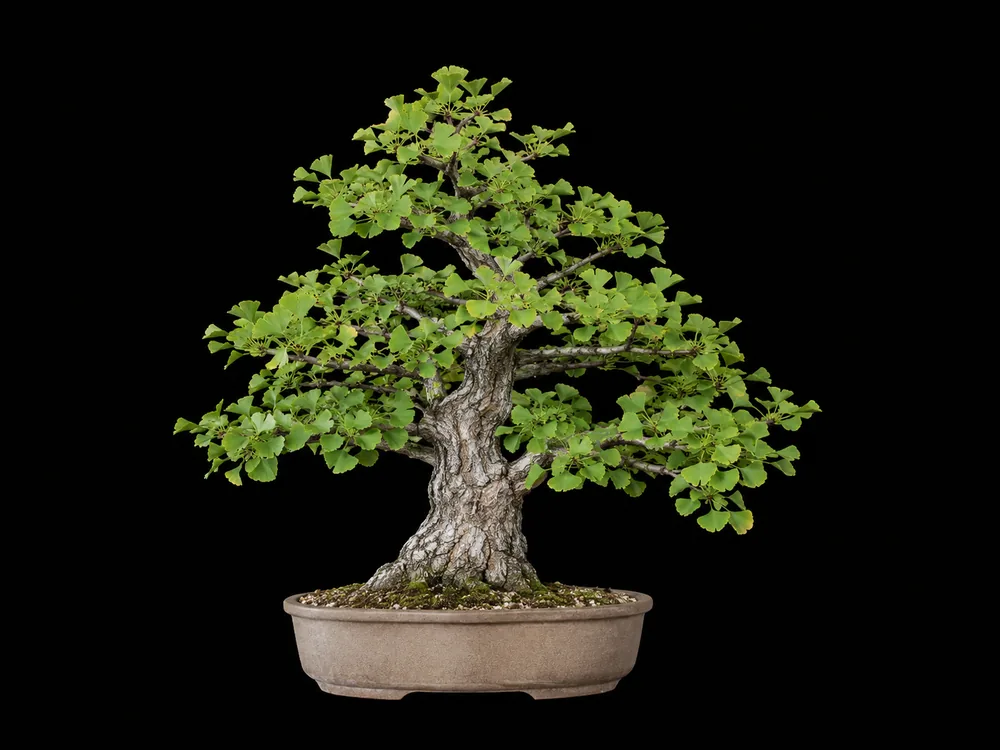
Ginkgo (Maidenhair Tree) Bonsai Care
Ginkgo biloba
Zones 4 to 9, outdoor. A true living fossil, essentially unchanged for ~200 million years and remarkably resistant. Most are lost to overwatering.
Ginkgoaceae (a living fossil — the sole survivor of an ancient lineage) · Deciduous broadleaf (botanically a gymnosperm relative of conifers)
Ginkgo (Maidenhair Tree) quick reference
| USDA zones | 4–9 (as bonsai, protect fragile potted roots in hard freezes) |
|---|---|
| Indoor / outdoor | Outdoor (deciduous; needs seasons and dormancy) |
| Light | Full sun for best fall color; semi-shade for young trees / peak summer heat |
| Water | Generous in growing season, slightly moist; never waterlogged |
| Soil | Free-draining bonsai mix |
| Repot | Every 2–3 years (young), 3–5 (older) |
| Frost | Hardy tree, but potted roots are fragile — protect from freezing |
| Mature height (as bonsai) | Tree to 35 m; 20-60 cm as bonsai |
| Growth rate | Slow to moderate |
| Season of interest | Brilliant golden-yellow autumn colour |
| Leaf reduction | Limited - fan leaves resist reduction |
| #1 cause of death | Overwatering / root rot; winter root freezing of potted plants |
Overview & Character
The Ginkgo is a true living fossil — essentially unchanged for ~200 million years and remarkably resistant to pests and disease. Its unmistakable fan-shaped (bilobed) leaves turn a brilliant, uniform golden yellow in autumn, then often drop all at once in a striking display. This spectacular fall color is the main reason it's grown as bonsai.
Ginkgo has a distinctive, somewhat stiff, upright growth habit and naturally forms a "flame" or columnar silhouette; it is often styled in informal upright or flame styles rather than the flowing forms used for junipers. It is exceptionally tough and urban-tolerant — its main vulnerabilities in a pot are wet roots and cold-sensitive potted roots, not bugs or fungus.
Note on sex/fruit: female ginkgos produce fleshy seeds with a notoriously foul smell when they rot. Bonsai are typically grown from cuttings/grafts of male plants or are too young to fruit, so this is rarely an issue — but worth knowing if you grow one from seed.
Identification
Foliage: Unmistakable fan-shaped (flabellate) leaves, typically 5–10 cm wide, leathery, with fine parallel veins that radiate from the stalk (dichotomous venation — no central midrib). Many leaves have a central notch dividing them into two lobes (the "biloba"). Bright green in summer, turning a uniform brilliant golden yellow in autumn before dropping, often all at once. Leaves are borne in tufts on short woody spur shoots. No scent of note.
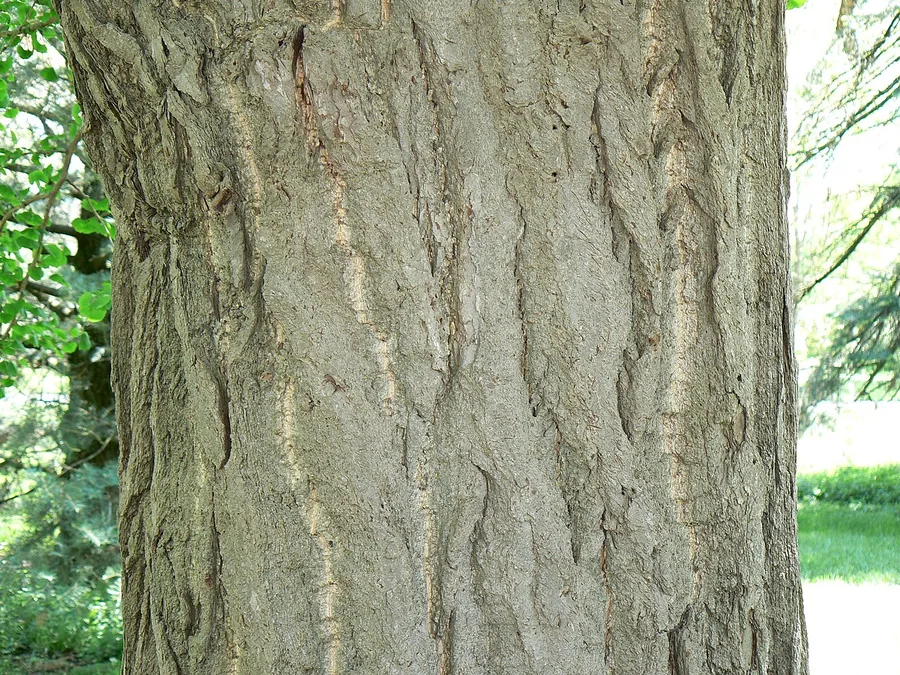
Bark & trunk: Grey-brown bark, becoming deeply furrowed/corky and ridged with age. Old trees can develop hanging woody aerial outgrowths called chichi.
Growth habit / form: Stiff, upright, often columnar to flame-shaped ascending habit — angular branching rather than flowing. Styled mainly as informal upright or flame; cascade forms are unnatural for it.
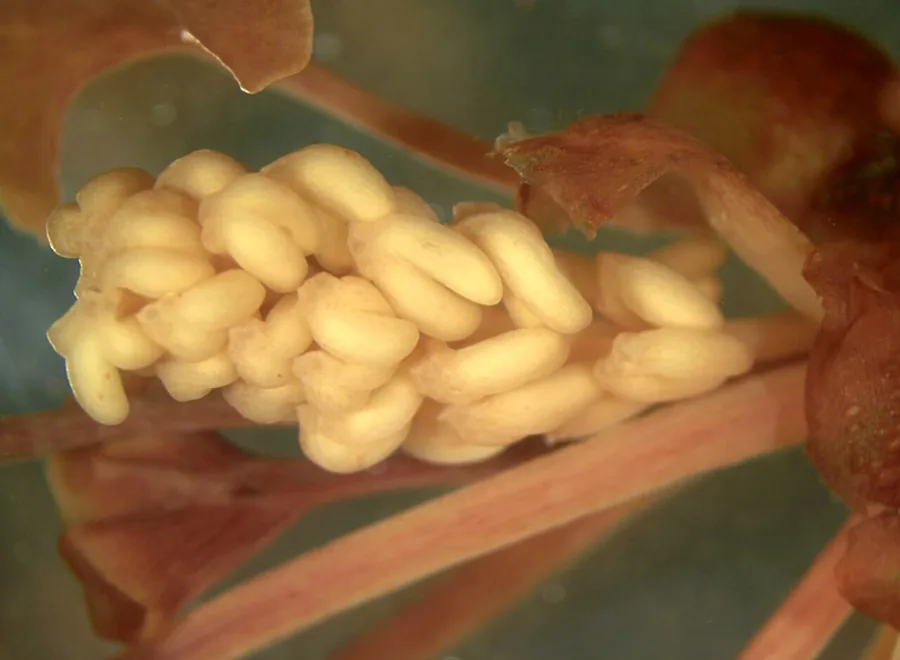
Flowers / fruit / cones: A non-flowering gymnosperm and dioecious. Males bear small pollen catkins; females produce naked ovules that develop into plum-like fleshy seeds (~2–3 cm) which smell strongly rancid (butyric acid) when the fleshy coat rots. Bonsai are usually male/young, so fruiting is rare.
Look-alikes & how to tell them apart: Essentially nothing in cultivation resembles it — the fan-shaped, midrib-less leaf is diagnostic. The only superficial echo is the unrelated **maidenhair fern (Adiantum)** whose fan-shaped leaflets inspired the common name "maidenhair tree"; a fern is herbaceous and non-woody, so the woody trunk instantly separates Ginkgo.
Climate & USDA Zone
Hardy in USDA zones 4–9 as a landscape tree. As bonsai, it grows happily across temperate zones but its potted roots are notably fragile and cold-sensitive, so protect the pot from hard freezes even though the tree itself is very cold-hardy. It is deciduous and requires a proper winter dormancy — it is not an indoor tree. It tolerates urban pollution, heat, and poor air extremely well.
Light
- Full sun produces the strongest growth and the best, most vivid fall color — give it as much direct sun as possible once the hottest part of summer has passed (spring and autumn especially).
- Young trees and trees in the hottest midsummer weather benefit from partial/semi-shade to prevent leaf scorch.
- More sun overall = better autumn gold.
Watering
Wants ample water during the growing season and prefers to be kept slightly moist — but it must not be overwatered or sit in standing water.
- Spring–autumn: water as soon as the soil surface begins to dry; the tree drinks a lot in active growth, often daily in summer.
- Winter: reduce watering significantly. The dormant, fragile potted roots dislike sitting constantly wet/cold — keep barely moist, never saturated.
- Good drainage is essential year-round; like junipers and pines, ginkgo roots are sensitive to soggy soil and will rot if waterlogged.
Soil & Root Care
Soil: A standard free-draining bonsai mix (e.g., akadama / pumice / lava) works well — moisture-retentive enough to support its summer thirst but open enough to prevent waterlogging.
Repotting:
- Frequency: every 2–3 years for younger trees; every 3–5 years as they mature.
- Timing: early spring before bud break.
- Ginkgo often produces thick, fleshy roots and can develop a strong nebari (surface root flare) and even aerial root features (chichi). Prune roots moderately at repotting; it tolerates root work reasonably well but the fleshy roots are sensitive to rot if cut and then kept too wet.
- Aftercare: shelter, keep lightly moist, resume feeding only after growth restarts.
Feeding
Feed regularly through the growing season with a balanced fertilizer to support vigor and good autumn color. Ease off as the tree approaches dormancy in fall. Do not feed freshly repotted, stressed, or dormant trees. Avoid heavy late-season nitrogen, which delays hardening for winter.
Pruning & Styling
- Pruning: Prune to shape in the growing season; ginkgo back-buds and is forgiving. Important: ginkgo pruning wounds do not heal/callus over the way most species do — large cuts remain visible and can die back, so favor smaller cuts and avoid big amputations on visible areas.
- The species suits informal upright and flame/columnar styles that follow its natural ascending habit; flowing/cascade forms are difficult.
- Wiring is possible but the wood is somewhat brittle and the bark marks easily — wire carefully, protect the bark, and remove wire before it bites. Many growers shape ginkgo primarily through directional pruning rather than heavy wiring.
Propagation & Cuttings
Ease: Moderate. Best methods: seed; cuttings; grafting.
Ginkgo biloba grows from seed — collect the fleshy (foul-smelling) seed, clean it, give a short cold-moist stratification, and sow; germination is good but seedlings are of unknown sex for ~20 years. Softwood/semi-hardwood cuttings root at moderate rates with hormone and let you clone a known male (preferred — females drop smelly seed) or a good autumn-colour form. Named forms are grafted. For bonsai, cuttings or grafts of a good clone beat seedlings; ginkgo back-buds strongly, even from the base.
Pests
Ginkgo is famously pest-resistant — it is rarely troubled by insects. Occasional minor issues:
- Sap-suckers (aphids, scale) may appear opportunistically but are uncommon.
- Generally no significant pest management is required.
Disease, Fungus & Infection
Ginkgo is highly disease-resistant and is hardly ever attacked by fungal diseases. The realistic concerns are cultural rather than pathogenic:
- **Root rot (Phytophthora / Pythium)** — the main disease risk, and it comes from overwatering / poor drainage rather than from the tree being inherently disease-prone.
- Leaf scorch — from intense sun/heat on young trees or under-watering in heat (a cultural stress, not an infection).
- Rare fungal leaf spot in very wet, stagnant conditions — cosmetic; improve airflow.
Prevention is almost entirely about correct watering, drainage, and not letting potted roots freeze.
Most Common Causes of Death
1. Overwatering / root rot. Despite a big summer thirst, the fleshy roots rot in constantly wet soil; water generously only when the surface dries, and cut back sharply in winter. 2. Winter freezing of fragile potted roots. The tree is very cold-hardy but its potted roots are not — shelter the pot in hard freezes. 3. Severe summer drought. Heavy drinker in growth; a missed hot-day watering causes scorch and dieback. 4. Indoor keeping. Deciduous and dormancy-dependent — declines indoors. 5. Large pruning wounds. Ginkgo cuts don't heal over well; avoid big amputations on visible areas.
Seasonal Calendar
- Spring: Repot if due (before bud break). Resume feeding as leaves emerge; shaping prune.
- Summer: Water heavily and consistently; partial shade in peak heat to prevent scorch.
- Autumn: Full sun for best golden color; taper feeding and water as it goes dormant.
- Winter: Dormant/leafless; protect pot/roots from hard freezes; water sparingly.
Close-up photo reference
Compare your tree against these to confirm the species and spot problems early.


Sources
Where to buy a Ginkgo (Maidenhair Tree) bonsai
We don’t stock Ginkgo (Maidenhair Tree) at the moment. These species need similar care and we have them now — they are the closest match in our catalogue.
- Dawn Redwood — similar care, in stock now
- Bald Cypress — similar care, in stock now
Browse all bonsai trees for sale or find a species matched to your climate and space.
- All species
- Shop bonsai trees, tools & supplies
- How to Water a Bonsai (Without Killing It)
- Bonsai Soil: What to Buy, What to Mix, and What It Costs
- Why Bonsai Die After Repotting: Diagnosing a Failed Repot
- Pruning vs. Pinching: Shaping Your Bonsai
- Overwintering Bonsai: Cold-Season Care
- Indoor Bonsai Light and Humidity: Making a Windowsill Actually Work
- Root Rot on bonsai
- Overwatering on bonsai
- Winter / Frost Damage on bonsai
- Leaf Scorch / Sunburn on bonsai
- Scale Insects on bonsai
- Dawn Redwood bonsai care
- European Larch bonsai care
- Bald Cypress bonsai care
- American Beech bonsai care