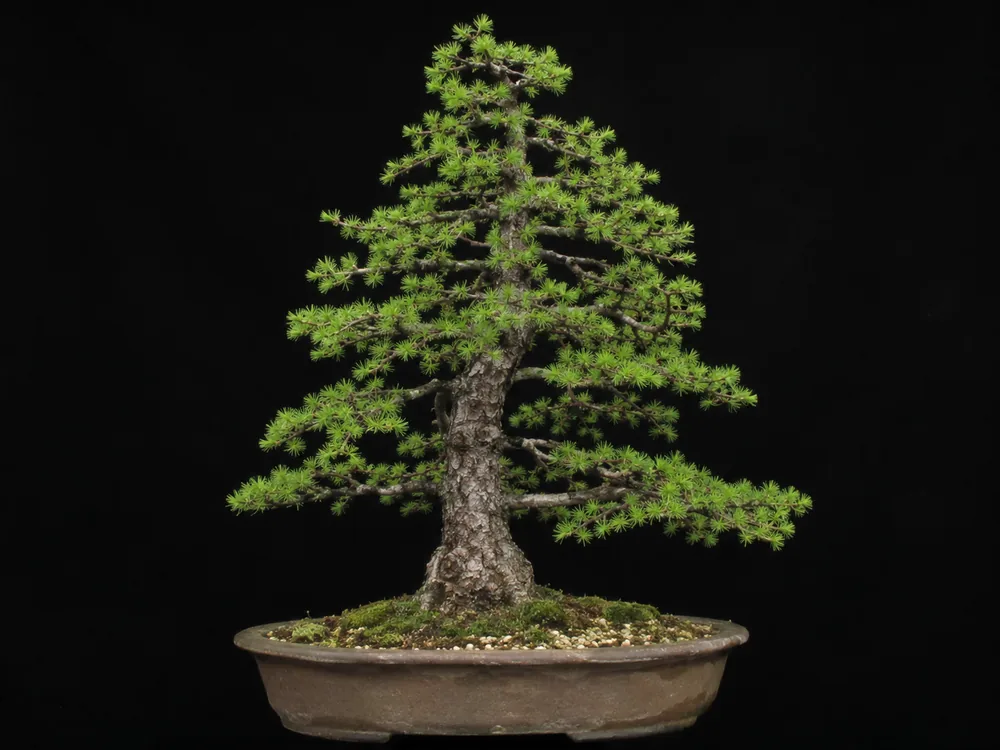
Japanese Larch Bonsai Care
Larix kaempferi
Zones 4a to 7b. One of the most rewarding deciduous conifers. Most are lost to drying out.
Pinaceae · Deciduous conifer (drops its needles every autumn)
Japanese Larch quick reference
| USDA zones | 4a–7b (very cold-hardy; struggles in hot, humid summers) |
|---|---|
| Indoor / outdoor | Strictly outdoor — it requires a genuine cold winter dormancy |
| Light | Full sun for most of the day; the more light, the shorter and finer the needles |
| Water | Moisture-loving but NOT wet — keep the soil consistently damp; never let it dry out, never let it sit waterlogged |
| Soil | Free-draining, slightly acidic mix (e.g. akadama / pumice / lava, ~2:1:1) |
| Repot | Young trees every 1–2 years; mature trees every 2–4 years, in early spring before buds open |
| Frost | Excellent — survives hard frost; protect only the pot/roots in severe freezes |
| Mature height (as bonsai) | Tree to 30 m; 25-70 cm as bonsai |
| Growth rate | Fast |
| Season of interest | Fresh spring green, golden autumn, deciduous conifer |
| Leaf reduction | Good - soft needles reduce well |
| #1 cause of death | Root rot from waterlogged soil, and (in summer) letting the rootball dry out completely |
Overview & Character
The Japanese Larch is one of the most rewarding deciduous conifers in bonsai. Unlike pines and junipers, it is not evergreen: in spring it bursts with soft, almost luminous fresh-green needles arranged in tufted whorls; in autumn those needles turn a warm gold before dropping entirely, leaving a finely ramified, twiggy silhouette through winter. This seasonal theatre — four distinct looks across the year — is exactly why growers prize it.
Larch is vigorous and back-buds freely, which makes it forgiving to style and excellent for developing fine branch structure. It is well suited to informal upright, literati, group/forest plantings, and dramatic deadwood (jin and shari) compositions, since the bark fissures attractively with age. Because it grows fast, it builds trunk girth and ramification quickly compared with many conifers.
Identification
Foliage (the giveaway): Deciduous — the rare conifer that drops all its needles each autumn. Soft, slender, light-green needles 2–3.5 cm long, borne in dense tufts/rosettes of 20–40 on short spur shoots along the older branches (and singly/spirally on new long shoots). Fresh green in spring, turning a brilliant gold/butterscotch yellow in autumn before falling, leaving a bare twiggy silhouette in winter.
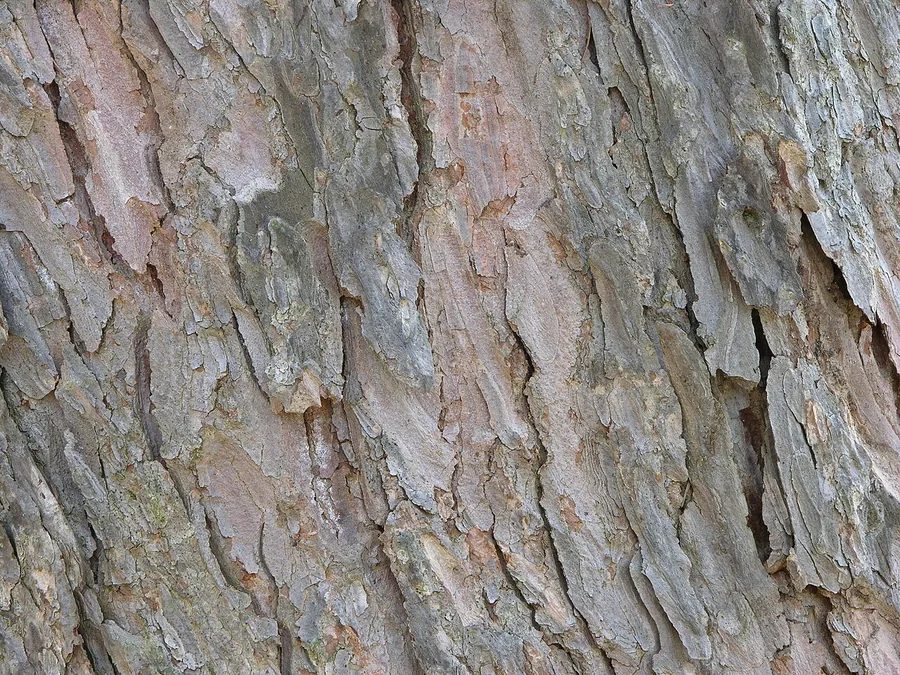
Bark & trunk: Greyish-brown, becoming thick, scaly and fissured with age — it takes deadwood (jin/shari) beautifully.
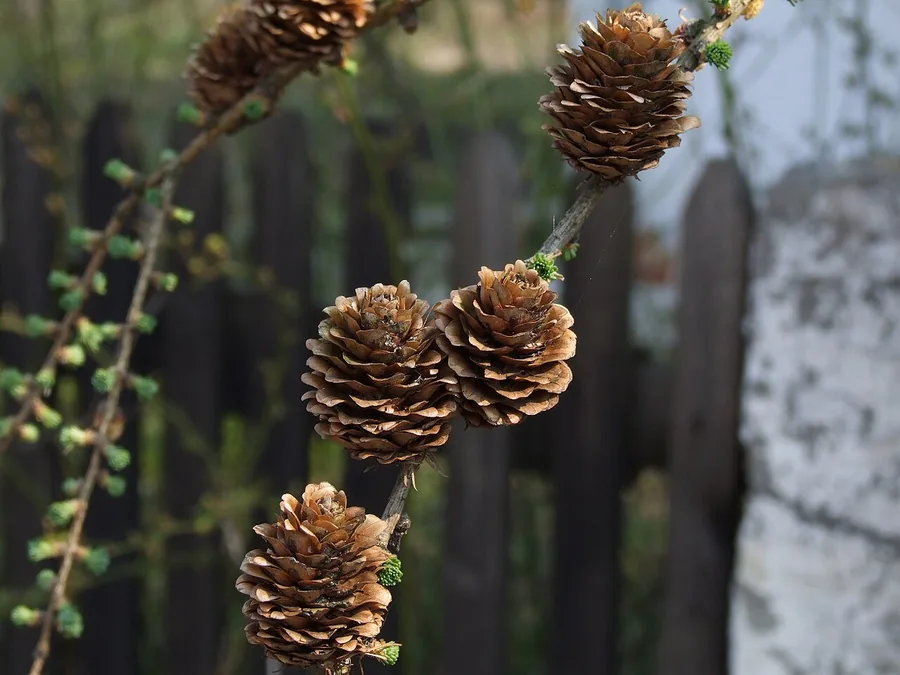
Growth habit / form: A fast-growing, conical tree; young shoots often have a reddish tinge. Cones: Small, upright, rosette-like woody cones about 2–3.5 cm, with scales whose tips reflex/curve outward (a feature separating it from European Larch).
Look-alikes & how to tell them apart: The deciduous needles in tufted rosettes turning gold separate larch from all evergreen conifers here. European Larch (Larix decidua) is very similar but has straighter, non-reflexed cone scales and less glaucous needles; Japanese Larch shoots are more reddish and its cone scales curve back. Unlike the deciduous Dawn Redwood and Bald Cypress (feathery needles in flat rows), larch needles are in clustered rosettes on spurs.
Climate & USDA Zone
Larix kaempferi is a true cold-climate, mountain species and is reliably hardy in USDA zones 4–7. It positively needs a cold, dormant winter to perform — it will not thrive as an indoor or warm-climate tree. The main climate limitation is at the warm end: hot, humid summers and warm nights stress larch and make it prone to fungal trouble and weak growth. In zones warmer than 7, success requires summer shade in the hottest part of the day and excellent airflow.
Light
Give Japanese Larch as much sun as possible — ideally full sun all day in temperate climates. Strong light keeps the new needles short, dense, and well-coloured, and drives the tight ramification that makes a refined larch. In regions with intense, dry summer heat, light afternoon shade helps prevent the foliage from scorching and reduces water stress, but err on the side of more light rather than less.
Watering
Larch is moisture-loving — but it is NOT a wet-feet species like bald cypress or dawn redwood. The goal is consistent dampness: the soil should never dry out completely, and it should never stay soggy/waterlogged either.
- In the growing season, water thoroughly whenever the surface begins to dry. In midsummer heat and full sun a larch may need watering twice a day because it transpires heavily.
- After autumn needle-drop and through winter dormancy, the tree uses far less water. Keep the rootball just damp — reduce frequency sharply and never leave it standing wet, as cold, saturated soil is what triggers root rot.
- Use a free-draining substrate so you can water generously without the roots suffocating. The combination of "lots of water" and "fast drainage" is the key to larch — abundant moisture passing through, not pooling.
This is the single most important distinction for larch: it loves to drink, but it hates wet feet. That is the opposite balance from the swamp conifers in this library.
Soil & Root Care
Use an open, free-draining, slightly acidic bonsai mix — a classic blend is akadama with pumice and lava rock (roughly 2:1:1), which holds moisture while shedding excess water. Avoid heavy, water-retentive composts that stay saturated.
Repot in early spring, just as the buds begin to swell but before they open. Young, fast-growing trees benefit from repotting every 1–2 years; established trees every 2–4 years. Larch responds well to root work and develops a fine, fibrous root pad, but do not bare-root harshly — remove no more than about a third of the roots at once, and keep a little of the existing soil to retain beneficial mycorrhizae, which larch depends on.
Feeding
Larch is a hungry, vigorous grower. Feed from when the needles harden off in spring through to autumn. Use a balanced organic fertiliser during the main growing period; some growers ease nitrogen later in the season to keep needles short and to encourage the trunk and branches to mature rather than push leggy growth. Do not feed during winter dormancy, and avoid feeding a freshly repotted tree until it has recovered (typically 3–4 weeks).
Pruning & Styling
- Structural pruning: Best done in late winter/early spring before bud-break, or in autumn after the needles drop, when the branch structure is fully visible. Larch heals reasonably and back-buds well, so you can prune fairly hard to build taper and ramification.
- Pinching/shoot management: In spring, pinch or cut back the extending candles/shoots to two or three pairs of needles to encourage density and keep internodes short. Larch buds back readily on old wood, which makes it easy to rebuild branches.
- Wiring: Wire in late autumn through winter, or early spring, while you can see the structure. The wood is somewhat brittle, so bend carefully and watch wire closely in spring — larch thickens fast and wire can bite in within weeks.
- Deadwood: Larch takes jin and shari beautifully; the contrast of bleached deadwood against gold autumn needles is a signature look.
Propagation & Cuttings
Ease: Moderate. Best methods: seed; collected; cuttings (tricky).
Larix kaempferi grows from seed — short cold-moist stratification (3–4 weeks) then spring sowing; germination is fair and seedlings grow fast for a conifer. Softwood cuttings root only modestly. Larch is widely collected as mountain yamadori and grown from seedlings for bonsai. For bonsai this deciduous conifer back-buds strongly and takes hard work, developing fine twigs and dramatic deadwood; seedlings and collected trees both develop quickly with good light.
Pests
Larch is generally robust and often "hardly affected" by pests in cultivation, but it can be attacked by:
- Aphids (including black and woolly aphids) — look for kinked, distorted, drying needles and sticky honeydew.
- Larch case-bearer, larch sawfly, larch looper, and adelgids.
- Mealybugs, caterpillars, gall midges, and occasionally Japanese beetle.
Inspect new growth regularly, hose off light infestations, and treat persistent problems with an appropriate insecticide or horticultural oil. Good airflow and full sun reduce pest pressure.
Disease, Fungus & Infection
The chief disease threats are fungal and are made far worse by wet, stagnant conditions:
- Needle cast and needle rust — fungal needle diseases that cause premature browning and shedding; favoured by humidity and poor airflow.
- Canker — sunken, dead bark patches on branches/trunk.
- Grey mould (Botrytis) and other rots — typically follow overwatering or poor ventilation.
Prevention is mostly cultural: maximise sunlight and airflow, avoid wetting foliage late in the day, keep the soil damp-not-soggy, and remove and dispose of any infected needles or branches promptly. Treat active fungal outbreaks with a suitable fungicide.
Most Common Causes of Death
1. Waterlogging-induced root rot. Moisture-loving but NOT a wet-feet tree; use a free-draining mix and avoid stagnant, soggy soil. 2. Drying out. Fine roots in a deciduous conifer; a hard dry-out in summer causes dieback — keep consistently damp. 3. Insufficient sun. Needs full sun for tight growth and good autumn gold. 4. Winter root freeze. Hardy but shelter potted roots in severe freezes. 5. Pests. Larch adelgid, aphids, and sawfly — treat early.
Seasonal Calendar
- Spring: Bright fresh needles emerge; repot if due (early, just as buds move); resume feeding; wire while flexible.
- Summer: Full sun; keep consistently damp (not soggy); pinch/trim extending shoots.
- Autumn: Brilliant golden needles before drop (deciduous conifer); taper feeding/water.
- Winter: Bare dormancy outdoors; protect potted roots; structural pruning/wiring while leafless.
Close-up photo reference
Compare your tree against these to confirm the species and spot problems early.


Sources
Where to buy a Japanese Larch bonsai
We don’t stock Japanese Larch at the moment. These species need similar care and we have them now — they are the closest match in our catalogue.
- Bald Cypress — similar care, in stock now
- Dawn Redwood — similar care, in stock now
Browse all bonsai trees for sale or find a species matched to your climate and space.
- All species
- Shop bonsai trees, tools & supplies
- How to Water a Bonsai (Without Killing It)
- Bonsai Soil: What to Buy, What to Mix, and What It Costs
- Why Bonsai Die After Repotting: Diagnosing a Failed Repot
- Pruning vs. Pinching: Shaping Your Bonsai
- Overwintering Bonsai: Cold-Season Care
- Indoor Bonsai Light and Humidity: Making a Windowsill Actually Work
- Root Rot on bonsai
- Overwatering on bonsai
- Underwatering (Drought Stress) on bonsai
- Winter / Frost Damage on bonsai
- Leaf Scorch / Sunburn on bonsai
- European Larch bonsai care
- Bald Cypress bonsai care
- Dawn Redwood bonsai care
- Ginkgo (Maidenhair Tree) bonsai care