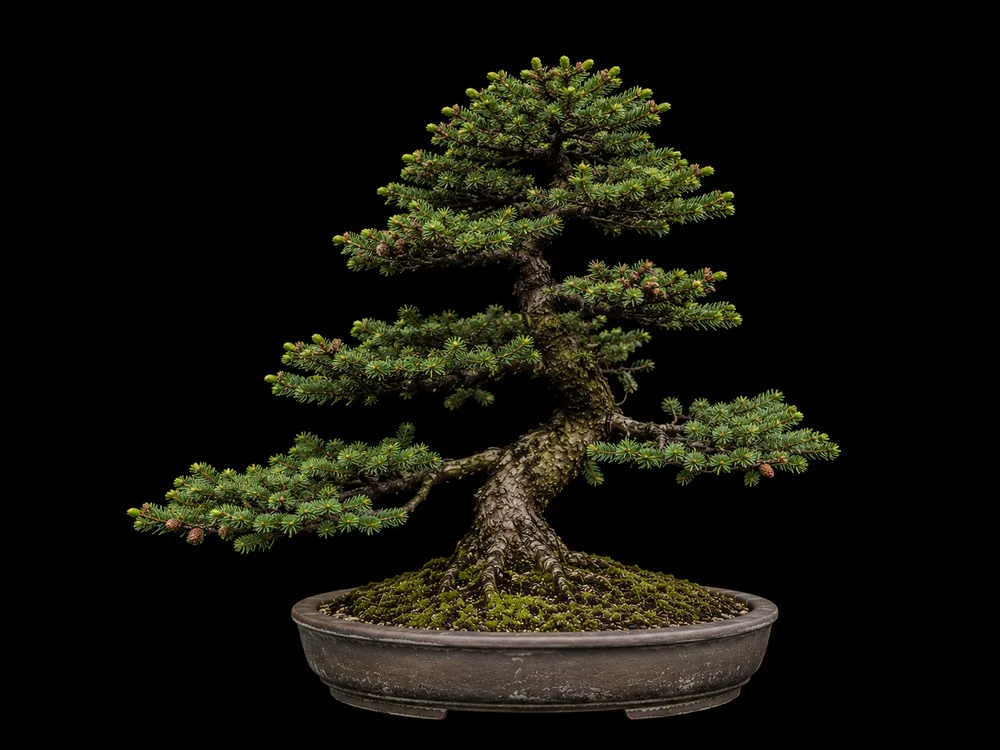
Spruce Bonsai Care
Picea jezoensis
1 Spruce bonsai in stock, from $325.00 Shipped direct from our nursery partners, with a 48-hour live-arrival guarantee. See the trees
Zones 2 to 7. Spruces are classic, refined bonsai conifers. Most are lost to overwatering.
Pinaceae · Evergreen coniferous tree
Spruce quick reference
| USDA zones | 2–7 (P. jezoensis reliably hardy to about zone 5; very cold-tolerant) |
|---|---|
| Indoor / outdoor | Strictly outdoor, year-round; needs cold winter and fresh air |
| Light | Full sun to light shade; Ezo spruce prefers somewhat shadier conditions than pines |
| Water | Evenly moist, leaning slightly toward dry — water thoroughly when topsoil dries; never keep roots soaking, never let the rootball dry out completely |
| Soil | Free-draining mix (akadama/pumice/lava), slightly acidic |
| Repot | Every 2–4 years (young more often, mature less) |
| Frost | Excellent — among the hardiest bonsai conifers |
| Mature height (as bonsai) | Tree to 40m in nature; bonsai usually 25-70cm. |
| Growth rate | Slow to moderate. |
| Season of interest | Year-round; dense green needles, tight buds. |
| Leaf reduction | Moderate; needles reduce with careful pinching of new growth. |
| #1 cause of death | Overwatering/root rot, and weakening from too-aggressive pruning at once |
Overview & Character
Spruces are classic, refined bonsai conifers, and the **Ezo spruce (Picea jezoensis)** from Hokkaido and northeast Asia is the quintessential bonsai spruce — short, neat needles, dense ramification, and a naturally elegant, layered silhouette that lends itself to formal and informal upright, group plantings and rock arrangements. Spruce are extremely cold-hardy and grow well in cooler climates where some other conifers struggle.
The defining cultural fact you must respect: spruce does not back-bud readily on old, bare wood. Unlike yew or many junipers, if you cut a spruce branch back to bare old wood, you usually will not get new growth there — and you may simply kill the branch. All development is done by directing energy into new shoots, pinching and selecting them, and building ramification forward from existing foliage. Plan your structure before you remove a branch, because you generally cannot regrow it.
Identification
FOLIAGE: Short, stiff, sharply pointed needles, square in cross-section (you can roll a single needle between your fingers — it rolls, whereas a flat fir needle won't). Needles attach singly to small woody pegs (sterigmata) that remain on the twig after needles drop, leaving the twig rough and peg-studded. Ezo spruce needles are notably short and fine, dark green above with bluish-white stomatal lines beneath.
BARK & TRUNK: Grayish-brown, becoming scaly and flaky with age; older trunks develop platey, rugged bark.
GROWTH HABIT/FORM: Conical with horizontal to slightly downswept branch tiers; strongly apically dominant, so the leader and upper branches run away in vigor if not checked.
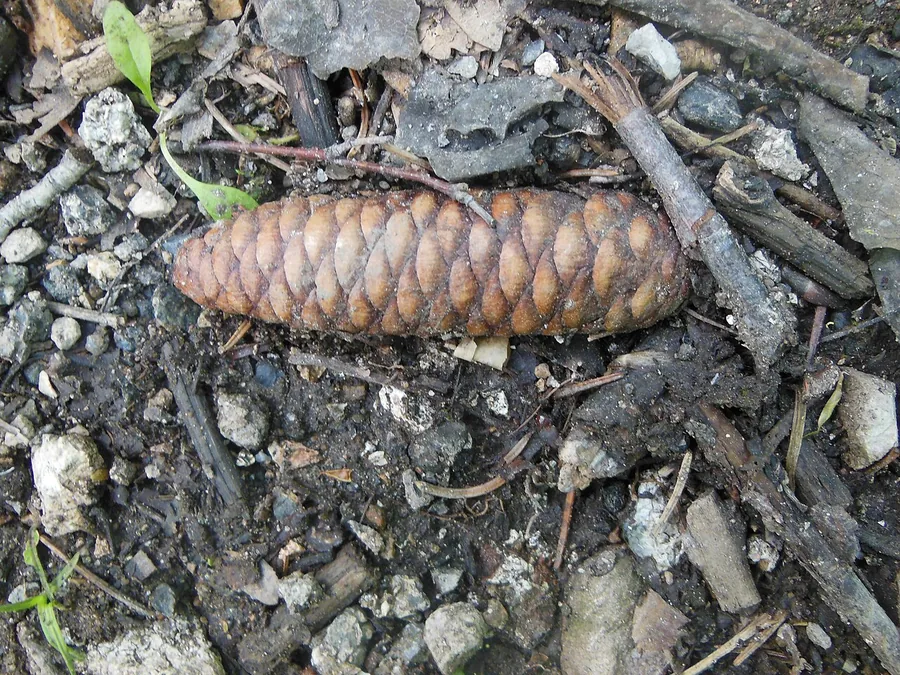
FLOWERS/FRUIT/CONES: Cones hang downward and fall intact when mature (a key spruce trait). Female cones are pendulous and cylindrical.
Look-alikes & how to tell them apart: Spruce is most confused with Fir (Abies) and Hemlock (Tsuga). The reliable tests: spruce needles are square in cross-section and roll between the fingers; they sit on woody pegs that leave the twig rough when needles fall; and spruce cones hang down and drop whole. Fir needles are flat, soft, can't be rolled, leave smooth round scars when they drop, and fir cones stand upright and disintegrate on the tree. Hemlock needles are flat, much softer, two-ranked with white bands beneath, and its cones are tiny. If the needle is square, rolls, and is prickly — it's a spruce.
Climate & USDA Zone
Spruces are cold-climate trees and among the hardiest bonsai conifers, comfortable through USDA zones 2–7 (Ezo spruce reliably to about zone 5). They must be grown outdoors year-round and genuinely need winter cold, strong light and fresh moving air. They struggle in hot, humid summers and in regions without a proper cold season. Give some afternoon shade in hot climates to prevent needle scorch.
Light
Full sun to light shade. Most spruces take full sun, but Ezo spruce prefers somewhat shadier conditions and can scorch in intense, hot sun — bright light with afternoon shade in summer is ideal. Adequate light keeps needles short and internodes tight; too much shade gives leggy, weak growth.
Watering
Spruce wants soil that is evenly moist but leaning toward the drier side — emphatically not soggy. Water thoroughly as soon as the topsoil begins to dry, then let it approach (but never reach) dryness before watering again. The two failure modes are equally fatal: roots kept constantly soaking will rot, and a rootball allowed to dry out completely will kill fine roots and brown the foliage. In winter, water less, but never let the rootball go bone-dry.
Soil & Root Care
Use a free-draining, slightly acidic mix — akadama with pumice and lava rock is standard. Good drainage is essential to avoid the root rot that is the species' main killer. Repot every 2–4 years in early spring as buds swell; young trees more often, mature specimens less. Spruce roots resent heavy disturbance, so reduce roots gradually over several repottings rather than bare-rooting all at once. Keep humidity up after repotting.
Feeding
Feed from spring through autumn with a balanced fertilizer; an organic feed works well. Ease off high nitrogen in late summer to keep growth compact and harden it for winter. Because spruce builds entirely from new shoots, steady (not excessive) feeding supports the fresh growth you need for ramification — but over-feeding produces long, coarse needles and weak structure.
Pruning & Styling
Work with the spruce's biology, not against it. The governing rule: do not cut into bare old wood expecting it to back-bud — it generally will not. Build and refine using new growth.
- Pinching new shoots (the main technique): In spring, let new candle-like shoots extend to roughly 0.5–1.5 inches (1–4 cm), then pinch or cut each back to an average length across the tree to balance energy. This typically produces a new terminal bud and often back buds further down the current shoot, giving you ramification. Do this by hand on soft growth; avoid tearing.
- Energy balance: Spruce is strongly apically dominant — pinch the strong top/outer shoots harder and leave weak interior/lower shoots alone, or the lower branches will weaken and die back.
- Avoid drastic cutback all at once. Ezo spruce especially is sensitive to heavy reduction; spread major work over multiple seasons so you never weaken the whole tree at once.
- Wiring: Branches wire well, best in autumn through winter; the wood is brittle, so bend carefully and watch for wire bite — spruce bark marks easily.
- Deadwood: Jin and shari are possible but the wood is softer and less durable than juniper or yew; protect it with preservative.
Propagation & Cuttings
Ease: Difficult from cuttings. Best methods: seed; collected.
Spruce (Picea, here P. jezoensis and relatives) is grown from seed — cold-moist stratify ~1–2 months and sow in spring; germination is fair, seedlings slow. Cuttings root poorly; dwarf forms are grafted. Spruce is widely collected as alpine yamadori. For bonsai, seedlings, grafted dwarfs, or collected trees are the routes; spruce back-buds only modestly on old wood, so preserve inner growth and refine the flat, layered pads by careful pinching of new shoots.
Pests
- Spider mites — the most common and serious pest, especially in hot, dry conditions; foliage goes dull, bronzed and speckled. Check undersides; treat early.
- Adelgids (spruce gall adelgid, woolly adelgid) — sap-suckers that cause pineapple-like galls and white woolly tufts; remove and treat.
- Aphids — including spruce aphid, which can cause heavy needle drop; inspect interior needles.
- Scale insects and occasional sawfly larvae that chew needles.
Disease, Fungus & Infection
- Root rot (Phytophthora / Pythium) from wet soil — the principal disease threat; prevent with sharp drainage and correct watering.
- Needle cast fungi (Rhizosphaera, etc.) — older needles yellow, brown and drop, often from the inside out; worsened by poor airflow and overhead wetness. Improve ventilation and keep foliage dry.
- Cytospora canker on stressed trees, causing branch dieback and resin bleeding.
Good airflow, sharp drainage and avoiding stress prevent most problems.
Most Common Causes of Death
1. Overwatering / root rot. Constantly soggy soil rots the roots. Prevention: free-draining mix; water only when topsoil starts to dry. 2. Cutting into bare old wood expecting back-budding. It won't break, and you lose the branch permanently. Prevention: never remove foliage you can't regrow; build from new shoots; plan structure first. 3. Too-aggressive pruning all at once. Ezo spruce in particular collapses under heavy simultaneous cutback. Prevention: stage major work over several seasons. 4. Letting the rootball dry out completely. Fatal to fine roots. Prevention: never let it go bone-dry, even in winter. 5. Spider mite infestation going unnoticed. Can defoliate and kill in a hot summer. Prevention: inspect regularly in heat; treat at first sign. 6. Kept indoors / no winter cold. Spruce needs dormancy and fresh air. Prevention: outdoors year-round. 7. Heat and sun scorch. Hot, dry, full-sun exposure browns Ezo spruce. Prevention: afternoon shade in summer; keep roots cool and watered.
Seasonal Calendar
- Spring: Repot as buds swell (early spring; gradual root reduction). Begin feeding. As new shoots extend, pinch/cut them to length to balance energy and drive back-budding on the new growth.
- Summer: Water carefully (moist, not wet), afternoon shade in heat. Watch closely for spider mites and adelgids. Continue light feeding.
- Autumn: Reduce nitrogen. Best season for wiring and careful structural work. Tidy and select shoots.
- Winter: Full dormancy outdoors. Excellent cold tolerance, but protect pots from extreme freeze-thaw. Water less, never bone-dry. Continue wiring on dormant wood.
Close-up photo reference
Compare your tree against these to confirm the species and spot problems early.

Sources
- Bonsai Empire — Spruce (Picea) care
- Bjorn Bjorholm / Eisei-en — Spruce & Fir care guide
- Bonsai Today — Picea glehnii guide
- Treeigami — Norway Spruce (Picea abies) care timeline
Buy a Spruce bonsai
- All species
- Shop bonsai trees, tools & supplies
- How to Water a Bonsai (Without Killing It)
- Bonsai Soil: What to Buy, What to Mix, and What It Costs
- Why Bonsai Die After Repotting: Diagnosing a Failed Repot
- Pruning vs. Pinching: Shaping Your Bonsai
- Overwintering Bonsai: Cold-Season Care
- Indoor Bonsai Light and Humidity: Making a Windowsill Actually Work
- Root Rot on bonsai
- Overwatering on bonsai
- Underwatering (Drought Stress) on bonsai
- Winter / Frost Damage on bonsai
- Leaf Scorch / Sunburn on bonsai
- Norway Spruce bonsai care
- White Spruce bonsai care
- Ezo Spruce bonsai care
- Colorado Blue Spruce bonsai care