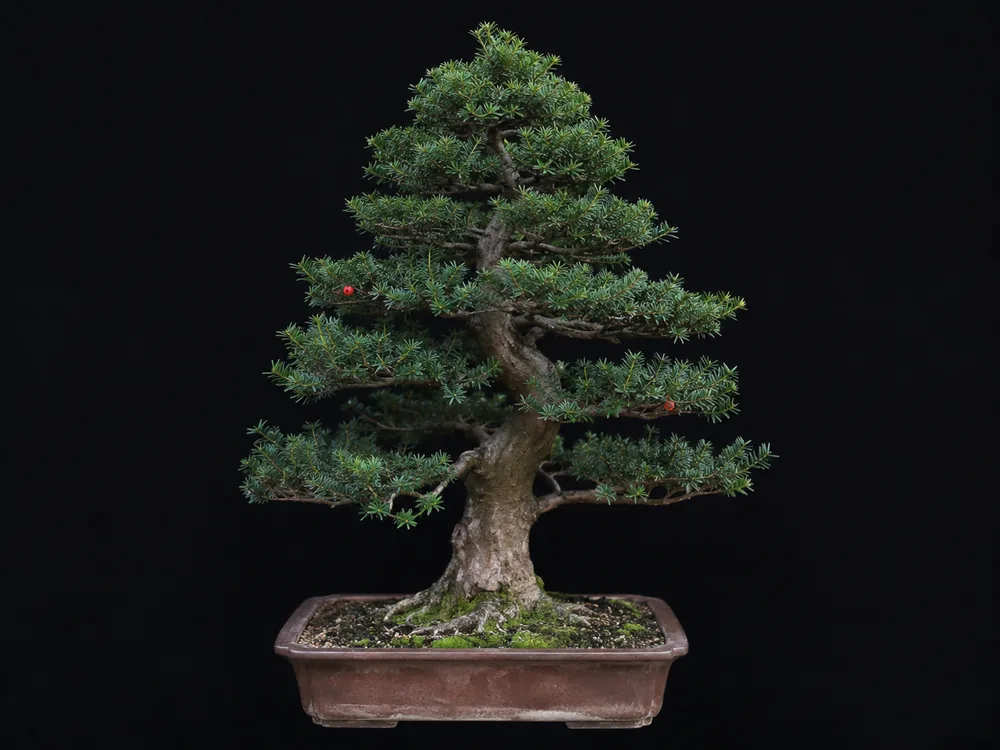
Japanese Yew Bonsai Care
Taxus cuspidata
Zones 4 to 7, outdoor only. A superb, long-lived evergreen conifer for bonsai, valued for very dark green needles. Most are lost to overwatering.
Taxaceae (yew family) · Evergreen coniferous tree/shrub
Japanese Yew quick reference
| USDA zones | 4–7 |
|---|---|
| Indoor / outdoor | Outdoor only — bright light, fresh air, winter rest |
| Light | Partial to full sun — shade from harsh afternoon sun in heat |
| Water | Slightly dry between waterings — never constantly wet |
| Soil | Free-draining, neutral-to-slightly-acidic mix (pH 5–6) |
| Repot | Every 2–4 years (old trees longer) |
| Frost | Hardy; shelter from frost + sun/icy wind together |
| Mature height (as bonsai) | 10-20m wild; 30-90cm as bonsai |
| Growth rate | Slow; tolerates hard pruning and old wood |
| Season of interest | Year-round dark evergreen; red arils in autumn |
| Leaf reduction | Needles reduce moderately with pinching and light |
| #1 cause of death | Root rot from wet soil; winter sun/wind on frozen roots (all parts toxic) |
Overview & Character
The Japanese Yew is a superb, long-lived evergreen conifer for bonsai, valued for very dark green needles, rich red-brown flaky bark, fine ramification, and outstanding deadwood potential. Crucially — and unlike pines, spruces, and false-cypress — yew back-buds readily on old wood, so it can be cut back hard and rebuilt, making it forgiving to style.
It is an outdoor tree wanting bright light (with shelter from fierce afternoon sun in hot climates), a wet/dry watering cycle, lime-free water, and a winter rest with protection from the damaging combination of frost plus sun and icy wind. All parts except the red aril are poisonous — handle and site accordingly.
Identification
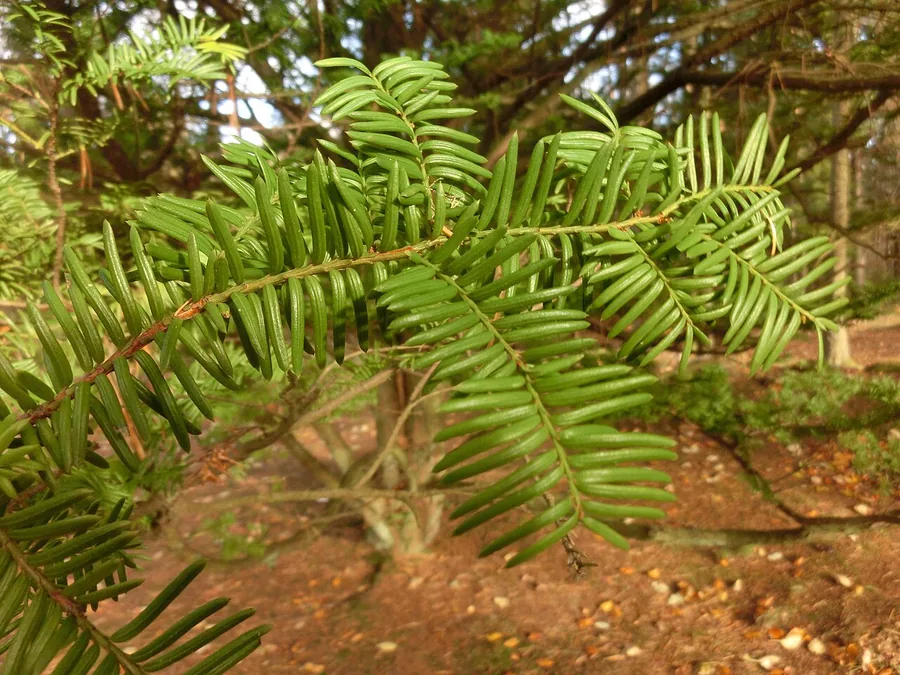
Foliage: Soft, flattened, needle-like leaves ~1.5–2.5 cm borne in two ranks along the shoot, very dark green above, paler green-yellow beneath (no bright white bands); not sharp-tipped.
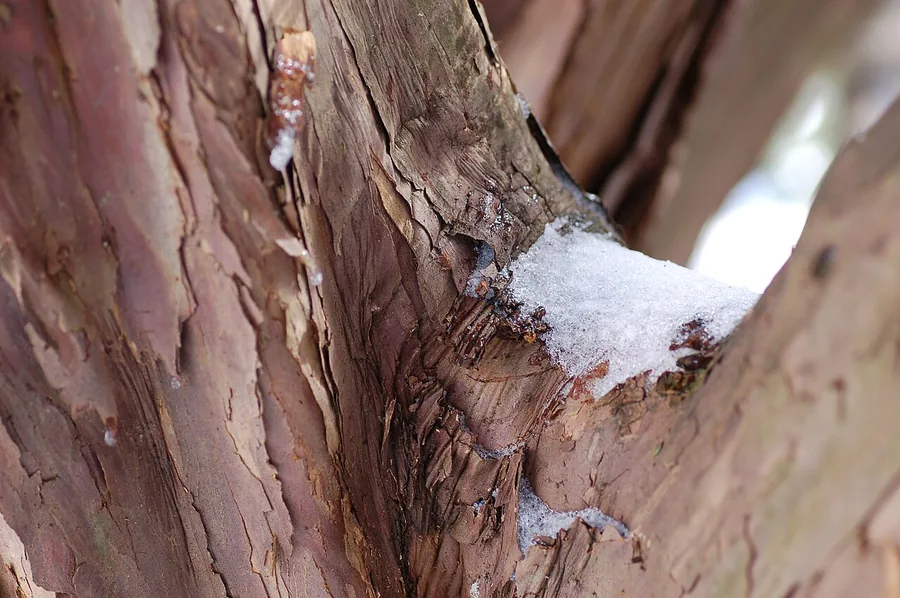
Bark & trunk: Thin, reddish-brown, scaly and flaking, revealing patches; ages beautifully and takes fine deadwood.
Growth habit / form: Dense, often spreading shrub/tree with excellent twigging; suits informal upright, literati, cascade, and deadwood styles.
Flowers / fruit: Dioecious; females bear a single seed in a fleshy red cup-like aril (the only non-toxic part); males shed pollen in spring.
Look-alikes & how to tell them apart: Yew vs fir/hemlock: yew needles are two-ranked, soft, dark green with no white bands beneath and bear red arils (not cones); the red aril and lack of true cones are the instant tells. Taxus cuspidata differs from English Yew (T. baccata) in hardier, slightly more upright-curved needles.
Climate & USDA Zone
Hardy in USDA zones 4–7. Outdoor year-round with a winter rest. In hot, dry climates protect from strong afternoon summer sun; in winter shelter from the damaging combination of hard frost with bright sun and icy wind, which burns foliage and roots. Prefers lime-free, slightly acidic conditions.
Light
Partial to full sun. It thrives in bright light with good airflow and tolerates light shade better than most conifers, but give shelter from harsh afternoon sun in hot, dry summers to avoid scorch.
Watering
Let the soil begin to dry between waterings — yew dislikes constantly wet roots.
- Water thoroughly once the surface has started to dry, then allow a partial dry-down; do not keep the roots soaking.
- Mist/spray the foliage with lime-free water in dry spells.
- Sharp drainage is essential — yew is notably prone to root rot in wet soil.
Soil & Root Care
Soil: A free-draining, neutral-to-slightly-acidic mix (target pH ~5–6, not over 7) — akadama / pumice / lava.
Repotting:
- Frequency: every 2–4 years; very old specimens less often.
- Timing: early spring. Do not remove a large amount of root at once — yew resents heavy root reduction.
- Aftercare: shelter, keep on the slightly-dry-but-not-dry side while recovering.
Feeding
Apply solid organic fertilizer every ~4 weeks, or a weekly balanced liquid feed, through the growing season; ease off in winter. Don't feed freshly repotted trees.
Pruning & Styling
- Back-buds on old wood — a major advantage: it can be pruned hard and will throw new shoots from bare branches and the trunk, allowing major rebuilds.
- Trim new shoots and pluck old needles in summer to let light into the interior and drive back-budding and ramification.
- Deadwood: excellent jin/shari; preserve with lime sulfur.
- Wiring: branches are flexible and set well; protect the thin flaky bark.
- Suits informal upright, literati, cascade, and deadwood styles.
Propagation & Cuttings
Ease: Easy (yews root from cuttings). Best method: cuttings.
Taxus cuspidata roots reliably from semi-hardwood cuttings taken with a heel in autumn to winter, dipped in IBA and kept cool and humid — rooting is slow (up to several months) but dependable, and this is how cultivars stay true. Seed is deeply dormant (warm-then-cold over 1–2 years) and slow. For bonsai, cuttings clone good forms and yew tolerates hard cutting-back with strong back-budding even from old wood, plus superb deadwood potential.
Pests
- Vine weevil (larvae eat roots — serious for yew)
- Scale insects and mealybugs
- Spider mites (hot, dry conditions)
- Aphids
Treat with horticultural oil, insecticidal soap, or appropriate systemics; catch infestations early.
Disease, Fungus & Infection
- **Root rot (Phytophthora)** — from wet soil/poor drainage; yew is especially prone, the leading killer.
- Winter scorch — foliage/root burn from frost combined with sun and icy wind (cultural); shelter in winter.
- Needle blight / dieback — in damp, stagnant conditions; improve airflow.
Prevention: sharp drainage and a wet/dry cycle, lime-free water, winter shelter, and root-pest vigilance.
Most Common Causes of Death
1. Root rot from wet soil. Yew is highly rot-prone — water on a wet/dry cycle with very sharp drainage. 2. Winter frost + sun/icy wind together. Burns foliage and roots; shelter in winter. 3. Heavy root reduction at repotting. Resents it — root-prune conservatively. 4. Vine weevil grubs eating roots. Inspect/treat; a common silent yew killer. 5. Constantly soggy soil / poor drainage. Never keep the roots soaking. (Note: all parts except the red aril are toxic.)
Seasonal Calendar
- Spring: Repot if due (conservative root work); resume feeding; bright light.
- Summer: Wet/dry watering (lime-free misting); pluck old needles and trim to drive back-budding; afternoon shade in fierce heat.
- Autumn: Structural pruning (it back-buds, so you can cut hard); wire; taper feeding.
- Winter: Outdoor rest; shelter from frost combined with sun and icy wind; keep on the dry side, not soggy.
Close-up photo reference
Compare your tree against these to confirm the species and spot problems early.
.jpg)

Sources
Where to buy a Japanese Yew bonsai
We don’t stock Japanese Yew at the moment. These species need similar care and we have them now — they are the closest match in our catalogue.
- Boxwood — similar care, in stock now
Browse all bonsai trees for sale or find a species matched to your climate and space.
- All species
- Shop bonsai trees, tools & supplies
- How to Water a Bonsai (Without Killing It)
- Bonsai Soil: What to Buy, What to Mix, and What It Costs
- Why Bonsai Die After Repotting: Diagnosing a Failed Repot
- Pruning vs. Pinching: Shaping Your Bonsai
- Overwintering Bonsai: Cold-Season Care
- Indoor Bonsai Light and Humidity: Making a Windowsill Actually Work
- Root Rot on bonsai
- Winter / Frost Damage on bonsai
- Leaf Scorch / Sunburn on bonsai
- Spider Mites on bonsai
- Scale Insects on bonsai
- Yew bonsai care
- Gold Arborvitae bonsai care
- Norway Spruce bonsai care
- Boxwood bonsai care