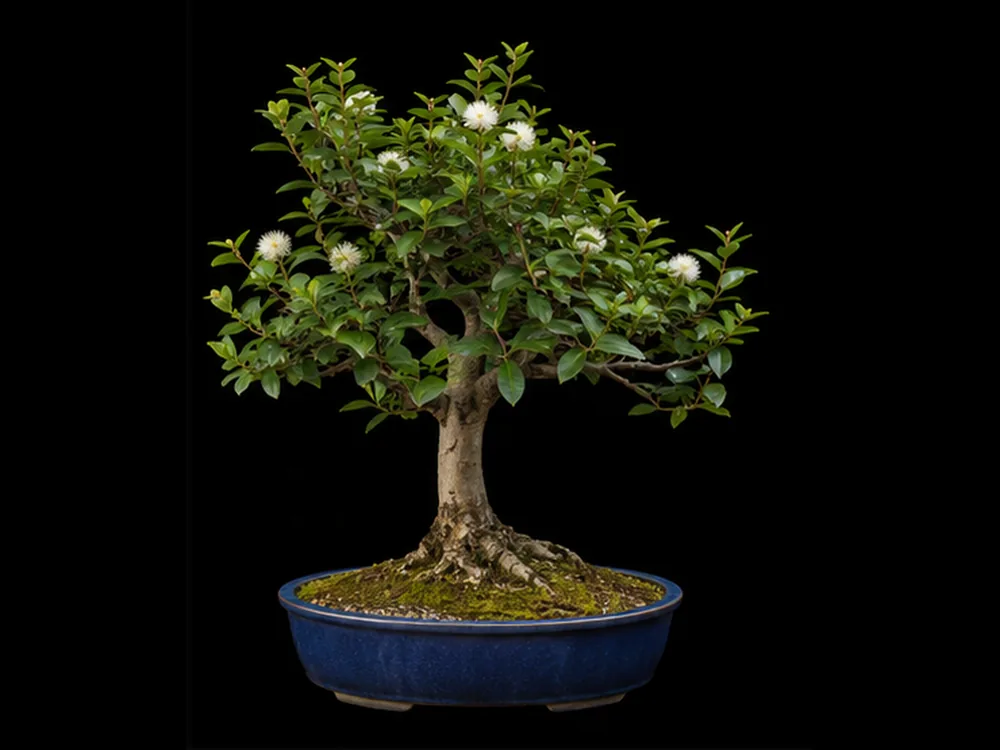
Brush Cherry Bonsai Care
Syzygium paniculatum
9 Brush Cherry bonsai in stock, from $16.95 Shipped direct from our nursery partners, with a 48-hour live-arrival guarantee. See the trees
Zones 10 to 11, indoor or out. A vigorous evergreen from Australia, prized for small, glossy. Most are lost to drying out.
Myrtaceae (myrtle family) · Evergreen broadleaf tree/shrub
Brush Cherry quick reference
| USDA zones | 10–11 (grow indoors / under glass in cooler zones) |
|---|---|
| Indoor / outdoor | Indoor-capable — outdoors in warmth, protected from frost |
| Light | Sunny and warm — 4–6+ hours; partial shade in fiercest heat |
| Water | Keep consistently moist — thirsty, never let it dry out |
| Soil | Free-draining but moisture-retentive, slightly acidic mix |
| Repot | Every 2 years, in spring |
| Frost | Low — protect below ~−5 °C / 23 °F (brief light frost only) |
| Mature height (as bonsai) | Tree to 15 m; kept 25-60 cm as bonsai |
| Growth rate | Fast |
| Season of interest | Red new growth, white flowers, evergreen |
| Leaf reduction | Good - small glossy leaves reduce well |
| #1 cause of death | Drying out / underwatering; cold damage |
Overview & Character
The Brush Cherry is a vigorous evergreen from Australia, prized for small, glossy, firm leaves that flush coppery-red on new growth, fluffy white powderpuff flowers, and (in good conditions) edible rosy-magenta berries. It takes well to dense ramification and frequent trimming, making it a popular, fast, rewarding broadleaf — often sold as an indoor bonsai in cooler climates.
Its two main demands are steady moisture (it is thirsty and resents drying out, often dropping leaves if it does) and protection from frost. Given warmth, light, and consistent water it grows quickly and back-buds freely. The wood lignifies fast, so wiring sets relatively quickly.
Identification
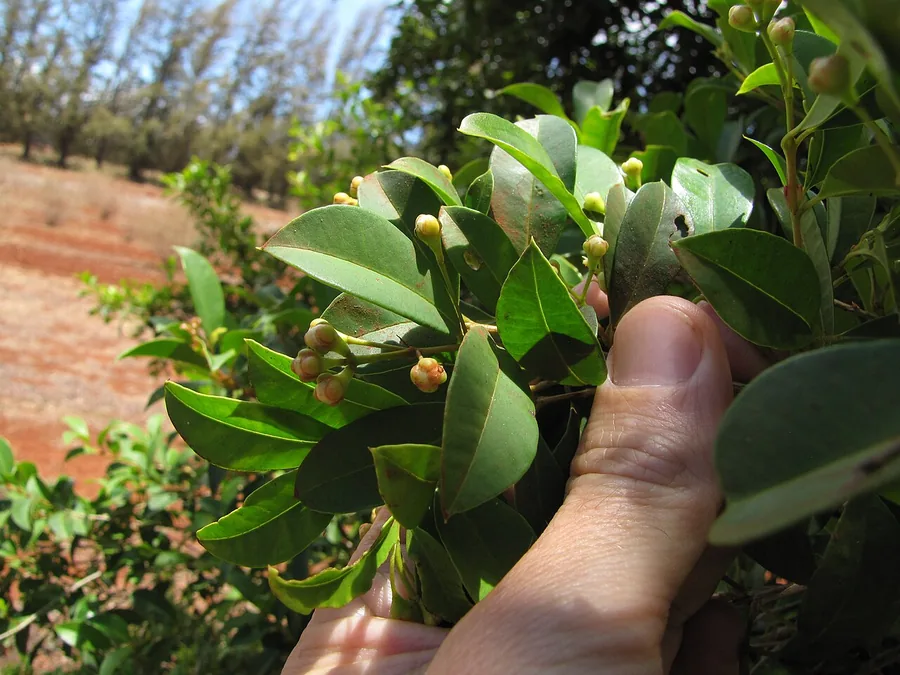
Foliage: Small, opposite, elliptic to oval leaves ~3–5 cm, glossy, firm, and deep green, with new growth flushing bronze-red to pink; aromatic when crushed (a myrtle-family trait). Leaf margins are smooth.
Bark & trunk: Smooth, pale grey-brown bark, often flaking lightly with age to give a clean, mature trunk.
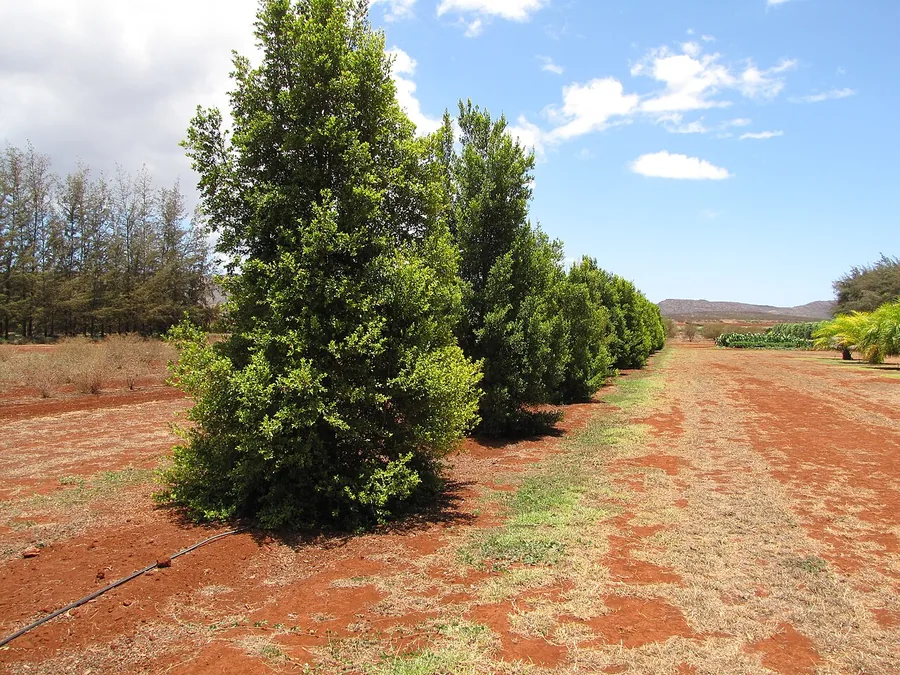
Growth habit / form: Dense, upright, fast-growing evergreen shrub/tree that twiggs up readily; suits informal upright, formal upright, and hedge/broom-influenced styles.
Flowers / fruit: Fluffy, white, many-stamened powderpuff flowers in clusters, followed by oval rosy-red to magenta edible berries (~2 cm).
Look-alikes & how to tell them apart: Easily confused with related myrtles, especially **Surinam Cherry (Eugenia uniflora) — distinguish by fruit (Brush Cherry: smooth oval berry; Surinam: deeply ribbed/pumpkin-shaped fruit) and by Brush Cherry's firmer, glossier foliage. Also confused with true Myrtle (Myrtus)**; the coppery new growth and powderpuff flowers point to Syzygium.
Climate & USDA Zone
Hardy outdoors in USDA zones 10–11. It can take brief, light frost (to roughly −5 °C) but is fundamentally frost-tender, so in cooler zones it is grown as an indoor/greenhouse bonsai, summered outdoors and brought in before cold nights. It enjoys warmth and humidity.
Light
Bright, sunny, warm conditions — at least 4–6 hours of direct light; more is better, with good leaf color and tight growth in strong light. In the hottest climates give some afternoon shade to prevent scorch. Indoors, give the brightest possible window (south-facing) and consider supplemental light in winter.
Watering
Keep the soil consistently moist — this is a thirsty species that must not dry out.
- In active growth, especially summer, it may need daily watering (sometimes twice in heat); water before the surface dries.
- Letting the rootball dry out causes rapid leaf drop and dieback.
- Still ensure free drainage — it wants moist, not waterlogged, roots.
- Reduce somewhat in cool weather but never let it go bone-dry.
Soil & Root Care
Soil: A free-draining but moisture-retentive, slightly acidic bonsai mix (e.g. akadama / pumice / lava, optionally a little organic matter) suits its thirst while preventing sogginess.
Repotting:
- Frequency: about every 2 years, in spring.
- Prune roots moderately (up to ~1/3); it tolerates root work well.
- Aftercare: keep warm, shaded from harsh sun, and consistently moist while it re-establishes.
Feeding
Feed regularly through the growing season — a fertilizer for acid-loving plants (as used for azaleas) every ~2 weeks in spring–autumn, and roughly monthly in winter if kept actively growing indoors. Ease off for freshly repotted or stressed plants.
Pruning & Styling
- Trimming: Cut new shoots back to 2–3 leaf pairs; it back-buds readily and ramifies quickly, so trim often to build density.
- Flowering: Blooms on current growth — from around mid/late spring, ease off hard trimming if you want flowers, since shearing removes the terminal flower buds.
- Wiring: Young shoots are flexible but the wood lignifies fast and branches are brittle, so wire and bend carefully; wire often sets within 3–4 months — check frequently to avoid bite.
- Suits informal/formal upright and broom styles.
Propagation & Cuttings
Ease: Easy. Best methods: cuttings; seed.
Syzygium roots readily from semi-hardwood cuttings taken in the warm season, treated with rooting hormone and kept humid and warm. Fresh seed from the ripe fruit germinates quickly and easily — sow at once, as the seed does not store. It also air-layers well. As a subtropical, propagate in warmth and protect from frost. For bonsai, cuttings build the dense, glossy, small-leaved canopy fast, and the species back-buds strongly after pruning, so cutting-grown stock develops ramification quickly.
Pests
- Aphids and scale (the Australian brush-cherry psyllid causes pimpled, distorted leaves on susceptible plants)
- Mealybugs
- Spider mites (hot, dry indoor air)
Treat with insecticidal soap or horticultural oil; keep humidity up indoors to discourage mites.
Disease, Fungus & Infection
Generally tough and not especially disease-prone; problems are mostly cultural:
- Root rot — from waterlogged soil/poor drainage (less common than drought stress for this thirsty species).
- Leaf drop — from drying out, cold drafts, or sudden environment change (a stress response, not an infection).
- Fungal leaf spot — in stagnant, damp, low-airflow conditions; improve airflow and remove affected leaves.
Prevention: steady moisture, warmth, good light, and airflow.
Most Common Causes of Death
1. Drying out / underwatering. The top killer — a missed watering causes heavy leaf drop and dieback; keep consistently moist. 2. Cold / frost damage. Frost-tender; protect below ~−5 °C and avoid cold drafts. 3. Low light indoors. Leggy, weak growth and decline; give the brightest spot. 4. Waterlogging / root rot. Keep moist but well-drained, never standing in water. 5. Sudden environmental shock. Big swings in light/temperature trigger leaf drop; acclimate gradually.
Seasonal Calendar
- Spring: Repot if due; resume feeding; trim to build structure (ease off before flowering); move outdoors after frost.
- Summer: Full warmth and light; water heavily (often daily); feed; enjoy flowers/berries.
- Autumn: Taper water/feeding; bring indoors before nights turn cold.
- Winter: Bright, warm spot indoors; keep moist (not wet); light feeding only if actively growing.
Close-up photo reference
Compare your tree against these to confirm the species and spot problems early.
.jpg)
.jpg)
Sources
Buy a Brush Cherry bonsai
- Small Pre Flowering Brush Cherry Bonsai, 3 Years Old (Eugenia myrtifolia) — $16.95
- Small Flowering Brush Cherry Bonsai, 5 Years Old (Eugenia myrtifolia) — $33.95
- Flowering Brush Cherry In Faux Lava Rock Bonsai, 5 Years Old (Eugenia myrtifolia) — $39.95
- Medium Flowering Brush Cherry Bonsai, 9 Years Old (Eugenia myrtifolia) — $43.95
- Small Flowering Brush Cherry Bonsai, Land and Water Pot, 5 Years Old (Eugenia myrtifolia) — $45.95
- Flowering Brush Cherry Group Bonsai, Three Tree Forest, 5 Years Old (Eugenia myrtifolia) — $59.95
- Flowering Brush Cherry Group Bonsai, Five Tree Forest, 7 Years Old (Eugenia myrtifolia) — $125.00
- Flowering Brush Cherry Seven Bonsai, Forest Group, 7 Years Old (Eugenia myrtifolia) — $184.00
- All species
- Shop bonsai trees, tools & supplies
- How to Water a Bonsai (Without Killing It)
- Bonsai Soil: What to Buy, What to Mix, and What It Costs
- Why Bonsai Die After Repotting: Diagnosing a Failed Repot
- Pruning vs. Pinching: Shaping Your Bonsai
- Overwintering Bonsai: Cold-Season Care
- Indoor Bonsai Light and Humidity: Making a Windowsill Actually Work
- Root Rot on bonsai
- Underwatering (Drought Stress) on bonsai
- Winter / Frost Damage on bonsai
- Leaf Scorch / Sunburn on bonsai
- Insufficient Light (Etiolation) on bonsai
- Downy Jasmine bonsai care
- Loquat bonsai care
- Myrtle bonsai care
- Parrot's Beak bonsai care