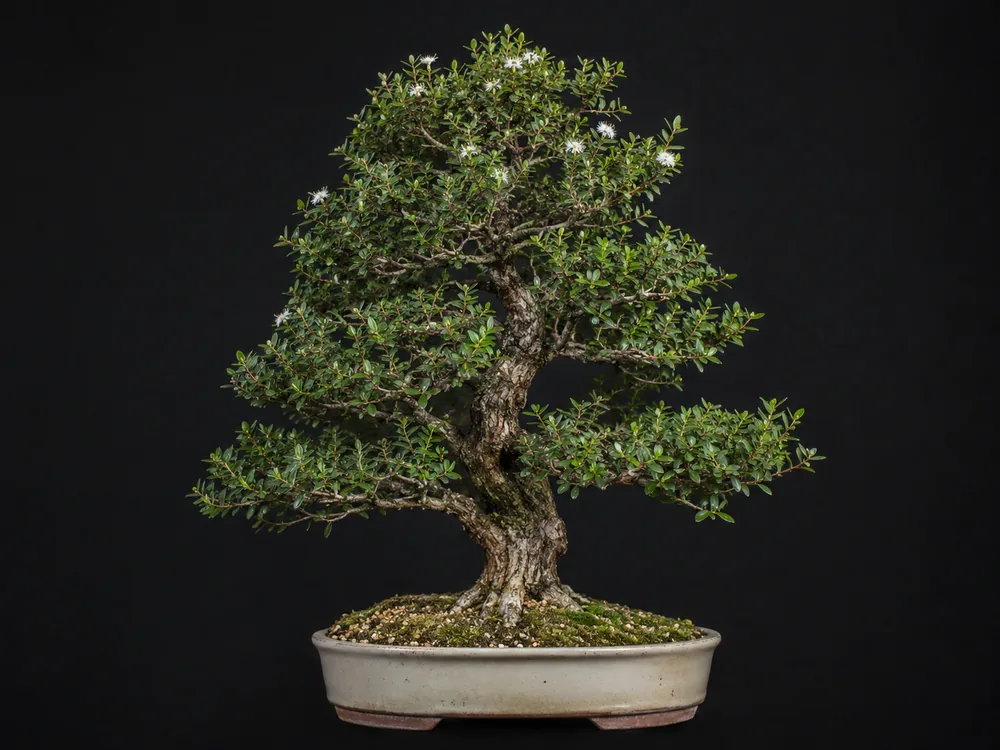
Myrtle Bonsai Care
Myrtus communis
Zones 8 to 11, outdoor. A classic Mediterranean broadleaf evergreen, valued in bonsai for its small, glossy. Most are lost to drying out.
Myrtaceae (myrtle family) · Broadleaf evergreen shrub
Myrtle quick reference
| USDA zones | 8–11 (tender; not frost-hardy) |
|---|---|
| Indoor / outdoor | Outdoors in warm months; protect from frost — overwinter indoors/greenhouse in cold climates |
| Light | Full sun to partial shade; 6+ hours of sun for best flowering and compact growth |
| Water | EVENLY MOIST — keep the rootball moist, never let it dry out, but avoid waterlogging; leans wet-side |
| Soil | Free-draining but moisture-retentive mix; dislikes lime — use rainwater if water is hard |
| Repot | Every 2–3 years in spring |
| Frost | Low — tender; damaged by hard frost |
| Mature height (as bonsai) | 3-5m wild; 20-50cm as bonsai |
| Growth rate | Moderate; dense small-leaved evergreen |
| Season of interest | White summer flowers; aromatic foliage |
| Leaf reduction | Small leaves reduce well with pinching |
| #1 cause of death | Letting the rootball dry out (drying out kills it quickly), plus winter losses from cold and dry indoor air |
Overview & Character
Myrtle is a classic Mediterranean broadleaf evergreen, valued in bonsai for its small, glossy, aromatic leaves, fine twigging, and an abundance of fragrant white flowers in late summer followed by dark berries. Crush a leaf and it releases the warm, spicy scent that has made myrtle a symbol of love and a culinary/ceremonial herb for millennia. As bonsai it forms an elegant, refined small tree well suited to formal and informal upright, broom, and flowering display styles.
Two cultivated forms are common: the standard myrtle and the small-leaved Myrtus communis var. tarentina (compact, smaller leaves, ideal for shohin). Being Mediterranean, myrtle loves sun and warmth and needs a long hot summer to flower well — but it is tender and cannot take hard frost. The defining care point is moisture: myrtle wants its roots kept evenly moist at all times and reacts very badly, often fatally, to drying out.
Identification
FOLIAGE: Small, opposite, lance-shaped to oval leaves, 2–5 cm long, glossy dark green, leathery, and strongly aromatic when crushed (a key identifying trait). Evergreen.
BARK & TRUNK: Reddish-brown bark that becomes flaky and attractively textured with age; trunks develop good character and movement.
GROWTH HABIT/FORM: Dense, bushy, twiggy evergreen shrub that responds well to clipping; naturally rounded but readily trained into tree forms.
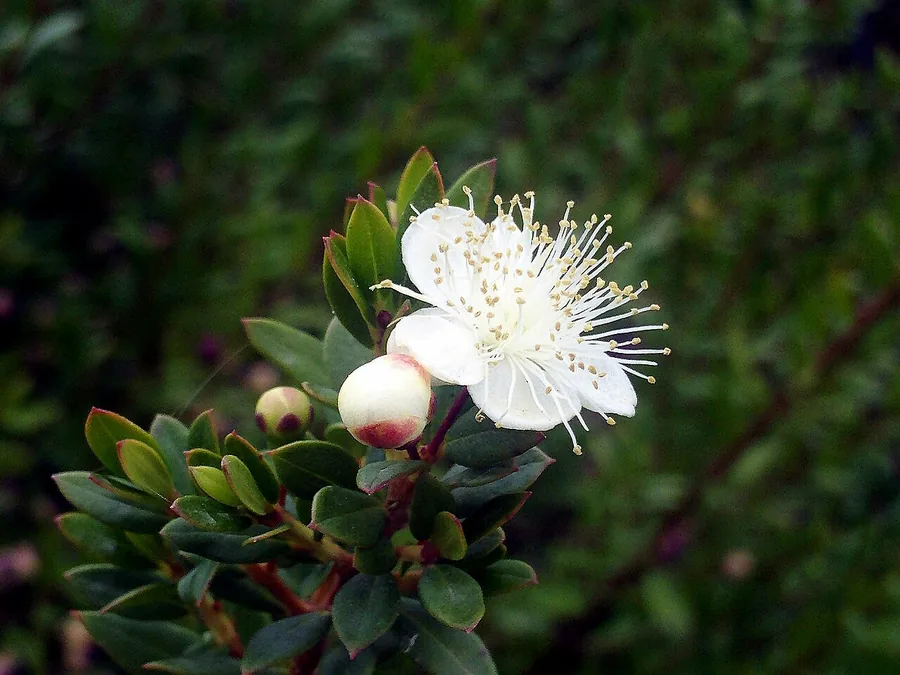
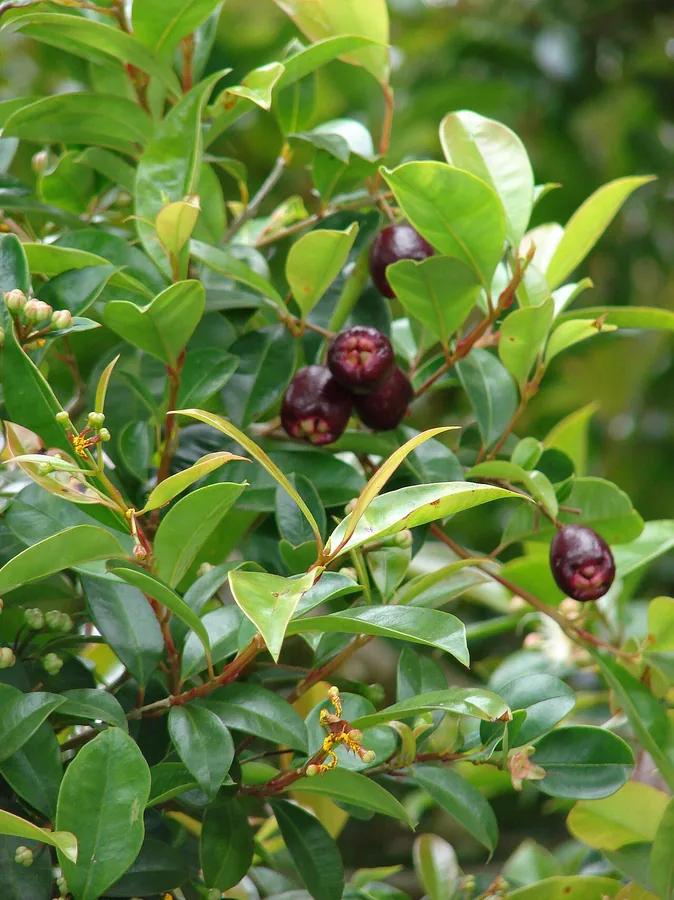
FLOWERS/FRUIT/CONES: Fragrant white flowers about 2 cm across with a prominent boss of long white stamens, borne in late summer; followed by pea-sized blue-black (sometimes white) berries. Heat and a long summer are needed for good flowering.
Look-alikes & how to tell them apart: Often confused with **box (Buxus) and small-leaved evergreen shrubs, but myrtle's leaves are fragrant when crushed (box smells unpleasant/foxy, and its leaves are notched at the tip), and myrtle bears showy white stamen-rich flowers box never does. Distinguish from Crepe Myrtle (Lagerstroemia) — an unrelated deciduous tree with crinkled flowers and no leaf fragrance — and from other Myrtaceae like Lilly Pilly (Syzygium)**. If small glossy leaves smell spicy when crushed and the shrub carries white stamen-puff flowers, it is true myrtle.
Climate & USDA Zone
Best in USDA zones 8–11. It is a warm-temperate/Mediterranean species: it loves heat and sun and needs a long, hot summer to flower, but it is tender and not frost-hardy. In zones 8 and warmer it can live outside year-round with protection during cold snaps; in colder climates it must be moved to a bright, cool, frost-free place (cool greenhouse, conservatory, or bright unheated room) for winter. It is not a true indoor tree but can be overwintered indoors with good light.
Light
Full sun to partial shade, with at least 6 hours of direct sun for compact growth and good flowering. Give it the sunniest spot outdoors in summer; in very hot, dry climates light afternoon shade prevents stress. Overwintered indoors, give it the brightest available window — poor winter light combined with warm dry air weakens it and invites pests.
Watering
Myrtle is on the moist/wet side — keep the rootball evenly moist at all times. Never let it dry out: drying out can kill the tree quickly, which is the single most common cause of death. At the same time, avoid standing water and constant sogginess, which rots roots — the mix should drain freely while holding moisture. Water when the top 2–3 cm of soil begins to dry.
Myrtle dislikes lime: if your tap water is hard, use rainwater where possible, as high lime levels cause leaf yellowing (chlorosis). In summer heat it may need watering once or twice daily; in winter it needs much less, but still never bone dry.
Soil & Root Care
Use a free-draining but moisture-retentive bonsai mix (e.g., akadama with pumice/lava plus some organic matter), slightly acidic to neutral and low in lime. Repot every 2–3 years in spring as growth resumes, pruning roots moderately. Myrtle is reasonably vigorous and recovers well from sensible root work. Avoid alkaline soils and limey water to keep the foliage green.
Feeding
Feed regularly through the growing season (spring through early autumn) with a balanced fertilizer; an ericaceous/acid-leaning feed suits its dislike of lime and helps prevent chlorosis. A feed slightly higher in potassium in mid–late summer supports flowering. Reduce feeding in winter, especially if the tree is resting in cool conditions.
Pruning & Styling
Myrtle takes well to clipping and is excellent for developing fine ramification and dense pads. Trim new shoots back to shape through the growing season; it back-buds well on older wood, so it tolerates fairly hard pruning to rebuild structure. Note that flowers form on the current season's growth in late summer — if you want a flowering display, ease off hard pruning in early summer so flower buds can develop, then prune after flowering. Wire young, flexible shoots carefully; older branches are stiffer. Suits formal/informal upright and broom styles, and the small-leaved tarentina form is ideal for shohin.
Propagation & Cuttings
Ease: Moderate. Best methods: semi-hardwood cuttings; seed.
Myrtus communis roots from semi-hardwood cuttings taken in late summer with IBA under humidity at moderate rates; the compact 'Compacta' forms are cloned this way. Fresh seed from the berries germinates warm after cleaning, though seedlings are slower to flower. It layers where stems touch soil. For bonsai the tiny aromatic evergreen leaves and white flowers suit shohin; cuttings keep the small-leaved form, and the plant back-buds well and shears densely.
Pests
Myrtle is prone to sap-sucking pests, especially when kept indoors over winter in warm, dry, low-light conditions:
- Scale insects — common; brown limpet-like bumps on stems and leaf undersides.
- Mealybugs — white cottony masses in leaf axils.
- Whitefly — clouds of tiny white flies, often indoors.
- Spider mites and thrips — in hot, dry air; cause stippling and leaf damage.
- Aphids — on soft new growth.
Improve light, airflow, and humidity in winter to reduce infestations; treat with insecticidal soap, horticultural oil, or appropriate systemic, and inspect leaf undersides regularly.
Disease, Fungus & Infection
- Root rot — from waterlogged soil; prevent with free-draining mix and balanced watering.
- Leaf chlorosis (lime-induced) — not strictly a disease but a common disorder from hard water/alkaline soil; yellowing leaves with green veins. Prevent with rainwater and acid-leaning soil/feed.
- Sooty mould — black coating that grows on the honeydew left by scale, mealybug, whitefly, and aphids; control the underlying pests and it clears.
- Fungal leaf spots — possible in damp, stagnant conditions; improve airflow.
Most Common Causes of Death
1. Letting the rootball dry out — myrtle can die quickly from a single severe drying; the number-one killer. Prevention: keep soil evenly moist, check daily in summer, never let it go bone dry. 2. Frost / cold damage — it is tender and frost will damage or kill it. Prevention: move to a frost-free, bright, cool place before frosts; don't leave it out in freezing weather. 3. Poor winter conditions indoors — warm, dry, dark rooms cause leaf drop, weakness, and pest outbreaks. Prevention: overwinter bright and cool, away from heaters; maintain humidity. 4. Root rot from waterlogging — constant sogginess suffocates roots. Prevention: free-draining mix; water by checking the soil, not the clock. 5. Lime-induced chlorosis and decline — hard water/alkaline soil yellows and weakens it. Prevention: use rainwater and acid-leaning soil and feed. 6. Pest infestation (scale/mealybug/whitefly) — sap-suckers debilitate a tree, especially in winter. Prevention: inspect regularly, treat early, keep winter conditions bright and airy. 7. Heat/drought stress in full summer sun without enough water — combined sun and dry roots scorches and stresses the tree. Prevention: keep up with watering; light afternoon shade in extreme heat.
Seasonal Calendar
- Spring (Mar–May): Repot as growth resumes. Resume feeding. Begin trimming for shape. Move outdoors once frosts have passed. Increase watering as it wakes up.
- Summer (Jun–Aug): Full sun and warmth — peak growth and flowering. Water generously and never let it dry out; possibly daily. Ease hard pruning so flowers can form; enjoy the fragrant blooms in late summer. Feed steadily; watch for mites/thrips in heat.
- Autumn (Sep–Nov): Berries form after flowering. Reduce feeding. Begin moving toward winter protection as nights cool; bring under cover before first frost.
- Winter (Dec–Feb): Keep frost-free, bright, and cool. Water sparingly but never let the soil dry completely. No feeding. Watch closely for scale, mealybug, and whitefly in indoor/greenhouse conditions.
Close-up photo reference
Compare your tree against these to confirm the species and spot problems early.

.jpg)
Sources
- Care guide for the Myrtle Bonsai tree (Myrtus communis) — Bonsai Empire
- Myrtle Bonsai Care Guide (Myrtus communis) — Make Bonsai
- Myrtus communis — North Carolina Extension Gardener Plant Toolbox
- How to Care for Bonsai: Myrtle (Myrtus communis) — KarensGardenTips
Where to buy a Myrtle bonsai
We don’t stock Myrtle at the moment. These species need similar care and we have them now — they are the closest match in our catalogue.
- Downy Jasmine — similar care, in stock now
- Japanese Andromeda — similar care, in stock now
- Parrot's Beak — similar care, in stock now
Browse all bonsai trees for sale or find a species matched to your climate and space.
- All species
- Shop bonsai trees, tools & supplies
- How to Water a Bonsai (Without Killing It)
- Bonsai Soil: What to Buy, What to Mix, and What It Costs
- Why Bonsai Die After Repotting: Diagnosing a Failed Repot
- Pruning vs. Pinching: Shaping Your Bonsai
- Overwintering Bonsai: Cold-Season Care
- Indoor Bonsai Light and Humidity: Making a Windowsill Actually Work
- Root Rot on bonsai
- Underwatering (Drought Stress) on bonsai
- Winter / Frost Damage on bonsai
- Leaf Scorch / Sunburn on bonsai
- Spider Mites on bonsai
- Downy Jasmine bonsai care
- Japanese Andromeda bonsai care
- Loquat bonsai care
- Parrot's Beak bonsai care