Japanese Andromeda Bonsai Care
Pieris japonica
1 Japanese Andromeda bonsai in stock, from $65.95 Shipped direct from our nursery partners, with a 48-hour live-arrival guarantee. See the trees
Zones 4b to 8b, outdoor. A four-season shrub, which is unusual and valuable in a bonsai. Most are lost to overwatering.
Ericaceae (heath family — the same family as azalea and rhododendron) · Hardy broadleaf evergreen flowering shrub; acid-soil specialist
Japanese Andromeda quick reference
| USDA zones | 4b–8b in the ground |
|---|---|
| Indoor / outdoor | Outdoor, year-round. It needs real winter cold and declines indoors |
| Light | Full sun to partial shade; afternoon shade in hot southern climates |
| Water | Evenly moist. It tolerates neither drought nor waterlogging |
| Soil | Acidic, pH 5.0–6.0, organic, moist and free-draining. This is not negotiable |
| Repot | Every 2 years, immediately after flowering, in fresh ericaceous substrate |
| Frost | Hardy in the ground; potted roots are shallow, fine and far less hardy |
| Mature height (as bonsai) | 8–10 ft as a shrub; 'Mountain Fire' under 8 ft. 20–50 cm as bonsai |
| Growth rate | Slow |
| Season of interest | Vivid red new growth in spring, white urn-shaped flowers, buds visible all winter |
| Leaf reduction | Not documented; leaves are naturally small and leathery |
| #1 cause of death | Phytophthora root rot from wet feet, or slow chlorotic decline in non-acid soil |
Overview & Character
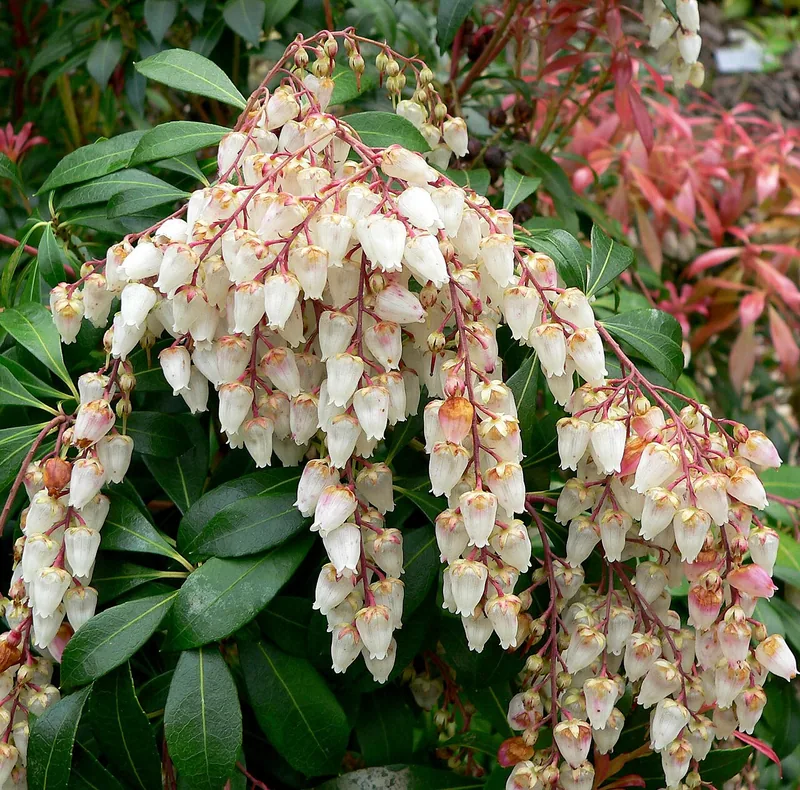
Pieris is a four-season shrub, which is unusual and valuable in a bonsai. In spring the new growth emerges a vivid coppery red — on the cultivar 'Mountain Fire' it is genuinely scarlet — while pendulous racemes of small white urn-shaped flowers hang beneath. Through summer it is glossy evergreen. From late summer onward the flower buds for next year form and stay visible, decorating the plant right through autumn and winter.
It is slow-growing, naturally dense and compact, and takes well to small sizes.
Two things make it demanding, and both are about the soil. It is an ericaceous plant, so it must have acid conditions. And it is prone to Phytophthora root rot, so it must have drainage. Get the substrate right and it is straightforward; get it wrong and the tree declines in ways no amount of feeding or repositioning will fix.
Identification
Foliage: Alternate, leathery, glossy leaves 2.5–10 cm, obovate-oblong, with finely toothed margins, crowded into rosette-like clusters at the branch tips. Dark green above, paler beneath. New growth emerges coppery-red to bronze — vivid red on 'Mountain Fire'.
Bark & trunk: Reddish-brown, scaly, vertically fissured with age. Young stems are green to yellow-green and hairless.
Growth habit: Upright, rounded, dense and slow.
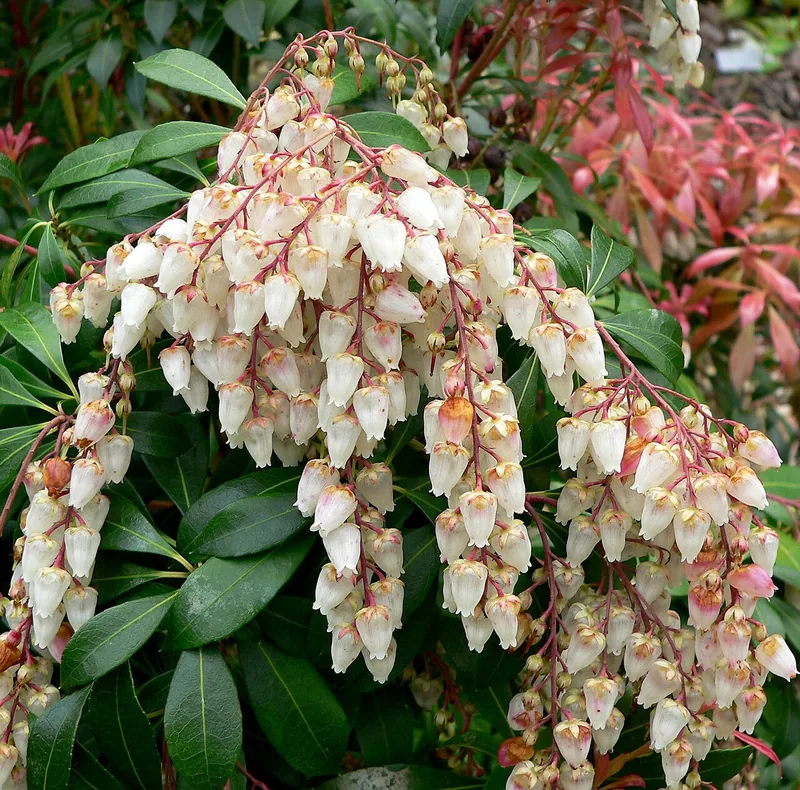
Flowers & fruit: Fragrant white urn or vase-shaped flowers in drooping racemes 7–15 cm long, in spring. The flower buds form in late summer and persist attractively all winter. Fruit is a small dry brown capsule.
Look-alikes: NC State lists it as often confused with Agarista populifolia, Enkianthus campanulatus, Leucothoe fontanesiana and Ternstroemia gymnanthera. The combination of urn-shaped flowers in pendulous racemes, rosette leaf clustering and coppery new growth distinguishes it.
Climate & USDA Zone
Zones 4b–8b in the ground. It is a hardy outdoor shrub and needs a genuine winter — it will not thrive as an indoor plant.
The pot changes the calculation. Pieris has a naturally shallow, fine root system that sits far more exposed in a bonsai container than in the ground. Even though the species is broadly cold-hardy, protect the pot over winter: mulch it, plunge it, or move it to an unheated cold frame.
Light
Full sun to partial shade. In hot southern climates give it afternoon shade, and site it out of drying wind — both produce better foliage and better flowers.
Watering
Evenly moist. Not the "let it dry between waterings" pattern used for many species here. Pieris tolerates neither drought nor waterlogging, and because it is shallow-rooted it dries out faster in a pot than you expect.
The greater danger is the wet side: sustained wet feet is what triggers Phytophthora. Aim for consistently damp, freely draining, checked often.
Water quality matters. Hard tap water raises substrate pH over months, which for an ericaceous plant means slow decline. Use rainwater where you can.
Soil & Root Care
Acidic, pH 5.0–6.0. As a member of the heath family, Pieris cannot take up iron and other nutrients properly in neutral or alkaline conditions. It will go chlorotic and decline slowly and irreversibly if the pH drifts up. This is a hard requirement, not a preference.
Use kanuma or a peat and pine-bark based ericaceous bonsai mix, rich in organic matter but freely draining.
Repot every two years, immediately after flowering, always into fresh acidic substrate. Disturb the fine roots only moderately — Ericaceae generally resent heavy root work.
Feeding
Use an ericaceous (acid-loving) fertiliser through the growing season, at moderate strength. Standard bonsai feeds will gradually work against the pH you are trying to maintain.
Pruning & Styling
Timing is the whole thing here. NC State is explicit: next season's blossoms appear on old growth. Prune immediately after spring flowering finishes. Prune in autumn or winter and you remove next year's display.
Deadhead spent flower clusters promptly after bloom — it tidies the plant and redirects energy into growth and next year's bud set.
Because it is slow-growing, take no more foliage than you need to in any one session. It does not replace it quickly.
Propagation & Cuttings
Ease: Moderate. Best method: stem cuttings.
Stem cuttings are the recommended route. As a named cultivar, 'Mountain Fire' must be propagated vegetatively to come true — seed-grown plants will not reproduce the red new growth reliably.
Pests
**Andromeda lace bug (Stephanitis takeyai) is the significant one** — a well-documented major pest of this genus, serious enough that the University of Georgia has run research programmes on which cultivars resist it. Damage shows as stippled, bleached, silvery leaf discoloration, with the nymphs feeding on leaf undersides.
Check undersides regularly from late spring. Wash nymphs off with water, or treat undersides with horticultural oil or insecticidal soap at the first sign.
Disease, Fungus & Infection
Phytophthora root and crown rot is explicitly documented for this species and is the main killer. It follows poor drainage, overwatering and heavy soil. Leaf spot, dieback and nematodes also occur.
NC State flags this species overall as having both frequent disease problems and frequent insect problems. It is not a low-maintenance plant, and we would rather you knew that before buying.
Most Common Causes of Death
1. Phytophthora root rot from wet feet. The documented number one, and 'Mountain Fire' is reported as somewhat more vulnerable than some other cultivars. 2. Slow chlorotic decline in non-acid soil. The quieter killer. Wrong substrate or hard water, months of gradual yellowing, then collapse. 3. Unprotected shallow roots in a winter pot. Hardy species, vulnerable root ball. 4. Lace bug infestation left unmanaged. Rarely kills alone but badly weakens the plant.
Seasonal Calendar
- Spring: Flowering, then immediate pruning and deadheading; coppery new growth flush; repot after flowering if due.
- Summer: Even moisture, afternoon shade in heat, watch for lace bug. Next year's flower buds begin forming.
- Autumn: Buds persist as ornament. Reduce feeding. Prepare winter root protection.
- Winter: Outdoors with the pot protected. Keep the substrate damp — do not let an evergreen dry out in dormancy.
Toxicity, Safety & Handling
NC State Extension rates Pieris japonica "Poison Severity: High". The toxic principles are grayanotoxins and andromedotoxin, present in the leaves, flowers and sap.
Documented symptoms of poisoning include tingling, salivation, watering eyes and nose, nausea, vomiting, diarrhoea, sweating, abdominal pain, headache, weakness, convulsions and cardiac failure. It may be fatal. NC State flags it specifically as a problem for cats, dogs, horses and children.
This is the same toxin class found in some rhododendrons and in "mad honey". It is not a mild irritant. Site this tree where pets, livestock and small children cannot reach it, and wash your hands after pruning.
Close-up photo reference
Compare your tree against these to confirm the species and spot problems early.

Sources
- Pieris japonica — NC State Extension Gardener Plant Toolbox
- Pest-free plants: which Pieris cultivars avoid lace bugs — University of Georgia CAES
Buy a Japanese Andromeda bonsai
- All species
- Shop bonsai trees, tools & supplies
- How to Water a Bonsai (Without Killing It)
- Bonsai Soil: What to Buy, What to Mix, and What It Costs
- Why Bonsai Die After Repotting: Diagnosing a Failed Repot
- Pruning vs. Pinching: Shaping Your Bonsai
- Overwintering Bonsai: Cold-Season Care
- Indoor Bonsai Light and Humidity: Making a Windowsill Actually Work
- Root Rot on bonsai
- Overwatering on bonsai
- Underwatering (Drought Stress) on bonsai
- Winter / Frost Damage on bonsai
- Fungal Canker & Dieback on bonsai
- Chinese Elm bonsai care
- Boxwood bonsai care
- Cotoneaster bonsai care
- Gardenia bonsai care