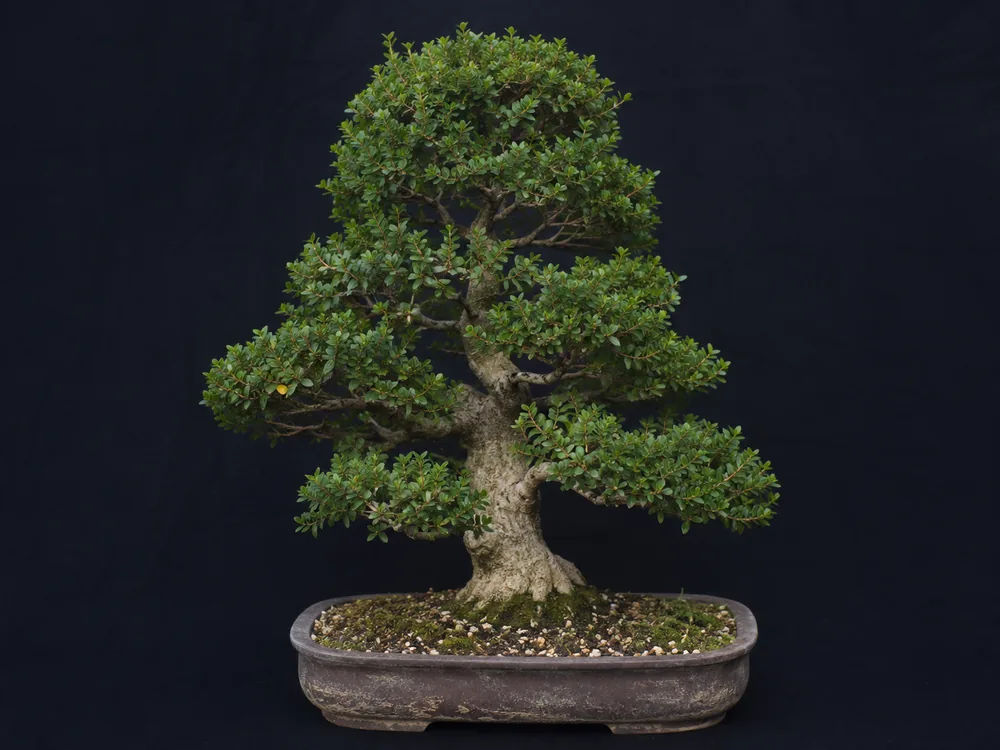
Boxwood Bonsai Care
Buxus sempervirens
3 Boxwood bonsai in stock, from $375.00 Shipped direct from our nursery partners, with a 48-hour live-arrival guarantee. See the trees
Outdoor. A classic broadleaf evergreen, long valued in topiary and hedging and excellent. Most are lost to overwatering.
Buxaceae (boxwood family) · Evergreen broadleaf shrub
Boxwood quick reference
| USDA zones | B. sempervirens* ~5/6–8; *B. microphylla* ~6–9; protect potted roots in winter |
|---|---|
| Indoor / outdoor | Outdoor — needs cool dormancy; tender boxwoods overwinter in a cool, bright frost-free space |
| Light | Full sun to semi-shade |
| Water | Evenly moist but well-drained — thirsty in summer, tolerates short dry spells, hates sogginess |
| Soil | Well-draining mix, neutral to slightly alkaline (pH ~7–8); add pumice/lime grit |
| Repot | Every 2–5 years in spring, depending on age |
| Frost | Hardy in ground; container roots need winter protection from hard freezes |
| Mature height (as bonsai) | Shrub to 5 m; 15-40 cm as bonsai |
| Growth rate | Slow |
| Season of interest | Year-round dense evergreen foliage |
| Leaf reduction | Excellent - reduces to under 1 cm |
| #1 cause of death | Boxwood blight (and box tree moth defoliation); plus root rot in wet soil |
Overview & Character
Boxwood is a classic broadleaf evergreen, long valued in topiary and hedging and excellent as bonsai. It has small, dense, glossy leaves, takes shearing and pruning extremely well, and back-buds reliably even from old wood — qualities that make it forgiving and well-suited to creating tight, refined foliage pads. Old boxwood develops attractive pale, sometimes fluted bark and can be carved for convincing deadwood, since the wood is hard and fine-grained (box is famously dense).
Buxus sempervirens (European/common box) is the hardier, larger-leaved species most often used for bonsai in temperate climates; Buxus microphylla (littleleaf/Japanese box) has smaller leaves and slightly different hardiness. Both are slow-to-moderate growers that reward patience. The major modern caveat — and the reason this guide emphasises disease so heavily — is that boxwood now faces two serious, spreading threats: boxwood blight and the box tree moth, both of which can destroy a plant quickly.
Identification
Foliage: Small, opposite, oval-to-elliptic glossy evergreen leaves, leathery, dark green above and paler beneath, usually with a tiny notch at the tip. B. sempervirens leaves are a little larger; B. microphylla (littleleaf) noticeably smaller. Growth is dense and twiggy. Crushed or pruned foliage has a distinctive pungent smell (often described as cat-like) — a reliable identifier.
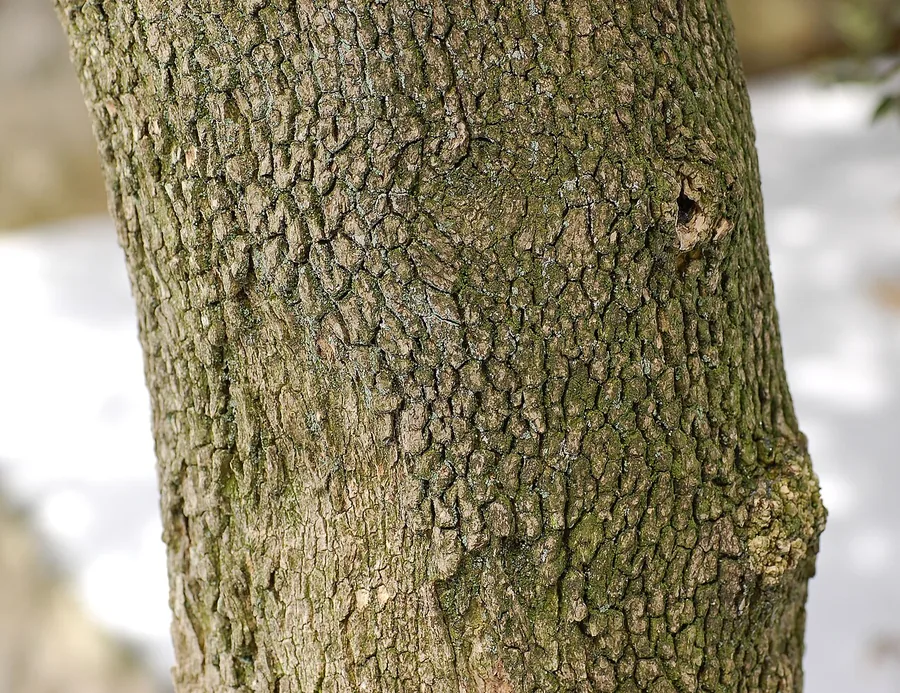
Bark & trunk: Pale tan-to-grey bark; old trunks become attractively flaky and sometimes fluted, and the very hard, fine-grained wood carves cleanly for deadwood.
Growth habit / form: Slow-to-moderate, extremely dense, compact shrub — the classic topiary/hedge plant — taking shearing well into tight foliage pads.
Flowers / fruit: Tiny, inconspicuous greenish-yellow flowers (fragrant to bees) in spring; small three-horned capsules. Rarely significant for bonsai.
Look-alikes & how to tell them apart: The tiny opposite oval leaves + very dense twiggy growth + distinctive smell are the giveaways. Versus Japanese holly (Ilex crenata), which is often mistaken for boxwood: holly leaves are alternate (boxwood is opposite) and finely toothed, and holly lacks the boxwood odour. Versus privet (Ligustrum): privet leaves are larger, thinner and not as densely packed. The opposite leaf arrangement plus the pungent scent quickly separates true boxwood from its imitators.
Climate & USDA Zone
Boxwood is a temperate evergreen that needs a genuine, cool winter dormancy and must be grown outdoors, not as a houseplant. Buxus sempervirens is hardy roughly in USDA zones 5/6–8; Buxus microphylla roughly zones 6–9. While established plants in the ground tolerate considerable frost, bonsai in pots are far more exposed: the limited soil mass and shallow container leave the roots vulnerable to hard freezes. Protect potted boxwood over winter — a cold but frost-free greenhouse, cold frame, or sheltered/mulched position is ideal, keeping the tree cool and bright while preventing the root ball from freezing solid. The more tender forms in particular do best overwintered around 50 °F (10 °C) in a cool, well-lit room.
Light
Boxwood grows well in full sun to semi-shade. Full sun produces the densest, most compact growth and the best foliage colour, though in very hot climates some afternoon shade prevents leaf scorch and bronzing. Indoors over winter (where required) it must have plenty of light in a cool room; it will not thrive in a warm, dim interior.
Watering
Boxwood likes to be kept evenly moist but well-drained. In summer it needs a lot of water and can be quite thirsty, though it will withstand short dry periods better than many species. The key is to avoid excess soil wetness: water thoroughly when the surface begins to dry, let it drain freely, and never let the pot stand waterlogged, which invites Phytophthora root rot. Reduce watering in winter dormancy, keeping the root ball just moist. Avoid the two extremes — chronic sogginess (rot) and complete drying out (leaf browning and dieback).
Soil & Root Care
Use a well-draining bonsai soil. Uniquely among common bonsai species, boxwood prefers a neutral to slightly alkaline soil — aim for a pH around 7–8. You can add some pumice or lime-rock/limestone grit to a standard mix both to improve drainage and to nudge the pH up. Good drainage matters because wet soil promotes root rot.
Repot every 2–5 years in spring, depending on the tree's age and size (younger, faster trees more often; old, slow specimens less). Boxwood tolerates root pruning well. As with any blight-prone species, work cleanly with sterilised tools and fresh soil to avoid introducing or spreading pathogens.
Feeding
Feed through the growing season to support boxwood's dense foliage. A balanced fertiliser from spring through late summer is appropriate; as a broadleaf evergreen it appreciates steady, moderate feeding rather than heavy nitrogen spikes, which produce soft growth. Ease off in autumn and stop during winter dormancy.
Pruning & Styling
Boxwood is built for pruning. It tolerates hard cutting and shearing and back-buds dependably from old wood, which makes it superb for developing tight, well-defined foliage pads and for restyling overgrown material. Trim and pinch new growth through the growing season to maintain shape and density; structural/hard pruning is best done in spring so the tree re-buds vigorously through the season.
The dense, fine-grained wood carves cleanly, so jin and shari are realistic options on suitable trunks. Wire younger, flexible shoots; older branches are stiff but respond well to clip-and-grow. Note that pruned boxwood foliage has a distinctive (to some, unpleasant) smell — normal and harmless.
Propagation & Cuttings
Ease: Easy. Best method: semi-hardwood cuttings.
Buxus is one of the most reliable cutting subjects. Take semi-hardwood cuttings in late summer to autumn, 8–12 cm, strip lower leaves, dip in IBA and keep humid; they root slowly but steadily over 2–3 months and through winter. Hardwood cuttings also work. It layers easily where low branches touch soil. Seed is slow and seldom used. Propagate the dense, small-leaved cultivars (like Kingsville) only from cuttings to keep them true. For bonsai, cutting-grown boxwood builds tight pads and lets you replace foliage or start shohin readily.
Pests
Boxwood faces several pests, two of them serious:
- **Box tree moth (Cydalima perspectalis) — the most alarming. Its green-and-black caterpillars feed within webbing and can skeletonise and defoliate a boxwood extremely quickly, killing plants. Now spreading through Europe and into North America. Control with Bacillus thuringiensis (Bt)** or neem-based sprays on young caterpillars, plus pheromone monitoring and physical removal.
- Boxwood leafminer — larvae mine inside the leaves causing blistering and yellowing; treat with a systemic at the right time.
- Boxwood mite — fine stippling/bronzing of leaves; treat with miticide.
- Boxwood psyllid — causes cupped leaves on new growth.
- Scale and nematodes — occasional.
Disease, Fungus & Infection
This is where boxwood demands the most vigilance.
- Boxwood blight (caused by Calonectria pseudonaviculata) is a serious, fast-moving fungal disease that has spread across Europe, Asia and North America (reported in many US states and parts of Canada). It causes dark leaf spots, black stem lesions, rapid defoliation, decline and eventually death. There is no reliable cure once a plant is heavily infected. Management is strictly preventive and sanitary: buy clean stock, avoid overhead watering and prolonged leaf wetness, ensure good air circulation, sterilise tools between plants, remove and destroy (do not compost) infected material, and consider preventive fungicides where blight is present in your area. Spores spread on water splash, tools, hands and plant debris, so hygiene is everything.
- Phytophthora root rot — develops in wet, poorly drained soil and rots the roots; prevent with free-draining soil and correct watering.
- Volutella blight and other leaf/stem fungi — favoured by damp, congested growth; improve airflow and remove affected material.
Because both boxwood blight and box tree moth are spreading and so destructive, many growers now treat new boxwood material cautiously (quarantine/inspection) before adding it to a collection.
Most Common Causes of Death
1. Boxwood blight (Calonectria). A devastating modern fungal disease — dark leaf spots, black stem streaks, rapid defoliation; isolate, remove infected material, sterilize tools; very hard to eradicate. 2. Box tree moth/caterpillar. Caterpillars can strip a plant fast; inspect for webbing/frass and treat promptly. 3. Overwatering / root rot. Keep evenly moist but free-draining (slightly alkaline preferred); avoid sogginess. 4. Drying out / winter desiccation. Don't let it bone-dry; protect evergreen foliage from cold drying winds. 5. Volutella canker / leaf miner. Improve airflow, remove dead wood, treat pests; keep the interior open to light.
Seasonal Calendar
- Spring: Repot if due; resume feeding; prune/shape — boxwood back-buds well; watch for box moth.
- Summer: Even moisture; light trimming; monitor closely for blight and caterpillars; keep airflow.
- Autumn: Taper feeding/water; clean fallen leaves to reduce fungal carryover.
- Winter: Hardy but protect potted roots and foliage from cold drying winds.
Close-up photo reference
Compare your tree against these to confirm the species and spot problems early.

Sources
Buy a Boxwood bonsai
- All species
- Shop bonsai trees, tools & supplies
- How to Water a Bonsai (Without Killing It)
- Bonsai Soil: What to Buy, What to Mix, and What It Costs
- Why Bonsai Die After Repotting: Diagnosing a Failed Repot
- Pruning vs. Pinching: Shaping Your Bonsai
- Overwintering Bonsai: Cold-Season Care
- Indoor Bonsai Light and Humidity: Making a Windowsill Actually Work
- Root Rot on bonsai
- Overwatering on bonsai
- Underwatering (Drought Stress) on bonsai
- Winter / Frost Damage on bonsai
- Leaf Scorch / Sunburn on bonsai
- Kingsville Boxwood bonsai care
- Cotoneaster bonsai care
- Japanese Yew bonsai care
- Oak bonsai care