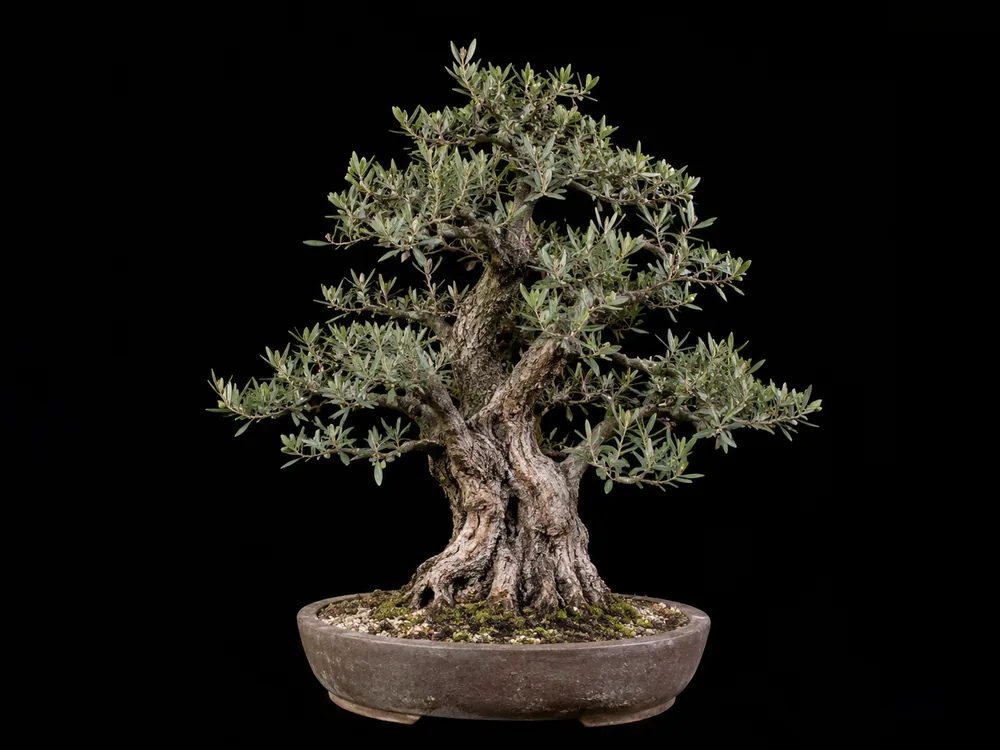
Olive Bonsai Care
Olea europaea
2 Olive bonsai in stock, from $44.95 Shipped direct from our nursery partners, with a 48-hour live-arrival guarantee. See the trees
Zones 8 to 10, outdoor. One of the great bonsai subjects, a tough. Most are lost to overwatering.
Oleaceae (olive family) · Evergreen Mediterranean tree
Olive quick reference
| USDA zones | 8–10 (some cultivars to 7a/7b); hardy to about 5 °F for short periods |
|---|---|
| Indoor / outdoor | Outdoor — wants strong sun and a cool (not freezing) winter; can briefly come in but is not a houseplant |
| Light | Full sun, all day — the more the better |
| Water | On the dry side — drought-tolerant; let the soil dry somewhat between waterings |
| Soil | Very free-draining, gritty/inorganic, slightly alkaline-tolerant mix |
| Repot | Every 2–4 years in spring |
| Frost | Tolerates light frost; protect from hard/prolonged freezes (below ~5 °F) |
| Mature height (as bonsai) | 8-15m wild; 25-60cm as bonsai |
| Growth rate | Slow; ancient gnarled trunks, buds old wood |
| Season of interest | Year-round silver-green; rugged deadwood |
| Leaf reduction | Small leaves reduce very well with pruning |
| #1 cause of death | Overwatering / waterlogging (root rot), especially in winter |
Overview & Character
The olive is one of the great bonsai subjects — a tough, long-lived Mediterranean evergreen with small grey-green leaves, gnarled and beautifully textured bark, and an unrivalled capacity to develop ancient-looking deadwood and fluted, hollowed trunks. Old olives in nature live for centuries and acquire the kind of weathered character that bonsai artists chase, which is why collected (yamadori) olive stumps are so prized.
For the grower it is refreshingly forgiving: adapted to drought and poor, rocky soils, the olive is more tolerant of irregular watering than most traditional bonsai, back-buds vigorously even from old wood, and tolerates hard pruning. Olea europaea has fairly large natural leaves but the cultivar Olea europaea subsp. europaea var. sylvestris (wild olive) and small-leaved forms reduce well, giving fine foliage in proportion to compact trees. It is an outstanding choice for warm, sunny climates and for growers who travel or water erratically.
Identification
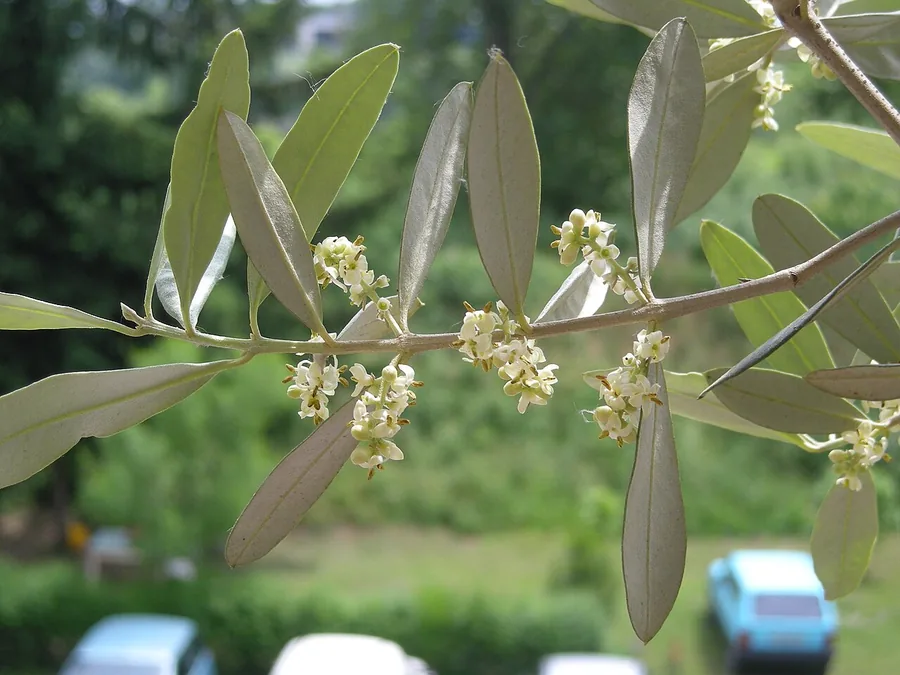
Foliage: Small, simple, narrow lance-shaped (elliptic) leaves arranged oppositely, leathery and stiff. The upper surface is grey-green; the underside is distinctly silvery-white (covered in fine scales), so the canopy shimmers in a breeze. Evergreen.
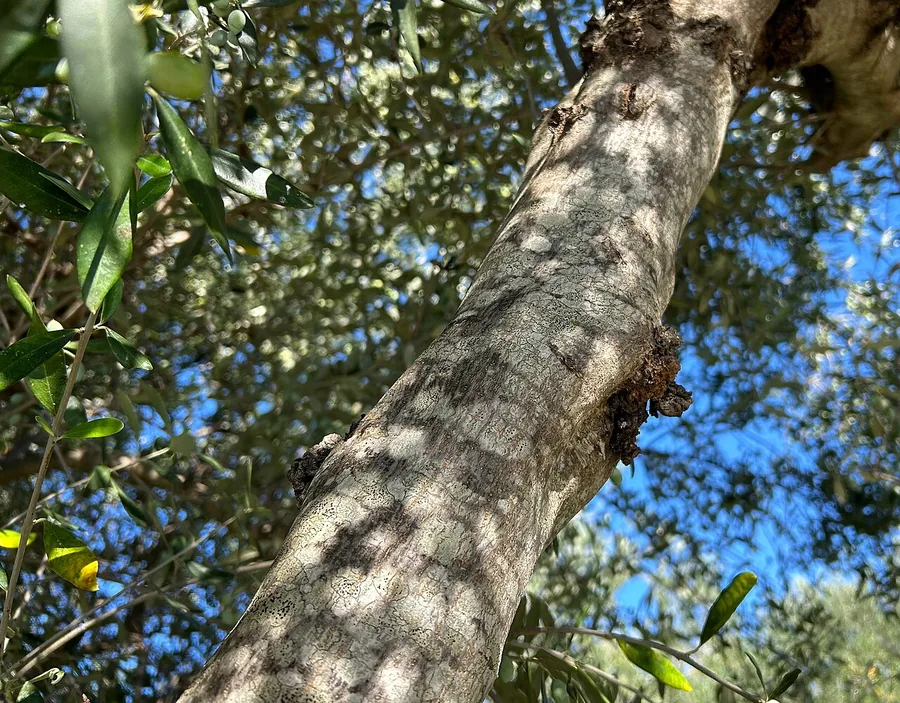
Bark & trunk: Pale grey, gnarled and fissured bark; old trunks become deeply furrowed, twisted, and develop natural hollows and fluting — the weathered, ancient character olives are prized for.
Growth habit / form: Dense, twiggy, rounded crown on a rugged trunk; back-buds readily even from old bare wood.
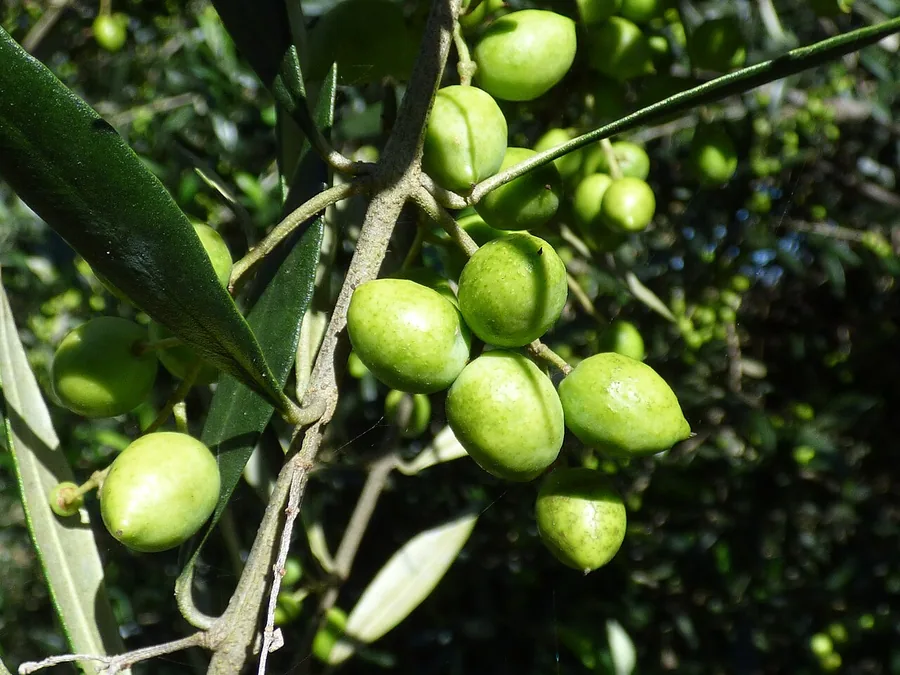
Flowers / fruit: Tiny, fragrant creamy-white four-petaled flowers in small clusters in spring/early summer, followed (where pollinated) by the familiar green-to-black olive drupes.
Look-alikes & how to tell them apart: The narrow grey-green leaves with silver undersides + gnarled grey trunk are highly distinctive. Versus Russian olive (Elaeagnus) or willow: those lack the opposite leaf arrangement and the olive's leathery silver-backed leaf. Versus Privet (Ligustrum, same family): privet leaves are broader, glossier green on both sides without the silver reverse, and lack the fluted ancient trunk. Crushed olive foliage and the silvery leaf underside are the quickest tells.
Climate & USDA Zone
Olives grow outdoors in USDA zones 8–10, with some hardier cultivars viable in zones 7a–7b. They are built for a Mediterranean climate: hot, dry, sunny summers and cool — but not deeply freezing — winters. The tree tolerates light frost and brief cold down to roughly 5 °F (-15 °C), but prolonged hard freezes, especially of the root ball in a pot, will damage or kill it. Notably, olives actually benefit from a cool winter rest with low temperatures (above freezing), which mimics their native cycle.
In climates colder than zone 8, overwinter the tree in a cold but frost-free space — an unheated greenhouse, cold conservatory, or cool bright room around 35–50 °F. It is not a tropical and should not be kept warm and dark indoors; it needs light and a genuine cool dormancy.
Light
Give the olive as much sun as possible — full, all-day sun is ideal and produces the tightest growth and healthiest tree. It revels in heat and bright light. Indoors over winter it must have the brightest position available (and ideally a cool one); insufficient light leads to weak, leggy growth and makes fungal problems and pests more likely.
Watering
The olive prefers to be kept on the dry side. This is a genuinely drought-tolerant species, and once established it forgives less-frequent watering far better than maples or tropicals do. Water the bonsai thoroughly whenever the soil has dried out, then allow it to approach dryness again before the next watering — avoid constant wetness. Over-watering is a more common and more dangerous error than under-watering, precisely because the olive evolved in dry, well-drained Mediterranean soils.
Be especially restrained in winter: the cool, dormant tree uses very little water, and a wet pot in cold conditions is the classic route to root rot. Water sparingly and only when the soil is dry. In hot summer growth, by contrast, the tree drinks more and the fast-draining soil may need watering daily — but always to the soak-then-dry rhythm, never leaving it soggy.
Soil & Root Care
Use a very free-draining, gritty substrate — heavy on inorganic components such as pumice, lava, akadama and coarse grit. Olives tolerate poor and slightly alkaline soils and absolutely will not tolerate a water-retentive, organic-heavy mix that stays wet. Good drainage is the single most important physical factor in keeping an olive alive.
Repot every 2–4 years in spring as growth begins. The olive has a strong, vigorous root system and tolerates root pruning well, back-budding readily afterward. Use the opportunity to improve drainage and refresh the gritty mix. Avoid repotting in cold weather or while dormant.
Feeding
Feed regularly through the growing season to support growth on what is otherwise a frugal tree. A balanced fertiliser from spring through early autumn works well; alternate or supplement with an organic feed if preferred. Olives are not gross feeders, so moderate, consistent feeding beats heavy doses. Reduce feeding in late autumn and stop during the cool winter rest.
Pruning & Styling
The olive is a joy to prune: it back-buds prolifically, even on old, bare wood, so it recovers from hard structural cutting and is very amenable to clip-and-grow development. Do major structural pruning in spring; refine throughout the growing season by trimming new shoots to build ramification and reduce leaf size over time. Pinching and regular trimming encourage the small foliage that suits bonsai scale.
Wiring is effective on young and semi-hardened shoots; older branches are stiff but the wood is workable. The olive's chief glory in styling is its trunk — natural hollows, shari and jin form readily and convincingly, so designs that showcase deadwood and rugged bark (informal upright, twisted trunks, collected-tree styles) play to its strengths.
Propagation & Cuttings
Ease: Easy. Best methods: cuttings; truncheons; seed; collected.
Olea europaea roots well from semi-hardwood cuttings in summer with hormone, and from larger 'truncheon' cuttings (thick branch sections) set in warmth — a traditional way to get instant size. It also sprouts from basal burls (ovuli), so knobs can be rooted. Seed germinates after cleaning and stratification but is slow and variable. Old olives are widely collected as spectacular yamadori. For bonsai, cuttings/truncheons and collected stock both develop the gnarled, twisted trunks and fine grey foliage; olive back-buds strongly.
Pests
Olives are relatively robust but can be troubled by:
- Scale insects — small bumps along stems and branches; treat with horticultural oil or a systemic.
- Spider mites — thrive in hot, dry conditions and leave fine webbing; rinse foliage and treat.
- Aphids — cluster on tender new shoots; soap, neem or systemic.
- Olive fruit fly — relevant chiefly if the tree fruits; generally minor for bonsai.
Many infestations trace back to weak trees in poor light or stagnant air, so good culture is the best defence.
Disease, Fungus & Infection
The dominant disease risk is root rot from over-watering and waterlogged soil — overwhelmingly the most common way olive bonsai die. The fix is cultural: gritty free-draining soil and disciplined, on-the-dry-side watering, especially in winter.
The main foliar disease is Peacock Spot (olive leaf spot, caused by Spilocaea oleagina), which shows as small dark spots ringed with a paler halo and leads to leaf drop. Like most olive fungal problems, it is favoured by damp, still, shaded conditions. Prevention is again cultural: full sun, good air circulation, correct watering, and prompt removal of affected leaves; a copper-based fungicide can help in persistent cases. Olives are generally healthy when sited in bright, airy, well-drained conditions.
Most Common Causes of Death
1. Overwatering / winter waterlogging. The top killer; Mediterranean and drought-adapted — let it dry between waterings and keep it on the dry side in winter. 2. Hard frost. Tolerates light frost but hard freezes damage it; protect below ~25°F (-4°C). 3. Too little light. Needs full sun; weak in shade or dim indoor spots. 4. Root rot from heavy wet soil. Use a very free-draining mix; avoid water-retentive organic soil. 5. Pests. Scale and olive-specific pests, plus peacock spot fungus in damp conditions — treat and improve airflow.
Seasonal Calendar
- Spring: Repot if due; resume feeding; prune to shape — buds back readily on old wood.
- Summer: Full sun and heat; let it dry between thorough waterings; light trimming.
- Autumn: Taper feeding/water.
- Winter: Cool, bright, frost-protected; keep on the dry side; protect from hard freeze.
Close-up photo reference
Compare your tree against these to confirm the species and spot problems early.


.jpg)
Sources
Buy a Olive bonsai
- All species
- Shop bonsai trees, tools & supplies
- How to Water a Bonsai (Without Killing It)
- Bonsai Soil: What to Buy, What to Mix, and What It Costs
- Why Bonsai Die After Repotting: Diagnosing a Failed Repot
- Pruning vs. Pinching: Shaping Your Bonsai
- Overwintering Bonsai: Cold-Season Care
- Indoor Bonsai Light and Humidity: Making a Windowsill Actually Work
- Root Rot on bonsai
- Overwatering on bonsai
- Winter / Frost Damage on bonsai
- Insufficient Light (Etiolation) on bonsai
- Spider Mites on bonsai
- Buttonwood bonsai care
- Boxwood bonsai care
- Heavenly Bamboo bonsai care
- Barbados Cherry bonsai care