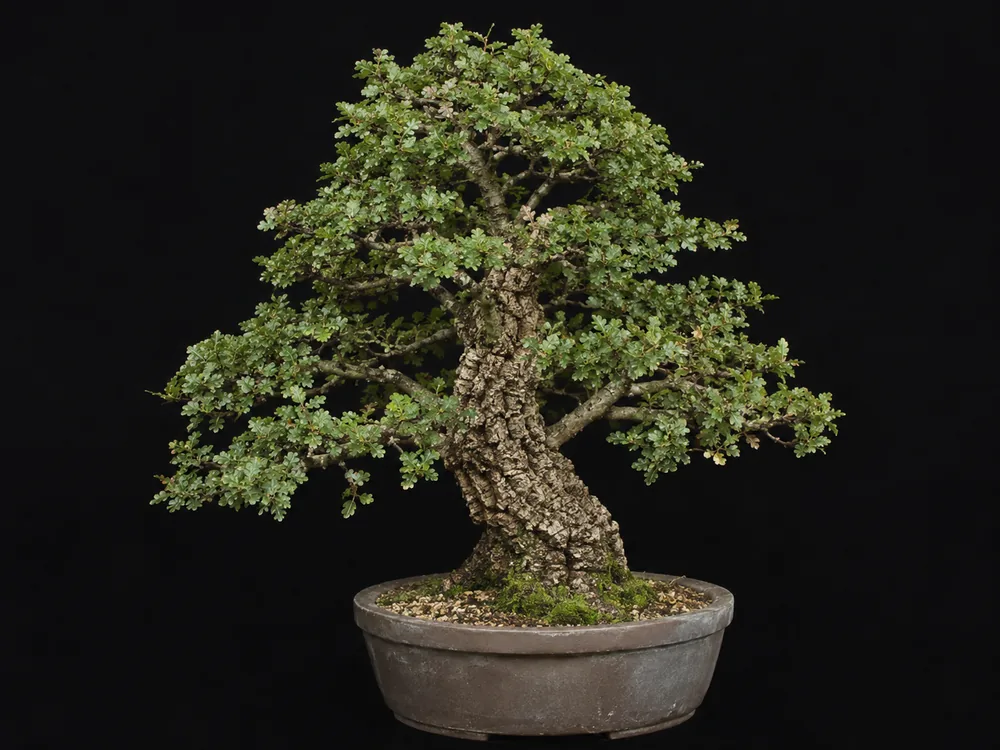
Cork Oak Bonsai Care
Quercus suber
Zones 8 to 10, outdoor. An evergreen Mediterranean oak famous for thick, rugged. Most are lost to overwatering.
Fagaceae (beech/oak family) · Evergreen broadleaf tree
Cork Oak quick reference
| USDA zones | 8–10 |
|---|---|
| Indoor / outdoor | Outdoor — full sun to part shade; not indoors long-term |
| Light | Full sun to part shade |
| Water | Even moisture in growth — drought-tolerant; not soggy |
| Soil | Free-draining bonsai mix |
| Repot | Every 2 years (young), 3–4 (older), early spring |
| Frost | Tender-ish — suffers below ~−6 °C / 20 °F; protect |
| Mature height (as bonsai) | Tree to 20 m; kept 30-80 cm as bonsai |
| Growth rate | Slow to moderate |
| Season of interest | Year-round evergreen, corky bark feature |
| Leaf reduction | Good with pinching |
| #1 cause of death | Root rot from soggy soil; hard frost; powdery mildew on weak trees |
Overview & Character
The Cork Oak is an evergreen Mediterranean oak famous for thick, rugged, deeply furrowed corky bark that gives a dramatic aged appearance even on young bonsai — its single greatest feature. It holds small leathery evergreen leaves and develops a powerful trunk with characterful bark relatively quickly.
It wants full sun (with part shade tolerated), even moisture in growth (it is drought-tolerant but best with consistent water), sharp drainage, and protection from hard frost. Feeding for bark development and avoiding soggy soil are the keys. A rewarding evergreen oak that builds 'instant age' through its bark.
Identification
Foliage: Small, leathery, evergreen ovate leaves ~3–7 cm, dark glossy green above, grey-felted beneath, with a few small marginal teeth/spines; held year-round (semi-evergreen, shedding old leaves in spring).
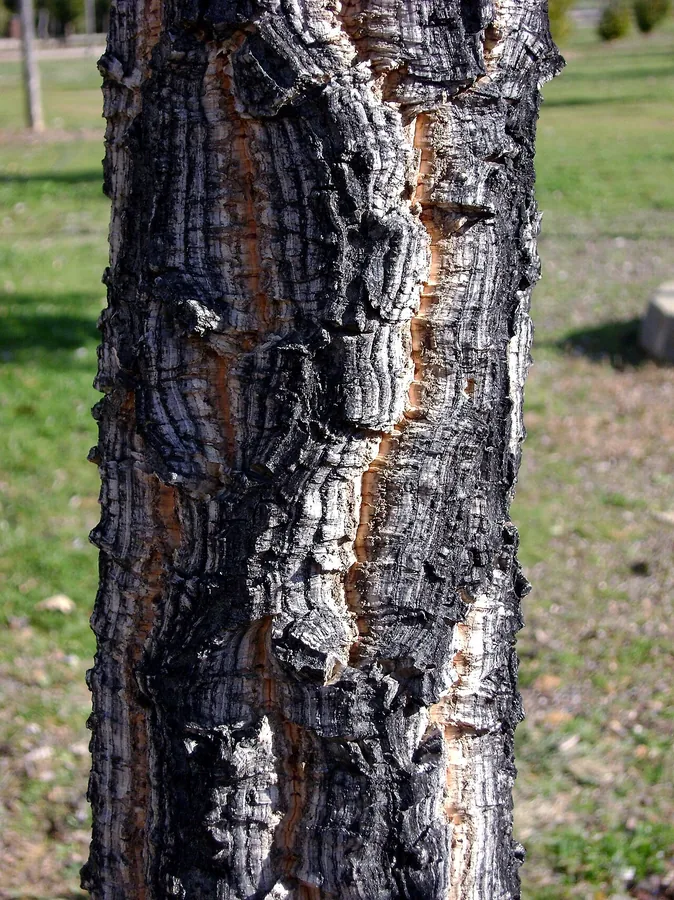
Bark & trunk: The signature feature — thick, pale grey-brown, deeply fissured corky bark (the commercial cork) that builds rugged texture and 'instant age' young.
Growth habit / form: Broad evergreen oak with a stout trunk; suits informal upright and powerful broom/bark-feature styles.
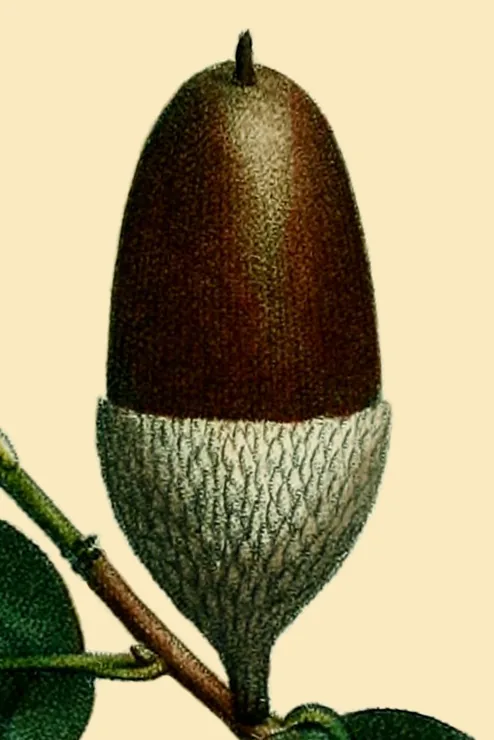
Flowers / fruit: Wind-pollinated catkins in spring, followed by acorns in cups with long scales (rare on bonsai).
Look-alikes & how to tell them apart: The combination of evergreen holly-like leaves with thick corky bark is distinctive among oaks; distinguished from Holm Oak (Q. ilex) — similar leaves but smooth (non-corky) bark — by the deeply corky bark, and from deciduous oaks by its evergreen leathery foliage.
Climate & USDA Zone
Hardy in USDA zones 8–10. It prefers a warm Mediterranean climate and suffers below about −6 °C / 20 °F, so protect from hard/prolonged frost. Grow outdoors year-round in full sun with good airflow; it should not be kept indoors long-term.
Light
Full sun to partial shade. Strong light keeps leaves small and growth compact and supports the bark; it tolerates some shade but is best in sun.
Watering
Keep evenly moist in the growing season — it is drought-tolerant but grows best with consistent moisture — and avoid soggy soil.
- Water thoroughly when the topsoil feels dry; don't let it sit waterlogged.
- Reduce in winter but don't let the rootball dry out completely.
- Sharp drainage prevents the root rot it is prone to if kept wet.
Soil & Root Care
Soil: A free-draining bonsai mix (akadama / pumice / lava).
Repotting:
- Frequency: young trees every 2 years; mature every 3–4 years.
- Timing: early spring before bud break.
- Moderate root-pruning; keep sheltered and evenly moist afterward.
- Aftercare: warm, bright, evenly moist while re-establishing.
Feeding
Feed a balanced organic fertilizer monthly through spring and summer; occasional potassium-rich feeds support bark development. Avoid feeding in late autumn/winter dormancy. Don't feed freshly repotted trees.
Pruning & Styling
- Trimming: trim new shoots back to shape; it back-buds and takes pruning well, building ramification over time.
- Bark is the feature: protect the corky bark when wiring — it marks/crushes; favor directional pruning and careful wiring on younger wood.
- Structural work suits the cooler shoulders of the season.
- Suits informal upright and powerful bark-feature/broom styles.
Propagation & Cuttings
Ease: Easy from acorns. Best method: seed (acorns).
Quercus suber is grown from acorns — sow fresh in autumn as soon as they drop, since they lose viability quickly if they dry out; no long stratification is needed and they root a taproot fast (sow deep or root-prune early for bonsai nebari). Cuttings and grafting are difficult and rarely used on oaks. For bonsai the prized thick, corky bark develops with age, so start acorns early and grow on hard; protect the tender young plants from hard frost in colder areas.
Pests
- Scale insects and aphids
- Oak gall wasps (galls; usually cosmetic)
- Caterpillars (chew foliage)
- Spider mites (hot, dry conditions)
Treat with horticultural oil, insecticidal soap, or appropriate systemics; catch infestations early.
Disease, Fungus & Infection
Generally resistant; main risks:
- Root rot — from soggy soil/poor drainage.
- Powdery mildew — white coating on foliage in humid, low-airflow, or shaded conditions; improve airflow and light, treat if persistent.
- Oak fungal leaf spots — cosmetic in damp conditions.
Prevention: full sun, free drainage, good airflow, frost protection.
Most Common Causes of Death
1. Root rot from soggy soil. Keep evenly moist but sharply drained; never waterlogged. 2. Hard / prolonged frost. Suffers below ~−6 °C — protect in cold. 3. Powdery mildew on weak/shaded trees. Give sun and airflow; treat early. 4. Letting the rootball dry out completely. Drought-tolerant but not invincible — keep evenly moist in growth. 5. Crushing the corky bark when wiring. Protect the bark; favor directional pruning.
Seasonal Calendar
- Spring: Repot if due (before bud break); new growth and catkins; begin feeding; full sun.
- Summer: Full sun; even moisture; feed (occasional potassium for bark); trim to shape.
- Autumn: Taper feeding/water; old leaves shed in spring (semi-evergreen).
- Winter: Keep slightly drier (not dry); protect from hard/prolonged frost.
Close-up photo reference
Compare your tree against these to confirm the species and spot problems early.


Sources
Where to buy a Cork Oak bonsai
We don’t stock Cork Oak at the moment. These species need similar care and we have them now — they are the closest match in our catalogue.
- Oak — similar care, in stock now
- Jamaican Raintree — similar care, in stock now
Browse all bonsai trees for sale or find a species matched to your climate and space.
- All species
- Shop bonsai trees, tools & supplies
- How to Water a Bonsai (Without Killing It)
- Bonsai Soil: What to Buy, What to Mix, and What It Costs
- Why Bonsai Die After Repotting: Diagnosing a Failed Repot
- Pruning vs. Pinching: Shaping Your Bonsai
- Overwintering Bonsai: Cold-Season Care
- Indoor Bonsai Light and Humidity: Making a Windowsill Actually Work
- Root Rot on bonsai
- Underwatering (Drought Stress) on bonsai
- Winter / Frost Damage on bonsai
- Powdery Mildew on bonsai
- Spider Mites on bonsai
- Oak bonsai care
- Live Oak bonsai care
- English Oak bonsai care
- Jamaican Raintree bonsai care