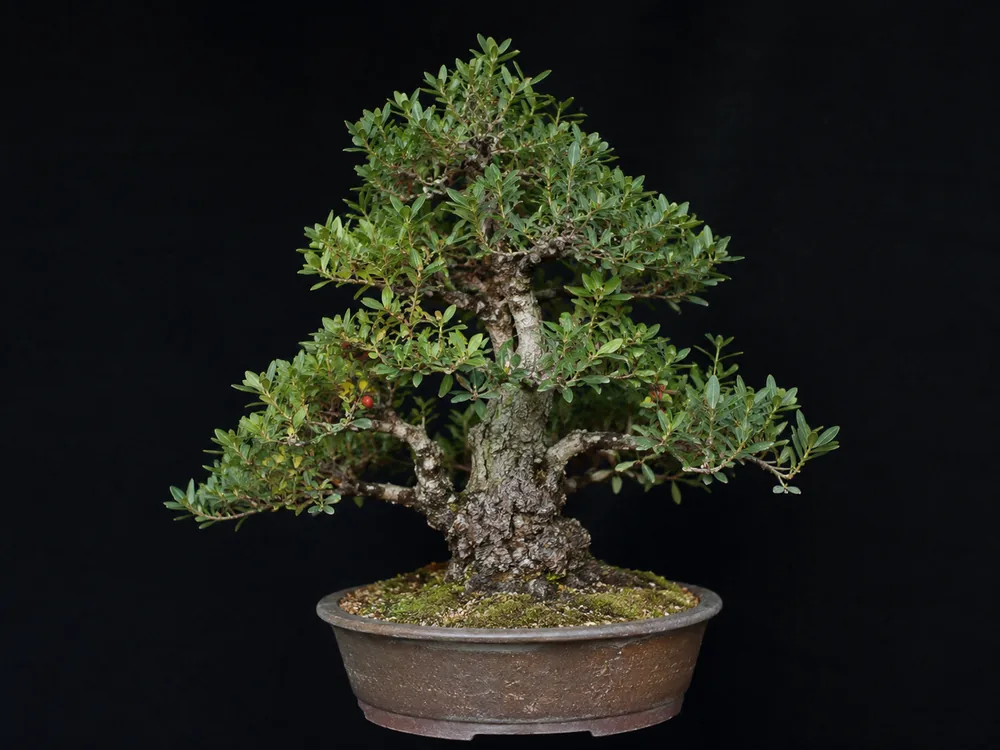
Mastic Tree Bonsai Care
Pistacia lentiscus
Zones 8 to 11, outdoor. The Mastic Tree (Lentisc) is a tough, evergreen Mediterranean shrub long used. Most are lost to overwatering.
Anacardiaceae (cashew/sumac family) · Evergreen broadleaf shrub/tree
Mastic Tree quick reference
| USDA zones | 8–11 |
|---|---|
| Indoor / outdoor | Outdoor — full sun, hot/dry; not indoors long-term |
| Light | Full sun — loves heat and a dry, bright spot |
| Water | Generous in growth (esp. flowering) — drought-tolerant; never waterlogged |
| Soil | Stony, very free-draining, aerated mix |
| Repot | Every 3–5 years, late spring (May/June) |
| Frost | Tender — does not withstand frost well; protect |
| Mature height (as bonsai) | 4-8m wild; 25-50cm as bonsai |
| Growth rate | Slow to moderate; drought-hardy |
| Season of interest | Glossy evergreen; red-to-black berries |
| Leaf reduction | Small leaflets reduce well with pruning |
| #1 cause of death | Frost; root rot from waterlogging |
Overview & Character
The Mastic Tree (Lentisc) is a tough, evergreen Mediterranean shrub long used for bonsai in southern Europe, valued for tiny, neat, evergreen compound leaves ideal for bonsai proportions, reddish wrinkled bark, aromatic resin, and near-bomb-proof resilience in heat and drought. It develops fine ramification and an aged look with time.
It is a sun-and-heat lover that performs best outdoors in a hot, dryish spot, needing both strong sun and a cool (but not freezing) winter. Though drought-tolerant, it actually thrives on plenty of water in growth (especially while flowering), provided drainage is sharp. Its main vulnerability is frost. An easy, rewarding species where the climate suits it.
Identification
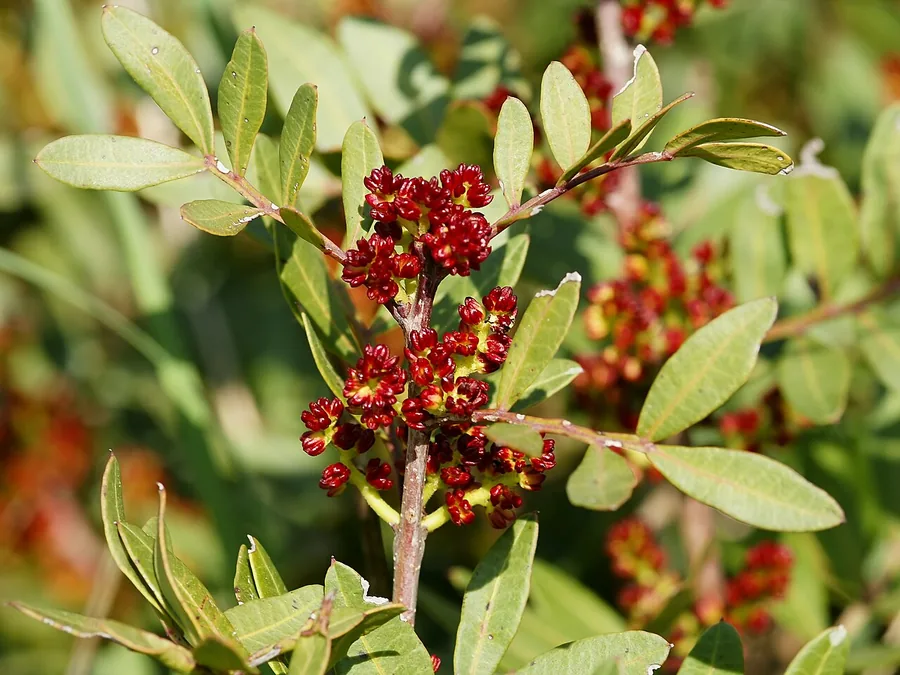
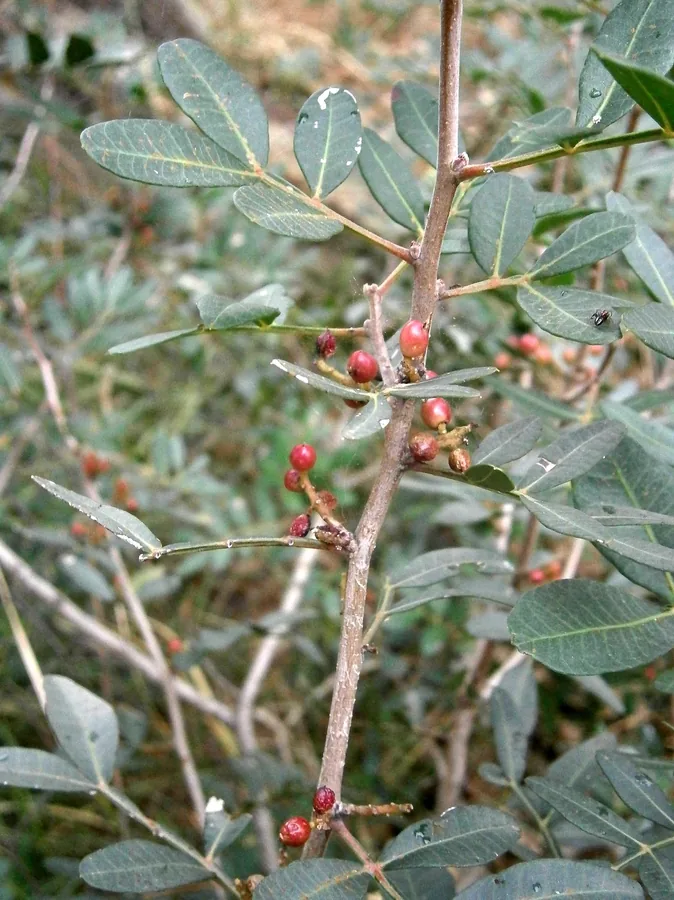
Foliage: Small, even-pinnate compound evergreen leaves with a winged rachis and several pairs of tiny leathery leaflets (no terminal leaflet); deep glossy green, aromatic (resinous) when crushed.
Bark & trunk: Reddish to grey-brown, wrinkled/finely fissured with age; the plant exudes the fragrant resin known as mastic when wounded.
Growth habit / form: Dense, twiggy evergreen shrub/small tree; suits informal upright, broom, and naturalistic Mediterranean styles.
Flowers / fruit: Dioecious; small reddish flower clusters in spring, followed on females by small berry-like fruits ripening red then black.
Look-alikes & how to tell them apart: The small even-pinnate (winged-rachis, no terminal leaflet) evergreen leaves distinguish it from true pistachio (P. vera, deciduous, larger leaflets) and from Terebinth (P. terebinthus, deciduous with a terminal leaflet); the winged leaf-stalk and evergreen habit are the tells.
Climate & USDA Zone
Hardy in USDA zones 8–11. A Mediterranean evergreen that loves heat, sun, and dry air; it needs both sun and a cool winter, so it lives best outdoors. It does not tolerate frost well — protect from freezing. Not suited to long-term indoor culture.
Light
Full sun in a hot, dryish position. Maximum light and warmth give compact growth and health; shade and damp cool air weaken it.
Watering
Though drought-tolerant, it thrives on plenty of water in growth (especially while flowering) — but never waterlogged.
- Water thoroughly, preferably early in the morning, so it isn't sitting wet overnight; let the mix drain freely.
- It tolerates drying better than most, but consistent water in growth gives the best results.
- Reduce in winter; keep it on the dry side and frost-free.
Soil & Root Care
Soil: It loves stony, very free-draining, aerated mixes (lots of grit/pumice/lava with some akadama).
Repotting:
- It dislikes frequent root work — repot every 3–5 years, in late spring (May/June) when in full vegetative activity.
- Moderate root-pruning; keep warm and well-drained afterward.
- Aftercare: bright, warm, sharply drained while re-establishing.
Feeding
Feed a balanced fertilizer through the growing season (spring and autumn are its strongest growth periods); ease off in the heat of midsummer dormancy and in winter. Don't feed freshly repotted trees.
Pruning & Styling
- Trimming: prune in spring and autumn (its fastest-growth periods); cut new shoots back to two or three leaves once they have made six to eight, to build ramification.
- It back-buds well and tolerates pruning; the small evergreen leaves refine nicely.
- Wiring: young shoots are workable; protect the bark.
- Suits informal upright, broom, and naturalistic Mediterranean styles.
Propagation & Cuttings
Ease: Moderate. Best methods: seed; semi-hardwood cuttings.
Pistacia lentiscus grows from seed — clean the small drupes, soak, and give a short cold stratification before spring sowing; germination is fair and plants are dioecious. Semi-hardwood cuttings root at moderate rates in warm, humid conditions with hormone. It is often collected in the Mediterranean as characterful yamadori. For bonsai the small aromatic evergreen leaves and tough constitution suit it well; it back-buds readily and tolerates hard pruning, so seed, cuttings, or collected stock all develop nicely.
Pests
- Scale insects and mealybugs
- Aphids
- Spider mites (hot, dry conditions — but it tolerates dry air well)
- Psyllids (can cause leaf galls)
Treat with horticultural oil, insecticidal soap, or appropriate systemics; catch infestations early.
Disease, Fungus & Infection
Very resilient; main risks are cultural:
- Root rot — from waterlogging/poor drainage (the chief danger despite its thirst).
- Frost damage — browning/dieback from freezing (cultural; protect).
- Fungal leaf spot — in damp, stagnant, low-airflow conditions; improve airflow.
Prevention: full sun, stony sharp-draining soil, morning watering, frost protection.
Most Common Causes of Death
1. Frost. It does not withstand frost well — protect from freezing in winter. 2. Root rot from waterlogging. Use a stony, very free-draining mix; water in the morning, never standing wet. 3. Long-term indoor culture. Needs sun and a cool winter — declines indoors. 4. Frequent root disturbance. Dislikes it — repot only every 3–5 years. 5. Deep shade / cold damp air. Weakens it; give a hot, bright, dryish spot.
Seasonal Calendar
- Spring: Strong growth; repot if due (late spring); reddish flowers; prune to ramify; begin feeding; full sun.
- Summer: Full sun and heat; water generously yet sharply drained; ease feeding in peak heat.
- Autumn: Second strong growth flush; prune; resume feeding; female plants fruit.
- Winter: Keep on the dry side; protect from frost (bright, cool, frost-free).
Close-up photo reference
Compare your tree against these to confirm the species and spot problems early.
.jpg)

Sources
Where to buy a Mastic Tree bonsai
We don’t stock Mastic Tree at the moment. These species need similar care and we have them now — they are the closest match in our catalogue.
- Bottlebrush — similar care, in stock now
- Buttonwood — similar care, in stock now
Browse all bonsai trees for sale or find a species matched to your climate and space.
- All species
- Shop bonsai trees, tools & supplies
- How to Water a Bonsai (Without Killing It)
- Bonsai Soil: What to Buy, What to Mix, and What It Costs
- Why Bonsai Die After Repotting: Diagnosing a Failed Repot
- Pruning vs. Pinching: Shaping Your Bonsai
- Overwintering Bonsai: Cold-Season Care
- Indoor Bonsai Light and Humidity: Making a Windowsill Actually Work
- Root Rot on bonsai
- Winter / Frost Damage on bonsai
- Spider Mites on bonsai
- Scale Insects on bonsai
- Aphids on bonsai
- Chinese Pistache bonsai care
- Bottlebrush bonsai care
- Buttonwood bonsai care
- Cork Oak bonsai care