
Chinese Pistache Bonsai Care
Pistacia chinensis
Zones 6 to 9, outdoor. A tough, sun-loving deciduous tree from China and Taiwan. Most are lost to cold damage.
Anacardiaceae (cashew / sumac family) · Deciduous broadleaf tree
Chinese Pistache quick reference
| USDA zones | 6 to 9 |
|---|---|
| Indoor / outdoor | Outdoor: a temperate deciduous tree that needs a true seasonal cycle |
| Light | Full sun: best color and compact growth in strong light |
| Water | Moderate: evenly moist in growth; drought-tolerant once established |
| Soil | Free-draining bonsai mix; tolerant of a wide range of soils |
| Repot | Every 2 to 3 years (young), 3 to 4 years (older) |
| Frost | Good: hardy to about −20 °C (−4 °F); protect the pot in hard freezes |
| Mature height | Tree to 20 m; kept 25-60 cm as bonsai |
| Growth rate | Moderate |
| Season of interest | Brilliant orange-red autumn color |
| Leaf reduction | Moderate - leaflets reduce with pruning |
| #1 cause of death | Winter root freeze in an unprotected pot |
Overview & Character
Pistacia chinensis is a tough, sun-loving deciduous tree from China and Taiwan, prized in bonsai for its spectacular autumn color (foliage turns brilliant orange, scarlet, and crimson before falling) and for its pinnate, ferny leaves that reduce well under cultivation. It is a relative of the edible pistachio and of sumac and cashew, and shares the family's excellent drought tolerance and resilience. As bonsai it back-buds freely, thickens quickly for a broadleaf, and develops attractive flaking bark, making it a rewarding subject for informal upright and broom styles. Female trees can bear small red-to-blue drupes, adding seasonal interest.
Care keys: this is an outdoor, cold-hardy, full-sun tree. Give it as much light as possible, keep it evenly watered while in leaf, allow a genuine winter dormancy, and protect only the exposed roots from the hardest freezes.
Identification
Foliage: Pinnately compound leaves with (usually) 10 to 12 lanceolate leaflets, each 5 to 10 cm long, glossy dark green in summer. Crushed foliage has a faint resinous, turpentine-like scent typical of the family.
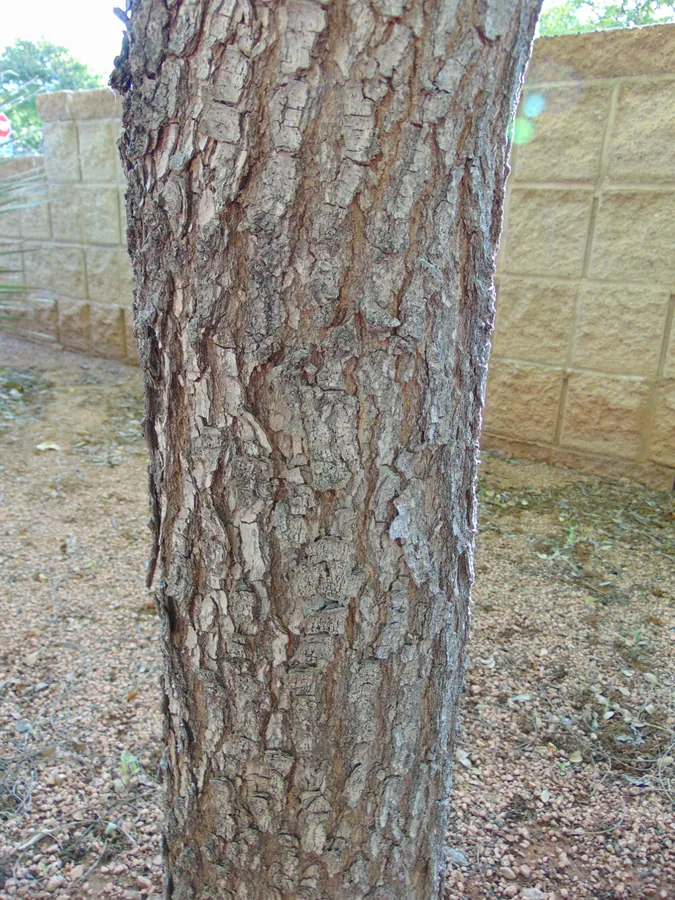
Bark & trunk: Gray-brown, becoming scaly and peeling with age to reveal salmon-to-orange inner bark, a strong feature on older trunks.
Growth habit / form: A rounded, spreading crown in nature; vigorous and upright when young, developing good taper and ramification under bonsai care.
Flowers / fruit: Dioecious. Inconspicuous greenish-red flowers in spring before or with the leaves; females bear clusters of small drupes that ripen red then blue-purple.
Look-alikes & how to tell them apart: Easily confused with **staghorn sumac (Rhus typhina)** and other pinnate-leaved Anacardiaceae. Chinese pistache leaflets are smooth-edged (entire), glossy, and even in number, whereas sumac leaflets are serrated and the twigs of staghorn sumac are densely velvety-hairy. It is also confused with Pistacia vera (the edible pistachio), which has fewer, broader leaflets.
Climate & USDA Zone
Hardy in USDA zones 6 to 9. Established trees tolerate cold to roughly −20 °C (−4 °F), and the species needs a proper winter dormancy to thrive; it is not an indoor tree. It handles summer heat and drought extremely well, thriving at 20 to 35 °C (68 to 95 °F). In a bonsai pot the roots are more exposed than in the ground, so in zone 6 and colder winters, shelter the pot (cold frame, mulched, or against a wall) to keep the root ball from freezing solid, while still giving the tree the cold it needs for dormancy.
Light
Grow it in full sun: Chinese pistache needs strong light for compact internodes, dense ramification, and its famous fiery autumn color. Insufficient light produces leggy shoots, larger leaves, and muted fall color. It is one of the more sun-hardy bonsai and rarely scorches; only in extreme heat does light afternoon shade help conserve moisture.
Watering
Keep the soil evenly moist through the growing season; it is drought-tolerant once established but colors and grows best with steady water.
- Water when the surface begins to dry; in high summer this may be daily or twice daily in a small pot.
- Do not let a leafed-out tree dry to the point of wilting, or leaf margins scorch.
- Reduce watering sharply once leaves drop and the tree is dormant: just enough to keep roots from desiccating.
- Good drainage matters; the species dislikes standing water despite its drought tolerance.
Soil & Root Care
Soil: A standard free-draining bonsai mix: akadama, pumice, and lava in roughly equal parts. The species is undemanding and adapts to a wide range of soils as long as drainage is good.
Repotting:
- Repot young trees every 2 to 3 years, older trees every 3 to 4 years.
- Best in early spring just as buds swell, before the leaves open.
- Roots are vigorous and tolerate substantial pruning; you can remove up to about a third to a half on a healthy tree.
- Aftercare: keep sheltered from strong wind and hard sun for a few weeks, water carefully, and delay feeding until new growth is established.
Feeding
Feed from when leaves harden off in spring through to late summer. A balanced fertilizer supports vigorous growth; for refined trees, ease off high nitrogen in late summer to help autumn color develop. Organic pellets or a regular diluted liquid feed both work well. Stop feeding once the tree begins its autumn shutdown, and give none through dormancy. Because it grows strongly, avoid over-feeding refined specimens, which coarsens the foliage and lengthens internodes.
Pruning & Styling
- Prune structurally in late winter or early spring while the tree is leafless and the branch structure is visible.
- Pinch or cut back new shoots to 1 to 2 pairs of leaflets during the growing season to build ramification and shorten internodes.
- Partial defoliation in early summer on healthy trees promotes a second, smaller flush and stronger autumn color.
- Wire young shoots while flexible; older wood stiffens and is best shaped by directional pruning.
- Suits informal upright, broom, and clump/group styles; the naturally rounded crown lends itself well to broom form.
Propagation & Cuttings
Ease: Easy. Best methods: seed; cuttings.
Pistacia chinensis grows easily from seed: collect the ripe drupes, remove pulp, cold-moist stratify ~2 months, and sow in spring; germination is good, though plants are dioecious so seedlings vary in sex. Semi-hardwood cuttings root at moderate rates with hormone in warm, humid conditions. It can be air-layered. For bonsai the fast, tough growth and brilliant autumn color make seedling stock rewarding; trunk chops build taper well on this vigorous species.
Pests
- Aphids: cluster on soft new growth; blast off with water or treat with insecticidal soap.
- Scale insects: on twigs and undersides of leaves; treat with horticultural oil.
- Spider mites: in hot, dry spells they cause stippling and fine webbing; increase humidity and use a miticide.
- Caterpillars / leaf-chewing larvae: remove by hand or treat localized outbreaks with Bt.
Disease, Fungus & Infection
- **Verticillium wilt (Verticillium dahliae)**: the most serious disease of Chinese pistache; a soil-borne fungus that blocks the vascular system, causing sudden wilting and dieback of individual branches. There is no cure; prune out affected wood and avoid reusing contaminated soil.
- Root rot: from waterlogged soil; keep drainage sharp.
- Leaf spot / anthracnose: occasional fungal leaf spotting in wet conditions; remove fallen leaves and improve airflow.
Prevention: use fresh, well-draining soil, avoid overwatering, clean tools between trees to limit Verticillium spread, and keep the canopy open for good air circulation.
Most Common Causes of Death
1. Winter root freeze in an unprotected pot: the exposed root ball can freeze solid; mulch or shelter the pot in hard freezes while still allowing dormancy. 2. Verticillium wilt: soil-borne and often fatal; use clean soil, sterilize tools, and remove affected branches promptly. 3. Summer drought / total dry-out: a leafed-out tree in a small pot dries fast; never let it wilt severely. 4. Root rot from waterlogging: despite drought tolerance it rots in standing water; keep drainage sharp. 5. Keeping it indoors: denied dormancy and light, it weakens and declines; it must live outdoors.
Seasonal Calendar
- Spring: Repot before bud break; structural pruning while leafless; begin feeding once leaves harden.
- Summer: Full sun and steady water; pinch new shoots, optionally partially defoliate healthy trees for a finer second flush.
- Autumn: Enjoy the fiery color; stop feeding as leaves turn; let the tree drop its leaves naturally.
- Winter: Full dormancy: keep cold but shelter the pot from hard freezes; water only to prevent root desiccation.
Close-up photo reference
Compare your tree against these to confirm the species and spot problems early.

Sources
- Wikipedia: *Pistacia chinensis*
- Missouri Botanical Garden: *Pistacia chinensis*
- The Morton Arboretum: Chinese pistache
Growing a Chinese Pistache bonsai
We don’t currently stock Chinese Pistache trees. If you already have one — or you are sourcing one elsewhere — these are the supplies its care depends on:
- Bonsai Decorative Crushed Shale Top of Soil Dressing — $4.95
- Bonsai Zen Garden Grooming Rake — $8.95
- Metal Impression Tags Package of 4 — $2.95
Browse all bonsai trees, tools and soil or find a species we stock that suits your conditions.
- All species
- Shop bonsai trees, tools & supplies
- How to Water a Bonsai (Without Killing It)
- Bonsai Soil: What to Buy, What to Mix, and What It Costs
- Why Bonsai Die After Repotting: Diagnosing a Failed Repot
- Pruning vs. Pinching: Shaping Your Bonsai
- Overwintering Bonsai: Cold-Season Care
- Indoor Bonsai Light and Humidity: Making a Windowsill Actually Work
- Root Rot on bonsai
- Overwatering on bonsai
- Winter / Frost Damage on bonsai
- Leaf Scorch / Sunburn on bonsai
- Insufficient Light (Etiolation) on bonsai
- Amur Maple bonsai care
- Beautyberry bonsai care
- Cedar Elm bonsai care
- Common Hackberry bonsai care