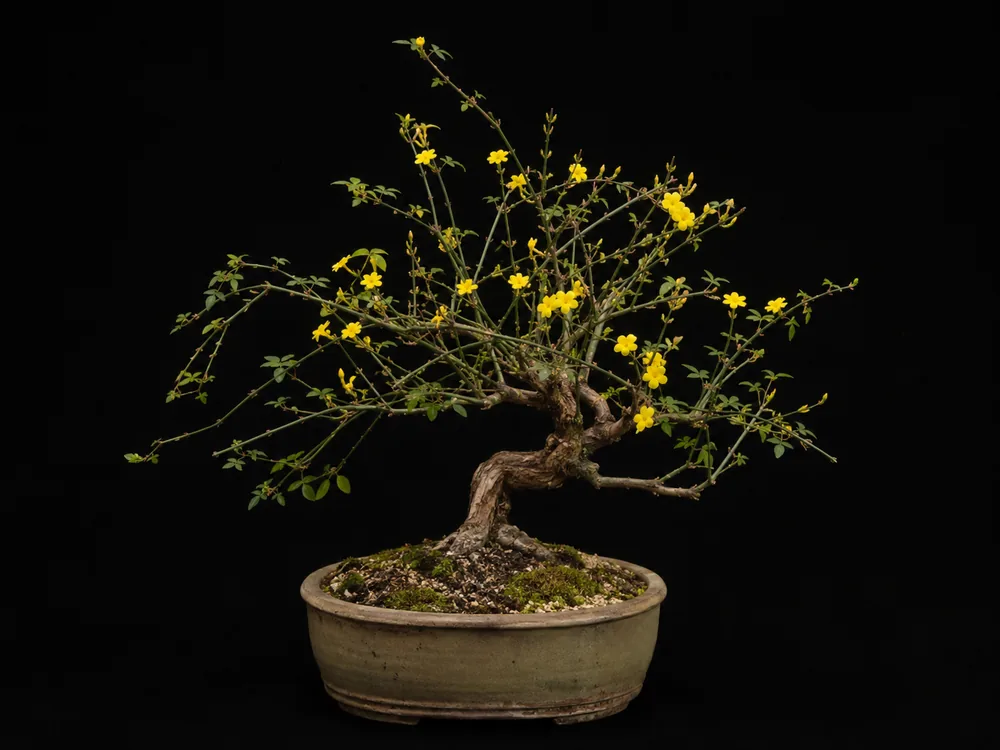
Winter Jasmine Bonsai Care
Jasminum nudiflorum
Zones 6 to 10, outdoor. A hardy deciduous shrub treasured for cheerful bright-yellow flowers that open in late winter. Most are lost to drying out.
Oleaceae (olive family) · Deciduous flowering shrub
Winter Jasmine quick reference
| USDA zones | 6–10 |
|---|---|
| Indoor / outdoor | Outdoor (deciduous; needs seasons and dormancy) |
| Light | Full sun for best flowering |
| Water | Keep moist — never let it dry out; free-draining |
| Soil | Free-draining, moisture-retentive mix |
| Repot | Every 2–3 years, mid-summer |
| Frost | Frost-tolerant; protect below ~−5 °C / 23 °F |
| Mature height (as bonsai) | Shrub to 3m in nature; bonsai usually 15-40cm. |
| Growth rate | Fast (arching, vigorous). |
| Season of interest | Winter for bright yellow flowers on bare stems. |
| Leaf reduction | Good; small trifoliate leaves stay compact. |
| #1 cause of death | Drying out; root rot from waterlogging |
Overview & Character
Winter Jasmine is a hardy deciduous shrub treasured for cheerful bright-yellow flowers that open in late winter on bare stems, before the leaves — the species name nudiflorum means 'naked flower.' It has slender green arching shoots and fine trifoliate leaves, and lends itself to cascade, semi-cascade, and informal styles.
It is easy and frost-tolerant, wanting full sun, steady moisture (it must not dry out), and free drainage. Because it flowers on old wood, pruning timing matters: tidy and shorten shoots after flowering and through the growing season, leaving mature wood to bloom the following winter. Its winter flowers make it a standout off-season display.
Identification
Foliage: Small, opposite trifoliate leaves (three small oval leaflets), glossy green; deciduous, dropping in autumn to reveal green stems.
Bark & trunk: Slender, four-angled, bright green arching/trailing stems when young (they can root where they touch soil), browning and woodier with age.
Growth habit / form: Arching, scrambling, semi-pendulous shrub; excellent for cascade, semi-cascade, and informal upright styles.
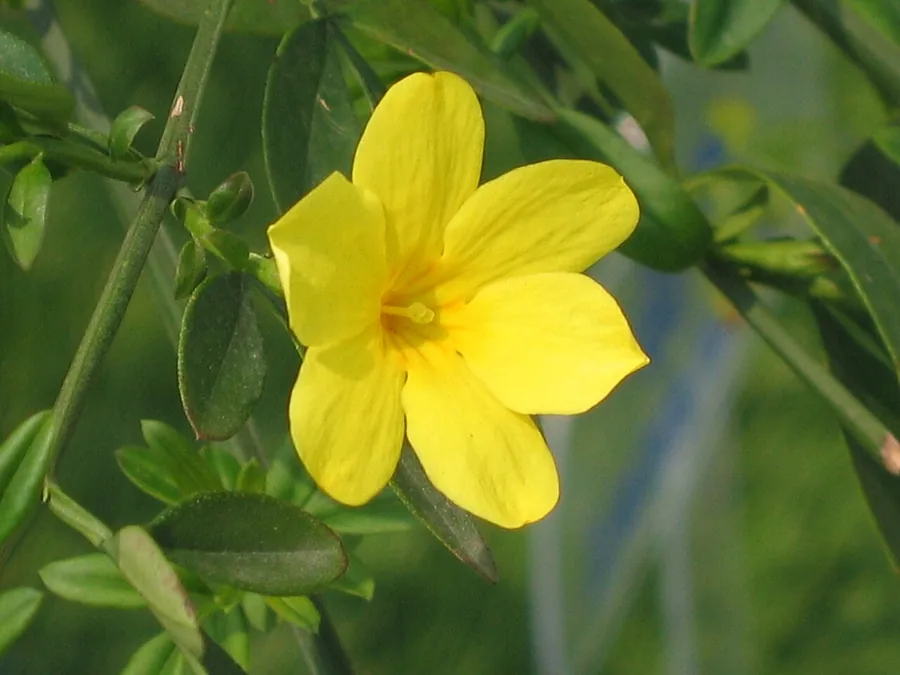
Flowers / fruit: The signature feature — solitary, bright-yellow, six-lobed flowers on leafless stems in late winter/early spring (unscented, despite the name); a rare and welcome off-season bloom.
Look-alikes & how to tell them apart: The green four-angled stems with yellow winter flowers on bare wood are distinctive; resembles Forsythia in bloom color/timing but Forsythia has four-petalled flowers and alternate simple leaves, while Winter Jasmine has six-lobed flowers and opposite trifoliate leaves on green stems.
Climate & USDA Zone
Hardy in USDA zones 6–10. Deciduous and dormancy-needing, grown outdoors year-round; frost-tolerant but protect potted roots below about −5 °C / 23 °F. Too much summer heat can reduce flowering quality the following winter; it likes a cool dormancy.
Light
Full sun for the best flowering and compact growth; it tolerates light shade but blooms most freely in full sun.
Watering
Keep moist — like most bonsai it will die if it dries out — in free-draining soil.
- Water before the surface dries; it enjoys plenty of water in growth.
- Never let the rootball dry out completely.
- Avoid waterlogging; ensure free drainage.
Soil & Root Care
Soil: A free-draining, moisture-retentive bonsai mix (akadama / pumice / lava).
Repotting:
- Frequency: every 2–3 years, ideally in mid-summer when (as a deciduous shrub) it is at its least fragile, after flowering and the spring flush.
- Tolerates root-pruning well; reduce up to ~1/3.
- Aftercare: keep moist and sheltered while re-establishing.
Feeding
Feed every ~2 weeks from the end of flowering through autumn with a balanced fertilizer to build the wood that will bear next winter's flowers; ease off as it goes dormant. Don't feed freshly repotted or dormant trees.
Pruning & Styling
- Flowers on old wood: shorten and tidy shoots after flowering and through the growing season, leaving mature wood intact to bloom the next winter; hard-pruning at the wrong time sacrifices flowers.
- It back-buds and shoots vigorously; the long arching stems suit cascade/semi-cascade training.
- Wiring: young green shoots are very flexible (ideal for cascade shaping); set them before they stiffen.
- Suits cascade, semi-cascade, and informal upright styles.
Propagation & Cuttings
Ease: Very easy. Best methods: cuttings; layering.
Jasminum nudiflorum roots from cuttings almost effortlessly, and its long arching stems layer wherever they touch soil (self-layering), so rooted pieces are easy to lift — take semi-hardwood cuttings in summer or hardwood in autumn, or simply detach a self-rooted tip. Seed is seldom used. For bonsai the yellow flowers on bare green stems in late winter are the appeal; cutting- or layer-grown plants flower young, thicken fast, and back-bud strongly, though the vigorous growth needs frequent trimming.
Pests
- Aphids (on new growth/buds)
- Spider mites (hot, dry conditions)
- Scale insects
- Mealybugs
Treat with horticultural oil, insecticidal soap, or appropriate systemics; catch infestations early.
Disease, Fungus & Infection
Tough and largely trouble-free; problems are mostly cultural:
- Root rot — from waterlogging/poor drainage.
- Leaf/shoot dieback — from drying out (stress).
- Leaf spot — fungal spotting in damp, stagnant conditions; improve airflow.
Prevention: full sun, steady moisture with free drainage, airflow.
Most Common Causes of Death
1. Drying out. It dies if the rootball dries — keep consistently moist. 2. Root rot from waterlogging. Keep moist but well-drained. 3. Pruning at the wrong time. Hard-pruning before winter removes the flower-bearing old wood; prune after flowering. 4. Unprotected potted roots in hard freeze. Frost-tolerant, but shelter below ~−5 °C. 5. Deep shade. Poor flowering; give full sun.
Seasonal Calendar
- Spring: Late-winter/early-spring yellow flowers on bare stems; after bloom, begin shaping and feeding; leaves emerge.
- Summer: Full sun; keep moist; repot if due (mid-summer); trim/tidy shoots, leaving wood to bear next winter's flowers; feed.
- Autumn: Leaves drop; taper feeding/water as it goes dormant.
- Winter: Flower buds open on bare green stems; protect potted roots below ~−5 °C; keep just-moist.
Close-up photo reference
Compare your tree against these to confirm the species and spot problems early.
.jpg)
Sources
Where to buy a Winter Jasmine bonsai
We don’t stock Winter Jasmine at the moment. These species need similar care and we have them now — they are the closest match in our catalogue.
- Downy Jasmine — similar care, in stock now
Browse all bonsai trees for sale or find a species matched to your climate and space.
- All species
- Shop bonsai trees, tools & supplies
- How to Water a Bonsai (Without Killing It)
- Bonsai Soil: What to Buy, What to Mix, and What It Costs
- Why Bonsai Die After Repotting: Diagnosing a Failed Repot
- Pruning vs. Pinching: Shaping Your Bonsai
- Overwintering Bonsai: Cold-Season Care
- Indoor Bonsai Light and Humidity: Making a Windowsill Actually Work
- Root Rot on bonsai
- Underwatering (Drought Stress) on bonsai
- Winter / Frost Damage on bonsai
- Spider Mites on bonsai
- Scale Insects on bonsai
- Downy Jasmine bonsai care
- American Beech bonsai care
- Amur Maple bonsai care
- Beautyberry bonsai care