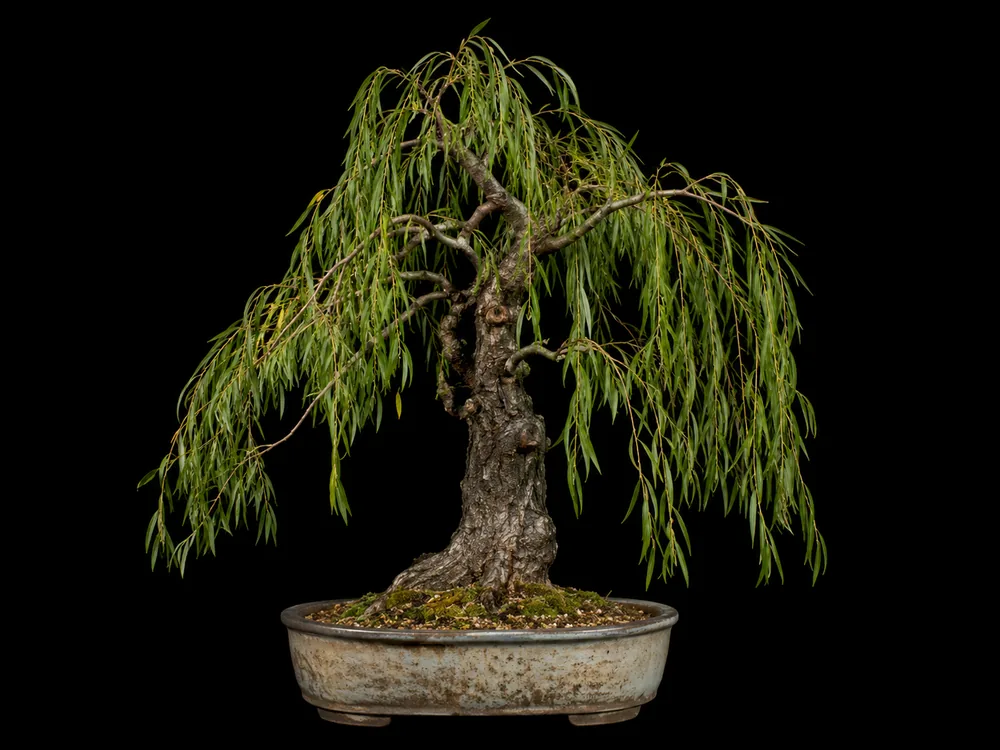
Willow (Weeping / Dappled) Bonsai Care
Salix babylonica
Zones 6 to 8, outdoor. The dramatic exception among bonsai: where almost every other species can be killed by wet feet. Most are lost to drying out.
Salicaceae (willow family) · Deciduous broadleaf tree, grown as an outdoor bonsai
Willow (Weeping / Dappled) quick reference
| USDA zones | 6–8 (weeping willow; species vary roughly 4–9) |
|---|---|
| Indoor / outdoor | Outdoor year-round — needs full light, fresh air, and winter dormancy |
| Light | Full sun for best growth and tight foliage |
| Water | Very wet — the wet-feet exception. Never let it dry out; may stand the pot in a shallow tray of water on hot days |
| Soil | Moisture-retentive yet still draining mix (more organic/akadama than for most species) |
| Repot | Often — young/vigorous trees annually or even more (some growers twice a year); fast root growth |
| Frost | Cold-hardy when dormant, but protect pot roots from hard freeze |
| Mature height (as bonsai) | Tree to 20m in nature; bonsai usually 30-70cm. |
| Growth rate | Fast (water-loving, very vigorous). |
| Season of interest | Spring catkins; graceful weeping form. |
| Leaf reduction | Moderate; narrow leaves reduce somewhat with trimming. |
| #1 cause of death | Drying out (its watering needs are extreme), plus its high susceptibility to pests and fungal disease |
Overview & Character
The willow is the dramatic exception among bonsai: where almost every other species can be killed by wet feet, the willow positively craves them. It is among the fastest-growing of all bonsai subjects, capable of major transformation in a single season — long, whippy shoots cascade quickly, making it ideal for the weeping (cascade) form it is famous for. That speed and water-love come at a cost: willows are thirsty to the point of needing water several times a day in summer, and they are notably pest- and disease-prone. The reward is a fast, expressive, graceful tree; the price is constant attention.
Identification
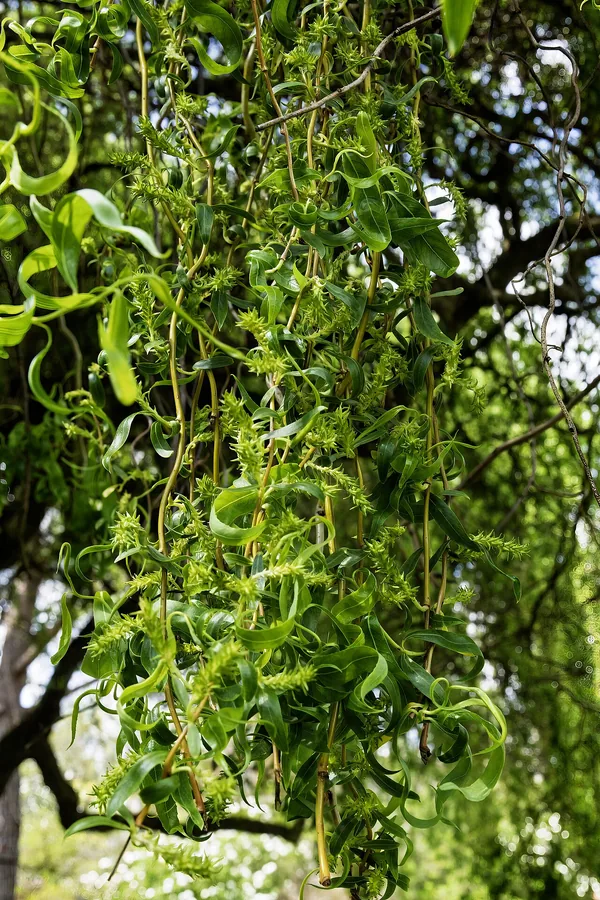
FOLIAGE: Alternate, long, narrow, lance-shaped (linear) leaves with finely serrate margins — the slender willow leaf is unmistakable. Weeping willow leaves are bright green above, paler beneath. The dappled willow (S. integra 'Hakuro-nishiki') has shorter leaves splashed pink-and-white when young.
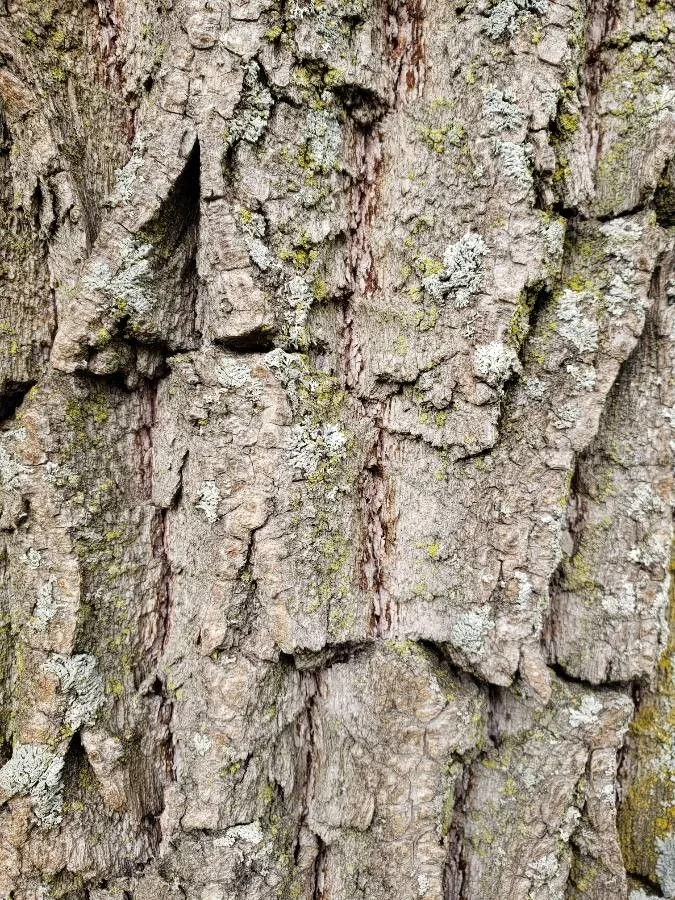
BARK & TRUNK: Greyish, becoming ridged and furrowed with age. Trunks thicken fast but the wood is soft and short-lived compared with most bonsai species.
GROWTH HABIT / FORM: Fast, vigorous, with long, flexible, whippy pendulous shoots that hang down — the basis of the classic weeping silhouette. Roots are aggressive and water-seeking.
FLOWERS / FRUIT / SEEDS: Catkins in spring (dioecious — separate male and female plants), followed by tiny seeds carried on cottony fluff.
Look-alikes & how to tell them apart: Willow is identified by its long narrow lance-shaped leaves + long whippy weeping shoots + catkins. No mainstream bonsai species has that combination of slender drooping foliage and pendulous habit. Unlike maples (opposite lobed leaves, samaras), hornbeam (fluted trunk, winged bracts), or hackberry (oblique leaf base, berries), the willow's narrow leaves and cottony seed are distinctive — and its extreme thirst is itself a clue.
Climate & USDA Zone
Weeping willow is generally hardy in USDA zones 6–8, with the broader Salix genus spanning roughly zones 4–9 depending on species. It needs a genuine winter dormancy and is grown outdoors year-round. In hot climates it copes well provided its enormous water demand is met. Because the soft wood and roots can be damaged by hard freezes in a pot, protect the roots over winter even though the species tolerates cold when dormant.
Light
Full sun. Willows want as much direct light as possible for strong, healthy growth and to keep the cascading foliage dense rather than leggy. Insufficient light produces weak, stretched shoots. Pair full sun with the heavy watering this tree requires.
Watering
Very wet — this is the wet-feet exception to normal bonsai practice. Never let the soil dry out. On hot summer days the willow needs huge amounts of water and must be watered several times a day. You can even stand the pot in a shallow tray/bowl of water during hot days to avoid drought damage — a technique that would rot almost any other species. Note the caveat: standing in water is best reserved for very hot days where the excess will evaporate or be taken up within a few hours; it is not a permanent setup, as perpetually stagnant water can still sour the soil and invite rot. The default mindset for a willow is "keep it wet."
Soil & Root Care
Use a mix that holds moisture well while still allowing some drainage — willows tolerate (and prefer) far more water retention than other species, so a more organic / akadama-heavy mix is appropriate. Roots grow fast and aggressively. Repot frequently: vigorous young trees often need it annually, and some growers repot strong willows even twice a year, because the pot fills with roots rapidly. Root-prune at repotting to control vigor and refresh the substrate. Spring is the main repotting window.
Feeding
Feed generously through the growing season to fuel the rapid growth — but balance it, as too much nitrogen produces even longer, coarser whips. A balanced fertilizer from spring through late summer keeps the tree vigorous and the foliage healthy. Reduce and stop feeding heading into autumn dormancy.
Pruning & Styling
Willows grow fast and demand frequent pruning to hold their shape. The long pendulous shoots are the styling feature for cascade/weeping designs — let them extend, then trim to maintain form and density; expect to do this repeatedly all season. The wood is soft and flexible, so young shoots wire and bend easily, but the soft wood also means wire marks and dieback can occur quickly — monitor closely. Hard pruning is tolerated and the tree back-buds vigorously. Because it transforms so fast, willow is excellent for rapidly developing a styled tree.
Propagation & Cuttings
Ease: Extremely easy. Best methods: hardwood and softwood cuttings.
Salix (weeping/dappled willow) roots from cuttings more easily than almost any woody plant — hardwood cuttings in winter or softwood in summer root in days to weeks, even in a jar of water (willow stems contain natural rooting hormone). Seed is tiny, short-lived, and must be sown within days. For bonsai the fast, pendulous growth is the draw but demands constant trimming; cutting-grown plants develop very fast, back-bud vigorously, and the same rooting ease makes willow water a traditional homemade rooting aid.
Pests
Willows are notably pest-prone. Watch for willow borer, aphids, scale insects, caterpillars, gall makers and gall mites, and others. Aphids cluster on leaves and young shoots, deforming foliage and secreting sticky honeydew, usually appearing in spring. Inspect constantly. Treat aphids and similar pests with potassium (insecticidal) soap, neem oil, or a specific insecticide; address borers and galls promptly as they can do structural damage. Vigilance is essential with this genus.
Disease, Fungus & Infection
Willows are also disease-prone, especially in humid conditions or with poor air circulation. Common problems include rust, canker, powdery mildew, downy mildew, and willow scab/anthracnose (Fusicladium saliciperdum). Prevent these with strong airflow, full sun, removal of infected leaves and dead wood, and (where possible) keeping foliage from staying constantly wet — note the tension with the tree's love of water, so airflow and sun become the key levers. Treat outbreaks with appropriate fungicides and prune out affected growth promptly.
Most Common Causes of Death
1. Drying out. The willow's water demand is extreme; a missed watering on a hot day can kill it. Prevention: never let the soil dry out, water several times daily in summer, stand in a water tray on hot days. 2. Pest infestations (borer, aphids, scale, galls). This genus is highly pest-prone and pests can do structural damage. Prevention: inspect constantly and treat at the first sign with soap/neem/insecticide. 3. Fungal disease (rust, canker, mildews, scab). Common in humid, still air; canker can kill branches or the tree. Prevention: full sun, excellent airflow, remove infected material, use fungicide as needed. 4. Stagnant/sour standing water for too long. The water-tray trick, left permanently, can sour the soil and rot roots. Prevention: use the tray only on hot days when water is used up within hours. 5. Becoming root-bound from fast root growth. Aggressive roots quickly fill the pot. Prevention: repot frequently — at least annually for vigorous trees. 6. Winter root freeze in the pot. Soft wood and roots are vulnerable. Prevention: protect roots over winter (cold frame/mulch/sheltered spot). 7. Weak, leggy growth from too little light. Saps vigor and invites disease. Prevention: grow in full sun.
Seasonal Calendar
- Spring: Repot vigorous trees (annually) into moisture-retentive mix. Catkins may appear. Begin feeding and frequent trimming as fast growth starts. Watch for the first aphids.
- Summer: Water heavily — several times a day; stand the pot in a shallow water tray on the hottest days. Full sun. Prune the fast, whippy growth repeatedly to maintain the weeping form. Stay vigilant for borer, aphids, scale, galls, and fungal disease; keep airflow high.
- Autumn: Foliage yellows and drops. Taper off feeding. Tidy pruning and structural assessment. Begin reducing water as growth slows; prepare winter protection.
- Winter: Dormant — keep the soil moist (not the summer tray regime) and protect the pot roots from hard freeze. Do structural pruning and wiring while bare; remove any diseased/dead wood.
Close-up photo reference
Compare your tree against these to confirm the species and spot problems early.

_Salix_babylonica_(Feuilles_et_inflorescences)_-_Les_Martels,_Giroussens_Tarn.jpg)
Sources
- Bonsai Empire — Weeping Willow Bonsai (Salix) care guide
- Bonsai4Me — Salix / Willow Bonsai species guide
- Miyagi Bonsai — Weeping Willow Bonsai Care Guide
- Hooked on Bonsai — The Complete Weeping Willow Bonsai Care Guide
Growing a Willow (Weeping / Dappled) bonsai
We don’t currently stock Willow (Weeping / Dappled) trees. If you already have one — or you are sourcing one elsewhere — these are the supplies its care depends on:
- Bonsai Decorative Crushed Shale Top of Soil Dressing — $4.95
- Bonsai Zen Garden Grooming Rake — $8.95
- Metal Impression Tags Package of 4 — $2.95
Browse all bonsai trees, tools and soil or find a species we stock that suits your conditions.
- All species
- Shop bonsai trees, tools & supplies
- How to Water a Bonsai (Without Killing It)
- Bonsai Soil: What to Buy, What to Mix, and What It Costs
- Why Bonsai Die After Repotting: Diagnosing a Failed Repot
- Pruning vs. Pinching: Shaping Your Bonsai
- Overwintering Bonsai: Cold-Season Care
- Indoor Bonsai Light and Humidity: Making a Windowsill Actually Work
- Underwatering (Drought Stress) on bonsai
- Winter / Frost Damage on bonsai
- Insufficient Light (Etiolation) on bonsai
- Powdery Mildew on bonsai
- Scale Insects on bonsai
- American Beech bonsai care
- American Elm bonsai care
- American Hornbeam bonsai care
- Amur Maple bonsai care