
Loquat Bonsai Care
Eriobotrya japonica
Zones 8 to 10, outdoor. One of the few genuinely subtropical fruiting trees that makes a rewarding bonsai. Most are lost to overwatering.
Rosaceae (rose family) · Evergreen broadleaf fruiting tree
Loquat quick reference
| USDA zones | 8 to 10 |
|---|---|
| Indoor / outdoor | Outdoor in mild climates; can shelter under glass or move indoors briefly in hard freezes |
| Light | Full sun to light shade: needs strong light to fruit and keep foliage compact |
| Water | Moisture-loving but well-drained: evenly moist, never waterlogged |
| Soil | Free-draining, slightly acidic to neutral loam-based mix |
| Repot | Every 2 to 3 years for younger trees, 3 to 4 for mature specimens |
| Frost | Wood hardy to about −10 °C (14 °F); flowers and young fruit killed near −3 °C (27 °F) |
| Mature height | 5-10m wild; 30-60cm as bonsai |
| Growth rate | Moderate; large coarse foliage |
| Season of interest | Winter flowers; yellow spring fruit; bold leaves |
| Leaf reduction | Large leaves reduce poorly; keep informal styles |
| #1 cause of death | Root rot from waterlogged soil / overwatering in a container |
Overview & Character
The loquat is one of the few genuinely subtropical fruiting trees that makes a rewarding bonsai. Its huge, corrugated, dark-green leaves, up to 25 cm long in the ground, reduce noticeably under bonsai discipline while keeping their handsome felted underside, giving a bold, tropical texture that few temperate species can match. Unusually, it flowers in autumn and winter and ripens fruit in spring, so a well-grown specimen can carry fragrant creamy flower panicles when almost everything else is dormant, then hold clusters of small orange pomes. That off-season interest, plus fast-thickening trunks and readily corky bark, makes it a favorite for informal upright and slanting styles in Mediterranean and warm-temperate collections.
The care keys are simple but strict: give it as much sun as you can, keep the rootball evenly moist through the growing season without ever letting it sit in water, feed generously to support the large leaves, and protect flowers and fruit from frost. Leaf size is the main styling challenge: hard pruning, restraint on nitrogen late in the season, and keeping the tree slightly pot-bound all help keep foliage in proportion.
Identification
Foliage: Large, leathery, oblong-lanceolate evergreen leaves, glossy dark green above with a dense rusty-woolly (tomentose) underside; margins are coarsely toothed toward the tip and the veins are deeply impressed, giving a strongly ribbed look. New growth is covered in tawny felt.
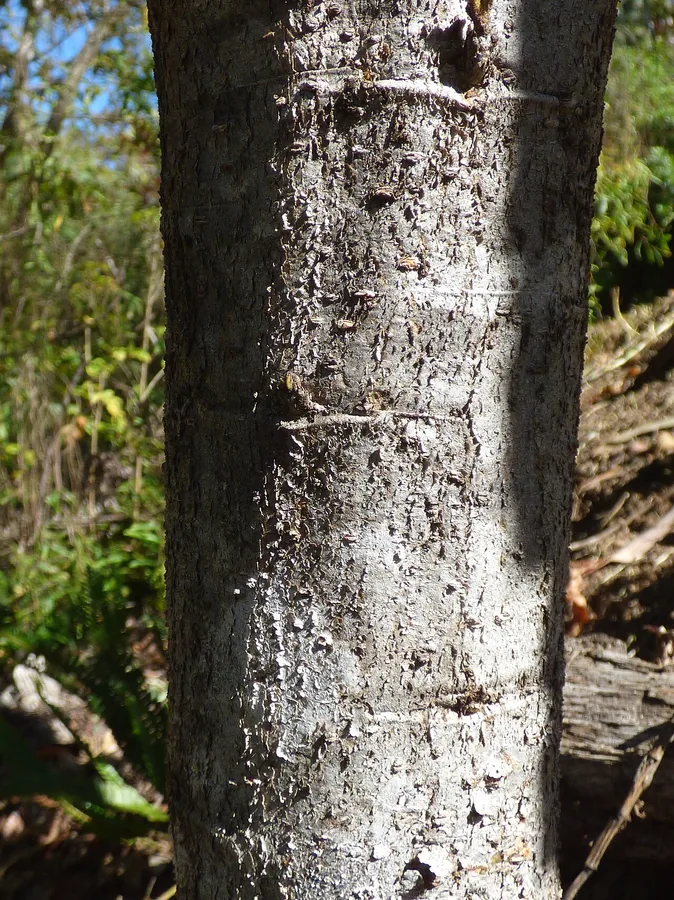
Bark & trunk: Young shoots are woolly and gray-brown; with age the trunk develops a grayish, shallowly fissured, slightly corky bark. Trunks thicken quickly for a fruiting broadleaf.
Growth habit / form: Naturally a rounded, densely crowned small tree 5 to 10 m tall with stout branching. In a pot it back-buds well on old wood, which suits compact ramification.
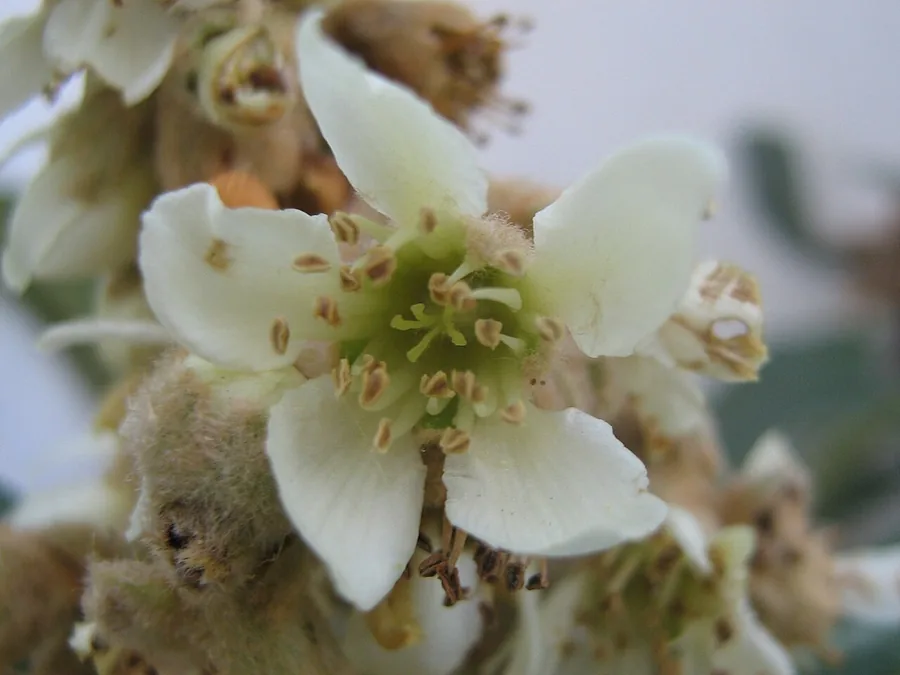
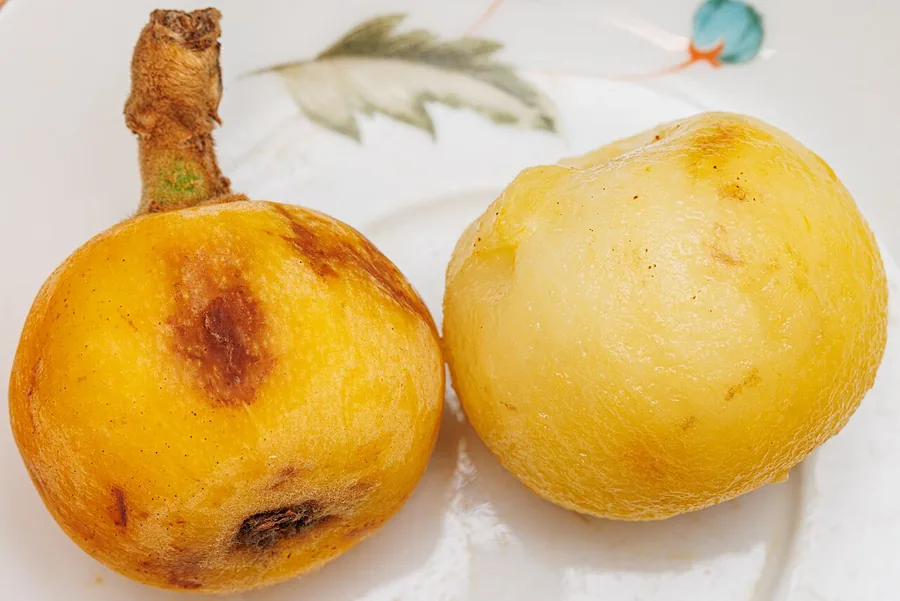
Flowers / fruit: Fragrant white-to-cream five-petaled flowers in woolly terminal panicles, opening autumn to winter. Fruit is a small yellow-to-orange pome (1.5 to 5 cm) with a few large brown seeds, ripening late winter to spring.
Look-alikes & how to tell them apart: Often confused with **bronze loquat (Rhaphiolepis deflexa, formerly Eriobotrya deflexa), whose new growth is coppery-red and whose leaves are thinner and less deeply ribbed; and with Japanese medlar confusion aside, true medlar (Mespilus germanica)**, which is deciduous with much smaller, matte leaves and a distinctive open-ended "hollow" fruit. Loquat's combination of evergreen, heavily ribbed leaves with a rust-felted underside is diagnostic.
Climate & USDA Zone
Loquat is a warm-temperate to subtropical tree, comfortable in USDA zones 8 to 10. Mature wood tolerates brief dips to about −10 °C (14 °F), but the autumn-winter flowers are damaged around −3 °C (27 °F) and developing fruit is killed by any hard frost, so cold snaps simply cost you the crop rather than the tree. It grows best where summers are warm and winters mild. In zones 7 and colder it must overwinter in a cold greenhouse, conservatory, or bright cool room; it is not a true houseplant and will decline in a warm, dark interior.
Light
Give loquat the sunniest position you have: full sun for most of the day, with only light afternoon shade in the hottest inland climates. Strong light keeps internodes short, encourages flower initiation, and prevents the already-large leaves from growing even bigger. In dull light the tree stretches, leaves enlarge, and flowering is poor. Under glass in winter, keep it as close to the brightest glazing as possible.
Watering
Keep the soil evenly moist during active growth, letting only the surface dry between waterings, but never let the pot stand in water.
- In summer heat a vigorous loquat in a small pot may need watering once or twice daily; the large leaves transpire heavily.
- Reduce frequency in cool weather and near-dormancy, watering only when the top of the soil begins to dry.
- Use a free-draining mix so excess water clears fast; this species is far more tolerant of frequent watering than of standing water.
- Mist or provide humidity in dry heat to reduce leaf scorch, but prioritize good root aeration over foliar misting.
Soil & Root Care
Soil: A free-draining, slightly acidic to neutral mix: for example akadama with pumice and a little organic component (kanuma or composted bark) to hold moisture. Avoid dense, water-retentive soils that stay soggy.
Repotting:
- Repot every 2 to 3 years while young and building the tree; every 3 to 4 years once mature.
- Best timing is early spring as the flush of new growth begins, after any fruit has finished; avoid repotting while in flower or fruit.
- Root-work tolerance is moderate: remove no more than about one-third of the roots at a time; loquat resents very aggressive bare-rooting.
- Aftercare: keep in a warm, bright, sheltered spot out of strong wind, water carefully, and withhold fertilizer for 3 to 4 weeks until new roots are running.
Feeding
Loquat is a hungry tree that needs steady feeding to support its large leaves and fruit. Feed regularly through the growing season with a balanced organic or slow-release fertilizer, tapering nitrogen from late summer to help control leaf size and to harden growth before winter. A higher-potassium feed in late summer supports flower and fruit development. Stop feeding a stressed or freshly repotted tree until it is growing again.
Pruning & Styling
- Suits informal upright, slanting, and broom-influenced styles; the bold foliage lends itself to larger bonsai where big leaves stay in proportion.
- Prune structurally in spring after the fruit finishes; loquat back-buds reliably on old wood, so you can cut hard to build taper and ramification.
- Pinch or cut new shoots back to one or two leaves to encourage denser branching and shorter internodes.
- Leaf reduction: partial defoliation of the largest leaves in early summer on a healthy tree forces smaller replacement leaves, a key technique for keeping this big-leaved species convincing as bonsai.
- Wire young, still-flexible shoots; older branches are stiff and brittle, so shape while green and protect the bark from wire bite.
Propagation & Cuttings
Ease: Easy from seed. Best methods: seed; grafting.
Eriobotrya japonica grows readily from fresh seed: sow the large seeds from ripe fruit warm and moist immediately, as they don't store; germination is quick and strong. Cuttings root poorly, so named fruiting cultivars are grafted onto seedling loquat or quince. Air-layering is possible. For bonsai the big leaves reduce only modestly, but seedlings develop fast and the plant back-buds strongly after hard pruning; keep it warm/frost-protected where winters are cold.
Pests
- Aphids: cluster on the woolly new shoots and flower panicles; treat with insecticidal soap or a systemic and rinse off honeydew.
- Scale insects (soft and armored): appear as brown or waxy bumps on stems and leaf undersides; scrub off or treat with horticultural oil.
- Codling moth and fruit-boring caterpillars: attack developing fruit; remove affected fruit and use pheromone traps or targeted controls.
- Mediterranean fruit fly (medfly): a serious fruit pest in warm regions; bag fruit or use approved baits where medfly is present.
Disease, Fungus & Infection
- **Fire blight (Erwinia amylovora)**: the most serious disease of loquat; causes blackened, "shepherd's-crook" wilting of shoots and oozing cankers. Prune out well below infected tissue, sterilizing tools between cuts, and avoid excess soft nitrogen growth.
- **Root rot (Phytophthora spp.)**: thrives in waterlogged soil; causes wilting, dieback, and dark rotted roots. Prevent with free-draining soil and correct watering.
- Loquat scab / leaf spot: fungal spotting of leaves and fruit in humid conditions; improve airflow and remove fallen debris.
- Prevention: keep foliage dry going into night, ensure good air circulation, avoid overhead-nitrogen-driven soft growth, and clear fallen leaves and mummified fruit that harbor spores.
Most Common Causes of Death
1. Root rot from waterlogged soil / overwatering: the number-one killer of container loquats; use a sharply draining mix and never let the pot sit in water. 2. Fire blight: can kill a tree quickly once it moves into the trunk; act fast, cutting well below symptoms and sterilizing tools. 3. Hard freeze on a tree kept too cold: wood damage below about −10 °C (14 °F); shelter in a frost-free but cool spot in zone 7 and below. 4. Drought / letting the rootball dry out: the large leaves collapse fast in heat; keep evenly moist in summer. 5. Starvation and neglect: an under-fed, unrepotted loquat weakens and becomes pest-prone; feed generously and repot on schedule.
Seasonal Calendar
- Spring: Main growth flush; repot as growth starts, harvest ripening fruit, begin feeding, and do structural pruning after fruiting.
- Summer: Water heavily, feed steadily (easing nitrogen late), partially defoliate the largest leaves for size control, and watch for aphids and scale.
- Autumn: Flower panicles form and open; reduce nitrogen, switch to a higher-potassium feed, and protect opening flowers from early frost.
- Winter: Flowering continues and fruit sets; keep cool and bright, water sparingly, and shield flowers and young fruit from hard freezes.
Close-up photo reference
Compare your tree against these to confirm the species and spot problems early.
.jpg)


Sources
- Wikipedia: *Eriobotrya japonica*
- Missouri Botanical Garden: *Eriobotrya japonica*
- RHS: *Eriobotrya japonica* (loquat)
Where to buy a Loquat bonsai
We don’t stock Loquat at the moment. These species need similar care and we have them now — they are the closest match in our catalogue.
- Downy Jasmine — similar care, in stock now
- Japanese Andromeda — similar care, in stock now
- Meyer Lemon — similar care, in stock now
Browse all bonsai trees for sale or find a species matched to your climate and space.
- All species
- Shop bonsai trees, tools & supplies
- How to Water a Bonsai (Without Killing It)
- Bonsai Soil: What to Buy, What to Mix, and What It Costs
- Why Bonsai Die After Repotting: Diagnosing a Failed Repot
- Pruning vs. Pinching: Shaping Your Bonsai
- Overwintering Bonsai: Cold-Season Care
- Indoor Bonsai Light and Humidity: Making a Windowsill Actually Work
- Root Rot on bonsai
- Overwatering on bonsai
- Underwatering (Drought Stress) on bonsai
- Winter / Frost Damage on bonsai
- Leaf Scorch / Sunburn on bonsai
- Downy Jasmine bonsai care
- Japanese Andromeda bonsai care
- Meyer Lemon bonsai care
- Mistletoe Fig bonsai care