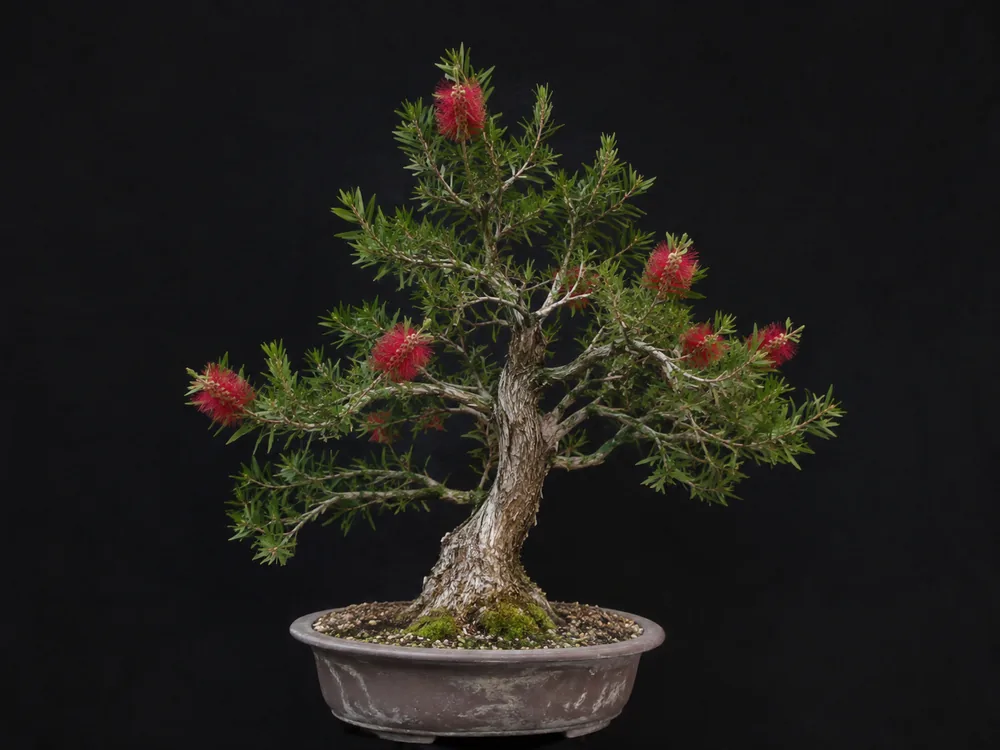
Bottlebrush Bonsai Care
Callistemon citrinus
1 Bottlebrush bonsai in stock, from $74.95 Shipped direct from our nursery partners, with a 48-hour live-arrival guarantee. See the trees
Zones 9 to 11, outdoor. An Australian evergreen shrub grown as bonsai for its dramatic flower spikes. Most are lost to drying out.
Myrtaceae (myrtle family) · Evergreen flowering shrub
Bottlebrush quick reference
| USDA zones | 9–11 |
|---|---|
| Indoor / outdoor | Outdoor in mild climates; bright frost-free spot where cold |
| Light | Full sun for heavy flowering |
| Water | Keep moist in growth — never fully dry; drier in winter |
| Soil | Free-draining, slightly acidic mix |
| Repot | Every 2–3 years, spring |
| Frost | Mostly hardy — protect from sustained freeze/heavy frost |
| Mature height (as bonsai) | Shrub-tree to 8 m; 25-50 cm as bonsai |
| Growth rate | Fast |
| Season of interest | Red bottlebrush flowers spring-summer |
| Leaf reduction | Moderate - narrow leaves stay fairly long |
| #1 cause of death | Drying out; cold/frost; root rot from waterlogging |
Overview & Character
The Bottlebrush is an Australian evergreen shrub grown as bonsai for its dramatic flower spikes — dense cylindrical brushes of crimson (sometimes pink/white) stamens that genuinely look like a bottle brush — plus aromatic narrow leaves and shredding bark. It is vigorous, free-flowering, and rewarding.
It wants full sun for heavy bloom, steady moisture (it dislikes drying out but also waterlogging), and protection from sustained frost. Flowering happens on growth, so the azalea-style rhythm of pruning hard after flowering then letting new shoots run gives the best display. New leaves often flush coppery-red.
Identification
Foliage: Narrow, lance-shaped leaves ~3–8 cm, stiff and leathery, aromatic (citrus/eucalyptus scent) when crushed; new growth often flushes silky coppery-pink to red.
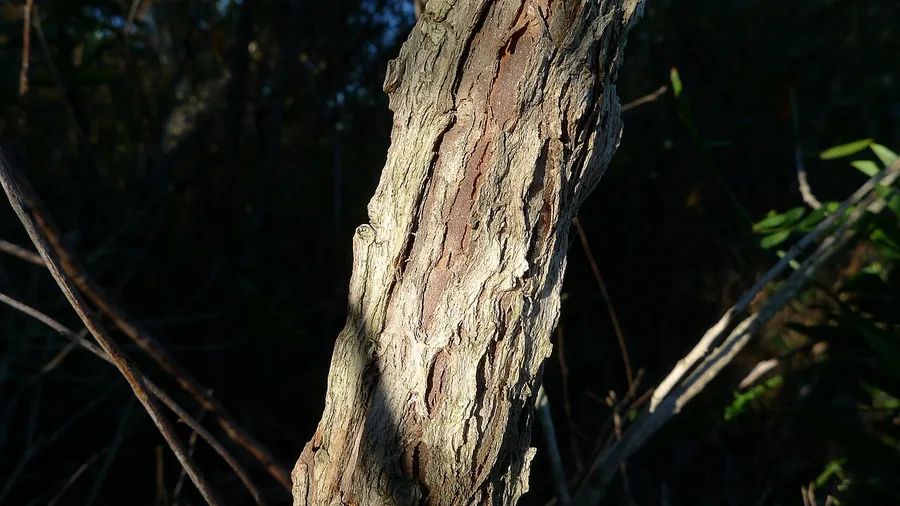
Bark & trunk: Grey-brown, firm, becoming finely fissured/shredding with age.
Growth habit / form: Vigorous, twiggy evergreen shrub, somewhat stiff-branched; suits informal upright, weeping, and flowering shrub styles.
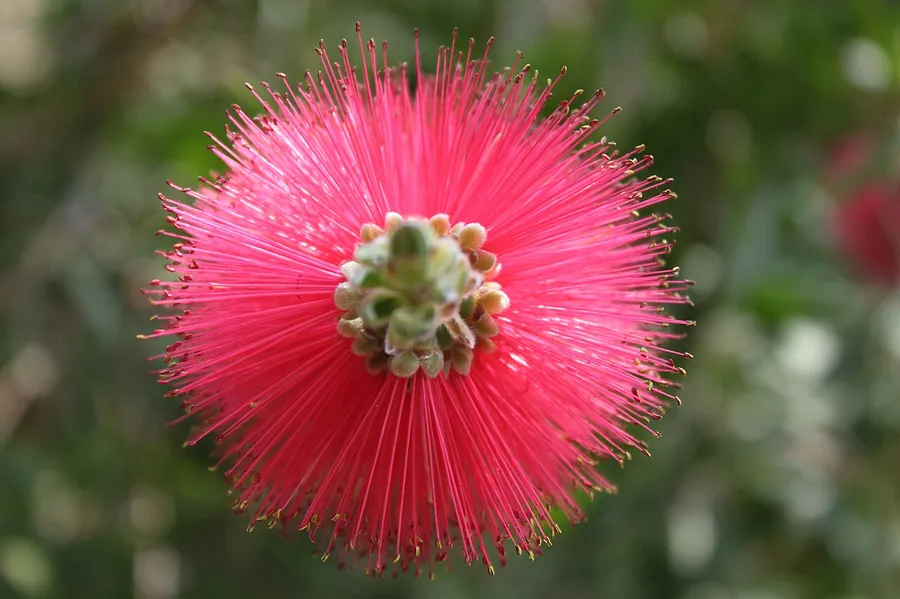
Flowers / fruit: The signature feature — dense cylindrical 'bottlebrush' spikes of long crimson (or pink/white) stamens, mainly spring–early summer; followed by woody seed capsules that cling to the stems for years.
Look-alikes & how to tell them apart: The cylindrical brush flower and aromatic narrow leaves are distinctive; related to and sometimes confused with paperbark (Melaleuca) and tea tree (Leptospermum), but the dense bottlebrush flower spike and persistent woody capsules along the stem are the instant tells.
Climate & USDA Zone
Hardy outdoors in USDA zones 9–11. Mostly cold-hardy and tougher than many tropicals, but protect from sustained freeze and heavy frost; in colder zones overwinter in a bright, frost-free spot. It enjoys heat and sun and tolerates damp ground.
Light
Full sun for compact growth and heavy flowering — at least 4–6 hours, more is better. In shade it grows leggy and flowers poorly.
Watering
Keep the soil moist during growth — never let it dry out completely — and reduce in winter.
- Water before the surface dries; bottlebrush naturally grows near water and likes steady moisture.
- Still ensure free drainage; prolonged waterlogging can rot roots.
- Slightly drier (but not bone-dry) over winter.
Soil & Root Care
Soil: A free-draining, slightly acidic bonsai mix (akadama / pumice / lava; a mix such as coco peat + potting mix + crushed granite also works).
Repotting:
- Frequency: every 2–3 years, in spring.
- Moderate root-pruning; keep moist and sheltered afterward.
- Aftercare: warm, bright, evenly moist while re-establishing.
Feeding
Feed with a balanced fertilizer through the growing season, with a little extra phosphorus in early spring to support flowering; ease off in winter. Don't feed freshly repotted trees.
Pruning & Styling
- Flower-driven pruning (azalea-style): prune hard after flowering (cut back behind the spent flower/seed capsules as soon as blooms fade), then let the subsequent shoots run and set buds for next season's bloom.
- Remove crossing branches; it back-buds and takes hard pruning well.
- Wiring: branches are somewhat stiff — wire younger wood carefully and watch for bite.
- Suits informal upright, weeping, and flowering shrub styles.
Propagation & Cuttings
Ease: Easy. Best methods: semi-hardwood cuttings; seed.
Callistemon strikes readily from semi-hardwood cuttings taken after a flush hardens in late summer, dipped in IBA and kept warm and humid. Seed is very easy too: the woody capsules hold fine seed for years and release it when dried — sprinkle on the surface of moist mix and keep warm, no stratification needed. Cultivars are grown from cuttings to preserve flower colour and form. Propagate in the warm season and protect young plants from frost; for bonsai, cutting-grown stock flowers young and builds the brushy character quickly.
Pests
- Scale insects and sooty mold
- Aphids (on new growth/buds)
- Spider mites (hot, dry conditions)
- Webbing caterpillars in some regions
Treat with horticultural oil, insecticidal soap, or appropriate systemics; catch infestations early.
Disease, Fungus & Infection
Generally tough; problems are largely cultural:
- Root rot — from waterlogged, poorly drained soil.
- Leaf drop / dieback — from drying out or hard frost (stress).
- Fungal leaf spot — in damp, stagnant conditions; improve airflow.
Prevention: full sun, steady moisture with free drainage, airflow, frost protection.
Most Common Causes of Death
1. Drying out. Don't let it dry fully — keep moist in growth. 2. Cold / frost damage. Mostly hardy but protect from sustained freeze and heavy frost. 3. Root rot from waterlogging. Keep moist but well-drained. 4. Too little sun. Leggy growth and poor flowering; give full sun. 5. Pruning at the wrong time. Cutting off the spring buds prevents bloom — prune right after flowering.
Seasonal Calendar
- Spring: Repot if due; resume feeding (extra phosphorus); full sun; flower spikes form.
- Summer: Full sun; keep moist; prune hard after flowering, then let shoots run; feed.
- Autumn: Taper feeding/water; let next season's growth mature.
- Winter: Keep slightly drier (not dry); protect from sustained freeze/heavy frost (bright frost-free spot where cold).
Close-up photo reference
Compare your tree against these to confirm the species and spot problems early.
.jpg)

Sources
Buy a Bottlebrush bonsai
- All species
- Shop bonsai trees, tools & supplies
- How to Water a Bonsai (Without Killing It)
- Bonsai Soil: What to Buy, What to Mix, and What It Costs
- Why Bonsai Die After Repotting: Diagnosing a Failed Repot
- Pruning vs. Pinching: Shaping Your Bonsai
- Overwintering Bonsai: Cold-Season Care
- Indoor Bonsai Light and Humidity: Making a Windowsill Actually Work
- Root Rot on bonsai
- Underwatering (Drought Stress) on bonsai
- Winter / Frost Damage on bonsai
- Spider Mites on bonsai
- Scale Insects on bonsai
- Buttonwood bonsai care
- Jamaican Raintree bonsai care
- Black Olive bonsai care
- Camellia bonsai care