
.jpg)
Eucalyptus Bonsai Care
Eucalyptus
Zones 8 to 10, outdoor. A genus of 716 accepted species in the myrtle family, Myrtaceae, native from the Philippines.
Myrtaceae (the myrtle family) · Broadleaf evergreen tree or mallee; outdoor bonsai
At a glance
- Type
- Broadleaf evergreen
- Leaves
- Evergreen
- USDA zones
- 8 to 10
- Indoor or outdoor
- Outdoor
- Growth rate
- Fast
- Bonsai popularity
- Tier 3
Close-up photo reference
Compare your tree against these to confirm the species and spot problems early.
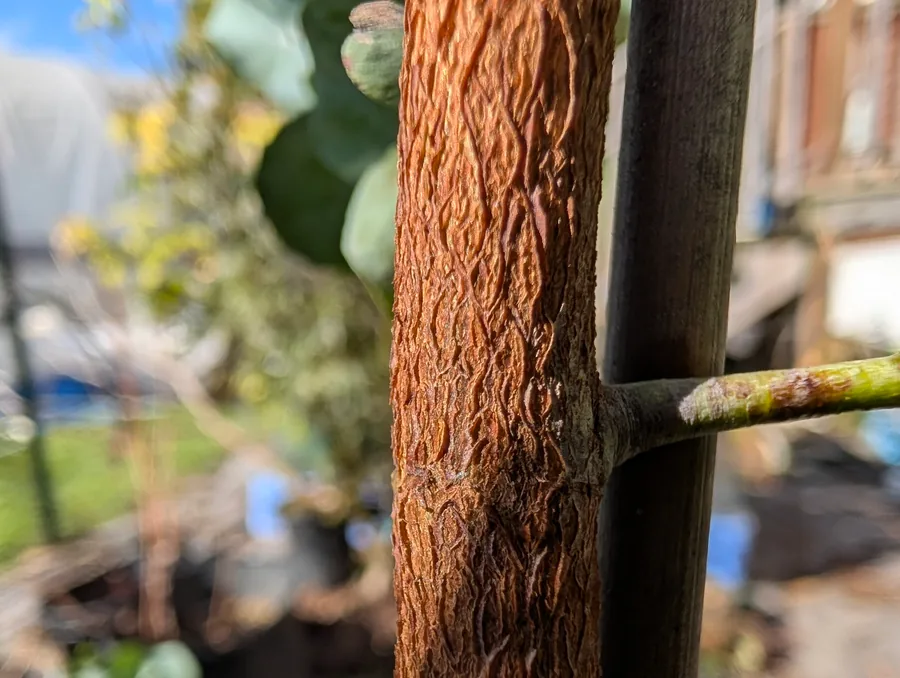
Eucalyptus quick reference
| USDA zones | 8 to 10, figures for trees in the ground: E. cinerea hardy to zone 8 [3], up to NC State's 10b [2]; NC State gives 7b to 10b for the genus, with die-back in 7a [2]; no source gives a figure for a pot, and Bonsai Empire keeps most species frost-free in cold-winter regions [15] |
|---|---|
| Indoor / outdoor | Outdoor, in full sun [15]; NYBG calls it a challenging houseplant [5]; in cold winters Bonsai Empire keeps most species frost-free [15] |
| Light | Full sun, 6 or more hours of direct sun a day [2] [15] |
| Water | Water once the soil has dried, never let the pot dry right out, avoid overwatering [15]; never let a container become waterlogged [7] |
| Soil | Well-draining mix at pH 5 to 6 [15] |
| Repot | Every two to three years [15]; every two years in a container [7] |
| Frost | E. gunnii is rated H5, 5 to 14°F (-15 to -10°C), in the ground [6]; most other species are not frost-hardy [15] |
| Mature height | 33 to 82 ft (10 to 25 m) in the wild, by species [9] [10] [11] |
| Growth rate | Fast: rapid [2], extremely fast [15]; E. cinerea is vigorous but not especially fast for a eucalyptus [13] |
| Season of interest | Evergreen blue-gray leaves all year [7]; round juvenile leaves persist on E. cinerea [10] and with coppicing [7]; mottled bark on E. gunnii [9] |
| Leaf reduction | Not rated by the sources we checked; defoliation can reduce leaf size on very healthy trees [15] |
| Main risks | Main risks, not ranked by any source: frost [15], root disturbance [7] [15], hard pruning followed by repotting, one grower's suspected cause [16], high-phosphorus feed [15] |
Overview & Character
Eucalyptus is a genus of 716 accepted species in the myrtle family, Myrtaceae, native from the Philippines to Australia [1]. Nursery "silver dollar" eucalyptus can be any of several round-leaved species, so this guide covers the genus. Three are widely grown: E. cinerea, one of the most popular temperate eucalypts in cultivation [10], called Silver Dollar Eucalyptus and Argyle Apple by Oregon State [3]; E. gunnii, which the RHS calls cider gum [6] and lists among its readily available garden species [7]; and E. pulverulenta, the silver-leaved mountain gum, often grown as a small ornamental [11]. NC State uses Gum and Silver Dollar Tree for the genus [2].
Eucalyptus is an uncommon bonsai: Bonsai Empire says its strong growth makes it not easy to cultivate as bonsai [15]. It grows extremely fast [15]; on most species the disc-like juvenile leaves give way to long, pointed adult leaves [7], though E. cinerea and E. pulverulenta rarely make them [10] [11]; it dislikes root disturbance [7]; and NYBG calls it a challenging houseplant [5]. In its favor, it backbuds well in most cases [15]. All three nursery species form a lignotuber [9] [10] [11], which one Australian grower says can produce many new buds if the trunk is damaged [16]; that is a grower's experience, not a botanical finding.
Identification
Foliage. On all three, juvenile leaves grow in opposite pairs without stalks and are round to heart-shaped and gray-green to waxy blue-gray (glaucous) [9] [10] [11] [12]. Edges are entire or finely scalloped on E. gunnii [9], entire or slightly scalloped on E. cinerea seedlings [10]. Adult leaves are alternate, stalked and lance-shaped, 1.6 to 3.5 in (4 to 9 cm) long on E. gunnii [9]; E. cinerea rarely forms them [10], E. pulverulenta very rarely [11].
Bark & trunk. E. cinerea: thick, rough and fibrous, gray over red-brown [10] [12]. E. gunnii: mostly smooth, mottled white, yellow and pink [9]; the RHS says peeling cream and brown [6]. E. pulverulenta: smooth [11].
Growth habit / form. E. gunnii and E. cinerea are trees [9] [10]; E. pulverulenta is a straggly small tree or mallee [11].
Look-alikes & how to tell them apart: EUCLID says E. pulverulenta has a juvenile crown much like E. cinerea but a mallee habit and smooth bark shedding in ribbons [10], while E. cinerea stands apart by its completely rough bark [11].
Climate & USDA Zone
In the ground. This guide gives zones 8 to 10: Oregon State rates E. cinerea hardy to zone 8 [3], and NC State's genus range reaches 10b [2]. NC State starts at 7b and says trees in 7a and colder tend to die back to the ground [2]; Trees and Shrubs Online gives zone 7 for E. cinerea [13]. The RHS rates E. gunnii H5, 5 to 14°F (-15 to -10°C) [6].
In a pot. No source we checked gives a figure; Bonsai Empire keeps most species frost-free in cold-winter regions [15].
Light
Full sun, 6 or more hours of direct sun a day [2] [15]. The RHS says most species dislike shade [7].
Watering
Never bone dry, never waterlogged. Bonsai Empire gives plenty of water in the growing season: water once the soil has dried, never let the pot dry right out, and avoid overwatering [15]. It prefers slightly acidic water, pH 5 to 6 [15]. The RHS keeps containers from becoming waterlogged and waters less in winter [7]. Drought tolerance [2] [7] applies to established trees in the ground.
Soil & Root Care
Bonsai Empire uses a well-draining mix at pH 5 to 6 [15]; for garden containers the RHS uses soil-based compost with up to 30% grit [7].
Repotting. Every two to three years, any time in warm climates, preferably summer in cooler ones [15]; every two years for RHS containers [7]. Be gentle: eucalyptus dislikes root disturbance [7], and some species take severe root pruning badly [15]. Canberra growers advise against winter repotting in cold climates [16].
Feeding
Bonsai Empire feeds monthly (solid organic) or weekly (liquid) in the growing season, less in winter, always low in phosphorus, which can kill eucalyptus and many other Australian natives [15]. Pot-bound or starved trees grow proteoid roots that take up extra phosphorus, so give none until they are repotted and those roots cut off [15]. The RHS feeds containers monthly from April to September [7].
Pruning & Styling
Shoots. Let new shoots mature before trimming; soft ones tend to die back [15].
Hard pruning. Heavy pruning is normally no problem, and it backbuds well in most cases [15]. The RHS coppices garden trees to 2 to 3 in (5 to 7.5 cm) above ground and expects regrowth, though large or damaged mature trees may not regrow [8]; this keeps the juvenile foliage [7].
Timing differs. The RHS prunes in late winter to early spring, February to March [8]. Grant Bowie, posting on the Australian AusBonsai forum, never cuts a eucalypt back hard at the end of winter and waits for warm to hot weather [16].
Leaves. Bonsai Empire defoliates only very healthy trees, to reduce leaf size [15]; a Canberra grower says leaf reduction does not work with all species [16].
Wiring. Remove wire in time, since marks can last for years [15].
Seasonal Calendar
- Late winter to early spring: RHS coppicing, February to March [8]; Grant Bowie waits for warm weather [16].
- Growing season: feed low in phosphorus [15]; repot in summer in cooler climates [15].
- Fall and winter: feed and water less [7] [15]; keep tender species frost-free [15].
Care calendar by month
- Repot and root-prune: March to April
- Prune, wire and shape: May to July
- Feed: April to September
- Air-layer or take cuttings: June to July
Propagation & Cuttings
Ease: Not rated by the sources we checked. Best methods: seed [15].
The RHS sows E. gunnii at 55 to 64°F (13 to 18°C) in spring and summer [6]. Cuttings and air layers root poorly [15]; one grower, quoting CSIRO research, says cuttings strike usually only from young stems under controlled conditions [16].
Pests
Caterpillars and grasshoppers eat young leaves, and mealybugs and gall wasps also attack [15]. The RHS adds eucalyptus sucker on E. gunnii [6]. In California, UC IPM says drought stress worsens redgum lerp psyllid and longhorned borer damage on landscape trees [4].
Disease, Fungus & Infection
Myrtle rust [15]. Silver leaf, edema and honey fungus on E. gunnii [6].
Most Common Causes of Death
No source we checked ranks these. They are the main risks the sources describe, in no particular order:
- Frost on the many species that are not frost-hardy [15].
- Root disturbance [7], or severe root pruning on species that resent it [15].
- Two insults too close together: an E. nicholii cut back hard at the end of winter and repotted in early summer died; one grower suspected the two together [16].
- High-phosphorus feed, above all on a pot-bound tree [15].
- Drying out completely [15], or a waterlogged container [7].
Toxicity, Safety & Handling
The ASPCA lists eucalyptus as toxic to dogs, cats and horses; it names the essential oil eucalyptol, with signs of salivation, vomiting, diarrhea, depression and weakness [14]. NC State says the oil is extremely toxic if eaten, and handling leaves and bark can redden, irritate and burn skin [2].
Sources
- Kew Plants of the World Online: Eucalyptus
- NC State Extension Plant Toolbox: Eucalyptus spp.
- Oregon State University Landscape Plants: Eucalyptus cinerea
- UC IPM Pest Notes: Eucalyptus Redgum Lerp Psyllid
- NYBG Mertz Library: How do I care for a eucalyptus plant indoors?
- RHS: Eucalyptus gunnii, cider gum
- RHS: How to grow eucalyptus
- RHS: Eucalyptus pruning
- EUCLID Eucalypts of Australia: Eucalyptus gunnii
- EUCLID Eucalypts of Australia: Eucalyptus cinerea subsp. cinerea
- EUCLID Eucalypts of Australia: Eucalyptus pulverulenta
- PlantNET NSW Flora Online: Eucalyptus cinerea
- Trees and Shrubs Online: Eucalyptus cinerea
- ASPCA Animal Poison Control: Eucalyptus
- Bonsai Empire: Eucalyptus bonsai
- AusBonsai forum: Eucalypts as bonsai, a summary of AusBonsai posts
Where to buy a Eucalyptus bonsai
We don’t stock Eucalyptus at the moment. These species need similar care and we have them now, they are the closest match in our catalogue.
- Myrtle, similar care, in stock now
- Brush Cherry, similar care, in stock now
- Bottlebrush, similar care, in stock now
Browse all bonsai trees for sale or find a species matched to your climate and space.
- All species
- Shop bonsai trees, tools & supplies
- How to Water a Bonsai (Without Killing It)
- Bonsai Soil: What to Buy, What to Mix, and What It Costs
- Why Bonsai Die After Repotting: Diagnosing a Failed Repot
- Pruning vs. Pinching: Shaping Your Bonsai
- Overwintering Bonsai: Cold-Season Care
- Indoor Bonsai Light and Humidity: Making a Windowsill Actually Work
- Root Rot on bonsai
- Overwatering on bonsai
- Underwatering (Drought Stress) on bonsai
- Winter / Frost Damage on bonsai
- Repot / Transplant Shock on bonsai
- Myrtle bonsai care
- Brush Cherry bonsai care
- Bottlebrush bonsai care
- Jaboticaba bonsai care