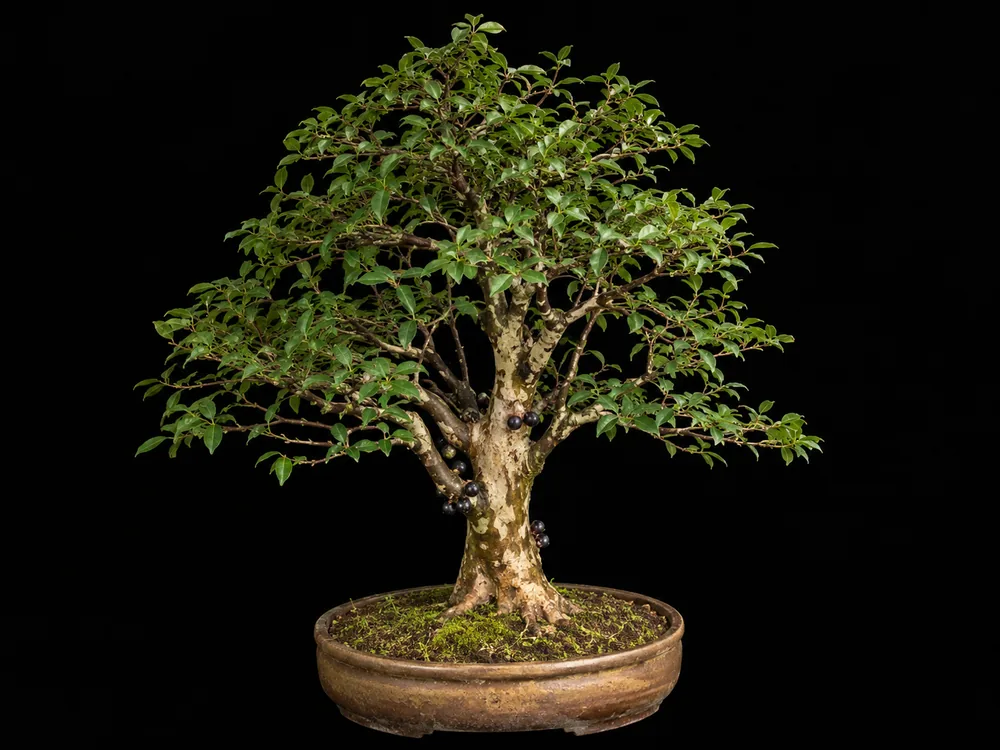
Jaboticaba Bonsai Care
Plinia cauliflora
4 Jaboticaba bonsai in stock, from $54.95 Shipped direct from our nursery partners, with a 48-hour live-arrival guarantee. See the trees
Zones 9b to 11, outdoor. One of the most distinctive of all bonsai subjects, prized. Most are lost to overwatering.
Myrtaceae · Tropical/subtropical evergreen fruiting tree (tender — indoor in cold climates)
Jaboticaba quick reference
| USDA zones | 9b–11 (tender; protect/bring indoors below ~30°F / -1°C) |
|---|---|
| Indoor / outdoor | Outdoors in warm seasons/climates; indoor (bright, humid) in cold climates over winter |
| Light | Bright light to full sun; bright indirect light indoors near a sunny window |
| Water | Wet-leaning — keep the rootball evenly moist, never bone-dry; loves humidity, but must drain (overwatering rots roots) |
| Soil | Rich, free-draining, slightly acidic, moisture-retentive mix (akadama, pumice, bark, a little kanuma) |
| Repot | Every 2–3 years (slow grower); spring/early summer in warmth |
| Frost | Very low — damaged by cold; keep above ~30°F (-1°C) |
| Mature height (as bonsai) | Tree to 12 m; 25-55 cm as bonsai |
| Growth rate | Slow |
| Season of interest | Cauliflorous white flowers, dark fruit on trunk |
| Leaf reduction | Good with defoliation |
| #1 cause of death | Root rot from overwatering, OR cold/dry-air shock — plus chronic low humidity and chlorosis from hard/alkaline water |
Overview & Character
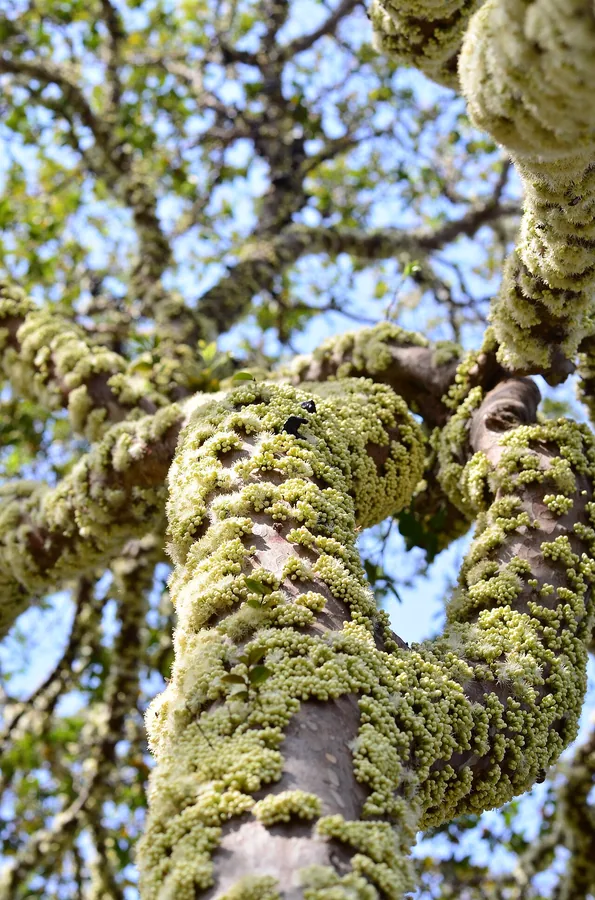
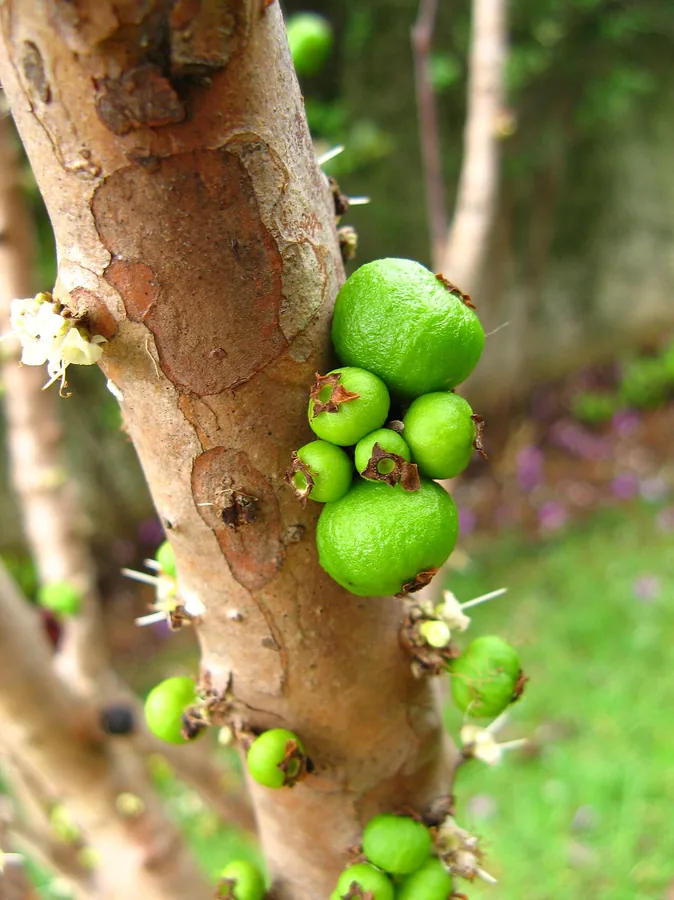
The Jaboticaba is one of the most distinctive of all bonsai subjects, prized for cauliflory — its flowers and fruit are borne directly on the trunk and main branches rather than at the branch tips. A mature tree in fruit appears studded with white puffs of flower and then dark, grape-like berries clinging straight to the bark. Add to that beautiful, flaky, mottled, self-exfoliating bark and small, glossy evergreen leaves, and you have a tree of exceptional character.
It is a slow grower and a tropical, so patience and warmth are essential. It rewards steady, attentive care — even moisture, humidity, warmth, and bright light — with that unforgettable trunk-borne fruiting display. Where conditions are right, it can flower and fruit several times a year.
Identification
FOLIAGE: Small, opposite, glossy, leathery lance-shaped leaves, deep green when mature; new growth flushes an attractive salmon-pink to bronze before hardening to green. Evergreen.
BARK & TRUNK: A signature feature — smooth but flaky, mottled bark in tan, grey, and pinkish tones that continually peels and renews, exposing paler patches beneath. Trunks develop fine character and the fluted, aged look that makes this species so collectible.
GROWTH HABIT / FORM: Densely branched, slow-growing small tree; naturally suited to informal upright and broom styles. Fine twigging develops with regular trimming.
FLOWERS / FRUIT + season + cauliflory: Small whitish flowers crowded with stamens emerge directly on the trunk and main branches (cauliflory), followed by round black-purple, grape-like fruit (sweet, edible, 1–4 seeds) borne on the same trunk/branch surface. In ideal warm, humid conditions it can flower and fruit multiple times per year. Because flowers form on the old woody trunk and branches rather than on new shoots, avoid scraping, sealing, or over-cleaning the trunk bark, and never wire or damage the fruiting zones — preserve the mature wood where flowering occurs.
Look-alikes & how to tell them apart: Other Myrtaceae bonsai (e.g., common myrtle Myrtus communis, or Eugenia/Syzygium "brush cherry") have similar small glossy leaves, but only Jaboticaba bears flowers and fruit directly on the trunk (cauliflory) and shows the distinctive flaky, mottled, self-peeling bark. If flowers/fruit appear at branch tips, it is not a true Jaboticaba.
Climate & USDA Zone
Jaboticaba is suited to USDA zones 9b–11 and is decidedly tender. It can summer outdoors in warmth but must be protected when temperatures approach freezing — keep it above roughly 30°F (-1°C). In cold climates it is grown as an indoor bonsai for much of the year, placed in the brightest, most humid spot available, then moved outside once nights are reliably warm. Sudden drops in temperature, cold drafts, and dry indoor heating all stress the tree.
Light
Provide bright light to full sun. Outdoors it enjoys sun (with some protection from the harshest midday heat in very hot regions). Indoors, place it directly at a bright, sunny window; supplement with a grow light in dim conditions. Insufficient light produces weak, sparse growth and discourages flowering and fruiting.
Watering
Wet-leaning and humidity-loving — but not waterlogged. Through the growing season Jaboticaba uses a lot of water and the rootball should be kept evenly moist and never allowed to dry out completely, or it will drop leaves and abort flowers/fruit. At the same time, overwatering and poor drainage cause root rot, which readily kills the tree — so the mix must drain freely and the pot must never stand in water. Reduce frequency in cooler months, letting the surface dry slightly before rewatering. It strongly prefers high humidity; mist, use a humidity tray, or group plants, especially indoors in winter. Use soft, slightly acidic water if possible — hard, calcareous water over time causes chlorosis.
Soil & Root Care
Use a rich, free-draining yet moisture-retentive, slightly acidic mix — akadama with pumice, composted bark, and a little kanuma (for acidity) works well. The species is slow-growing and slow to recover from heavy root work, so repot conservatively every 2–3 years, in spring or early summer when warmth supports regrowth. Remove only a modest portion of the roots, keep the rootball intact, and keep the freshly repotted tree warm, humid, and out of strong sun until it re-establishes.
Feeding
Feed regularly through the warm growing season with a balanced fertilizer, leaning slightly acidic (an ericaceous/azalea-type feed helps prevent chlorosis). Steady feeding supports both growth and the repeated flowering/fruiting cycles. Reduce or stop feeding in cool, low-light winter conditions when growth slows. Avoid feeding a stressed or freshly repotted tree.
Pruning & Styling
Trim new shoots back through the growing season to build the dense, fine ramification this species is known for; it back-buds reasonably well on healthy wood. Crucially, the flowers and fruit form on the trunk and older branches (cauliflory) — so structural pruning of branch tips is fine, but protect the mature trunk and branch surfaces where flowering occurs: do not scrub, over-clean, gouge, or wire across the fruiting zones, and avoid removing the older wood that carries the flowering buds. Let the flaky bark develop naturally rather than peeling it artificially. Wire young branches carefully and avoid biting wire into the prized bark. Because it is slow, plan styling over several seasons.
Propagation & Cuttings
Ease: Easy from seed; slow. Best method: seed.
Plinia cauliflora grows readily from fresh seed — clean it from the grape-like fruit and sow warm immediately, as it doesn't store; germination is good but seedlings are notoriously slow, and can be polyembryonic (several shoots per seed). Cuttings and air-layers are difficult and slow. Grafting is used commercially to speed fruiting. Keep everything warm and humid. For bonsai the mottled bark and cauliflorous flowers/fruit on the trunk are the prize; start seed early and be very patient, or buy older nursery stock.
Pests
Generally not seriously troubled, but watch for aphids, scale, mealybugs, spider mites, and nematodes — spider mites especially in dry indoor air. Treat with insecticidal soap or neem oil, wipe scale and mealybugs off by hand or with alcohol on a cotton bud, and raise humidity to discourage mites. Inspect regularly, particularly when the tree is indoors over winter.
Disease, Fungus & Infection
The dominant disease risk is root rot from overwatering or a poorly draining mix — the leading killer. Chlorosis (interveinal leaf yellowing) results from hard/alkaline water, alkaline soil, or under-feeding; correct with acidic water, an ericaceous feed, and iron if needed. Fungal leaf problems can appear in stagnant, overly damp, low-airflow conditions; improve ventilation while maintaining humidity. Keep tools clean and make tidy cuts to avoid introducing infection.
Most Common Causes of Death
1. Root rot from overwatering / poor drainage. The single most common killer. Prevention: free-draining mix, never let the pot stand in water, and water when the surface just begins to dry while keeping the core moist. 2. Letting the rootball dry out completely. A hard dry-out causes leaf and fruit drop and can kill roots. Prevention: check moisture daily in warmth; keep evenly moist. 3. Cold damage / frost. This tender tropical is injured near freezing. Prevention: keep above ~30°F (-1°C); bring indoors before cold nights. 4. Chronic low humidity and dry indoor heat. Causes leaf drop, mite outbreaks, and slow decline over winter. Prevention: mist, use humidity trays, keep away from radiators and heating vents. 5. Insufficient light. Dim conditions weaken the tree and stop flowering/fruiting. Prevention: brightest possible position; supplement with grow lights indoors. 6. Chlorosis from hard/alkaline water and under-feeding. A slow weakening of the whole tree. Prevention: soft/acidic water, acidic mix, regular ericaceous feeding. 7. Aggressive or ill-timed repotting/root work. A slow grower resents heavy disturbance. Prevention: repot conservatively in warm months and aftercare in warmth and humidity.
Seasonal Calendar
- Winter (Dec–Feb): Indoors in cold climates — brightest, most humid spot, away from drafts and heaters. Water sparingly but never let it dry; minimal/no feeding. Watch for spider mites and scale.
- Spring (Mar–May): Growth resumes with warmth. Best repotting window (spring/early summer). Resume feeding. New salmon-bronze growth flushes; may begin flowering on the trunk.
- Summer (Jun–Aug): Peak growth and main flowering/fruiting on the trunk and branches. Keep evenly moist, feed steadily, maintain humidity. Can be outdoors in warmth with bright light. Trim shoots for ramification.
- Autumn (Sep–Oct): Continued growth/possible further fruiting in warmth. Begin tapering feeding and watering as temperatures fall. Move indoors before nights get cold.
- Late autumn (Nov): Transition fully indoors in cold climates; acclimate gradually to lower indoor light and adjust watering downward.
Close-up photo reference
Compare your tree against these to confirm the species and spot problems early.


Sources
- Bonsai Empire — Jabuticaba Bonsai care guide
- Wigert's Bonsai — Jaboticaba Care Sheet
- North Carolina Extension Gardener Plant Toolbox — Plinia cauliflora
- UF/IFAS Gardening Solutions — Jaboticaba
Buy a Jaboticaba bonsai
- All species
- Shop bonsai trees, tools & supplies
- How to Water a Bonsai (Without Killing It)
- Bonsai Soil: What to Buy, What to Mix, and What It Costs
- Why Bonsai Die After Repotting: Diagnosing a Failed Repot
- Pruning vs. Pinching: Shaping Your Bonsai
- Overwintering Bonsai: Cold-Season Care
- Indoor Bonsai Light and Humidity: Making a Windowsill Actually Work
- Root Rot on bonsai
- Overwatering on bonsai
- Underwatering (Drought Stress) on bonsai
- Winter / Frost Damage on bonsai
- Insufficient Light (Etiolation) on bonsai
- Calamondin Orange bonsai care
- Mistletoe Fig bonsai care
- Bahama Berry bonsai care
- Black Olive bonsai care