Logwood Bonsai Care
Haematoxylum campechianum
1 Logwood bonsai in stock, from $85.95 Shipped direct from our nursery partners, with a 48-hour live-arrival guarantee. See the trees
Zones 10 to 11, outdoor. A historically important tree, its heartwood is the source. Most are lost to cold damage.
Fabaceae (pea family) · Tropical evergreen thorny small tree or shrub; slow-growing, gnarled
Logwood quick reference
| USDA zones | 10–11 outdoors year-round; indoors or greenhouse everywhere else |
|---|---|
| Indoor / outdoor | Outdoors through the warm season; indoors well before nights approach 40°F |
| Light | Sun-loving; give it the brightest position available |
| Water | Water-loving — it wants a steady supply of moisture, in a mix that still drains |
| Soil | Free-draining bonsai substrate that holds some moisture |
| Repot | Not documented; its slow growth suggests a long interval — every 3 years or so |
| Frost | None. It cannot tolerate below 40°F (4°C) — a specific and unusually high threshold |
| Mature height (as bonsai) | To 15 m in the wild, usually far smaller and gnarled; 20–50 cm as bonsai |
| Growth rate | Slow in a bonsai pot, though it thickens quickly in a large training container |
| Season of interest | Sweet-scented yellow flowers with reddish-purple sepals, in racemes |
| Leaf reduction | Naturally small pinnate leaflets; specific reduction potential not documented |
| #1 cause of death | Cold. The 40°F limit is higher than most people expect and catches owners out in autumn |
Overview & Character
Logwood is a historically important tree — its heartwood is the source of haematoxylin, the dye that coloured European cloth for centuries and still stains slides in every histology lab in the world. The Mexican state and city of Campeche are named for it.
As bonsai it is grown for character rather than refinement. It is naturally gnarled, thorny and irregular, with a trunk that fissures and twists, and it takes well to informal upright, slanting, root-over-rock, twin-trunk and clump styles. Growers report that it thickens surprisingly fast in a large training pot and then slows dramatically once restricted, which is a useful pattern to work with: build the trunk first, refine later.
It is genuinely obscure as a bonsai subject, and we have flagged the gaps in the literature honestly below rather than filling them in.
Identification
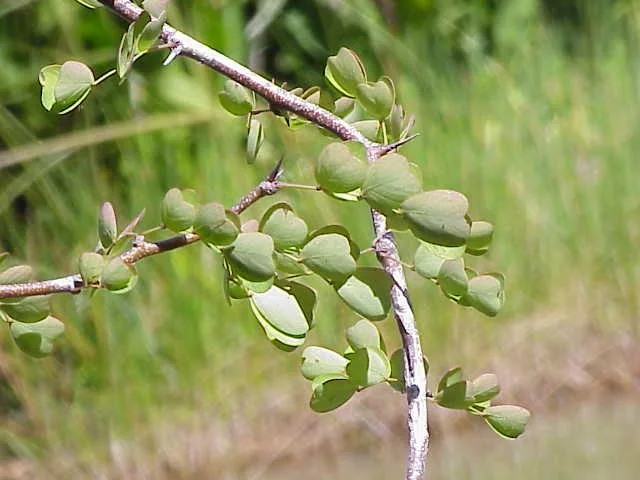
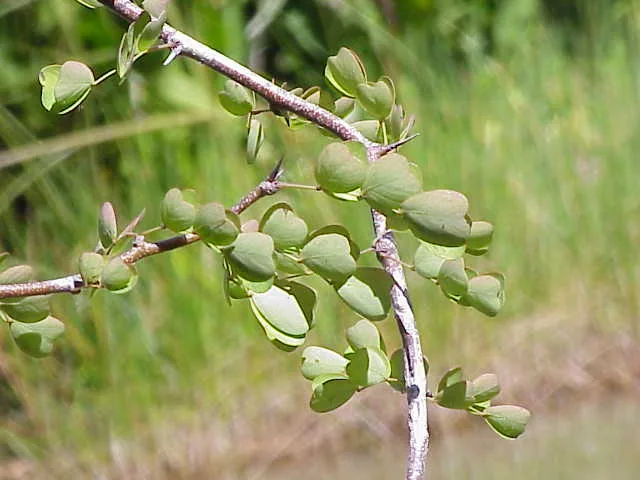
Foliage: Alternate, paripinnate (even-pinnate) compound leaves with leaflets in two to four pairs. Each leaflet is obcordate or obovate — roughly heart-shaped in reverse — 10–35 mm long and notched at the tip, dark green.
Thorns: The stipules are partly spine-like and the branches are armed. Sharp.
Bark & trunk: Gnarled, often multi-stemmed, fissuring and twisting with age. The heartwood is deep red — the source of the dye.
Flowers & fruit: Sweet-scented flowers with five reddish-purple reflexed sepals and five yellow petals, borne in racemes 5–20 cm long. Fruit is a small flat legume pod.
Look-alikes: Few among commonly grown bonsai. The combination of notched heart-shaped leaflets, spiny stipules and gnarled multi-stemmed habit is distinctive.
Climate & USDA Zone
Zones 10–11 outdoors year-round. It is a lowland tropical species from a climate where annual lows sit around 64–77°F, and it cannot tolerate temperatures below 40°F (4°C) — a specific, documented, and unusually high threshold. It prefers to stay in the high 50s°F and above.
That 40°F figure is the most practically important number in this guide. Most owners think of 32°F as the danger line. For this species it is eight degrees higher.
Light
Sun-loving. Give it the brightest position you have, outdoors in summer and at the best window in winter.
Honest gap: we could not find a precise documented light requirement for this species — cultivation notes describe it as a sun-lover without quantifying it. Treat "as much as you can give it" as the working rule.
Watering
Water-loving. Unusually for the thorny tropical legumes, this one wants a steady supply of moisture. Sources describe consistent moisture as crucial, with the substrate soaked through to root depth at each watering.
The qualifier is drainage: steady moisture in a mix that still breathes, never standing water. Check daily in summer. Reduce in winter, but do not let it dry out hard.
Soil & Root Care
A free-draining bonsai substrate that retains a little moisture — leaning slightly more moisture-retentive than you would use for a drought-tolerant species.
Honest gap: neither soil mix nor repotting cadence is documented for this species. Given its slow growth in a restricted pot, a long interval — three years or so, in spring — is the sensible inference.
Feeding
Feed through the growing season at moderate strength. As a legume it is not a heavy nitrogen feeder. If you are in the trunk-building phase in a large container, feed more generously; once refined and restricted, feed lightly.
Pruning & Styling
Thorns on new growth can be trimmed off for a cleaner silhouette and easier handling. The gnarled, irregular habit is the aesthetic asset — work with it rather than trying to impose a formal upright on a tree that does not want to be one.
Honest gap: the correct pruning timing relative to flowering is not documented for container culture. In its native range it flowers September through April with fruit ripening March to May, but that is Northern-Hemisphere-tropical phenology and a greenhouse specimen may behave differently. Watch your own tree for a season before committing to a hard annual cut.
Propagation & Cuttings
Ease: Moderate. Best methods: seed; semi-hardwood cuttings.
Seed collected from dried brown mature pods, soaked 24 hours before sowing, germinates in around two to three weeks. Semi-hardwood cuttings treated with rooting hormone root in a moist free-draining medium — the species is described as growing well from cuttings.
Pests
Aphids, scale insects and caterpillars, controllable with insecticidal soap or neem oil.
Disease, Fungus & Infection
Generally resistant. Fungal infection including anthracnose — brown spots followed by defoliation — occurs in humid, poorly ventilated conditions. Improve airflow first.
Most Common Causes of Death
1. Cold. The 40°F threshold is the highest of any species in this collection, and it is the documented failure point. Bring it in early. 2. Moisture stress in either direction. It wants steady moisture, which makes both drying out and waterlogging live risks — and the "water-loving" label tempts owners into the second. 3. Fungal infection in stagnant humid air. Manageable with ventilation.
Seasonal Calendar
- Spring: Repot if due; resume feeding; outdoors only once nights are reliably above 55°F.
- Summer: Brightest position, steady moisture, regular feeding. Main growth period.
- Autumn: Indoors well before nights approach 40°F — earlier than for most tropicals.
- Winter: Bright, warm, evenly moist but not wet. Minimal feeding.
Toxicity, Safety & Handling
The branches carry sharp thorns and spine-like stipules. Wear gloves for repotting and wiring.
On toxicity: the heartwood is the historic source of haematoxylin dye, and sources note that large quantities are poisonous in a dye-chemistry context. We found no specific ingestion-toxicity or pet-safety data. We are reporting that as unknown rather than claiming either way.
Close-up photo reference
Compare your tree against these to confirm the species and spot problems early.
![Kurt Stüber [1]](https://commons.wikimedia.org/wiki/File:Haematoxylon_campechianum0.jpg)
Sources
- Haematoxylum campechianum — Agroforestree Database, World Agroforestry
- Haematoxylum campechianum — Useful Tropical Plants
- Haematoxylum campechianum — Wikipedia
Buy a Logwood bonsai
- All species
- Shop bonsai trees, tools & supplies
- How to Water a Bonsai (Without Killing It)
- Bonsai Soil: What to Buy, What to Mix, and What It Costs
- Why Bonsai Die After Repotting: Diagnosing a Failed Repot
- Pruning vs. Pinching: Shaping Your Bonsai
- Overwintering Bonsai: Cold-Season Care
- Indoor Bonsai Light and Humidity: Making a Windowsill Actually Work
- Root Rot on bonsai
- Underwatering (Drought Stress) on bonsai
- Winter / Frost Damage on bonsai
- Scale Insects on bonsai
- Aphids on bonsai
- Bahama Berry bonsai care
- Black Olive bonsai care
- Calamondin Orange bonsai care
- Coffee bonsai care