
Bristlecone Pine Bonsai Care
Pinus aristata
Zones 4 to 7. One of the most characterful conifers. Most are lost to overwatering.
Pinaceae (the pine family) · Evergreen coniferous tree
At a glance
- Type
- Conifer
- Leaves
- Evergreen
- USDA zones
- 4 to 7
- Indoor or outdoor
- Outdoor
- Growth rate
- Slow
- Bonsai popularity
- Tier 3
Close-up photo reference
Compare your tree against these to confirm the species and spot problems early.
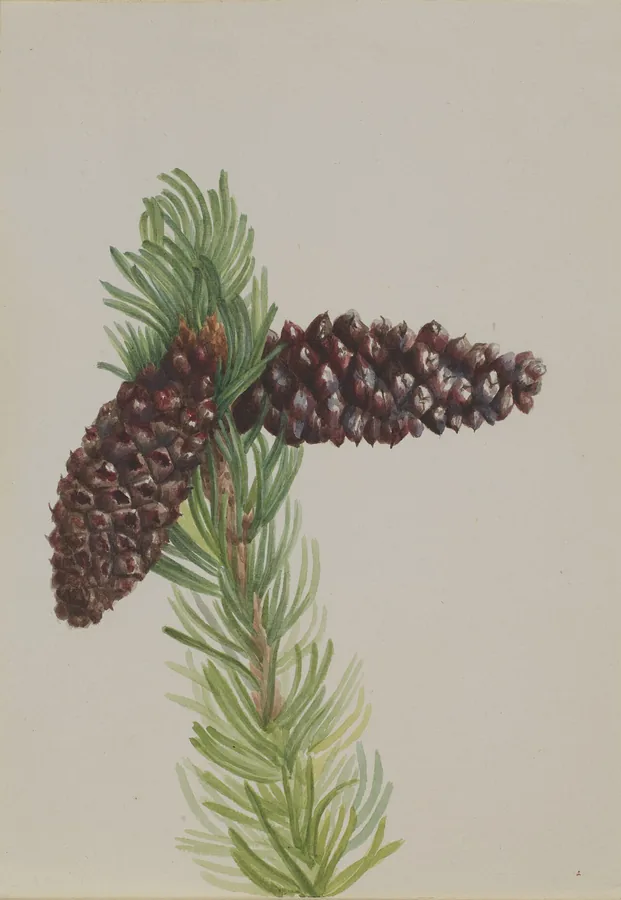
_by_Mary_Vaux_Walcott-saam1970.355.118.jpg)
Bristlecone Pine quick reference
| USDA zones | 4 to 7 |
|---|---|
| Indoor / outdoor | Strictly outdoor; a high-elevation alpine conifer that needs full sun, cold winters and open air |
| Light | Full sun, all day; the more direct light the better |
| Water | On the dry side: water thoroughly, then let the top of the soil approach dryness before watering again |
| Soil | Very free-draining inorganic mix (akadama/pumice/lava); never wet or organic-heavy |
| Repot | Infrequent: every 4 to 6 years for mature trees; roots resent disturbance |
| Frost | Very hardy in the ground; potted roots are far more exposed: shelter from hard freezes and drying winds |
| Mature height | Often to 40 ft (12 m) on good sites in the wild; shrubby at treeline [s3] |
| Growth rate | Slow [s3] [s4] |
| Season of interest | Evergreen blue-green needles flecked with white resin; twisted trunk [s4] |
| Leaf reduction | Not rated by the sources we checked |
| #1 cause of death | Overwatering / poor drainage causing root rot |
Overview & Character
The bristlecone pine is one of the most characterful conifers in bonsai. In the wild it grows on wind-battered, high-elevation slopes of the Rocky Mountains, where centuries of harsh weather produce gnarled trunks, twisting deadwood and dense clusters of stiff needles. Its close relative Pinus longaeva includes the oldest known non-clonal trees on Earth, and Pinus aristata shares that same slow, tenacious growth. For a bonsai artist this means the raw material already carries the look of great age, natural jin, shari and compact foliage that most species take decades to develop.
That slow metabolism is both the appeal and the discipline of the species. Bristlecone pine will not respond to hard, fast techniques; it rewards patience, restraint and mimicry of its alpine home, bright sun, sharp drainage and a genuine cold dormancy. Push it with rich soil, heavy water or frequent repotting and it sulks or dies. Treat it as the mountain survivor it is, and it becomes one of the most rewarding long-lived subjects you can own.
Identification
Needles: Borne in fascicles (bundles) of five, short and stiff, dark blue-green, and densely packed along the branch so that shoots resemble a bottle-brush or fox-tail. A signature feature is the flecks of white resin dotted on the needles, often mistaken for scale insects but entirely natural.
Bark: Smooth and gray on young stems, becoming furrowed, reddish-brown and plated with great age.
Habit: Naturally irregular, twisted and asymmetric, frequently with strips of exposed deadwood along the trunk.
Cones: Dark purplish-brown when young, maturing to brown; each scale bears a slender, incurved bristle (the "aristate" prickle that gives the species its name).
Look-alikes & how to tell them apart: Pinus longaeva (Great Basin bristlecone) is very similar but lacks the abundant resin flecks and lives at even higher elevation. Foxtail pine (Pinus balfouriana) also has fox-tail foliage but its needles lack the conspicuous white resin dots. Any five-needle pine with resin-flecked, bottle-brush needles and bristled cones is almost certainly a bristlecone.
Climate & USDA Zone
Hardy in roughly USDA zones 4 to 7. This is a cold-climate, high-altitude species that requires a real winter dormancy and struggles in hot, humid lowland summers. It tolerates intense cold and drying wind in the ground; the limitation in a pot is the exposed root mass, not the top of the tree. In warm-winter regions it is a poor choice because it never gets the chill it evolved to expect.
Light
Give bristlecone pine the maximum sun you can, full, direct light all day. Alpine pines are adapted to unfiltered mountain sun and thin air; in shade the internodes lengthen, needles weaken and the compact character is lost. This is not a species that will accept an indoor windowsill. Outdoor, open, sunny placement is non-negotiable.
Watering
Bristlecone pine prefers the dry side. It evolved on well-drained rocky slopes and dislikes constantly wet roots. Water thoroughly when you do water, letting it run through, then allow the surface of the soil to approach dryness before the next watering. Never let the pot sit in a saucer of water or in dense, water-retentive soil. In cool or dormant periods, watering is much less frequent; check by finger or weight rather than on a schedule. Chronic overwatering is the single most common way this tree is killed.
Soil & Root Care
Use a very free-draining, predominantly inorganic mix: akadama, pumice and lava rock in roughly equal parts is a proven starting point, leaning toward more pumice/grit in wet climates. The goal is abundant oxygen at the roots and no waterlogging. Like most pines, bristlecone benefits from mycorrhizal fungi in the soil (the white webbing you may see is beneficial, not a problem). Repot infrequently, every 4 to 6 years for established trees, and never bare-root the whole system at once. Work in early spring as buds begin to move, remove only a modest portion of the root mass, and preserve as much of the fungal-colonized fine root as possible.
Feeding
Feed modestly. As a slow-growing alpine, bristlecone does not want the heavy feeding regime given to vigorous species. A balanced or slightly lower-nitrogen organic fertilizer through the growing season is plenty; some growers ease off nitrogen in high summer and give a low-nitrogen feed in autumn to firm growth for winter. Over-feeding produces coarse, elongated growth that ruins the compact fox-tail character and stresses the roots. Do not feed a freshly repotted or clearly weak tree.
Pruning & Styling
Bristlecone pine is a single-flush, high-elevation pine and is generally not decandled. Decandling (removing the spring candles to force a smaller second flush) is a technique for strong, multi-flush pines such as Japanese black pine; on slow alpine pines it simply weakens the tree without producing a reliable second flush. Instead, refine by pinching or shortening the emerging candles by hand in spring to balance vigor between strong and weak areas, and by removing old needles selectively to admit light to inner buds. Wiring is the primary styling tool and can be done in autumn to early winter or when the tree is not in active flush; wire is well tolerated but check regularly, as slow trunk thickening means it can stay on a long time. The species is superb for deadwood work; its natural jin and shari echo its wild form.
Seasonal Calendar
- Spring: Buds and candles extend. Repot (only if due) as buds move. Pinch/shorten candles to balance vigor. Begin light feeding. Watch for aphids.
- Summer: Full sun; water thoroughly but let the surface dry between waterings. Watch for spider mites in heat. Feed modestly; ease nitrogen in high summer.
- Autumn: Growth firms up. Best window for wiring and structural styling. A low-nitrogen autumn feed helps harden growth. Reduce watering as temperatures drop.
- Winter: Full dormancy. Protect the exposed pot/roots from hard freezes and drying wind (mulch, cold frame or unheated shelter), but keep the tree cold. Water sparingly, only when needed.
Care calendar by month
- Repot and root-prune: April
- Prune, wire and shape: May, October to November
- Feed: April to June, September to October
- Air-layer or take cuttings: June to July
Propagation & Cuttings
Ease: Slow from seed; graft for selections. Best method: seed.
Like most pines, bristlecone is grown from seed, not cuttings (pine cuttings essentially do not root). Cold-moist stratify the seed ~4 to 8 weeks and sow in spring in lean, gritty, well-drained mix; germination is fair but the seedlings are extremely slow; this is the slowest-growing of pines. Named forms are side-veneer grafted onto two-needle pine understock. For bonsai, patience is everything: start seedlings or buy young grafted/collected plants, and expect to develop character over decades. Mycorrhizal soil helps establishment.
Pests
Pines can be affected by aphids, pine needle scale, spider mites (especially in hot, dry, still air), and various caterpillars and sawfly larvae that chew needles. Boring insects and adelgids occasionally appear. Inspect the dense needle clusters regularly, as pests hide well in the fox-tail foliage. Treat early with appropriate horticultural oil or an insecticide suited to conifers, and improve airflow to discourage mites.
Disease, Fungus & Infection
The most serious threat is root rot from overwatering or poor drainage; prevention through gritty soil and correct watering is far easier than cure. Bristlecone pines are also susceptible to white pine blister rust (a Cronartium fungus affecting five-needle pines) and to various needle-cast fungi that cause browning and shedding of needles. Good air circulation, full sun, avoidance of overhead watering late in the day, and prompt removal of infected material all reduce fungal pressure. Sterilize tools between trees.
Most Common Causes of Death
1. Overwatering / poor drainage causing root rot. The number-one killer. Use a sharply draining inorganic mix and let the soil approach dryness between waterings. 2. Kept indoors. This alpine conifer needs full outdoor sun and a real cold winter; indoors it slowly declines. Keep it outside year-round. 3. Over-repotting or bare-rooting. Frequent or aggressive root work destroys the mycorrhizae it depends on. Repot rarely and gently. 4. Aggressive decandling / over-pruning. Treating it like a black pine weakens a species that cannot recover fast. Pinch lightly, do not decandle. 5. No winter dormancy / heat stress. Warm winters and hot humid summers stress the tree. Provide cold dormancy and good airflow.
Sources
- Bonsai Empire: Pine care
- Wikipedia: Pinus aristata
- USDA Forest Service, Fire Effects Information System: Pinus aristata
- NC State Extension Gardener Plant Toolbox: Pinus aristata (Bristlecone Pine)
Where to buy a Bristlecone Pine bonsai
We don’t stock Bristlecone Pine at the moment. These species need similar care and we have them now, they are the closest match in our catalogue.
- Japanese Black Pine, similar care, in stock now
- Scots Pine, similar care, in stock now
Browse all bonsai trees for sale or find a species matched to your climate and space.
- All species
- Shop bonsai trees, tools & supplies
- How to Water a Bonsai (Without Killing It)
- Bonsai Soil: What to Buy, What to Mix, and What It Costs
- Why Bonsai Die After Repotting: Diagnosing a Failed Repot
- Pruning vs. Pinching: Shaping Your Bonsai
- Overwintering Bonsai: Cold-Season Care
- Indoor Bonsai Light and Humidity: Making a Windowsill Actually Work
- Root Rot on bonsai
- Overwatering on bonsai
- Winter / Frost Damage on bonsai
- Spider Mites on bonsai
- Scale Insects on bonsai
- Ponderosa Pine bonsai care
- Eastern White Pine bonsai care
- Japanese Black Pine bonsai care
- Japanese Red Pine bonsai care
- Scots Pine bonsai care