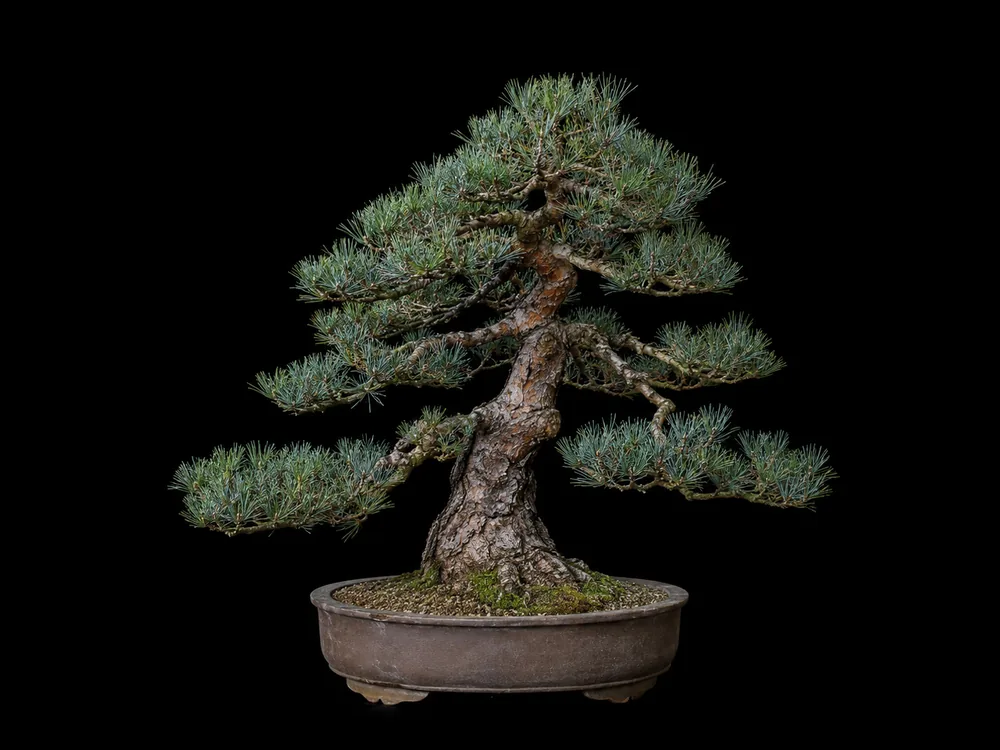
Scots Pine Bonsai Care
Pinus sylvestris
1 Scots Pine bonsai in stock, from $1200.00 Shipped direct from our nursery partners, with a 48-hour live-arrival guarantee. See the trees
The workhorse of European bonsai: tough, characterful and extraordinarily cold-hardy. Most are lost to overwatering.
Pinaceae · Evergreen coniferous tree; hardy single-flush pine, managed by candle selection/shortening — not aggressive decandling
Scots Pine quick reference
| USDA zones | Roughly 3–7 (very cold-hardy); native across Europe and northern Asia |
|---|---|
| Indoor / outdoor | Strictly outdoor, year-round, with a genuine cold winter dormancy |
| Light | Full sun. Strong light shortens needles and keeps growth tight |
| Water | DRY-ish. Prefers slightly drier conditions; water when the top layer dries, never keep the soil soggy, but do not let it bone-dry out |
| Soil | Free-draining, open, mostly inorganic mix (akadama/pumice/lava) |
| Repot | Every 3–5 years for developing trees, less often when mature; early spring as buds swell |
| Frost | Excellent — one of the hardiest pines; protect pot/roots only from extreme prolonged freezes |
| Mature height (as bonsai) | Tree to 30m in nature; bonsai often 30-80cm. |
| Growth rate | Slow to moderate. |
| Season of interest | Year-round; prized orange flaky upper bark. |
| Leaf reduction | Good; needles shorten via candle pinching and needle plucking. |
| #1 cause of death | Overwatering / poor drainage leading to root rot |
Overview & Character
The Scots Pine is the workhorse of European bonsai: tough, characterful and extraordinarily cold-hardy. It is famous for its flaky, orange-red upper bark, paired needles (two per bundle) of blue-green color, and the rugged, weathered character it develops with age — ideal for literati, windswept and old-mountain-tree styles. Many fine bonsai are collected from the wild (yamadori) in upland regions.
Scots Pine is a single-flush pine: it produces essentially one flush of growth per year. This means it must not be handled like a Japanese Black Pine. Do not aggressively decandle (remove all candles) a Scots Pine — it will not reliably replace the growth, and you can weaken or kill branches. Instead it is managed by candle selection/shortening and needle plucking (see Pruning). It does respond well to careful technique with strong back-budding and good ramification over time.
Identification
Foliage (the giveaway): Needles are borne two per fascicle (bundle) — paired — and are relatively short (about 3–7 cm / 1.5–3 in), stiff, often slightly twisted, and a characteristic blue-green to grey-green color. Evergreen.
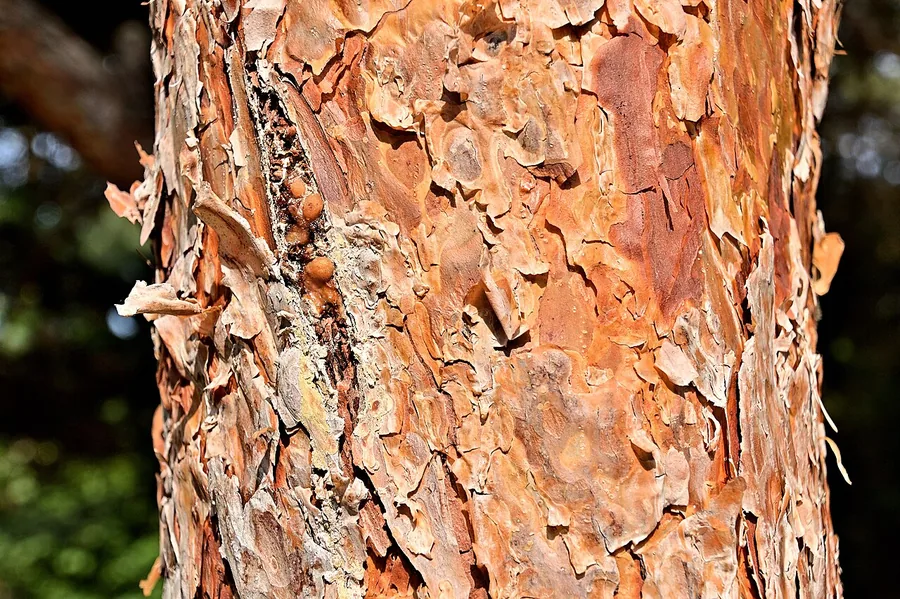
Bark & trunk: The single most recognizable feature is the bark: the upper trunk and branches are flaky, papery, and a warm orange to coppery-red, while the lower trunk is greyer, thick and fissured into plates. This two-tone bark is a near-instant ID.
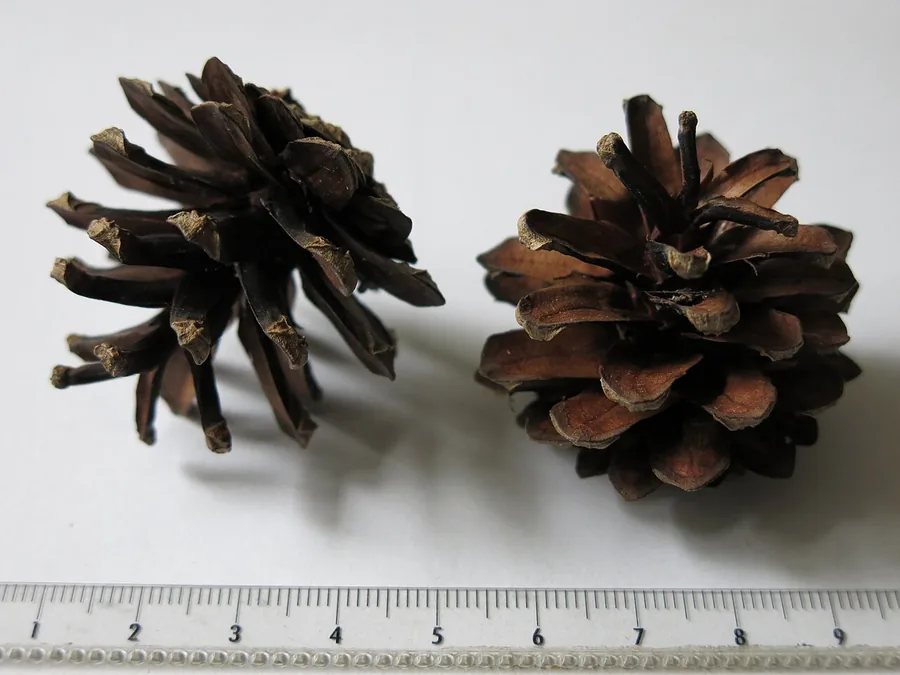
Growth habit / form: A tall, irregular tree in nature, frequently developing a bare lower trunk and a high, rounded or windswept crown — which is why it suits literati and windswept bonsai styles. Cones: Small, woody, conical, 3–6 cm, grey-brown.
Look-alikes & how to tell them apart: The combination of paired blue-green needles + orange flaky upper bark is distinctive. Mugo Pine also has two-needle bundles but is shrubby/multi-stemmed with darker green needles and lacks the bright orange upper bark. Five-needle pines like Japanese White Pine are ruled out immediately by needle count.
Climate & USDA Zone
Native across Europe and northern Asia, Scots Pine is one of the most cold-tolerant pines, comfortable in roughly USDA zones 3–7. It withstands hard frosts and harsh winters with minimal protection beyond shielding the pot and roots from extreme, prolonged freezing and from drying winds. It needs a real winter dormancy and does poorly in hot, humid summers without good airflow and some afternoon shade. It is emphatically an outdoor tree.
Light
Full sun is essential. Strong light keeps needles short, foliage dense and interior buds alive, and develops the best bark color. In very hot climates, light afternoon shade in midsummer reduces stress, but generally give it all the sun you can. Shade produces long, weak needles and dieback of inner growth.
Watering
Slightly dry. Like most pines, Scots Pine roots need oxygen and will rot in constantly wet soil. Water thoroughly when the top layer of soil begins to feel dry, then let it approach dryness again before the next watering — but do not let the root mass dry out completely. In the growing season this often means watering every one to two days; in cool or dormant periods, much less. Symptoms of overwatering are yellowing needles, weak growth and dieback. Free-draining soil makes correct watering far easier.
Soil & Root Care
Use an open, free-draining, predominantly inorganic substrate — akadama, pumice and lava rock (for example 1:1:1, with extra pumice/lava in wet climates) works well. The mix should hold a little moisture but drain and re-aerate quickly. Avoid dense, organic, water-retentive soils.
Repot every 3–5 years while developing and less often once mature, in early spring as buds swell. Remove no more than about one-third of the roots and preserve the white mycorrhizal fungus, which pines depend on. Keep newly repotted trees sheltered from strong sun and wind during recovery.
Feeding
Feed through the growing season to build strength, with a heavier autumn feeding to store reserves and improve bark and needle color. Many growers withhold or reduce feeding during spring candle elongation to keep needles short, then resume once needles harden. Organic slow-release fertilizers suit pines well; balanced feeding supports steady, controlled growth rather than coarse extension.
Pruning & Styling
Do NOT aggressively decandle like a Japanese Black Pine. Scots Pine is single-flush; removing all candles can be fatal to a branch because it will not reliably push a strong replacement flush. Manage it instead by:
- Candle selection and shortening (late spring / early summer): As the white sheaths at the base of the new needles begin to shed naturally (typically early-to-mid June in the Northern Hemisphere), reduce vigor and balance the tree. Remove the strongest candles where several cluster together, and cut back — do not remove — strong candles to an even length across the tree. Always leave some of this year's new needles on each candle; stripping a branch entirely can cause dieback.
- Needle plucking (autumn, ~Oct–Nov): Remove older needles while leaving the current year's growth. Pluck more from strong upper/outer areas and less from weak interior/lower branches. This balances energy, lets light reach the interior and induces back-budding (adventitious buds), which is how ramification and inner growth are built on this species.
- Structural pruning: Remove unwanted branches in autumn or late winter; seal larger wounds.
- Wiring: Best in autumn through winter while the tree is less active. Scots Pine bark is attractive and somewhat delicate — protect it and check wire so it does not bite in during the growing season.
Propagation & Cuttings
Ease: Easy from seed; graft for selections. Best method: seed.
Pinus sylvestris is grown from seed — soak and give a short cold-moist stratification (2–4 weeks), then sow in spring in gritty mix; germination is good and seedlings are hardy. Cuttings don't root; dwarf cultivars are grafted. Scots pine is widely collected as characterful yamadori with flaky orange bark. For bonsai, seedlings grown lean/sunny with mycorrhizae, or collected trees, are the routes; it back-buds when healthy and responds to needle-plucking and (gently) candle work to build compact pads.
Pests
- Aphids — on soft new growth.
- Scale insects and pine needle scale — sap-suckers on needles and shoots.
- Spider mites — in hot, dry, stagnant conditions; cause stippling/bronzing.
- Pine sawfly larvae and caterpillars — can defoliate fast.
- Adelgids / woolly aphids — occasional.
Inspect routinely, keep airflow good, and treat with horticultural oil or an appropriate insecticide; systemics help with scale.
Disease, Fungus & Infection
- Root rot (Phytophthora and related): the primary killer, caused by overwatering and poor drainage.
- Needle cast: the classic Scots Pine fungal problem — gold spotting and banding on needles that mature to brown and shed. Favored by wet, poorly ventilated conditions; treat with fungicide, improve airflow, and remove fallen needles.
- Pine wilt (pine wood nematode), rusts and cankers: less common in bonsai but possible; destroy badly affected material.
Good ventilation, dry-side watering and autumn cleanup prevent most fungal trouble.
Most Common Causes of Death
1. Overwatering / root rot. Keep on the dry side in a sharp free-draining mix; soggy soil rots the roots. 2. Aggressive black-pine-style decandling. Managed by candle selection/shortening and needle plucking — heavy decandling weakens it. 3. Insufficient sun. Needs full sun for compact, healthy growth and back-budding. 4. Drought stress / borers. Don't bone-dry for long; keep vigor up to resist beetles/borers. 5. Unprotected winter roots; indoor keeping. Very hardy but shelter potted roots in severe freezes; grow outdoors with dormancy.
Seasonal Calendar
- Spring: Repot if due (early); modest feeding; wire before candles harden.
- Summer: Full sun; dry-side watering; shorten/select candles; needle work; monitor pests.
- Autumn: Needle plucking and thinning; structural pruning; light feeding.
- Winter: Cold dormancy outdoors; protect roots from severe freezes; wiring while dormant.
Close-up photo reference
Compare your tree against these to confirm the species and spot problems early.


Sources
Buy a Scots Pine bonsai
- All species
- Shop bonsai trees, tools & supplies
- How to Water a Bonsai (Without Killing It)
- Bonsai Soil: What to Buy, What to Mix, and What It Costs
- Why Bonsai Die After Repotting: Diagnosing a Failed Repot
- Pruning vs. Pinching: Shaping Your Bonsai
- Overwintering Bonsai: Cold-Season Care
- Indoor Bonsai Light and Humidity: Making a Windowsill Actually Work
- Root Rot on bonsai
- Overwatering on bonsai
- Underwatering (Drought Stress) on bonsai
- Winter / Frost Damage on bonsai
- Spider Mites on bonsai
- Bristlecone Pine bonsai care
- Eastern White Pine bonsai care
- Japanese Black Pine bonsai care
- Japanese Red Pine bonsai care