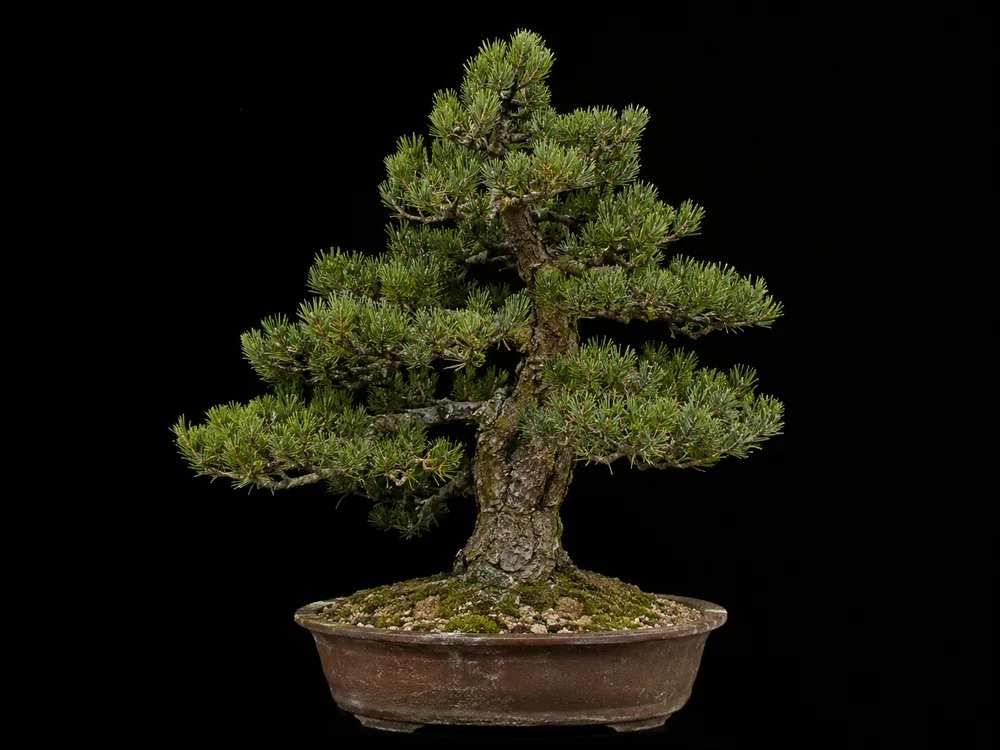
Mugo Pine Bonsai Care
Pinus mugo
5 Mugo Pine bonsai in stock, from $43.95 Shipped direct from our nursery partners, with a 48-hour live-arrival guarantee. See the trees
A tough, compact alpine pine from the mountains of central and southern Europe. Most are lost to overwatering.
Pinaceae · Evergreen coniferous shrub/small tree; hardy single-flush pine, managed by candle selection/shortening — not aggressive decandling
Mugo Pine quick reference
| USDA zones | Roughly 2/3–7; exceptionally cold-hardy (acclimated trees endure deep sub-zero cold) |
|---|---|
| Indoor / outdoor | Strictly outdoor, year-round, with a real cold winter dormancy |
| Light | Full sun. Strong light keeps the naturally dense needles short and tight |
| Water | DRY-ish. Dislikes soggy roots; water deeply, then let the soil partially dry; never let it dry completely |
| Soil | Free-draining, open, mostly inorganic mix (e.g. akadama/pumice/lava ~2:1:1) |
| Repot | Every 2–3 years (young) to 3–5 years (mature). Note: mugo is often repotted in summer (Jul–Aug), unusually for a pine |
| Frost | Outstanding — among the hardiest pines; protect only from extreme prolonged freezes |
| Mature height (as bonsai) | 3-5m wild; 20-50cm as bonsai |
| Growth rate | Slow; very hardy alpine pine |
| Season of interest | Dense evergreen; good winter structure |
| Leaf reduction | Needles shorten well with candle pruning |
| #1 cause of death | Overwatering / waterlogged soil leading to root rot |
Overview & Character
The Mugo Pine is a tough, compact alpine pine from the mountains of central and southern Europe. It is prized in bonsai for its rugged character, naturally dense clusters of paired (two-needle) dark green needles, compact growth and remarkable resilience, making it a forgiving choice for growers in cold climates. Its shrubby, multi-stemmed habit lends itself to informal, clump, and rugged mountain styles.
Mugo Pine is a single-flush pine and must not be treated like a Japanese Black Pine. Do not aggressively decandle (remove all candles) — it will not reliably replace a fully removed flush, and you risk weakening or killing branches. Manage it instead through candle selection/shortening and needle plucking (see Pruning). One genuine quirk separates mugo from most pines: it is commonly and successfully repotted in summer (July–August) rather than spring.
Identification
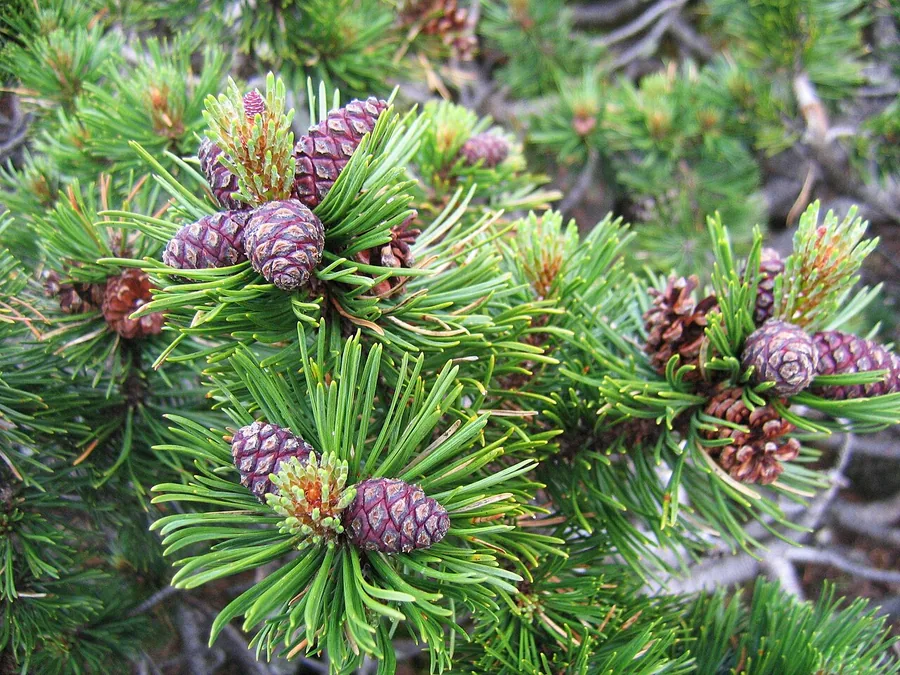
Foliage (the giveaway): Needles are borne two per fascicle (bundle) — paired — and are short, stiff and dark green (roughly 3–7 cm / 1.5–3 in), often densely packed and curving slightly, giving the plant a tufted, bushy look.. Evergreen.
Bark & trunk: Bark is greyish-brown, becoming scaly and fissured with age. Crucially the plant is shrubby and multi-stemmed — it typically forms several trunks or low branches from near the base rather than a single dominant trunk.
Growth habit / form: A low, spreading, often mound- or shrub-shaped mountain pine rather than a tall tree; this compact, multi-stem habit is itself a key ID feature and suits clump and rugged mountain styles. Cones: Small, ovoid-conical, 2–5 cm, often symmetrical and dark brown.
Look-alikes & how to tell them apart: Both Mugo and Scots Pine have paired needles, but Mugo's needles are shorter, stiffer and darker green, it is shrubby/multi-stemmed, and it lacks Scots Pine's bright orange flaky upper bark. Five-needle pines such as Japanese White Pine are ruled out instantly by needle count.
Climate & USDA Zone
A high-altitude European species, Mugo Pine is exceptionally cold-hardy — roughly USDA zones 2/3 through 7 — and acclimated trees endure deep sub-zero temperatures. It needs a true cold winter dormancy and resents hot, humid, stagnant conditions. Grow it outdoors all year; in hot-summer regions give some afternoon shade and ensure good air movement. Winter protection is minimal: shield the pot and roots only from extreme, prolonged freezing and from drying winter winds.
Light
Full sun. Strong, direct light is what keeps the dense needle clusters short and the plant compact, and keeps interior and lower growth alive. Shade leads to long, lax needles and loss of inner foliage. In very hot climates, light afternoon shade at the peak of summer reduces stress.
Watering
Slightly dry. Mugo dislikes soggy roots. Water deeply so the whole root mass is wetted, then allow the soil to partially dry before watering again. In hot summer weather check daily; in winter water far less, but never let the root mass dry out completely. Constantly wet soil suffocates the roots and causes rot — the chief danger. Free-draining soil makes correct watering straightforward.
Soil & Root Care
Use a free-draining, predominantly inorganic mix — akadama, pumice and lava rock at roughly 2:1:1 is a common, effective blend (lean toward more pumice/lava in wet climates). It should hold modest moisture while draining and re-aerating fast. Avoid dense, organic, water-retentive soils.
Repotting is where mugo breaks from the usual pine routine: many growers report best results repotting in summer, around July–August, though early spring as buds swell also works. Repot every 2–3 years for young trees and 3–5 years for older ones. Remove no more than about one-third of the roots and preserve the white mycorrhizal fungus pines rely on. Keep newly repotted trees sheltered from harsh sun and wind while they recover.
Feeding
Feed through the growing season to build vigor, with a heavier autumn feeding to store reserves and improve color. As with other pines, some growers ease off during spring candle elongation to keep needles short, resuming once needles harden. Organic, slow-release fertilizers suit mugo well; aim for steady controlled growth rather than coarse extension.
Pruning & Styling
Do NOT aggressively decandle like a Japanese Black Pine. Mugo is single-flush; removing entire candles can cause dieback. Manage it by:
- Candle selection and shortening (late spring): As candles emerge and elongate, reduce vigor and balance the tree. In a cluster, remove one or two of the strongest candles, and reduce the length of remaining strong candles by roughly one-third to one-half, leaving some new needles on each. Even out energy so weaker areas can catch up.
- Needle plucking / thinning (summer into autumn): On strong areas, pluck excess old needles to balance growth. In fall, thin needles — removing those that are overly long or growing downward — taking more from the strong upper crown and progressively less lower down so light reaches the interior and lower branches. This balances vigor and encourages back-budding.
- Structural pruning: Remove unwanted branches in autumn or late winter; seal larger wounds. Mugo back-buds well, which aids ramification.
- Wiring: Best in autumn through winter while the tree is less active. The bark is fairly tough but still mark-prone over time; check wire so it does not bite in.
Propagation & Cuttings
Ease: Easy from seed; graft for dwarfs. Best method: seed.
Pinus mugo is grown from seed — soak and give a short cold-moist stratification (2–4 weeks), then sow in spring in gritty mix; germination is good and the species is naturally compact. Cuttings don't root; named dwarfs are grafted. Mugo back-buds well and is very hardy, tolerating hard work. For bonsai, seedlings or collected mountain plants (yamadori) grown lean and sunny are ideal; decandle/needle-pluck to refine the dense, bushy foliage this two-needle pine produces.
Pests
- Spider mites — common in hot, dry, stagnant conditions; look for fine webbing and stippled, discolored needles.
- Pine sawfly larvae — can strip needles rapidly if unnoticed.
- Pine needle scale and other scale insects — sap-suckers on needles and shoots.
- Aphids — on soft new growth.
Check needles regularly for discoloration or webbing. Treat with horticultural/neem oil or an appropriate insecticide; systemics help with scale.
Disease, Fungus & Infection
- Root rot (Phytophthora and related): the primary killer, from waterlogged soil and poor drainage.
- Needle cast and needle blights: fungal spotting, banding and premature browning/shedding of needles in wet, poorly ventilated conditions; treat with fungicide, improve airflow, remove fallen needles.
- Diplodia tip blight and similar: can affect stressed mugos, killing candle tips; prune out and destroy affected shoots.
Good ventilation, dry-side watering and autumn cleanup prevent most fungal problems.
Most Common Causes of Death
1. Overwatering / root rot. Keep on the dry side in a sharp free-draining mix; very hardy but rots in soggy soil. 2. Aggressive decandling. Manage by candle selection/shortening and needle plucking, not hard black-pine decandling. 3. Insufficient sun. Needs full sun; shade weakens it and lengthens needles. 4. Wrong-time repot. Mugo often repots best in summer (Jul–Aug) after the flush — avoid stressing it at the wrong time. 5. Drought stress / pests. Don't bone-dry for long; watch for adelgids, scale, and sawfly.
Seasonal Calendar
- Spring: Modest feeding; wire; let candles extend.
- Summer: Full sun; dry-side watering; shorten/select candles; mugo's preferred repotting window (Jul–Aug).
- Autumn: Needle plucking and thinning; structural pruning.
- Winter: Very cold-hardy dormancy outdoors; protect potted roots in severe freezes.
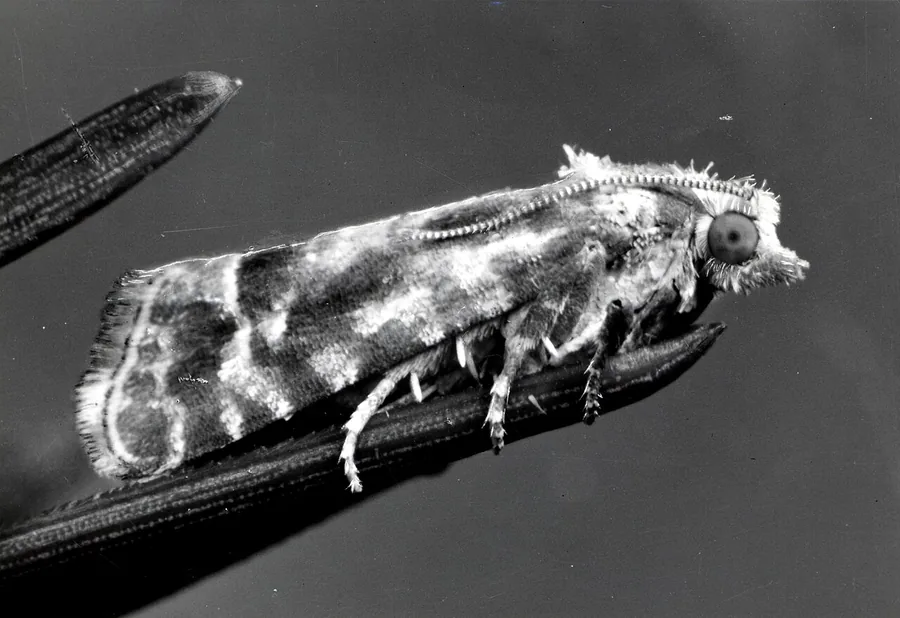
Close-up photo reference
Compare your tree against these to confirm the species and spot problems early.
_living_adult_on_mugo_pine_needle_in_Sellwood_Lab._Portland,_OR._(34755856690).jpg)

Sources
Buy a Mugo Pine bonsai
- Small Mugo Pine Bonsai, 5 Years Old (Pinus mugo 'Valley Cushion') — $43.95
- Mugo Pine Bonsai, Land and Water Pot, 7 Years Old (Pinus mugo 'Valley Cushion') — $54.95
- Mugo Pine Bonsai, 23 Years Old, 13 Inches Tall (Pinus mugo 'Valley Cushion') — $325.00
- Mugo Pine Bonsai, 39 Years Old (Pinus mugo 'Valley Cushion') — $375.00
- Mugo Pine Bonsai, 43 Years Old (Pinus mugo 'Valley Cushion') — $545.00
- All species
- Shop bonsai trees, tools & supplies
- How to Water a Bonsai (Without Killing It)
- Bonsai Soil: What to Buy, What to Mix, and What It Costs
- Why Bonsai Die After Repotting: Diagnosing a Failed Repot
- Pruning vs. Pinching: Shaping Your Bonsai
- Overwintering Bonsai: Cold-Season Care
- Indoor Bonsai Light and Humidity: Making a Windowsill Actually Work
- Root Rot on bonsai
- Overwatering on bonsai
- Underwatering (Drought Stress) on bonsai
- Winter / Frost Damage on bonsai
- Spider Mites on bonsai
- Eastern White Pine bonsai care
- Japanese White Pine bonsai care
- Pitch Pine bonsai care
- Ponderosa Pine bonsai care