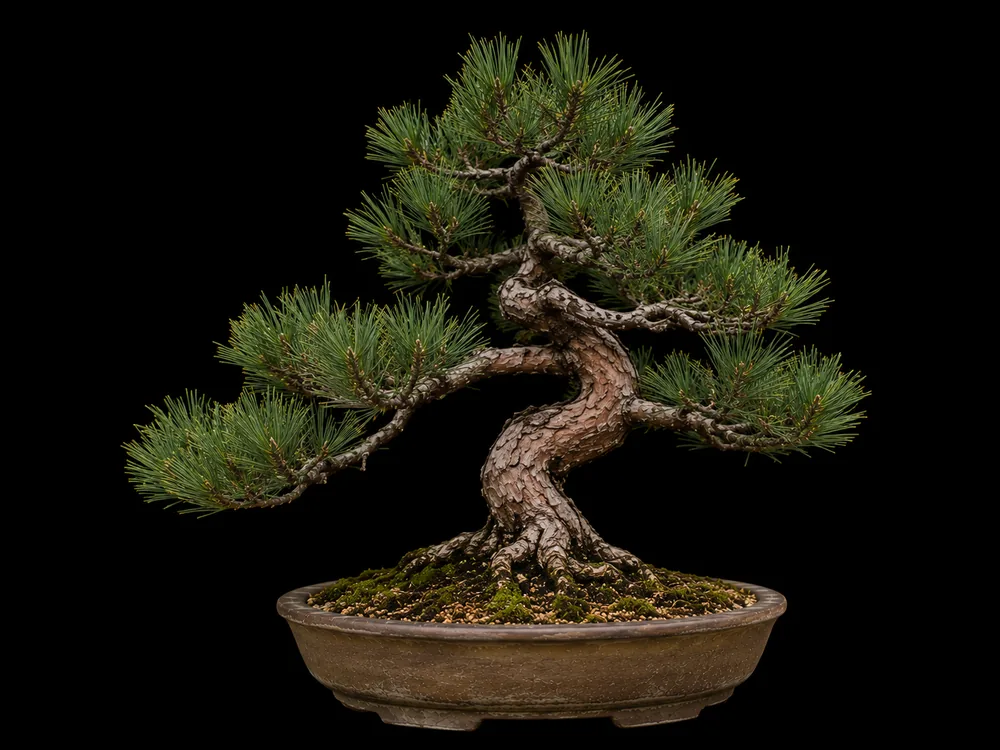
Shore Pine (Lodgepole) Bonsai Care
Pinus contorta
A wonderfully variable native western pine that wears two faces. Most are lost to overwatering.
Pinaceae (the pine family) · Evergreen, single-flush coniferous tree; outdoor bonsai, frequently used as collected (yamadori) material
Shore Pine (Lodgepole) quick reference
| USDA zones | Roughly 4–8 (coastal Shore Pine ~7; alpine Lodgepole hardier, ~4) |
|---|---|
| Indoor / outdoor | Strictly outdoor — never an indoor tree |
| Light | Full sun, all day |
| Water | Dry-side. Let the soil approach dryness, then water thoroughly; balance water with oxygen |
| Soil | Free-draining, gritty, inorganic mix (pumice / akadama / lava); high oxygen |
| Repot | Every 3–5 years for established trees; leave fresh collections undisturbed to recover |
| Frost | Excellent (Lodgepole especially); needs winter dormancy |
| Mature height (as bonsai) | Tree to 15m in nature; bonsai commonly 25-60cm. |
| Growth rate | Moderate. |
| Season of interest | Year-round dark green needles; rugged bark. |
| Leaf reduction | Good; needles shorten with candle and needle work. |
| #1 cause of death | Overwatering / root rot (and disturbing roots too soon on collected trees) |
Overview & Character
Pinus contorta is a wonderfully variable native western pine that wears two faces. As Shore Pine (P. contorta var. contorta) it is the gnarled, twisted, wind-sculpted coastal form found along Pacific beaches and bogs — naturally contorted, full of character, and a gift to bonsai. As Lodgepole Pine (P. contorta var. latifolia) it is the tall, straight, slender inland and alpine form. Both are the same species and both make excellent bonsai, valued for their short needles, easy wiring, and quick development into refined trees.
It is a single-flush pine — one flush of candles per year — so it is styled by candle selection and partial reduction, not by black-pine-style decandling. It is sun-loving, dry-tolerant, cold-hardy, and forgiving, making it one of the friendlier native pines for bonsai while still offering yamadori drama.
Identification
Foliage: Needles in bundles (fascicles) of 2, short and often slightly twisted — typically about 1–2.75 inches (3–7 cm), markedly shorter than Ponderosa. Color ranges from yellow-green to dark green. The short, paired, sometimes-twisted needles are a key ID and a major reason the species develops well as bonsai.
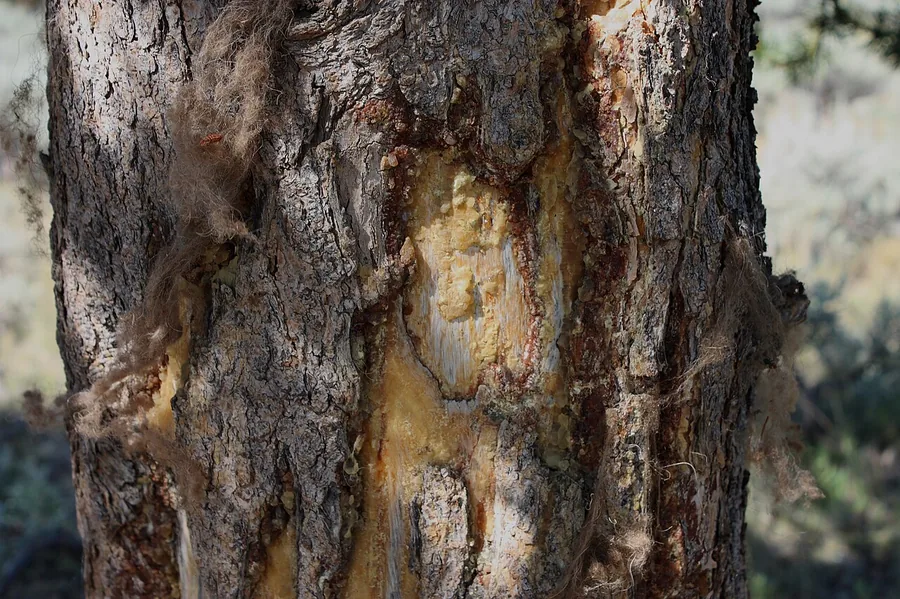
Bark & trunk: Shore Pine forms relatively thick, furrowed, scaly, dark gray-brown to reddish-brown bark on a frequently crooked, characterful trunk. Lodgepole's trunk is straighter with thinner, flaky, orange-brown to gray bark. Both develop attractive plating with age.
Growth habit / form: Shore Pine is bushy, contorted, irregular, and windswept — naturally bonsai-like. Lodgepole is upright, narrow, and slender. Both branch readily and respond well to wiring.
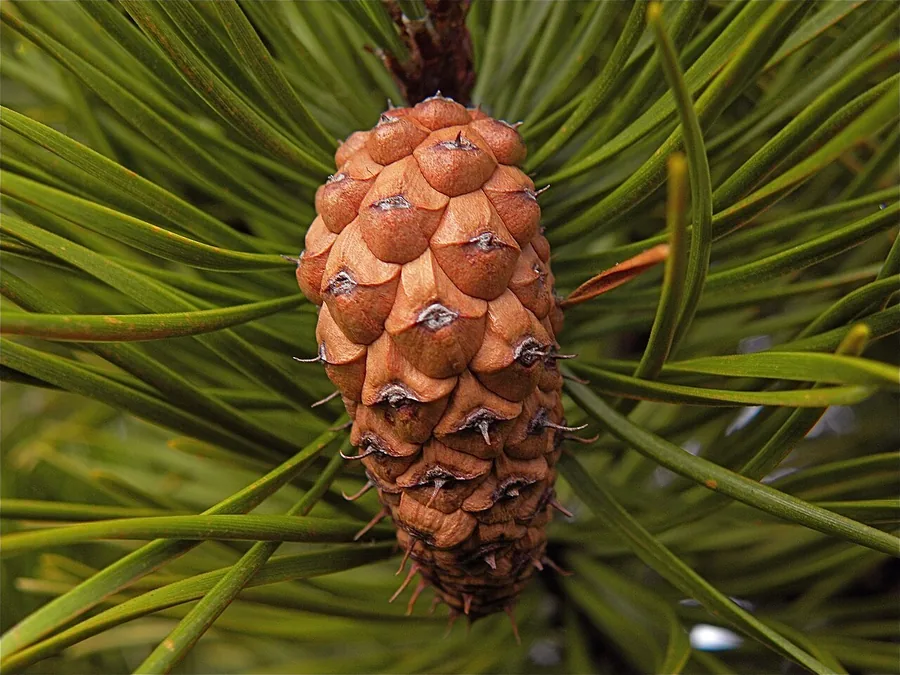
Cones: Small, egg-shaped, about 1–2 inches (3–5 cm), often asymmetrical and persistent on the branch, with a slender prickle on each scale. Lodgepole's cones are often serotinous (sealed with resin, opening with heat/fire).
Look-alikes & how to tell them apart: Distinguished from Ponderosa / Jeffrey pines by its 2 short needles (theirs are 2–3 and very long) and much smaller cones. Distinguished from other 2-needle pines such as **Scots Pine (Pinus sylvestris) by Scots' typically bluer, often longer needles, distinctive flaky orange upper-trunk bark, and larger cones; and from Japanese black pine by black pine's longer, stiffer needles and multi-flush** growth. Within P. contorta itself: the twisted, bushy, thick-barked coastal plant is var. contorta (Shore); the tall, straight, thinner-barked inland/alpine plant is var. latifolia (Lodgepole).
Climate & USDA Zone
Pinus contorta spans a wide range. Coastal Shore Pine is hardy to about USDA zone 7, while the alpine/inland Lodgepole is hardier (roughly zones 4–8). As a group, treat it as reliably hardy across zones 4–8 and provide a genuine winter dormancy with sustained cold. It tolerates wind, salt air (Shore form), poor soils, and a wide humidity range. Keep it outdoors year-round.
Light
Full, direct sun all day. Like all pines suited to bonsai, contorta needs maximum light to keep needles short, internodes tight, and growth vigorous and compact. Shade produces weak, elongated, fungus-prone growth. In intense heat the foliage handles full sun, but protect or insulate the dark pot so the roots don't overheat.
Watering
Dry-side. Pinus contorta is a moderate-water-mobility pine whose health depends on the balance between water and oxygen in the soil. Let the soil dry out (approaching, not reaching, bone-dry) between waterings, then water thoroughly until it runs freely from the drainage holes so the whole root mass is rehydrated.
Avoid keeping the roots constantly wet — saturated soil starves the roots of oxygen and invites rot, the leading killer. The species naturally endures lean, sometimes droughty sites, so it tolerates a missed watering far better than a soggy one. Combine restrained watering with a coarse, free-draining substrate. (Note: wild Shore Pines do grow in bogs, but a bonsai in a small container with poor drainage will rot — drainage and oxygen are what matter in a pot.)
Soil & Root Care
Use a free-draining, predominantly inorganic mix — pumice-heavy, or akadama / pumice / lava in roughly equal parts, leaning grittier for collected and recovering trees. The priority is air in the root zone and no standing water.
Like all pines, contorta relies on mycorrhizal fungi in its roots — preserve the white fungal webbing. Never bare-root the tree; reduce roots gradually over successive repots and don't strip away all the old soil. Repot established trees every 3–5 years in early spring as buds swell, only when the tree is strong. Newly collected trees must be left undisturbed in a coarse, draining medium (often pure pumice) for one or more years to recover before any root work.
Feeding
Feed to build and hold vigor through the growing season, but moderate the amount on refined trees to keep growth controlled. Start feeding in spring when growth is active, continue through summer (easing in extreme heat if needed), and feed again into autumn to harden the tree and strengthen next year's buds. Balanced organic fertilizer works well. Do not feed freshly collected, recovering trees heavily until they are clearly re-established and growing strongly.
Pruning & Styling
Do NOT decandle this pine. Decandling is a Japanese black pine (multi-flush) technique. Pinus contorta is single-flush — cutting off whole candles to force a second flush will weaken or kill branches. Style it instead by:
- Candle selection: In spring, choose how many candles to keep per area to balance vigor — thin candles from strong tips, keep candles on weaker zones.
- Candle reduction (partial): When the white sheaths at the needle bases begin to shed (typically early-to-mid June in the Northern Hemisphere), shorten candles to an even length across the tree. Always leave some of this year's new needles on each shoot — removing an entire candle can kill that branch.
- Needle work: Pluck/reduce old needles on strong areas in autumn to balance energy, admit light to the interior, and improve appearance; leave more needles on weak shoots.
- Structural pruning: Remove unwanted branches in late summer to early autumn so the tree recovers before winter.
- Wiring & styling: Wire in late autumn through winter while dormant. Contorta wires easily and develops quickly, which is a big part of its appeal; the naturally twisted Shore form lends itself to dramatic, characterful styling and deadwood.
Propagation & Cuttings
Ease: Easy from seed; mostly collected. Best methods: seed; collection.
Pinus contorta is grown from seed — short cold-moist stratification then spring sowing in gritty mix; germination is good and coastal shore pine is naturally compact and twisted. Cuttings don't root. It is collected as characterful coastal/mountain yamadori. For bonsai, seedlings grown lean, or collected trees, both work well; this hardy two-needle pine back-buds when vigorous and takes candle work to build dense, rugged pads.
Pests
Pinus contorta (especially Shore Pine) has no serious insect or disease problems, but watch for aphids, sawflies, pine needle scale, spider mites, and moths/caterpillars. Mites favor hot, dusty, poorly ventilated, stressed trees. Inspect needle bundles and shoot tips regularly and treat aphids/scale/mites with horticultural oil or an appropriate insecticide. Good airflow, full sun, and general vigor keep pest pressure low.
Disease, Fungus & Infection
Disease problems are relatively few but the threats are the usual pine fungal issues: root rot from overwatering (the most dangerous by far), needle cast (yellowing, spotting, and dropping needles, encouraged by poor airflow and excess moisture), tip/shoot blight affecting new candles, and rusts (Lodgepole can host gall-forming and blister rusts in nature). Prevention is the cure: dry-side watering, free-draining soil, full sun, open airflow, and removing fallen needles and debris. Treat outbreaks with an appropriate fungicide and immediately fix the underlying cultural cause.
Most Common Causes of Death
1. Overwatering & root rot. The leading killer in a pot. Prevention: water dry-side, use coarse inorganic soil, ensure free drainage, let the pot get light before rewatering. 2. Disturbing collected trees too soon. Root work on an unrecovered yamadori kills it. Prevention: leave new collections undisturbed in pure pumice for a year or more; never bare-root; reduce roots gradually. 3. Decandling like a black pine. Removing whole candles on this single-flush pine causes branch dieback. Prevention: never decandle — use candle selection and partial reduction, leaving new needles. 4. Insufficient light. Shade yields weak, leggy, disease-prone growth. Prevention: full sun all day, year-round. 5. No winter dormancy / poor overwintering. Kept warm year-round or roots frozen solid in a tiny pot, it declines. Prevention: allow real outdoor dormancy; protect the root mass in deep, prolonged freezes. 6. Too much work in one season. Repot + heavy prune + wire at once overwhelms the tree. Prevention: stagger major operations across years. 7. Untreated fungal disease. Needle cast and tip blight can escalate. Prevention: airflow, dry foliage, sanitation, prompt fungicide.
Seasonal Calendar
- Early Spring (Mar–Apr): Repot strong, well-rooted trees as buds swell. Increase watering as growth resumes; begin light feeding.
- Late Spring (May–Jun): Candles emerge. Do candle selection; as needle sheaths shed (early–mid June), partially reduce candles, leaving new needles. Watch for aphids.
- Summer (Jul–Aug): Growth then hardening. Water carefully in heat (still dry-side); protect the pot from baking. Monitor for spider mites.
- Autumn (Sep–Nov): Structural pruning and needle plucking to balance vigor; feed to harden the tree and build buds. Begin wiring as dormancy sets in.
- Winter (Dec–Feb): Dormant — prime time for wiring and bending. Water sparingly. Provide full winter cold but protect roots from deep prolonged freezing; shelter freshly collected trees.
Close-up photo reference
Compare your tree against these to confirm the species and spot problems early.


Sources
- Lodgepole Pine Bonsai Guide — Bonsai Mirai
- Care and Maintenance Guide for Native US Pine Bonsai (Pinus) — Eisei-en / Bjorn Bjorholm
- Pinus contorta — North Carolina Extension Gardener Plant Toolbox
- Care Guide for Pine Bonsai Species (Pinus) — Bonsai Empire
Where to buy a Shore Pine (Lodgepole) bonsai
We don’t stock Shore Pine (Lodgepole) at the moment. These species need similar care and we have them now — they are the closest match in our catalogue.
- Japanese White Pine — similar care, in stock now
- Pitch Pine — similar care, in stock now
Browse all bonsai trees for sale or find a species matched to your climate and space.
- All species
- Shop bonsai trees, tools & supplies
- How to Water a Bonsai (Without Killing It)
- Bonsai Soil: What to Buy, What to Mix, and What It Costs
- Why Bonsai Die After Repotting: Diagnosing a Failed Repot
- Pruning vs. Pinching: Shaping Your Bonsai
- Overwintering Bonsai: Cold-Season Care
- Indoor Bonsai Light and Humidity: Making a Windowsill Actually Work
- Root Rot on bonsai
- Overwatering on bonsai
- Underwatering (Drought Stress) on bonsai
- Winter / Frost Damage on bonsai
- Insufficient Light (Etiolation) on bonsai
- Japanese White Pine bonsai care
- Pitch Pine bonsai care
- Bristlecone Pine bonsai care
- Eastern White Pine bonsai care