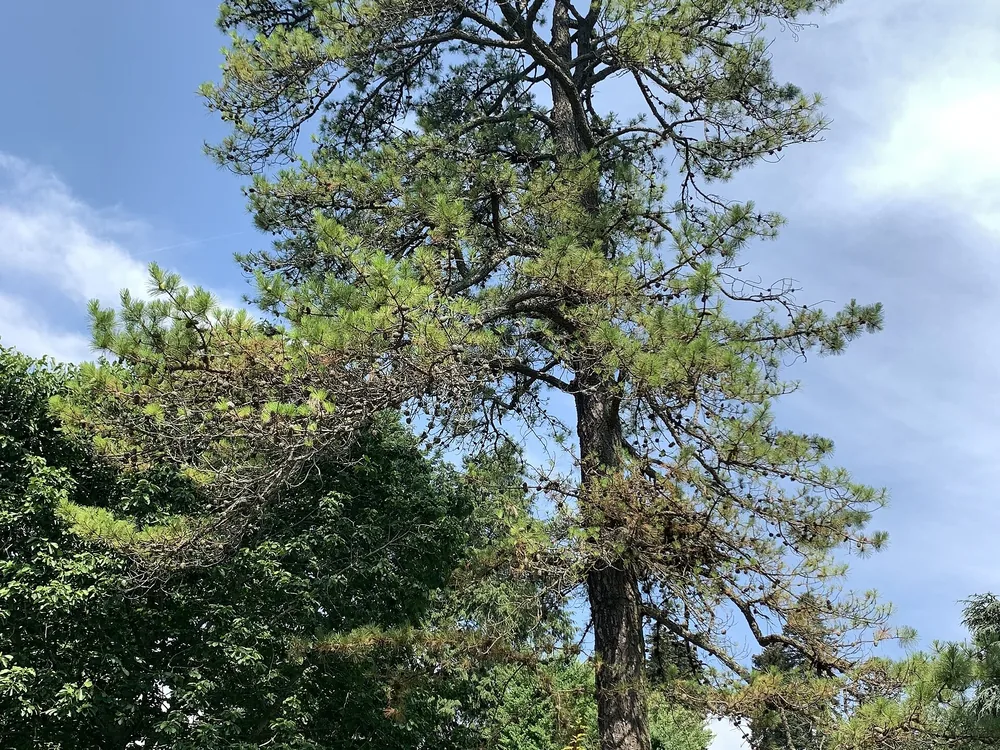
Pitch Pine Bonsai Care
Pinus rigida
1 Pitch Pine bonsai in stock, from $645.00 Shipped direct from our nursery partners, with a 48-hour live-arrival guarantee. See the trees
Zones 4a to 7b, outdoor only. The pine that survives things. Most are lost to overwatering.
Pinaceae · Evergreen coniferous tree; hardy, fire-adapted, unusually willing to bud from old wood
Pitch Pine quick reference
| USDA zones | 4a–7b; some databases extend to 3a. Native from coastal Maine to northern Georgia |
|---|---|
| Indoor / outdoor | Outdoor only, year-round. It needs winter dormancy and will die indoors |
| Light | Full sun all day — unlike high-elevation pines it does not want afternoon shade |
| Water | Let the surface dry between waterings. Pines will not tolerate waterlogged soil |
| Soil | Free-draining inorganic mix — akadama, lava and pumice around 4mm |
| Repot | Every 2–4 years, in spring as the buds swell |
| Frost | Very hardy in the ground, to roughly −30°F. Potted roots are far less hardy |
| Mature height (as bonsai) | 20–98 ft in the wild, often crooked and multi-trunked; 25–60 cm as bonsai |
| Growth rate | Rapid when young in the ground, much slower in a pot |
| Season of interest | Year-round bark and silhouette; persistent cones. Winter outline is the main draw |
| Leaf reduction | Moderate. Needles shorten with technique but not as dramatically as Japanese Black Pine |
| #1 cause of death | Overwatering and poor drainage; then progressive weakening from decandling it too hard, too often |
Overview & Character
Pitch Pine is the pine that survives things. It grows on poor sandy barrens, it gets burned, snapped and salt-blasted, and it comes back — crooked, multi-trunked and full of character. That wild, storm-battered quality is exactly why it is sold as cascade and literati material, and it is one of the few native North American pines with a genuine claim on the bonsai bench.
It has one trait that sets it apart from almost every other pine, and it matters enormously for styling: it back-buds from old, bare wood. Most pines only push new growth where live foliage already exists. Pitch Pine carries dormant buds embedded in its bark and can resprout directly from a bare trunk after a hard chop, a storm, or a fire. That is a real fire adaptation, confirmed by the US Forest Service, and it makes this species unusually forgiving of dramatic reduction on old leggy material.
Identification
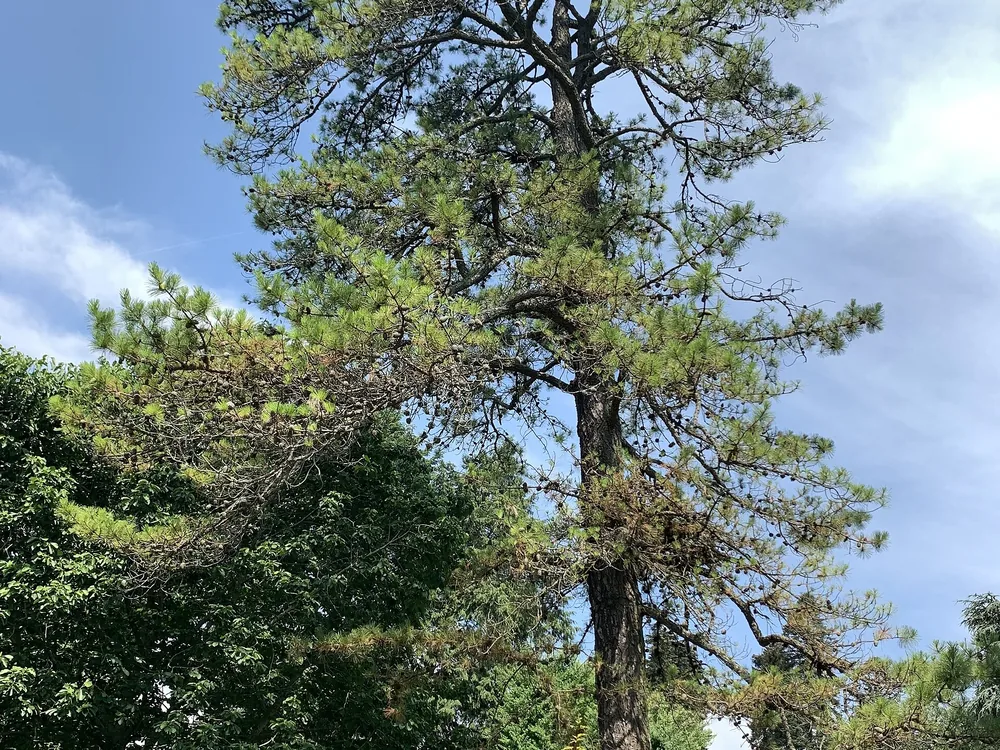
Foliage: Needles in bundles of three — stout, over 1 mm broad, often slightly twisted, 5.5–13 cm long.
Bark & trunk: Thick, irregular, plated bark. Trunks are typically straightish with a curve, but branches twist and the tree self-prunes poorly. Look for tufts of foliage sprouting directly from the trunk bark — those epicormic shoots are the species' signature and most other pines cannot do it.
Growth habit: Irregular, frequently multi-trunked, especially after damage.
Cones: Oval, 4–7 cm, with prickles on the scales; take two years to mature and persist on the tree.
Look-alikes: Other three-needle hard pines — loblolly, shortleaf, pond pine — with which it naturally hybridises. The combination of stout twisted needles, thick plated bark and epicormic trunk tufts settles it.
Climate & USDA Zone
Zones 4a–7b, and genuinely cold-hardy — ground-planted trees survive around −30°F. It requires a proper winter dormancy and must live outdoors all year. This is not a species that can be brought inside.
The important qualifier: a root ball in a shallow bonsai pot is far less hardy than the same tree in the ground. Roots can be damaged at temperatures well above the published ground-hardiness figure. In zone 6 and colder, bury the pot, mulch it heavily, or move the tree to an unheated but sheltered structure for the worst of the winter.
Light
Full sun, all day. Unlike high-elevation pines such as Ponderosa or Limber, Pitch Pine does not want afternoon shade — it is a species of open, exposed, sun-baked ground.
Watering
Let the surface dry between waterings. Pines need oxygen at the roots and rot in constantly wet soil. In the growing season check twice a day in hot weather and water once or twice daily as needed; in winter, every three to five days depending on climate and exposure.
The mistake to avoid is treating it like a broadleaf tree that wants steady moisture. It does not.
Soil & Root Care
A free-draining inorganic mix — akadama, lava and pumice in roughly equal parts, around 4 mm particle size for medium and large trees. It grows naturally in acidic, sandy, low-nutrient ground, so a lean sharp substrate matches its ecology.
Repot every two to four years depending on age and vigour, in spring as the buds swell. Leave a core of old soil under the trunk and do not root-prune hard in a single session — pines weaken from aggressive root work far more readily than deciduous species.
Feeding
Feed through the growing season, and keep feeding into autumn — sustained autumn fertilising is specifically what growers report restores vigour in this species. Ease off in deep winter.
Pruning & Styling
On candles and decandling — this is genuinely unsettled, and we would rather tell you that than pretend otherwise.
Pitch Pine is generally described as the only native US pine capable of double-flushing, meaning it can be decandled in early summer like a Japanese Black Pine and push a second flush. But whether it does so reliably depends heavily on your growing season:
- In long-summer zones (6b/7 and warmer) it will usually double-flush and decandling can be used to build ramification.
- In shorter-season, colder zones it behaves more like a single-flush pine, and experienced growers there recommend candle-shortening only.
There is a well-documented cautionary account from a grower in coastal New Jersey (zone 7a) who decandled annually for three seasons using a Japanese Black Pine regimen: back-budding got progressively worse, needles came in thin and pale, and the tree visibly weakened. Switching to candle-shortening and sustained autumn feeding reversed it.
Our recommendation: treat it as a facultative double-flush pine. Decandle only healthy vigorous trees, only in warm-summer climates, and never every year without a rest season in between. Otherwise shorten the candles to an even length as the white sheaths shed, typically early to mid June.
Structural work: late summer through autumn, roughly late August to October, which is also when back-budding responds best. Avoid heavy work in spring and early summer while candles are forming.
Use the epicormic trait. Because it buds from bare bark, this species tolerates hard chops and dramatic deadwood far better than most pines — a genuine advantage for literati and cascade work on old material. Resprouting vigour does decline in older, larger trees, as it does in the wild.
Propagation & Cuttings
Ease: Straightforward from seed. Best method: seed; also collected wild material.
Cones take two years to mature and trees can bear them young. Cuttings are not commonly used for bonsai purposes; most material is seed-grown or yamadori, which is part of why bonsai technique for this species is still being worked out in the community.
Pests
Aphids, borers, caterpillars, mealybugs and weevils — the general pine bonsai set. No pitch-pine-specific susceptibility is documented.
Disease, Fungus & Infection
Tip blight, needlecast and rust — again the general pine risks rather than anything documented as specific to this species.
Most Common Causes of Death
1. Overwatering and poor drainage. The classic pine killer, and it catches people who buy this as an easy "beginner cascade pine" without learning pine watering discipline. 2. Decandling too hard, too often. A slower failure over two to four seasons — weak pale needles, declining back-budding, eventual dieback. Documented by growers, not theoretical. 3. Unprotected pot roots in winter. The tree is hardy; the root ball in a shallow container is not. 4. Keeping it indoors. It needs dormancy. An indoor pitch pine is a dead pitch pine, just slowly.
Seasonal Calendar
- Spring: Repot as buds swell, around March; begin feeding; candles extend.
- Early–mid summer: Candle work — shorten, or decandle if the tree is strong and your season is long.
- Late summer–autumn: Structural pruning, wiring, needle plucking to drive back-budding; keep feeding through autumn.
- Winter: Full outdoor dormancy, but protect the pot. Bury it, mulch it, or move it to an unheated cold frame in zone 6 and colder.
Toxicity, Safety & Handling
Not reported as toxic. No significant hazard beyond the usual sharp needles.
Close-up photo reference
Compare your tree against these to confirm the species and spot problems early.
_01.jpg)
Sources
- Pinus rigida — NC State Extension Gardener Plant Toolbox
- Pinus rigida — Wikipedia
- Care and maintenance guide for native US Pine bonsai — Bjorn Bjorholm, Eisei-en
Buy a Pitch Pine bonsai
- All species
- Shop bonsai trees, tools & supplies
- How to Water a Bonsai (Without Killing It)
- Bonsai Soil: What to Buy, What to Mix, and What It Costs
- Why Bonsai Die After Repotting: Diagnosing a Failed Repot
- Pruning vs. Pinching: Shaping Your Bonsai
- Overwintering Bonsai: Cold-Season Care
- Indoor Bonsai Light and Humidity: Making a Windowsill Actually Work
- Root Rot on bonsai
- Overwatering on bonsai
- Winter / Frost Damage on bonsai
- Scale Insects on bonsai
- Aphids on bonsai
- Eastern White Pine bonsai care
- Japanese White Pine bonsai care
- Shore Pine (Lodgepole) bonsai care
- Bristlecone Pine bonsai care