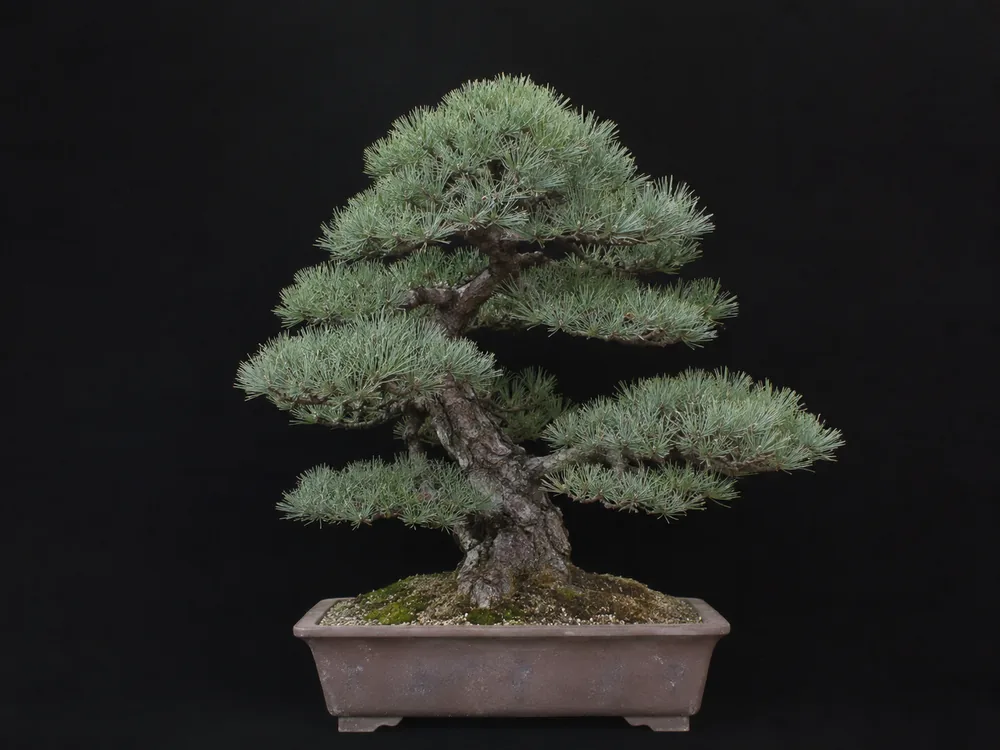
Japanese White Pine Bonsai Care
Pinus parviflora
5 Japanese White Pine bonsai in stock, from $137.95 Shipped direct from our nursery partners, with a 48-hour live-arrival guarantee. See the trees
One of the most refined and beloved of all bonsai. Most are lost to overwatering.
Pinaceae · Evergreen coniferous tree; classic single-flush pine, very frequently sold grafted onto Japanese Black Pine rootstock
Japanese White Pine quick reference
| USDA zones | Roughly 4b–7 (some sources cite 5–9); reliably hardy to about -20°F (-29°C) when fully acclimated |
|---|---|
| Indoor / outdoor | Strictly outdoor. It needs full seasons, including a genuine winter dormancy, and will decline indoors |
| Light | Full sun. More sun produces shorter needles, denser foliage and better color |
| Water | DRY. One of the driest of all bonsai. Water thoroughly, then let it dry appreciably before watering again; never keep it wet |
| Soil | Very free-draining, open, inorganic mix (akadama/pumice/lava). Avoid water-retentive, peaty soils |
| Repot | Slow grower: every 3–5 years for developing trees, 5–7+ years for mature specimens. Repot in early spring as buds swell |
| Frost | Good once established and dormant; protect the pot/roots from hard, prolonged freezes and drying winter wind |
| Mature height (as bonsai) | Tree to 25 m; 30-70 cm as bonsai |
| Growth rate | Slow |
| Season of interest | Year-round blue-green five-needle bundles |
| Leaf reduction | Good - naturally short needles |
| #1 cause of death | Root rot from overwatering / water-retentive soil — made worse on trees grown on their own roots |
Overview & Character
The Japanese White Pine is one of the most refined and beloved of all bonsai. Its short, soft, blue-green to silvery needles grow in bundles of five (hence "five-needle pine"), giving it a delicate, elegant appearance quite different from the coarse, rugged look of Japanese Black Pine. It is the species most associated with formal, mature-looking pine bonsai and is a staple of high-end collections.
A crucial fact for owners: the great majority of Japanese White Pines sold as bonsai are **grafted onto Japanese Black Pine (Pinus thunbergii) rootstock**. Black pine roots are far more vigorous and forgiving, so grafted trees grow stronger and tolerate more water than white pines on their own roots. Look at the base of the trunk for a graft union (a slight change in bark texture or a swelling). This matters for care: a tree on its own roots is even more sensitive to overwatering and prefers to stay drier still.
Japanese White Pine is a single-flush pine. It pushes one set of candles in spring and that is essentially the year's extension growth. This makes its care fundamentally different from black pine. Do not decandle a Japanese White Pine the way you would a black pine — see the Pruning section.
Identification
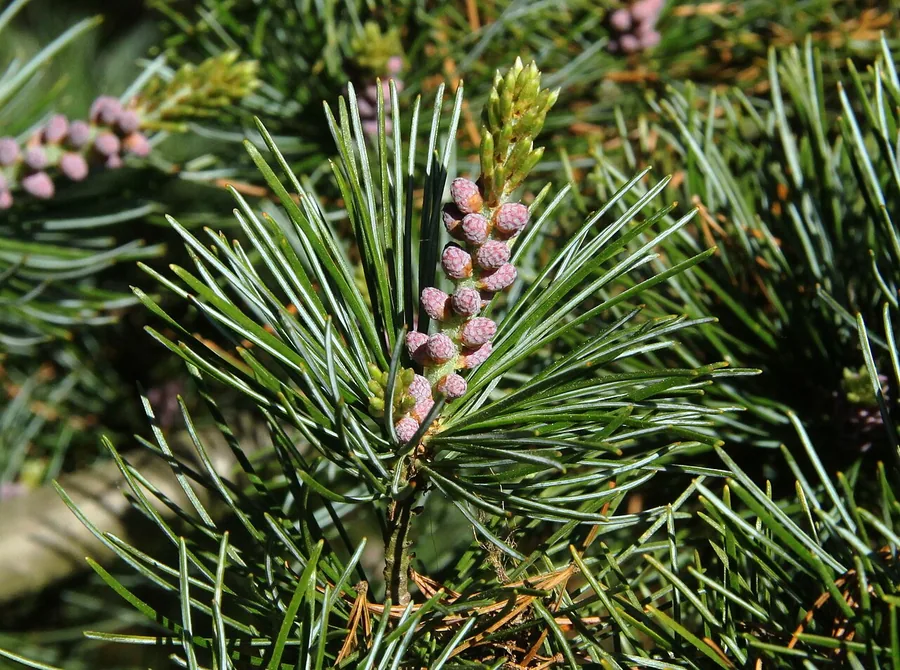
Foliage (the giveaway): Needles are borne five per fascicle (bundle) — this is the defining trait of the species and the source of its "five-needle pine" name. The needles are short (about 3–6 cm / 1–2.5 in), soft and slightly twisted, often with a distinct blue-green to silvery cast and faint white stomatal lines on the inner faces, giving a delicate, frosted look. Evergreen.
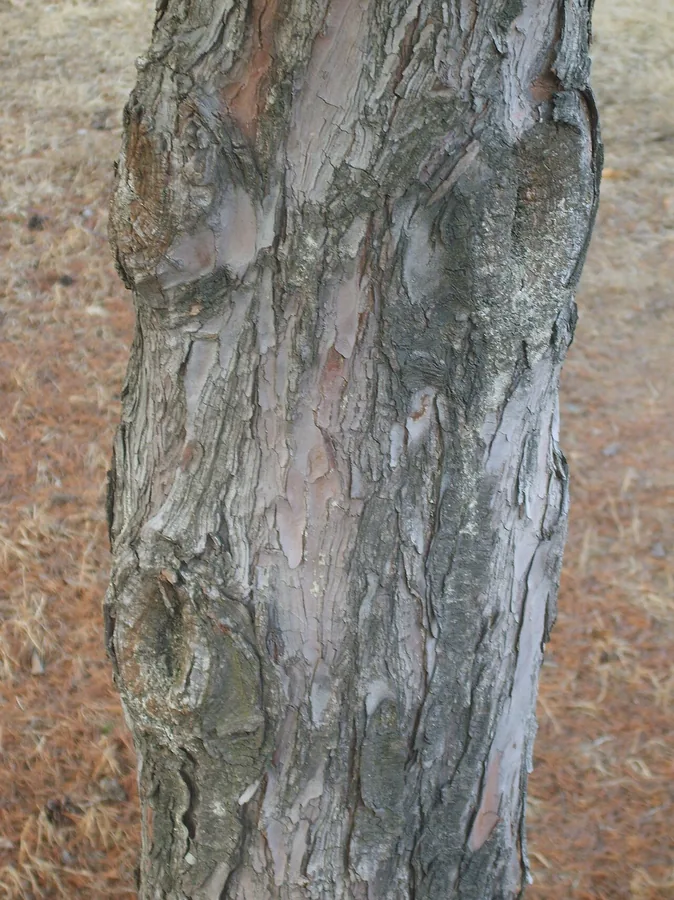
Bark & trunk: Young bark is smooth and grey; mature bark becomes darker grey and fissured into scaly plates. Most bonsai specimens are grafted onto Japanese Black Pine roots — look for a graft union (a change in bark texture or a slight swelling) low on the trunk.
Growth habit / form: Naturally a conical-to-rounded tree of moderate size; in cultivation it is refined, layered and tiered, with a soft, elegant silhouette quite unlike the rugged Black Pine. Cones: Small, ovoid, 4–7 cm, often persisting in clusters; seed scales fairly broad.
Look-alikes & how to tell them apart: The five-needle bundle instantly separates it from two-needle pines like Scots Pine and Mugo Pine. Among five-needle pines, the short, twisted, blue-silver needles and the very common Black-Pine graft union are the best clues; true Japanese Black Pine has long, stiff, dark-green needles in bundles of two and white candle-like buds.
Climate & USDA Zone
This is a cold-hardy mountain species native to Japan, comfortable in roughly USDA zones 4b–7 (some nursery sources extend this to 5–9 depending on provenance and the rootstock). Acclimated trees tolerate temperatures down to around -20°F (-29°C). It needs a real, cold winter dormancy to stay healthy; mild-winter and indoor environments cause weak, leggy growth and decline. In hot, humid climates it appreciates afternoon shade and excellent air movement.
Light
Give it full sun for as much of the day as possible. Strong light is what keeps needles short, color good and interior growth alive. In very hot regions, light afternoon shade in midsummer reduces stress, but err on the side of more sun. Insufficient light produces long, sparse needles and loss of inner foliage.
Watering
Dry. The Japanese White Pine is regarded as one of the driest bonsai species. Its roots have a high oxygen demand, and the balance between water and air in the pot is delicate. Water thoroughly so the entire root mass is saturated, then allow the soil to dry out noticeably before watering again. Constantly damp soil suffocates the roots and invites root rot.
Trees on their own roots (not grafted) are especially prone to rot and should be kept distinctly on the dry side. White pines are also sensitive to water quality: hard, alkaline, high-mineral water degrades needle color and health over time. Where possible, use clean, slightly acidic water (rainwater is ideal) and flush the soil periodically.
Soil & Root Care
Use a very open, free-draining, predominantly inorganic mix — a classic blend is akadama, pumice and lava rock (for example 1:1:1, or more pumice/lava for extra drainage in wet climates). The goal is a substrate that holds some moisture but drains and re-aerates fast. Avoid peaty, organic, water-retentive soils.
Repot infrequently: white pine is slow-growing and resents heavy root disturbance. Every 3–5 years for trees in development and 5–7+ years for mature specimens is typical. Repot in early spring as the buds begin to swell. Remove no more than about one-third of the roots, preserve as much beneficial mycorrhizae (the white fungal network) as practical, and keep the freshly repotted tree out of strong sun and wind while it recovers.
Feeding
Feed to build strength but do not push for explosive growth. Begin feeding in spring after the candles extend and needles harden off, continue through the growing season, and feed more heavily in autumn to build winter reserves and improve color. Many growers ease off or pause feeding during the spring candle elongation to keep needles short. Organic, slow-release fertilizers (such as cakes or pellets) suit pines well. A slightly acidic regime supports the species' color preferences.
Pruning & Styling
Do NOT decandle (full candle removal) like a Japanese Black Pine. White pine is single-flush; cutting off the whole candle can weaken or kill the branch because it will not reliably push a strong second flush.
Correct technique for a single-flush white pine:
- Candle selection and shortening (spring): As candles elongate, reduce vigor and balance the tree by removing the strongest candles entirely where there are clusters of several, and by shortening — not removing — strong candles, pinching or snapping them back to leave a portion that will still produce needles. The aim is to even out energy across the tree so weaker areas catch up. Never strip a branch of all its new growth.
- Needle plucking / thinning (autumn): In fall, remove older (previous-year) needles and thin overly dense areas, leaving the current year's needles. Pluck more from strong upper/outer regions and less from weak interior/lower branches. This admits light to the interior, balances vigor and encourages back-budding.
- Structural pruning: Do major branch removal in autumn or late winter when the tree is not actively pushing growth. Seal larger cuts.
- Wiring: Best applied in autumn through winter while the tree is less active; protect the bark, as pine bark marks easily, and check wire regularly so it does not bite in over the long growing season.
Because white pine is slow and refined, patience is the key styling tool: balance energy first, refine over years.
Propagation & Cuttings
Ease: Grafting is standard; seed slow. Best methods: grafting; seed.
Pinus parviflora is famously grown by grafting the desirable five-needle scions onto vigorous Japanese black pine roots — this is the norm for good bonsai and garden stock, giving strength and a fatter base. Seed grows (short cold stratification, spring sowing) but seedlings are slow and variable. Cuttings don't root. For bonsai, expect grafted stock (watch/hide the union) or slow seedlings; white pine back-buds modestly, so protect interior growth and reduce candles gently.
Pests
Generally robust, but watch for:
- Aphids — on tender new growth; cause distortion and honeydew.
- Scale insects — on needles, shoots and bark; sap-suckers that weaken the tree.
- Spider mites — in hot, dry, stagnant conditions; cause needle stippling and bronzing.
- Pine needle scale and the occasional adelgid.
- Caterpillars / sawfly larvae — can defoliate quickly if unnoticed.
Inspect regularly, improve airflow, and treat with horticultural oil or an appropriate insecticide; systemics can help with scale.
Disease, Fungus & Infection
- Root rot (Phytophthora and related): the dominant killer — driven by overwatering and poorly draining soil. Roots blacken and the tree slowly declines. Prevention (open soil, dry-side watering) is the only reliable defense.
- Needle cast fungi: spotting, banding and premature browning/shedding of needles, favored by wet, poorly ventilated conditions.
- Pine wilt (pine wood nematode), rusts and cankers: less common in cultivated bonsai but possible; remove and destroy badly affected material.
Good air circulation, dry-side watering, autumn cleanup of fallen needles and avoidance of overhead wetting in humid weather prevent most fungal problems.
Most Common Causes of Death
1. Overwatering / root rot. One of the driest-preferring bonsai; keep a sharp free-draining mix and water sparingly — soggy soil rots it. 2. Decandling like a black pine. It is single-flush — do NOT decandle aggressively; only select/shorten candles and pluck needles. 3. Graft / rootstock issues. Usually grafted onto black pine; watch the graft union and rootstock suckers, and treat the stronger black-pine roots' water needs. 4. Hard water / overfeeding. Sensitive to hard water and overfeeding (coarsens growth); use softer water and modest feed. 5. Insufficient sun; unprotected winter roots. Needs full sun; shelter potted roots in severe freezes.
Seasonal Calendar
- Spring: Repot if due (before candles open); modest feeding begins; wire.
- Summer: Full sun; water on the dry side; select/shorten candles (no hard decandling); monitor pests.
- Autumn: Needle plucking to balance strength; structural pruning; light feeding.
- Winter: Dormancy outdoors; protect roots from severe freezes; wiring while dormant.
Close-up photo reference
Compare your tree against these to confirm the species and spot problems early.


Sources
Buy a Japanese White Pine bonsai
- Japanese White Pine Bonsai, 16 Years Old (Pinus parviflora 'Aoi') — $137.95
- Japanese White Pine Bonsai, 32 Years Old (Pinus parviflora 'Bergman') — $435.00
- Japanese White Pine Bonsai, 34 Years Old (Pinus parviflora 'Bergman') — $468.00
- Japanese White Pine Bonsai, 35 Years Old (Pinus parviflora 'Bergman') — $495.00
- Japanese White Pine Bonsai, 36 Years Old (Pinus parviflora 'Bergman') — $1200.00
- All species
- Shop bonsai trees, tools & supplies
- How to Water a Bonsai (Without Killing It)
- Bonsai Soil: What to Buy, What to Mix, and What It Costs
- Why Bonsai Die After Repotting: Diagnosing a Failed Repot
- Pruning vs. Pinching: Shaping Your Bonsai
- Overwintering Bonsai: Cold-Season Care
- Indoor Bonsai Light and Humidity: Making a Windowsill Actually Work
- Root Rot on bonsai
- Overwatering on bonsai
- Underwatering (Drought Stress) on bonsai
- Winter / Frost Damage on bonsai
- Insufficient Light (Etiolation) on bonsai
- Eastern White Pine bonsai care
- Japanese Black Pine bonsai care
- Pitch Pine bonsai care
- Ponderosa Pine bonsai care