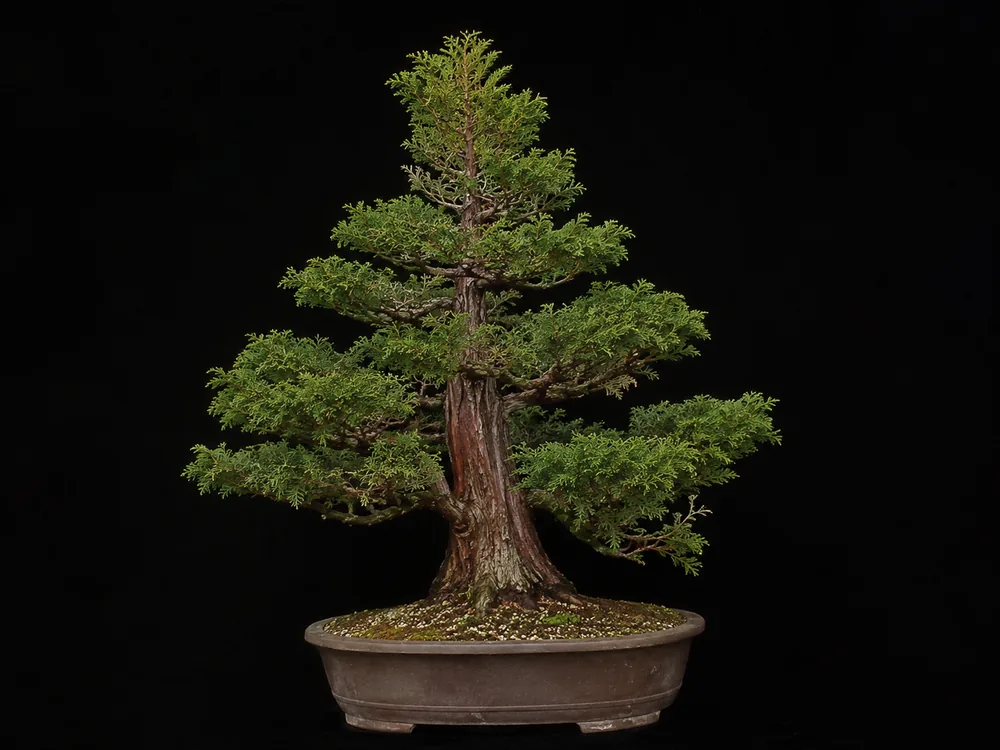
Cryptomeria / Japanese Cedar Bonsai Care
Cryptomeria japonica
Zones 5a to 9b, outdoor. Cryptomeria japonica, sugi, the national tree of Japan, is a stately evergreen conifer. Most are lost to drying out.
Cupressaceae · Evergreen conifer (retains its foliage year-round; older inner foliage browns and sheds gradually)
Cryptomeria / Japanese Cedar quick reference
| USDA zones | 5a–9b (most cultivars thrive in zones 5–9) |
|---|---|
| Indoor / outdoor | Outdoor tree; needs fresh air, light, and seasonal change |
| Light | Full sun to light shade; some afternoon shade in very hot climates protects foliage colour |
| Water | Moisture-loving — wants ample water and humidity; rootball must never dry out, but soil must still drain (no permanent waterlogging) |
| Soil | Moisture-retentive yet free-draining, slightly acidic to neutral (akadama / pumice / kiryu) |
| Repot | Young trees every 2 years; older trees every 3–5 years, in early spring |
| Frost | Good; hardy to about zone 5 but protect potted roots and foliage from harsh, drying winter wind |
| Mature height (as bonsai) | Tree to 40 m; kept 30-90 cm as bonsai |
| Growth rate | Moderate |
| Season of interest | Year-round evergreen, bronzing in cold |
| Leaf reduction | Good - fine needles reduce well |
| #1 cause of death | Root rot from soggy soil, or foliage dieback/needle drop from letting the rootball dry out |
Overview & Character
Cryptomeria japonica — sugi, the national tree of Japan — is a stately evergreen conifer with soft, awl-shaped needles arranged spirally along the shoots, giving the foliage a feathery, slightly bushy texture. The foliage is a rich green in summer and many forms take on a bronzy or purplish cast in cold winter weather. The bark is fibrous and reddish-brown, peeling in attractive vertical strips on older trunks, which adds a sense of age to even relatively young bonsai.
As a bonsai it is valued for its lush, full crown, fast growth, and willingness to back-bud, which makes building dense pads of foliage straightforward. It suits formal and informal upright styles and looks especially convincing as a tall, single-trunk specimen or in forest plantings that echo the towering sugi avenues of Japanese temples. One quirk to expect: like many conifers, Cryptomeria naturally sheds its oldest interior foliage, which browns before dropping — this is normal and not a sign of ill health.
Identification
Foliage (the giveaway): Evergreen, awl-shaped needles arranged spirally around the shoot — short, slightly incurved, and standing out in a soft, feathery, bottlebrush-like spiral rather than lying flat. Rich green in summer, often bronzing to a purplish or rusty cast in cold winter weather (normal, not disease). The oldest interior foliage browns and sheds gradually.
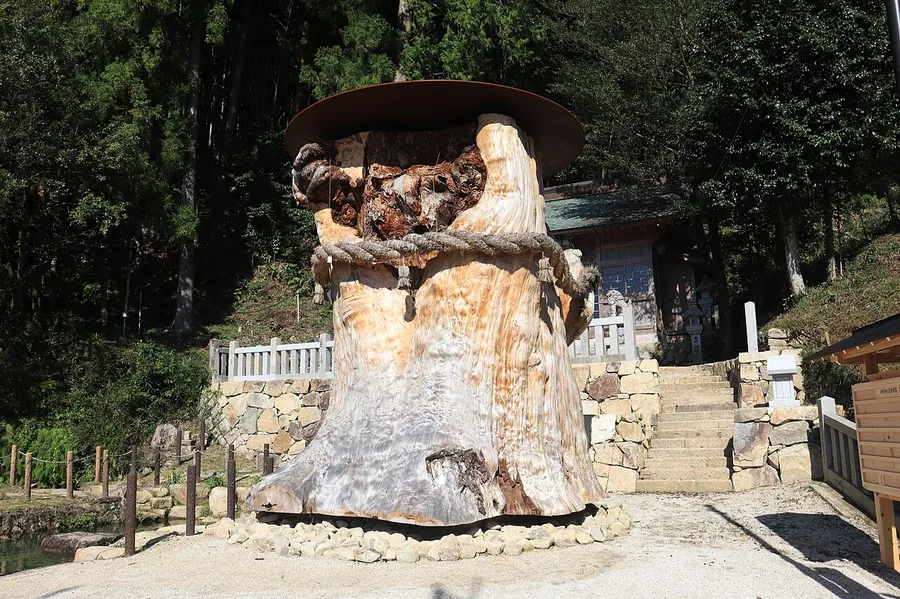
Bark & trunk: Reddish-brown and fibrous, peeling in attractive vertical strips on older trunks — lending an aged look quickly.
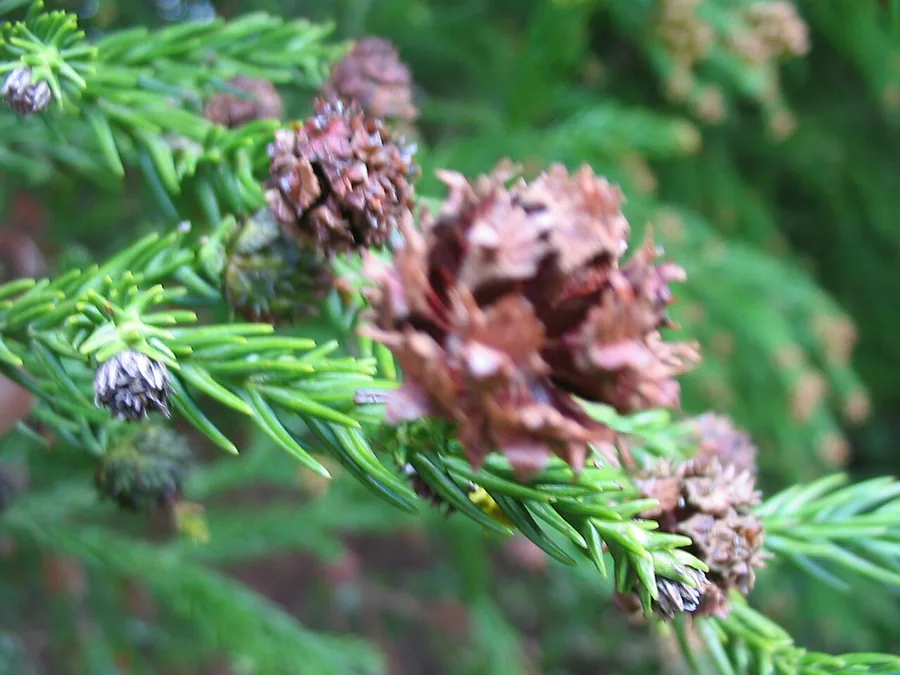
Growth habit / form: A tall, conical evergreen (the towering temple sugi of Japan) with a lush, full, bushy crown; back-buds freely. Cones: Small, round, woody, about 1–2 cm, with distinctive spine-tipped scales giving a spiky, almost burr-like globe.
Look-alikes & how to tell them apart: The spirally-arranged awl needles separate Cryptomeria from the flat-sprayed cypresses (Hinoki, with white Y/X marks beneath) and from junipers. It is sometimes confused with Coast Redwood (Sequoia sempervirens), which has flat, two-ranked needles, not Cryptomeria's all-around spiral arrangement.
Climate & USDA Zone
Cryptomeria is reliably hardy in USDA zones 5–9, with most cultivars happiest across zones 5 to 9. It is an outdoor tree that benefits from the full cycle of the seasons. In colder parts of its range, shelter the pot from hard freezes and especially from cold, drying winter wind, which can desiccate the evergreen foliage. In the hottest zones, the species appreciates some afternoon shade and steady moisture to avoid foliage scorch and bronzing.
Light
Cryptomeria grows well in full sun to light/partial shade. Plenty of light keeps the foliage compact and the crown dense. In regions with intense summer heat and sun, light afternoon shade helps preserve good green colour and prevents the foliage from drying or scorching. Indoors it will decline, so keep it outside where it gets real light and air movement.
Watering
Cryptomeria is decidedly moisture-loving. It needs a lot of water through the growing season and the rootball must not be allowed to dry out — even a brief drought can cause needles to brown and small branches to die back. It also enjoys higher humidity, so misting the foliage and wetting the bench and ground around the pot on hot days is beneficial.
That said, "loves water" does not mean "loves a swamp." Cryptomeria is still sensitive to permanently waterlogged, airless soil, which causes root rot. The right balance is generous, frequent watering through a free-draining mix, so the roots stay consistently moist and oxygenated rather than sitting in stagnant water. In winter the tree uses less water — keep the soil damp but reduce frequency and never leave it sodden in the cold.
Water quality matters: Cryptomeria prefers slightly acidic to neutral water (around pH 5.5–7). If your tap water is very hard/calcareous, rainwater is preferable.
Soil & Root Care
Use a substrate that holds moisture well yet still drains freely and is slightly acidic to neutral — a typical bonsai blend of akadama with pumice and a grit such as kiryu works well. Avoid heavy clay or any mix that stays sodden, and equally avoid a mix so coarse it dries out the moisture-hungry roots.
Repot in early spring as growth is about to resume. Young trees benefit from repotting roughly every 2 years; older, established trees every 3–5 years. At each repot, renew a good portion of the substrate and tidy the root pad, but as with all conifers do not strip the roots bare in a single session — remove a portion, keep the tree moist afterwards, and let it recover before feeding.
Feeding
Feed actively through the growing season, from spring after new growth emerges into autumn, to support the dense foliage this species is prized for. A balanced organic fertiliser suits it well. Because the foliage tends toward lush bushiness, some growers moderate nitrogen later in the season to keep growth tight. Do not feed in winter dormancy or immediately after repotting; wait until the tree shows it has recovered.
Pruning & Styling
- Pinching/shoot management: During the growing season, pinch back the soft extending tips by hand to maintain the shape of the foliage pads and encourage back-budding and density. Avoid cutting individual needles with scissors where possible, as cut needle tips brown unattractively — pinch the soft new growth instead.
- Structural pruning: Heavier branch pruning is best in early spring or autumn. Cryptomeria back-buds well, even on older wood, allowing you to rebuild and compact the silhouette.
- Thinning interior foliage: Periodically thin out crowded inner shoots to let light and air into the crown — this keeps interior buds alive and reduces fungal risk.
- Wiring: Wire in the dormant season or early spring. The branches are flexible when young; wire bites quickly during the growing flush, so monitor and remove wire before it scars.
Propagation & Cuttings
Ease: Easy from cuttings (unusual for a conifer). Best methods: cuttings; seed.
Japanese cedar roots well from cuttings — take semi-hardwood cuttings in autumn to late winter, dip in IBA, and keep humid; rooting is good and this is the standard way cultivars (like 'Yoshino') are produced true. Seed germinates after a short cold stratification but seedlings vary. It back-buds well and tolerates the work. For bonsai, cuttings clone good foliage forms and support formal upright styling; keep young plants moist, as Cryptomeria dislikes drying out.
Pests
Cryptomeria is largely trouble-free and is seldom seriously attacked by pests, but watch for:
- Spider mites — especially in hot, dry conditions; they cause stippling, dullness, and browning of foliage. Increasing humidity and rinsing the foliage helps deter them.
- Scale insects — small bumps on shoots/stems that excrete honeydew.
Inspect regularly, rinse the foliage, and treat persistent infestations with horticultural oil or an appropriate miticide/insecticide.
Disease, Fungus & Infection
Diseases are uncommon but possible, and most are encouraged by poor airflow, dense crowns, or overly wet conditions:
- Leaf blight and leaf spot — fungal problems causing browning patches and shoot dieback.
- Mildew and other fungal growth in stagnant, humid, poorly ventilated situations.
The best defence is cultural: thin the interior for airflow, give plenty of light, avoid leaving foliage wet overnight, keep the soil moist-but-draining rather than soggy, and remove and destroy affected foliage. Treat active fungal disease with a suitable fungicide. Remember that gradual browning and shedding of the oldest interior needles is normal seasonal behaviour, not disease.
Most Common Causes of Death
1. Drying out. Moisture-loving; the rootball must never fully dry or foliage browns and dies back — keep consistently moist. 2. Root rot if waterlogged. Still needs drainage; avoid stagnant, soggy soil. 3. Low humidity / hot dry wind. Appreciates humidity; hot dry wind browns foliage — mist and shelter in extremes. 4. Cutting into bare old wood. Back-budding on old bare wood is limited — don't strip branches bare. 5. Winter bronzing vs damage. Foliage bronzes in cold (normal); but protect potted roots from hard freezes.
Seasonal Calendar
- Spring: Repot if due; resume feeding; pinch new growth; wire carefully.
- Summer: Sun to light shade; keep consistently moist with humidity; thin congested growth.
- Autumn: Taper feeding/water; light thinning.
- Winter: Evergreen dormancy outdoors (may bronze); protect potted roots; keep from fully drying.
Close-up photo reference
Compare your tree against these to confirm the species and spot problems early.
_of_Okuteshinmei-jinja.jpg)
.jpg)
Sources
Where to buy a Cryptomeria / Japanese Cedar bonsai
We don’t stock Cryptomeria / Japanese Cedar at the moment. These species need similar care and we have them now — they are the closest match in our catalogue.
- Atlantic White Cedar — similar care, in stock now
- Dawn Redwood — similar care, in stock now
Browse all bonsai trees for sale or find a species matched to your climate and space.
- All species
- Shop bonsai trees, tools & supplies
- How to Water a Bonsai (Without Killing It)
- Bonsai Soil: What to Buy, What to Mix, and What It Costs
- Why Bonsai Die After Repotting: Diagnosing a Failed Repot
- Pruning vs. Pinching: Shaping Your Bonsai
- Overwintering Bonsai: Cold-Season Care
- Indoor Bonsai Light and Humidity: Making a Windowsill Actually Work
- Root Rot on bonsai
- Underwatering (Drought Stress) on bonsai
- Winter / Frost Damage on bonsai
- Leaf Scorch / Sunburn on bonsai
- Spider Mites on bonsai
- Atlantic White Cedar bonsai care
- Dawn Redwood bonsai care
- Douglas Fir bonsai care
- Eastern White Pine bonsai care