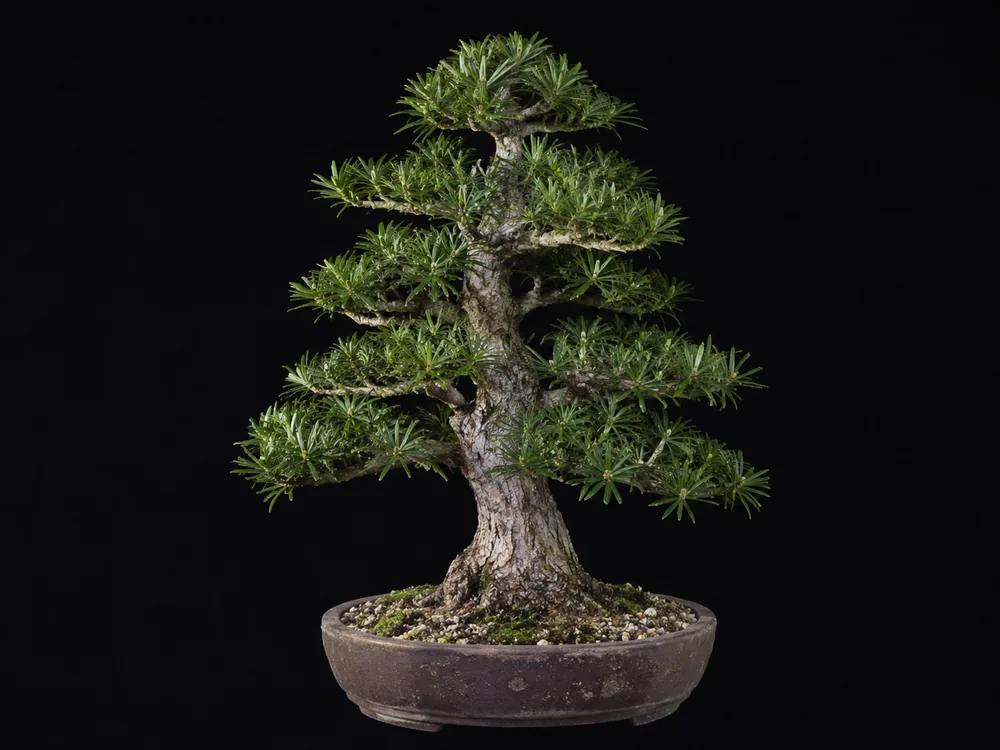
Japanese Umbrella Pine Bonsai Care
Sciadopitys verticillata
Zones 5 to 8, outdoor. A botanical curiosity, the sole surviving member of an ancient family, Sciadopityaceae. Most are lost to overwatering.
Sciadopityaceae (the umbrella-pine family: its own family, a living fossil) · Evergreen coniferous tree
Japanese Umbrella Pine quick reference
| USDA zones | 5 to 8 |
|---|---|
| Indoor / outdoor | Outdoor: a hardy but slow temperate conifer; not an indoor tree. |
| Light | Full sun to partial shade: bright light, but shelter from harsh afternoon sun and drying wind. |
| Water | Evenly moist: moisture-loving, dislikes drought; also dislikes soggy roots. |
| Soil | Free-draining, acidic, humus-rich conifer mix. |
| Repot | Every 3 to 5 years; very slow-growing, resents disturbance. |
| Frost | Cold-hardy to about −25 °C (−13 °F) established. |
| Mature height | Tree to 25m in nature; bonsai usually 30-60cm. |
| Growth rate | Slow. |
| Season of interest | Year-round whorled glossy soft needles. |
| Leaf reduction | Poor; long needles resist significant reduction. |
| #1 cause of death | Root rot / poor drainage and impatience: plus dry-out; it is slow and unforgiving of both extremes. |
Overview & Character
The Japanese umbrella pine is a botanical curiosity, the sole surviving member of an ancient family, Sciadopityaceae, a true living fossil with a fossil record stretching back over 200 million years. It is not a true pine at all. Its signature feature is whorls of long, thick, glossy, deep-green "needles" (actually flattened cladodes) arranged like the spokes of an umbrella at the shoot tips, giving a lush, distinctive texture unlike any other conifer in cultivation. As bonsai it is prized precisely for this rich foliage and its rarity, though it is one of the slowest-growing conifers you can keep, demanding patience above all.
Care keys: keep it outdoors in bright but sheltered light with a cold winter, water to keep the rootball evenly moist in an acidic, humus-rich, free-draining mix, feed lightly, and repot only occasionally and gently because it grows and recovers slowly. It back-buds poorly and grows at a crawl, so styling is a long game of patient pinching rather than heavy cutting.
Identification
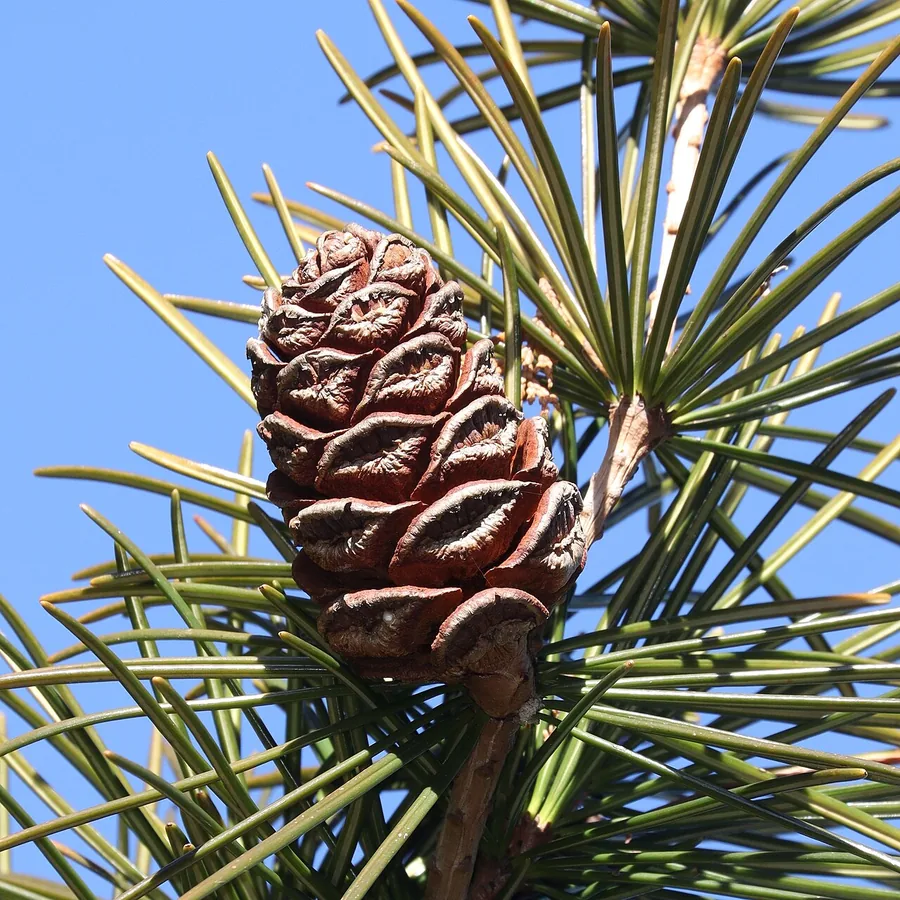
Foliage: Long (6 to 13 cm), thick, glossy, deep-green, flattened linear "needles": technically fused pairs of needles (cladodes), borne in dense radiating whorls of 15 to 30 at the ends of the shoots, giving the umbrella-spoke look. There are also small brown scale leaves along the stems.
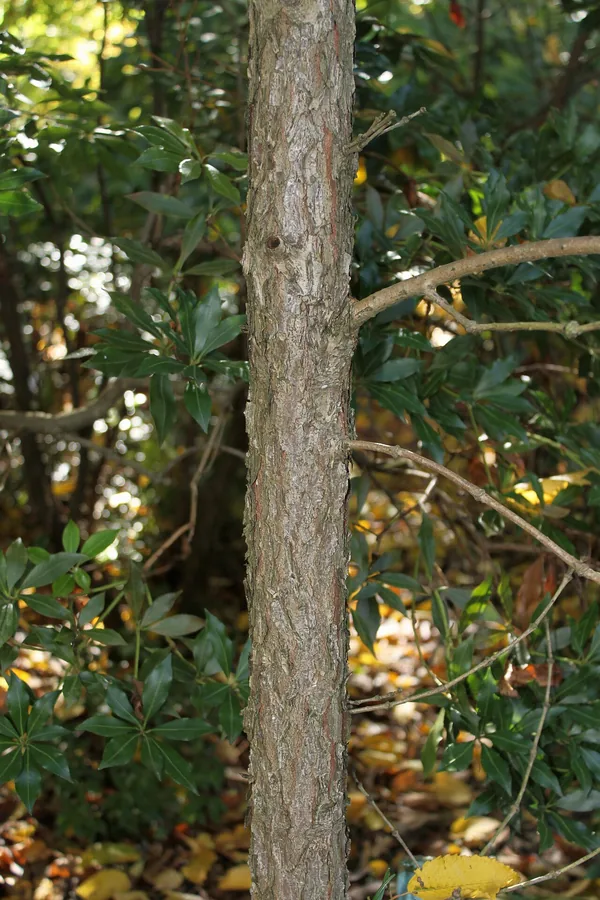
Bark & trunk: Reddish-brown to gray-brown bark that peels in thin vertical strips on older trunks; trunk is straight and slow to thicken.
Growth habit / form: Naturally a dense, narrow, conical evergreen, slow-growing, with a symmetrical whorled branch structure.
Flowers / fruit: Small oval cones about 6 to 11 cm long that take two seasons to mature, ripening from green to brown; young trees rarely cone.
Look-alikes & how to tell them apart: Superficially resembles true pines (Pinus) because of the long needle-like foliage, but true pines carry needles in bundles (fascicles) of 2 to 5 sheathed at the base along the shoot, whereas umbrella pine's whorls of thick, flattened, glossy cladodes radiate from the shoot tip with no basal sheath. Its foliage is also broader and glossier than any true pine, and it belongs to an entirely separate, monotypic family, the single unmistakable identifier.
Climate & USDA Zone
Japanese umbrella pine is hardy in USDA zones 5 to 8. Established plants tolerate winter lows around −25 °C (−13 °F). It is native to the cool, humid mountain forests of Japan and prefers cool, moist, temperate conditions; it dislikes hot, dry, exposed sites and drying winds, which scorch its foliage. It needs a cold winter dormancy. Grow it outdoors year-round in a sheltered position. In containers, protect the roots from hard freeze in a cold frame or by heeling the pot into the ground, and shelter the foliage from cold desiccating winter winds, which can brown the needles.
Light
Provide bright light: full sun in cool climates, partial or afternoon shade in hot ones, while sheltering it from scorching sun and drying wind. It grows densest in good light but its lush foliage burns in harsh, hot, exposed conditions. A spot with morning sun and afternoon shade in warm regions is ideal; too much shade thins the whorls and weakens growth.
Watering
Keep the rootball evenly moist: umbrella pine is moisture-loving and resents drying out, but equally dislikes waterlogged roots.
- Water when the surface begins to dry; never let the rootball dry out fully, as scorched needles do not recover.
- Ensure the mix drains freely; standing water rots the slow-growing roots.
- It appreciates humidity; misting the foliage in hot dry spells helps.
- Reduce watering in winter dormancy, keeping the soil just damp.
Soil & Root Care
Soil: A free-draining, acidic, humus-rich conifer mix: akadama and pumice with an added portion of composted bark or kanuma to hold moisture and acidity. It resents alkaline and heavy soils.
Repotting:
- Repot only every 3 to 5 years; it is extremely slow-growing and slow to recover from root disturbance.
- Timing: early spring as growth just begins to move.
- Root-work tolerance is low: trim conservatively, comb out gently, and never bare-root hard; preserve as many fine roots as possible.
- Aftercare: keep sheltered, humid, out of wind and strong sun, water carefully, and withhold fertilizer for 4 to 6 weeks while it slowly re-roots.
Feeding
Feed lightly. Because it grows so slowly, umbrella pine needs only modest feeding: a balanced or slightly acidic conifer fertilizer at reduced strength through the growing season, from late spring after new growth firms until early autumn. Over-feeding does not speed it up appreciably and can coarsen or burn the foliage. An acidifying feed suited to ericaceous/conifer plants supports its preference for acidic conditions. Ease off in the heat of midsummer and stop by autumn.
Pruning & Styling
- Work with its slow pace: pinch back the soft new shoot extensions lightly by hand in spring to shape and maintain the whorled form; avoid heavy cutting.
- Back-budding is poor and slow, so do not cut back into old bare wood expecting new growth; it rarely comes.
- Suitable styles: formal and informal upright (chokkan, moyogi) suit its naturally straight, conical, symmetrical habit best; group plantings also work.
- Wire carefully in the cooler months; branches are somewhat stiff and the tree is slow to reset, so leave wire on longer but check regularly for bite.
- Patience is the defining discipline: refinement takes many years, so avoid the temptation of aggressive styling.
Propagation & Cuttings
Ease: Difficult and slow. Best methods: seed; cuttings (slow).
Sciadopitys verticillata (Japanese umbrella pine, not a true pine) grows from seed: cold-moist stratify ~2 to 3 months and sow; germination is slow and erratic, and seedlings are extremely slow. Cuttings root at low rates over a very long period (up to a year) with IBA under mist. It doesn't layer readily. For bonsai it is a patient project: the whorled, glossy needle-like shoots are unique, it back-buds poorly on old wood, and any propagation or development must be done with long time horizons.
Pests
- Scale insects: sap-sucking scales on stems and needles, a common pest of umbrella pine; treat with horticultural oil and scrape off.
- Mealybugs: white cottony masses in leaf whorls and joints; dab with alcohol or treat with insecticidal soap/oil.
- Spider mites: stippling and browning in hot dry conditions; raise humidity and apply miticide.
- Aphids: on soft new growth; hose off or use insecticidal soap.
For all of these, a dormant-season horticultural oil spray plus good airflow and steady moisture are the best defense; the species is generally fairly pest-resistant.
Disease, Fungus & Infection
- Root rot (Phytophthora / Pythium): the chief disease risk, from waterlogged or heavy, poorly draining soil; ensure sharp drainage and never overwater.
- Needle blight / tip browning fungi: brown needle tips and whorls in cold, wet, stagnant conditions or after winter wind scorch; improve airflow, remove affected foliage, shelter from drying wind.
- Botrytis (gray mold): on damaged or overcrowded foliage in cool, damp, still air; improve ventilation and remove affected parts.
Prevention: umbrella pine is quite disease-resistant when its cultural needs are met: free-draining acidic soil, even moisture without waterlogging, good airflow, and shelter from desiccating wind keep it healthy.
Most Common Causes of Death
1. Root rot from poor drainage / overwatering: the most common killer; its slow roots suffocate and rot in soggy media. Use a free-draining acidic mix and never let the pot sit in water. 2. Drying out: the opposite extreme; a full dry-out scorches the needles irreversibly and, because it grows so slowly, recovery is very poor. Keep the rootball evenly moist. 3. Impatience and over-working: hard pruning, aggressive repotting, or heavy root work on such a slow species stalls or kills it; go gently and rarely. 4. Winter wind scorch and root freeze: cold desiccating winds brown the foliage and unprotected container roots freeze; shelter the foliage and protect the pot. 5. Alkaline or heavy soil: it declines in the wrong medium; use an acidic, humus-rich, free-draining mix.
Seasonal Calendar
- Spring: Slow new growth begins: the window to repot (gently, rarely) as growth moves; start light feeding and pinch soft new shoots to shape.
- Summer: Keep evenly moist and never let it dry, provide afternoon shade and humidity in heat, watch for scale, mealybug and mites, feed lightly and ease off in peak heat.
- Autumn: Growth slows to a stop; stop feeding, keep moist, do any careful wiring, and prepare winter shelter.
- Winter: Dormant outdoors; protect container roots from hard freeze and shelter foliage from cold drying winds, keep soil just damp, and avoid any root work.
Close-up photo reference
Compare your tree against these to confirm the species and spot problems early.

.jpg)
Sources
- Wikipedia: *Sciadopitys verticillata*
- Missouri Botanical Garden: *Sciadopitys verticillata* plant profile
- The Gymnosperm Database: *Sciadopitys verticillata*
Where to buy a Japanese Umbrella Pine bonsai
We don’t stock Japanese Umbrella Pine at the moment. These species need similar care and we have them now — they are the closest match in our catalogue.
- Fire Chief Arborvitae — similar care, in stock now
Browse all bonsai trees for sale or find a species matched to your climate and space.
- All species
- Shop bonsai trees, tools & supplies
- How to Water a Bonsai (Without Killing It)
- Bonsai Soil: What to Buy, What to Mix, and What It Costs
- Why Bonsai Die After Repotting: Diagnosing a Failed Repot
- Pruning vs. Pinching: Shaping Your Bonsai
- Overwintering Bonsai: Cold-Season Care
- Indoor Bonsai Light and Humidity: Making a Windowsill Actually Work
- Root Rot on bonsai
- Overwatering on bonsai
- Underwatering (Drought Stress) on bonsai
- Winter / Frost Damage on bonsai
- Leaf Scorch / Sunburn on bonsai
- Douglas Fir bonsai care
- Eastern White Pine bonsai care
- Fire Chief Arborvitae bonsai care
- Gold Arborvitae bonsai care