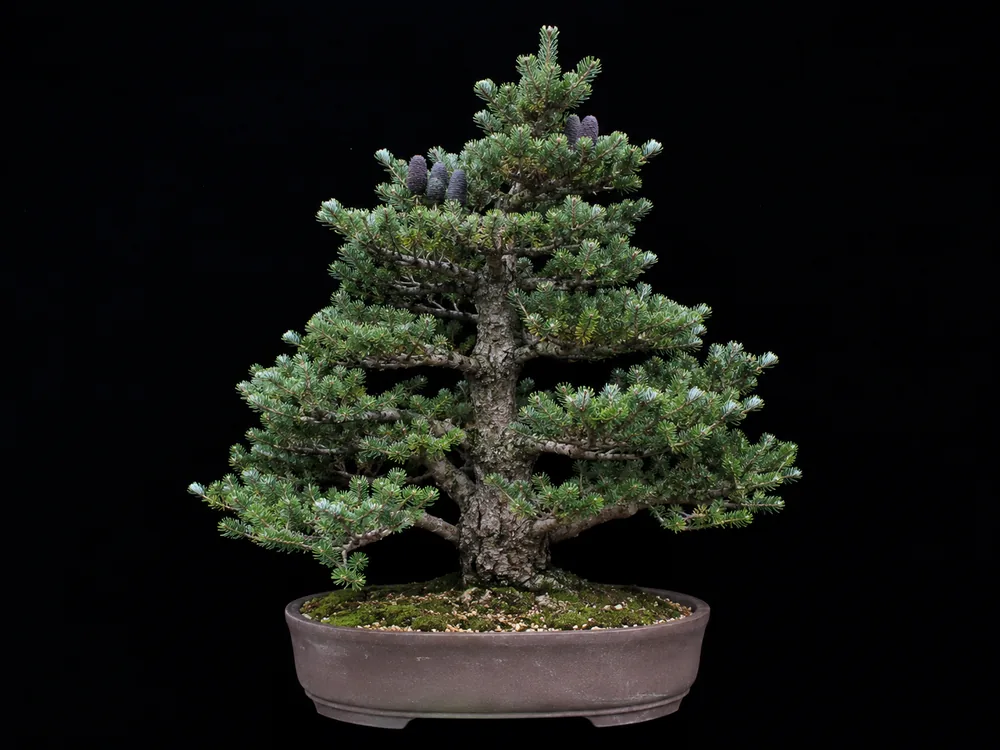
Korean Fir Bonsai Care
Abies koreana
Zones 5 to 7, outdoor only. A compact, slow, neat conifer famous for densely packed dark needles. Most are lost to overwatering.
Pinaceae (pine family) · Evergreen coniferous tree
Korean Fir quick reference
| USDA zones | 5–7 |
|---|---|
| Indoor / outdoor | Outdoor only — full sun/part shade, winter cold |
| Light | Full sun to part shade — shade midday in fierce heat |
| Water | Evenly moist — water when surface dries; never dry/soggy |
| Soil | Free-draining, neutral-to-slightly-acidic mix |
| Repot | Every 2–3 years, early spring |
| Frost | Frost-hardy; protect potted roots from strong frost |
| Mature height (as bonsai) | 10-18m wild; 30-60cm as bonsai |
| Growth rate | Slow; back-buds reluctantly |
| Season of interest | Blue-purple cones; silvery needle undersides |
| Leaf reduction | Needles reduce little; manage by candle pruning |
| #1 cause of death | Heat stress; root rot; cutting to bare wood (no back-bud) |
Overview & Character
The Korean Fir is a compact, slow, neat conifer famous for densely packed dark needles with silver-white undersides and, even on small trees, striking upright violet-blue cones. It makes an elegant, distinctive bonsai, and popular cultivars (e.g. 'Silberlocke', 'Ice Breaker') are widely grown.
It prefers cool conditions: full sun in mild climates but shade from intense midday/afternoon summer heat, which firs dislike. Keep it evenly moist with neutral-to-slightly-acidic, lime-free water, and remember it does not reliably back-bud on old bare wood — pinch soft spring shoots and leave foliage on branches you keep.
Identification
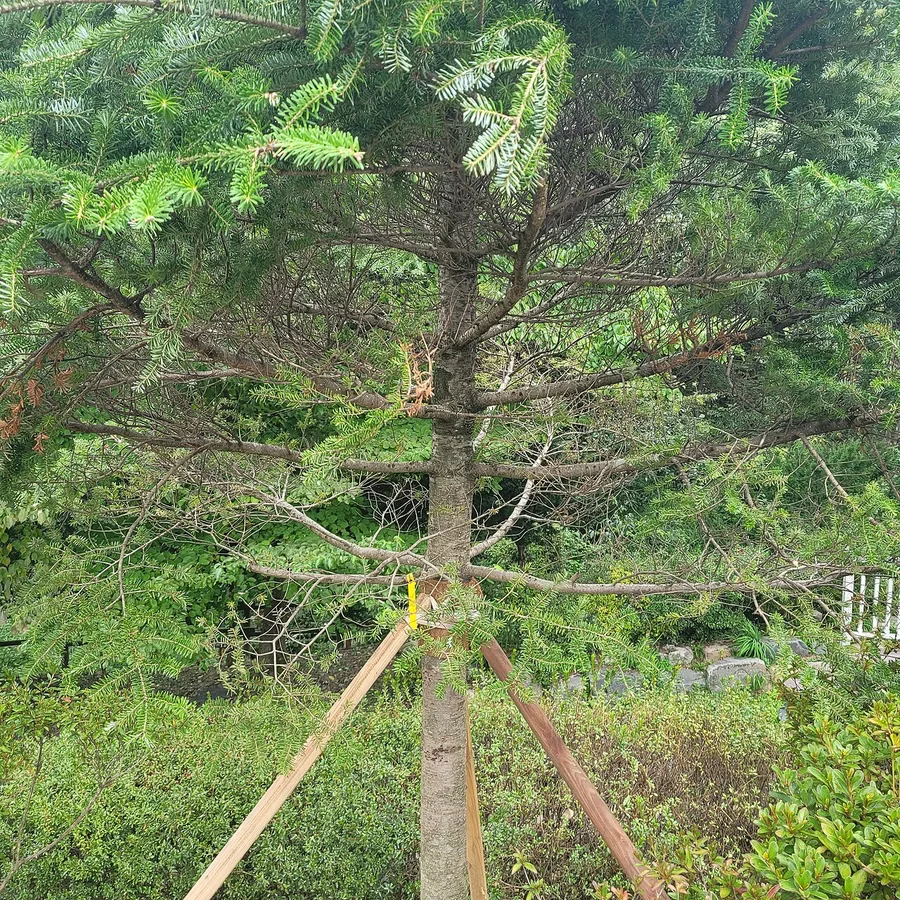
Foliage: Short, soft, flattened needles ~1–2 cm borne singly, dark green above with two bright silver-white stomatal bands beneath, densely arranged and often curving to show the silver — very ornamental.
Bark & trunk: Smooth grey with resin blisters when young, roughening with age.
Growth habit / form: Compact, slow, neatly conical with dense layered branches; suits formal/informal upright.
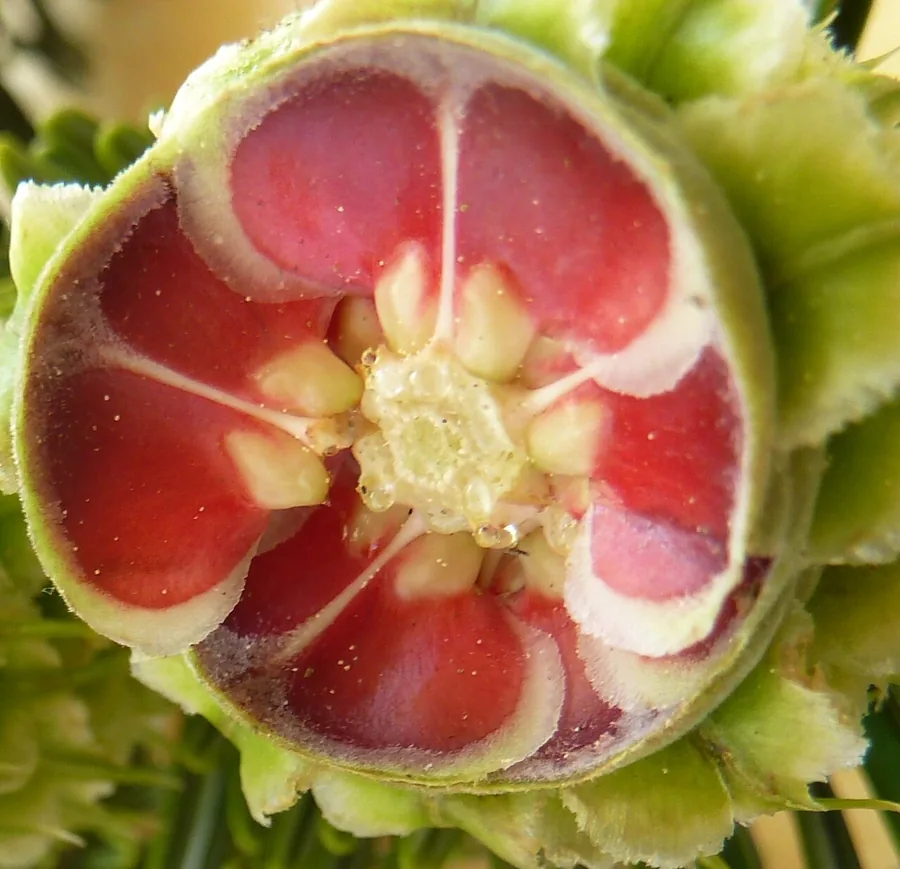
Flowers / fruit: Bears erect, violet-blue barrel-shaped cones ~5–7 cm even on young/small plants — the signature feature; fir cones disintegrate on the tree (scales shed), leaving an upright central spike.
Look-alikes & how to tell them apart: Fir vs spruce: fir needles are flat and soft, leave round flat scars (smooth twigs) when shed, and cones stand erect and disintegrate; Korean Fir is distinguished by its short densely-packed silver-backed needles and early violet cones.
Climate & USDA Zone
Frost-hardy in USDA zones 5–7. Needs full sun to part shade, fresh air, and winter cold; grown outdoors year-round. It dislikes heat, so it struggles in hot-summer climates without shade. Protect potted roots from strong frost. Prefers neutral/slightly acidic (lime-free) water and soil.
Light
Full sun to partial shade. In mild climates give 4–6+ hours of sun; in hot regions shade it over midday and early afternoon, as firs are damaged by intense heat. Too little light gives sparse, weak growth.
Watering
Keep evenly moist — water thoroughly when the surface dries; it tolerates neither drought nor constant wetness.
- Use lime-free (rain/soft) water; it prefers pH ~6.5–7.5.
- In winter water less but never let the rootball dry out.
- Sharp drainage prevents the root rot it is prone to if waterlogged.
Soil & Root Care
Soil: A free-draining, neutral-to-slightly-acidic bonsai mix (akadama / pumice / lava); avoid limey components.
Repotting:
- Frequency: every 2–3 years, early spring, with normal (moderate) root-pruning.
- Do not remove too much root at once; keep some old soil.
- Aftercare: shade, shelter, even moisture while recovering.
Feeding
Feed every ~4–6 weeks from early spring to late summer with a balanced fertilizer; avoid feeding in the dormant winter period and don't feed freshly repotted trees.
Pruning & Styling
- Pinch soft new shoots in spring while still tender to build ramification.
- No reliable back-budding on old bare wood — leave needles/buds on branches you keep.
- Prune larger branches in late autumn.
- Wiring: fir branches are flexible and slow to set, so they often need re-wiring several times; best applied in autumn/winter, protecting the bark.
- Suits formal/informal upright, showing off the silver needles and blue cones.
Propagation & Cuttings
Ease: Difficult from cuttings. Best methods: seed; grafting.
Abies koreana is grown from seed — cold-moist stratify ~3–4 weeks and sow in spring; germination is fair and seedlings slow. Cuttings root poorly (true firs are hard from cuttings). Dwarf cultivars are grafted onto Abies understock. For bonsai, seedlings or grafted/collected nursery plants are the route; firs back-bud poorly on old wood and dislike heavy root work, so develop the layered branches and famous violet cones patiently.
Pests
- Adelgids (woolly fir aphids — a key fir pest)
- Spider mites (hot, dry conditions)
- Scale insects
- Aphids
Treat with horticultural oil, insecticidal soap, or appropriate systemics; catch infestations early.
Disease, Fungus & Infection
- **Root rot (Phytophthora)** — from overwatering/poor drainage or alkaline wet soil; the main risk.
- Needle cast fungi — needle browning in damp, stagnant conditions; improve airflow.
- Heat / sun scorch — browning from intense summer heat (cultural); shade in heat.
Prevention: cool conditions with summer shade, lime-free even moisture, sharp drainage, airflow.
Most Common Causes of Death
1. Heat stress. Firs dislike intense heat — shade midday in hot summers or it scorches and declines. 2. Root rot from overwatering / alkaline wet soil. Keep evenly moist, lime-free, sharply drained. 3. Cutting back to bare wood. Poor back-budding; always leave foliage. 4. Adelgids / mites on a weak tree. Keep vigor up; treat early. 5. Unprotected potted roots in strong frost. Hardy, but shelter the pot.
Seasonal Calendar
- Spring: Repot if due (early spring); pinch soft new shoots; begin feeding; full sun in mild climates.
- Summer: Even moisture (lime-free); shade midday in heat; watch for adelgids/mites.
- Autumn: Prune larger branches; wire; continue feeding into late summer then taper.
- Winter: Dormant outdoors (needs cold); protect potted roots from strong frost; keep barely moist (not dry).
Close-up photo reference
Compare your tree against these to confirm the species and spot problems early.


Sources
Where to buy a Korean Fir bonsai
We don’t stock Korean Fir at the moment. These species need similar care and we have them now — they are the closest match in our catalogue.
- Atlantic White Cedar — similar care, in stock now
- Dawn Redwood — similar care, in stock now
Browse all bonsai trees for sale or find a species matched to your climate and space.
- All species
- Shop bonsai trees, tools & supplies
- How to Water a Bonsai (Without Killing It)
- Bonsai Soil: What to Buy, What to Mix, and What It Costs
- Why Bonsai Die After Repotting: Diagnosing a Failed Repot
- Pruning vs. Pinching: Shaping Your Bonsai
- Overwintering Bonsai: Cold-Season Care
- Indoor Bonsai Light and Humidity: Making a Windowsill Actually Work
- Root Rot on bonsai
- Overwatering on bonsai
- Underwatering (Drought Stress) on bonsai
- Winter / Frost Damage on bonsai
- Leaf Scorch / Sunburn on bonsai
- Atlantic White Cedar bonsai care
- Cryptomeria / Japanese Cedar bonsai care
- Dawn Redwood bonsai care
- Douglas Fir bonsai care