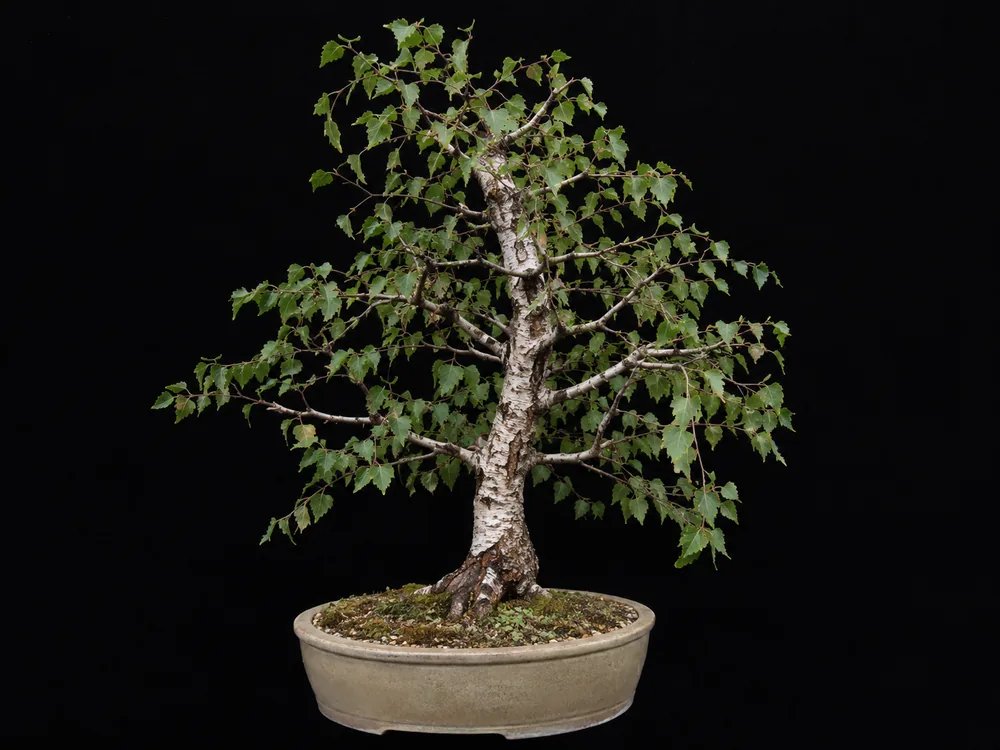
Birch Bonsai Care
Betula pendula
Zones 2 to 7b, outdoor only. Instantly recognizable for its luminous white, peeling bark and delicate, fluttering foliage, a tree of light and movement.
Betulaceae (birch family) · Deciduous broadleaf tree; fast-growing, white-barked, native to Europe and northern Asia
Birch quick reference
| USDA zones | 2–7b (very cold-hardy; dislikes hot climates) |
|---|---|
| Indoor / outdoor | Outdoor only — needs full winter dormancy |
| Light | Full sun (a sun-loving pioneer species) |
| Water | Moist — needs consistent, even moisture; dislikes drying out |
| Soil | Free-draining but moisture-retentive mix; slightly acidic |
| Repot | Every 2–3 years in spring; root work cautiously |
| Frost | Excellent — fully hardy to deep cold |
| Mature height (as bonsai) | Tree to 25 m; kept 30-70 cm as bonsai |
| Growth rate | Fast |
| Season of interest | Yellow autumn colour, white peeling bark |
| Leaf reduction | Moderate - reduces with defoliation |
| #1 cause of death | Branch dieback and trunk damage (scars heal poorly), and bronze birch borer |
Overview & Character
Birch is instantly recognizable for its luminous white, peeling bark and delicate, fluttering foliage — a tree of light and movement. As a bonsai it is undeniably beautiful and evokes northern woodlands, but it has a well-earned reputation as a tricky, demanding subject. Birch is a fast-growing pioneer that runs strongly to the top of the tree, drops its lower and inner branches readily, suffers unpredictable branch dieback, and seals wounds poorly so pruning scars stay ugly and can rot. The prized white bark also takes many years to develop and is easily blemished.
It is best treated by experienced growers, and best styled to suit its nature: tall, slender informal uprights, elegant single trunks, and especially clumps or groves that echo a stand of birches. Keep it vigorous, keep the apex in check, and accept that it is less forgiving than a hornbeam or maple.
Identification
FOLIAGE: Leaves are alternate, small, triangular to diamond-shaped (rhombic) with a pointed tip, on slender stalks, and have doubly serrate margins. They flutter in the slightest breeze on the thin, often pendulous shoots. Autumn color is a clear bright yellow.
BARK & TRUNK: The famous feature — smooth bark that matures to chalky white and peels in thin papery horizontal strips, marked with dark horizontal lenticels and rough black diamond-shaped fissures at the base of older trunks. Young bark is reddish-brown before turning white.
GROWTH HABIT/FORM: Slender, upright, often with gracefully drooping ("weeping," pendula) branch tips. Strongly apical-dominant and fast-growing; an open, airy crown rather than dense.
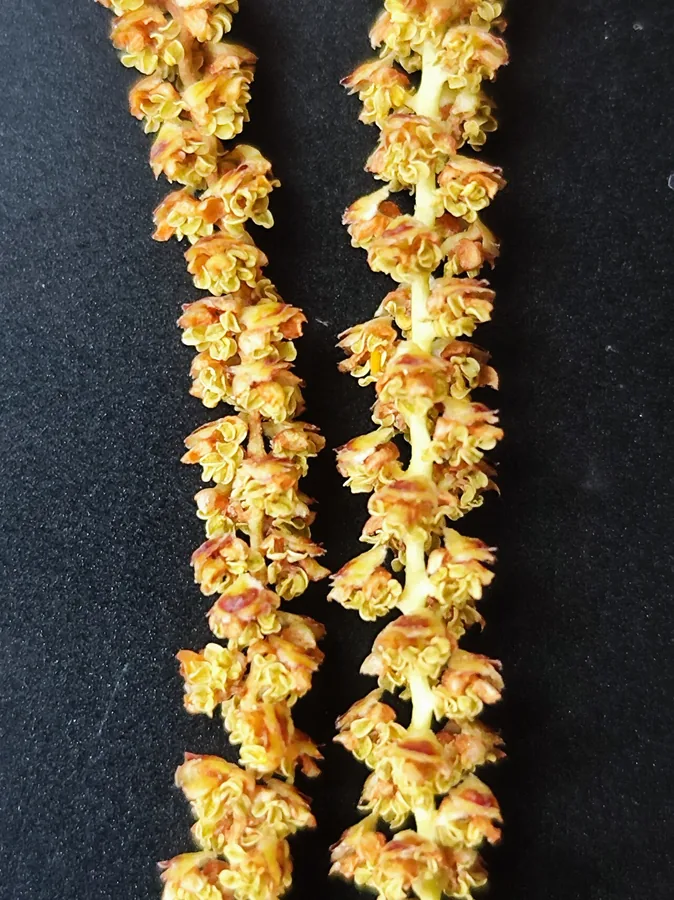
FLOWERS/FRUIT/SEEDS: Monoecious; long drooping male catkins and shorter upright female catkins in spring. Seeds are tiny winged nutlets shed from cylindrical "cone-like" female catkins that disintegrate in autumn.
Look-alikes & how to tell them apart: Other white-barked birches (e.g. Betula papyrifera, paper birch) look similar — B. pendula is distinguished by its weeping branch tips, more sharply diamond-shaped doubly-serrate leaves, and warty young twigs. Aspens/poplars (Populus) also tremble in the wind but have rounder leaves with flattened petioles and grey, non-peeling bark. Hornbeam and beech have smooth grey (not white peeling) bark.
Climate & USDA Zone
Hardy in USDA zones 2–7b and genuinely happiest in cool, northern climates. It is fully frost-hardy and requires a true winter dormancy, so it must live outdoors. It struggles in prolonged heat and humidity, which stress the tree and make it far more vulnerable to the bronze birch borer. If you garden in a hot zone (8+), birch is a poor and short-lived choice.
Light
Give birch full sun. It is a pioneer species adapted to open ground and colonizing clearings, so it wants maximum light for healthy growth, good bark development and tight foliage. Insufficient light leads to weak, leggy growth and accelerates the loss of lower and inner branches.
Watering
Birch likes it MOIST. It needs consistent, even moisture and resents drying out — its fine root system and thin foliage are quick to suffer if the rootball goes dry. Use a soil mix that retains good moisture while still draining freely, and water generously through the growing season, often daily in summer. A stressed, drought-checked birch is also a magnet for borers. At the same time avoid permanent waterlogging, which rots roots. Reduce watering in dormancy but keep the soil from drying completely.
Soil & Root Care
Use a free-draining yet moisture-retentive bonsai mix (akadama-heavy with pumice and lava), slightly acidic. Birch has fine, vigorous fibrous roots. Repot every 2–3 years in spring as buds swell, but be conservative with root pruning — birch can react badly to heavy root reduction. Avoid bare-rooting; work gradually over successive repots. Take care, because root and trunk wounds heal poorly on this species.
Feeding
Keep the tree well-fed and vigorous — vigor is the single best defense against the dieback and borers that plague birch. Feed from after the spring flush hardens through to early autumn. Use a balanced fertilizer; do not overdo nitrogen, which can drive even more uncontrollable apical growth. Ease off late in the season. Never feed a stressed or freshly repotted tree.
Pruning & Styling
This is where birch tests the grower. Manage apical dominance constantly: birch pours energy into the top and will sacrifice lower and inner branches if the apex is allowed to run. Pinch and cut back strong upper shoots to balance vigor and protect the lower structure. Do structural pruning in spring or early summer when the tree can best respond; avoid large cuts where possible because wounds seal slowly, scar permanently, and can become dieback/rot entry points. Seal cuts and keep them small. Wire young flexible shoots with care — the bark marks easily and is slow to recover. Expect occasional unexplained branch dieback and plan a design that can absorb it (clumps and groves are forgiving).
Propagation & Cuttings
Ease: Moderate. Best methods: seed; softwood cuttings (tricky).
Birch is grown mostly from its tiny seed: collect the catkins as they ripen in late summer/autumn, surface-sow on moist mix (light aids germination) after a short cold stratification, and expect fine, delicate seedlings. Softwood cuttings taken in early summer from young growth, under mist with IBA, root but at low-to-moderate rates and can be short-lived. Birch does not layer or take hardwood cuttings reliably. Cultivars are usually grafted. For bonsai, seed or young nursery whips are the practical start; birch resents heavy root-work, so propagate with that sensitivity in mind.
Pests
- Bronze birch borer — the serious one (see below).
- Aphids — heavy on soft new growth; sticky honeydew and sooty mold follow. Rinse/treat with insecticidal soap.
- Birch leaf miners — larvae tunnel inside leaves causing brown blister-blotches; treat early.
- Spider mites — in hot dry conditions; stippled, bronzed leaves and fine webbing.
- Scale and caterpillars — occasional; treat as needed.
Disease, Fungus & Infection
- Bronze birch borer (Agrilus anxius) — though an insect, it is the defining killer of birch. Larvae bore into the vascular tissue under the bark, girdling the tree. First signs are yellowing and thinning of foliage in the upper crown, followed by dieback of upper branches. Borers cannot survive in vigorous, healthy trees — keep the tree strong, watered and unstressed; remove and destroy infested wood.
- Leaf spot and rust fungi — discolored blotches in damp conditions; improve airflow, remove affected leaves.
- Cankers and wood-rot — enter through poorly healing pruning wounds; keep cuts small and clean, seal them.
- Root rot — from waterlogging; prevent with free-draining soil.
Most Common Causes of Death
1. Bronze birch borer. Bores under the bark and girdles the tree, killing it top-down. Prevention: keep the tree vigorous, well-watered and unstressed (borers cannot establish in healthy trees); avoid heat stress; remove infested branches immediately. 2. Unmanaged apical dominance leading to branch dieback. Strong top growth starves and kills lower/inner branches and ruins the design. Prevention: constantly check and cut back strong upper shoots to keep energy balanced. 3. Drying out the rootball. Birch resents drought and a dry-out triggers stress, dieback and borer susceptibility. Prevention: moisture-retentive soil and consistent, often daily, watering. 4. Poorly healing wounds becoming rot/canker entry points. Large cuts scar permanently and can rot. Prevention: avoid big chops, keep cuts small, seal them, design to need less heavy pruning. 5. Heavy-handed root pruning. Birch can decline after aggressive root work. Prevention: repot conservatively every 2–3 years, never bare-root, reduce roots gradually. 6. Heat and humidity stress. Grown outside its cool comfort zone it weakens and dies young. Prevention: grow only in suitable cool climates; provide some relief in summer heat. 7. Waterlogging / root rot. Soggy soil suffocates the fine roots. Prevention: free-draining mix and good drainage.
Seasonal Calendar
- Early–Mid Spring: Repot as buds swell (conservative root work). Best window for structural pruning so wounds can begin healing. Watch sap movement — avoid heavy cuts once the tree is "bleeding."
- Late Spring: Let foliage harden, then begin feeding. Pinch strong apical shoots to protect lower branches. Watch for aphids and leaf miners.
- Summer: Water generously, often daily; keep the tree cool and unstressed. Monitor the upper crown closely for the yellowing/thinning that signals borer. Treat pests promptly.
- Autumn: Enjoy the yellow color. Reduce feeding. Keep watering until leaf drop. Avoid heavy pruning.
- Winter: Fully dormant and very cold-hardy. Keep outdoors for proper dormancy; protect the pot/roots from extreme freeze-and-dry cycles. Do not bring indoors.
Close-up photo reference
Compare your tree against these to confirm the species and spot problems early.

Sources
- Bonsai Empire — Birch (Betula) care guide
- Bonsai Tree Gardener — Birch (Betula) care guide
- The Morton Arboretum — Bronze birch borer
- UC IPM — Bronze birch borer
Where to buy a Birch bonsai
We don’t stock Birch at the moment. These species need similar care and we have them now — they are the closest match in our catalogue.
- Himalayan Birch — similar care, in stock now
- Yellow Birch — similar care, in stock now
Browse all bonsai trees for sale or find a species matched to your climate and space.
- All species
- Shop bonsai trees, tools & supplies
- How to Water a Bonsai (Without Killing It)
- Bonsai Soil: What to Buy, What to Mix, and What It Costs
- Why Bonsai Die After Repotting: Diagnosing a Failed Repot
- Pruning vs. Pinching: Shaping Your Bonsai
- Overwintering Bonsai: Cold-Season Care
- Indoor Bonsai Light and Humidity: Making a Windowsill Actually Work
- Root Rot on bonsai
- Underwatering (Drought Stress) on bonsai
- Winter / Frost Damage on bonsai
- Insufficient Light (Etiolation) on bonsai
- Spider Mites on bonsai
- Himalayan Birch bonsai care
- Yellow Birch bonsai care
- American Elm bonsai care
- American Hornbeam bonsai care