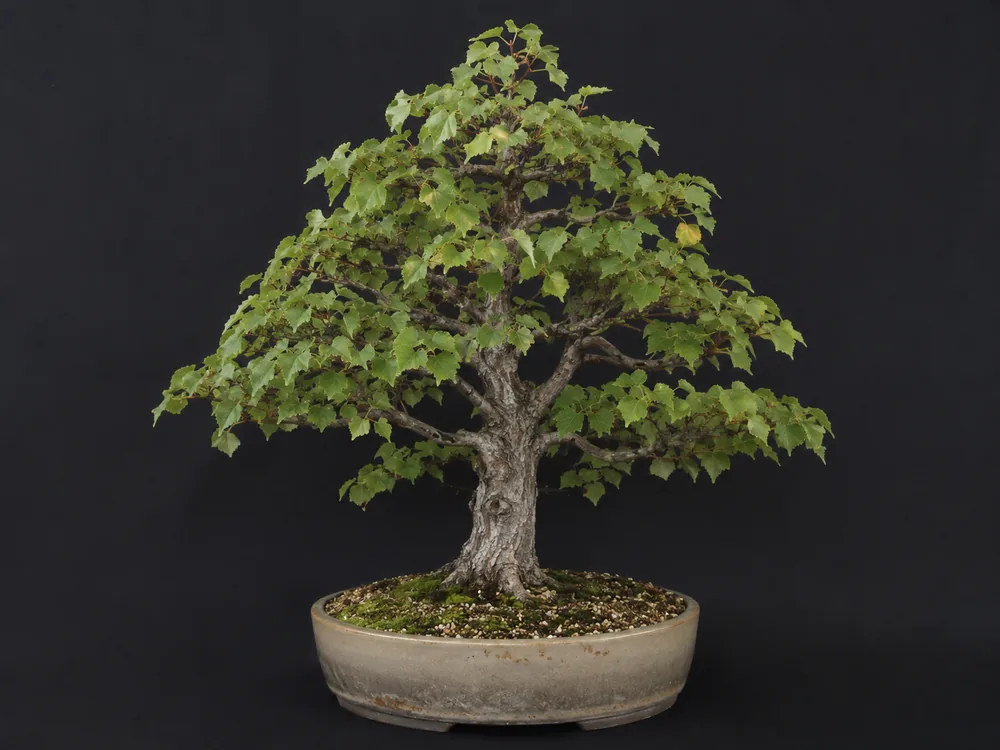
Littleleaf Linden Bonsai Care
Tilia cordata
Zones 3 to 7, outdoor. One of Europe's classic large forest trees, yet it makes a superb. Most are lost to drying out.
Malvaceae (mallow family; formerly placed in Tiliaceae, the linden family) · Deciduous broadleaf tree
Littleleaf Linden quick reference
| USDA zones | 3 to 7 |
|---|---|
| Indoor / outdoor | Outdoor: a fully cold-hardy temperate tree that needs seasonal change and winter dormancy |
| Light | Full sun to light afternoon shade: thin-cut leaves scorch in relentless summer heat |
| Water | Moisture-loving: keep evenly moist; never let it dry out fully in leaf |
| Soil | Free-draining bonsai mix, slightly moisture-retentive (akadama/pumice/lava with a little organic matter) |
| Repot | Every 2 to 3 years, early spring before bud break |
| Frost | Excellent: wood hardy to about -30 °C (-22 °F); protect roots in shallow pots |
| Mature height | 20-40m wild; 30-70cm as bonsai |
| Growth rate | Moderate to fast |
| Season of interest | Golden-yellow autumn; scented summer flowers |
| Leaf reduction | Heart leaves reduce well with defoliation |
| #1 cause of death | Summer drought stress / root desiccation in shallow pots |
Overview & Character
The littleleaf linden is one of Europe's classic large forest trees, yet it makes a superb, under-used bonsai because it naturally reduces its leaves, back-buds vigorously on old wood, and heals wounds fast. Old specimens develop deeply fissured, grayish bark and heavy, rounded canopies, exactly the mature-tree image bonsai artists chase. It tolerates hard cutting better than most broadleaf deciduous species, readily throwing new shoots from bare trunk and even from the base, which makes it forgiving of styling mistakes. Its heart-shaped (cordate) leaves shrink well with ramification, and in early summer it produces intensely fragrant, nectar-rich pale-yellow flowers hung from a distinctive strap-like bract.
The care keys are simple but non-negotiable: give it abundant water and steady feeding through the growing season, a genuinely cold winter dormancy, and full sun tempered only where midsummer heat is extreme. It is vigorous rather than fussy, a strong grower for beginners who can commit to daily summer watering, provided the pot never bakes dry.
Identification
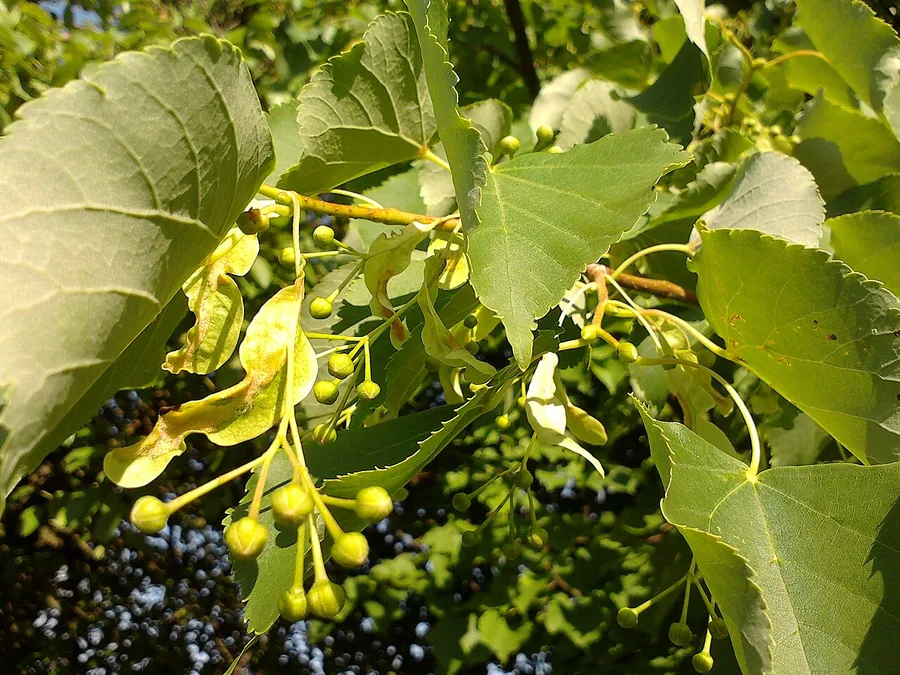
Foliage: Alternate, heart-shaped leaves 3 to 8 cm long with finely serrated margins, a sharply pointed tip, and an asymmetric (oblique) base. The upper surface is dark green and smooth; the underside is paler blue-green with distinctive rusty-brown tufts of hair in the vein axils, a key ID feature. Autumn color is a clear soft yellow.
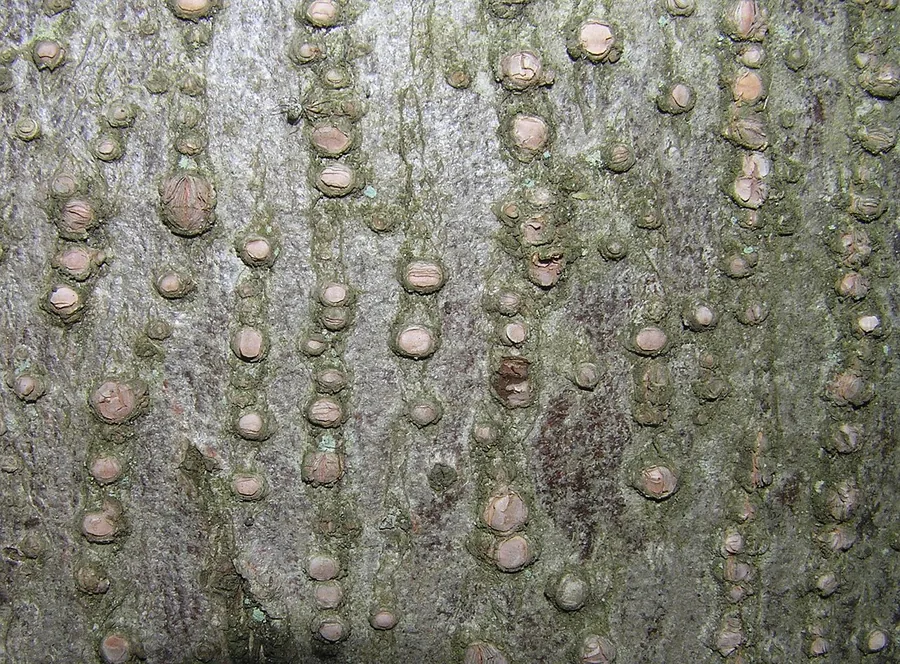
Bark & trunk: Smooth and gray-brown when young, developing shallow vertical fissures and a firm, plated gray bark with age. Trunks fatten quickly and take on convincing old-tree character.
Growth habit / form: Naturally a tall, dense, dome-crowned tree that suckers freely from the base. In a pot it produces abundant twiggy growth ideal for building fine ramification.
Flowers / fruit: Small, five-petaled, pale yellow-white fragrant flowers in drooping clusters (cymes) in June to July, each cluster fused to a pale leafy bract. Fruit is a small, round, faintly ribbed nutlet.
Look-alikes & how to tell them apart: The large-leaved lime (Tilia platyphyllos) is the closest relative; distinguish it by its larger leaves (up to 12 cm), white (not rusty) hair tufts under the leaf, and downy young shoots. The common lime (Tilia × europaea, a hybrid of the two) shows heavy basal suckering and intermediate leaf size.
Climate & USDA Zone
A cold-climate temperate tree, hardy across USDA zones 3 to 7. The wood tolerates roughly -30 °C (-22 °F), but roots in a shallow bonsai pot are far less protected and can be damaged below about -8 to -10 °C (18 to 14 °F). It must live outdoors year-round and requires a real winter dormancy to stay healthy. In summer it thrives in warm conditions but its thin leaves suffer in prolonged heat above 32 °C (90 °F) if watering lapses. Provide unheated but frost-buffered overwintering (a cold frame, mulched bed, or sheltered spot), protecting the root mass rather than the trunk.
Light
Full sun for most of the day, with light shade during the hottest midsummer afternoons.
Linden colors and ramifies best in strong light, but its large, thin leaves scorch at the margins under relentless heat combined with any water stress. In hot inland climates, morning sun with dappled afternoon shade keeps foliage clean; in cooler maritime climates, full sun all day is ideal.
Watering
Keep the soil consistently moist; linden is thirsty and does not tolerate drying out while in leaf.
- In summer, expect to water daily, often twice on hot windy days; the large leaf area transpires heavily.
- Never let the root ball go bone-dry; wilting is followed quickly by leaf-margin scorch and dieback.
- Ease off in autumn as the tree defoliates, and keep only barely moist through winter dormancy.
- Use a moisture-retentive but free-draining mix so the pot stays damp without becoming waterlogged and sour.
Soil & Root Care
Soil: A free-draining inorganic mix that still holds moisture, for example akadama, pumice and lava in roughly equal parts, with a small proportion of composted bark or extra akadama to boost water retention for this thirsty species.
Repotting:
- Repot every 2 to 3 years for developing trees; older, refined trees every 3 to 4 years.
- Timing: early spring, just as buds swell but before they open.
- Root-work tolerance: excellent; linden roots vigorously and tolerates fairly hard root pruning, up to about a third of the mass on a healthy tree.
- Aftercare: keep in a sheltered, bright but not scorching spot, water carefully, and withhold fertilizer for 3 to 4 weeks until new roots establish.
Feeding
Feed heavily during the growing season to support this vigorous grower and to fuel dense ramification. Begin once new leaves harden in spring, using a balanced organic fertilizer, and continue through summer. Shift to a lower-nitrogen, higher-potassium feed in late summer and early autumn to firm growth before dormancy. Stop feeding once the tree drops its leaves. If building a trunk, feed even more aggressively; if refining a finished tree, feed more moderately to keep internodes and leaves small.
Pruning & Styling
- Suited to informal upright, formal upright, broom, and group/forest plantings; the natural dome crown lends itself beautifully to broom style.
- Linden back-buds readily on old wood, so hard structural pruning in late winter is well tolerated and reliably produces new shoots.
- Pinch and cut back extending shoots to 1 to 2 leaves through the growing season to build ramification and keep internodes short.
- Full or partial defoliation in early summer on healthy trees reduces leaf size and encourages a second, finer flush.
- Manage the vigorous basal suckers: remove those you do not want promptly, or use them deliberately to develop multi-trunk styles.
Propagation & Cuttings
Ease: Moderate. Best methods: layering; seed; cuttings.
Tilia cordata is traditionally propagated by layering; it stools and its low branches root readily, so mound/stool layering is the classic method. Seed has a deep double dormancy and can take two years (warm-then-cold), so it's slow. Softwood cuttings root at low-to-moderate rates. It suckers, giving rooted pieces. For bonsai, a spring layer or rooted sucker gives a quick start; linden back-buds strongly, coppices well, and has large leaves that reduce with ramification.
Pests
- **Aphids (especially the lime aphid, Eucallipterus tiliae):** notorious on linden, coating leaves and dripping sticky honeydew; treat with insecticidal soap, a strong water jet, or a systemic if infestation is heavy.
- **Lime nail gall mite (Eriophyes tiliae):** produces the characteristic red, finger-like galls on the upper leaf surface, unsightly but rarely harmful; remove affected leaves.
- Red spider mite: thrives in hot, dry conditions, causing fine stippling and bronzing; raise humidity and treat with miticide.
- Scale insects: brown or soft scale on twigs and leaf undersides; scrape off or treat with horticultural oil.
Disease, Fungus & Infection
- Powdery mildew: white floury coating in warm, humid, poorly ventilated conditions; improve airflow and treat with a suitable fungicide.
- **Leaf blotch / anthracnose (Apiognomonia and related fungi):** brown blotches and premature leaf drop in wet springs; remove fallen leaves and avoid overhead wetting.
- Verticillium wilt: a soil-borne fungus causing sudden branch dieback and vascular staining; there is no cure; remove affected wood and use fresh, clean soil.
Prevention: good airflow around the canopy, clean-up of fallen leaves, avoiding persistent leaf wetness, and steady (not erratic) watering keep linden largely trouble-free.
Most Common Causes of Death
1. Summer drought / letting the pot dry out: the number-one killer; linden's huge thin leaf area transpires fast, and a single missed hot day can cause irreversible root and branch dieback. Water daily in summer, twice on hot days. 2. Frozen roots in a shallow pot: the wood is hardy but potted roots are not; protect the root ball over winter in a cold frame or mulched bed. 3. Waterlogging in a sour, compacted mix: constantly saturated roots rot; use a free-draining medium and repot before soil breaks down. 4. Neglected aphid infestations: heavy lime-aphid attacks weaken the tree and invite sooty mold on the honeydew; control them early. 5. No winter dormancy (kept indoors): treated as a houseplant it exhausts itself and declines; it must overwinter cold, outdoors.
Seasonal Calendar
- Spring: Repot before bud break; carry out structural pruning; begin watering and feeding as leaves harden.
- Summer: Water daily (twice on hot days); pinch and cut back for ramification; optional defoliation in early summer; provide afternoon shade in extreme heat.
- Autumn: Enjoy yellow color; reduce watering as leaves drop; apply a final low-nitrogen feed; clear fallen leaves to limit fungal carryover.
- Winter: Fully dormant; protect roots from hard freezes; keep soil just barely moist; do heavy structural cuts in late winter before buds swell.
Close-up photo reference
Compare your tree against these to confirm the species and spot problems early.



Sources
- Wikipedia: *Tilia cordata*
- Missouri Botanical Garden: *Tilia cordata* plant profile
- Royal Horticultural Society: *Tilia cordata*
Growing a Littleleaf Linden bonsai
We don’t currently stock Littleleaf Linden trees. If you already have one — or you are sourcing one elsewhere — these are the supplies its care depends on:
- Bonsai Decorative Crushed Shale Top of Soil Dressing — $4.95
- Bonsai Zen Garden Grooming Rake — $8.95
- Metal Impression Tags Package of 4 — $2.95
Browse all bonsai trees, tools and soil or find a species we stock that suits your conditions.
- All species
- Shop bonsai trees, tools & supplies
- How to Water a Bonsai (Without Killing It)
- Bonsai Soil: What to Buy, What to Mix, and What It Costs
- Why Bonsai Die After Repotting: Diagnosing a Failed Repot
- Pruning vs. Pinching: Shaping Your Bonsai
- Overwintering Bonsai: Cold-Season Care
- Indoor Bonsai Light and Humidity: Making a Windowsill Actually Work
- Root Rot on bonsai
- Underwatering (Drought Stress) on bonsai
- Winter / Frost Damage on bonsai
- Leaf Scorch / Sunburn on bonsai
- Powdery Mildew on bonsai
- Amur Maple bonsai care
- Common Hackberry bonsai care
- European Spindle bonsai care
- Field Maple bonsai care