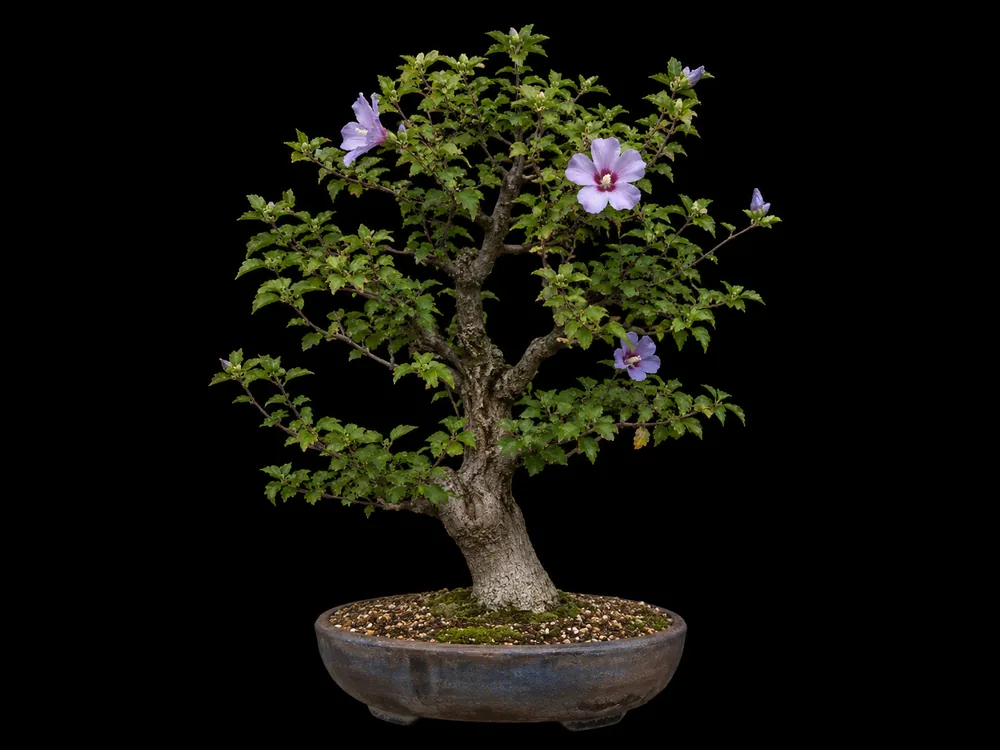
Rose of Sharon Bonsai Care
Hibiscus syriacus
Zones 5 to 9, outdoor. The cold-hardy, woody hibiscus, valued for its long succession of large, showy. Most are lost to overwatering.
Malvaceae · Deciduous flowering shrub (temperate, outdoor)
Rose of Sharon quick reference
| USDA zones | 5–9 (hardy hibiscus — not the tender tropical kind) |
|---|---|
| Indoor / outdoor | Outdoor — needs winter dormancy; not a houseplant |
| Light | Full sun (at least 6 hours direct sun) for best flowering |
| Water | Moderate-to-wet — likes consistent moisture in summer when flowering and growing hard, but must drain freely |
| Soil | Free-draining, fertile, moisture-retentive bonsai mix (akadama, pumice, bark) |
| Repot | Every 2 years for young/vigorous trees, 2–3 years for older ones; early spring before bud break |
| Frost | Wood hardy to zone 5; protect roots in container during hard freezes |
| Mature height (as bonsai) | Shrub 2-4m tall in nature; bonsai typically 20-50cm. |
| Growth rate | Fast (vigorous, tolerates hard pruning). |
| Season of interest | Late summer for showy pink, white or blue blooms. |
| Leaf reduction | Moderate; leaves reduce fairly with defoliation and trimming. |
| #1 cause of death | Container winter-kill of roots, plus root rot from waterlogging — and weakening from poor light/feeding |
Overview & Character
Rose of Sharon is the cold-hardy, woody hibiscus, valued for its long succession of large, showy, hollyhock-like flowers from midsummer well into autumn — exactly when most flowering bonsai have finished. Blooms come in white, pink, lavender-blue, red, and bicolors, often with a dramatic contrasting eye. It is vigorous, forgiving, and back-buds readily, which makes it an excellent and rewarding flowering species for beginners and intermediate growers.
Its great advantage for bonsai is its pruning forgiveness: because it flowers on new (current-season) wood, you can prune hard in late winter without sacrificing the coming summer's display — in fact, that hard pruning produces stronger shoots and bigger blooms. The trade-off is that flowers are large relative to a small tree, so it suits medium and larger bonsai better than tiny shohin.
Identification
FOLIAGE: Alternate, three-lobed (sometimes coarsely toothed) deep-green leaves, roughly diamond-shaped, 4–10 cm long. Leafs out relatively late in spring and drops in autumn with little fall color.
BARK & TRUNK: Grey-brown bark, smooth when young, becoming lightly ridged and characterful with age. The trunk thickens fairly quickly for a flowering shrub and develops good taper under bonsai management.
GROWTH HABIT / FORM: Upright, vase-shaped, multi-branched shrub; vigorous and twiggy. Suits informal upright, broom, and multi-trunk styles. Strong back-budding makes it easy to develop ramification.
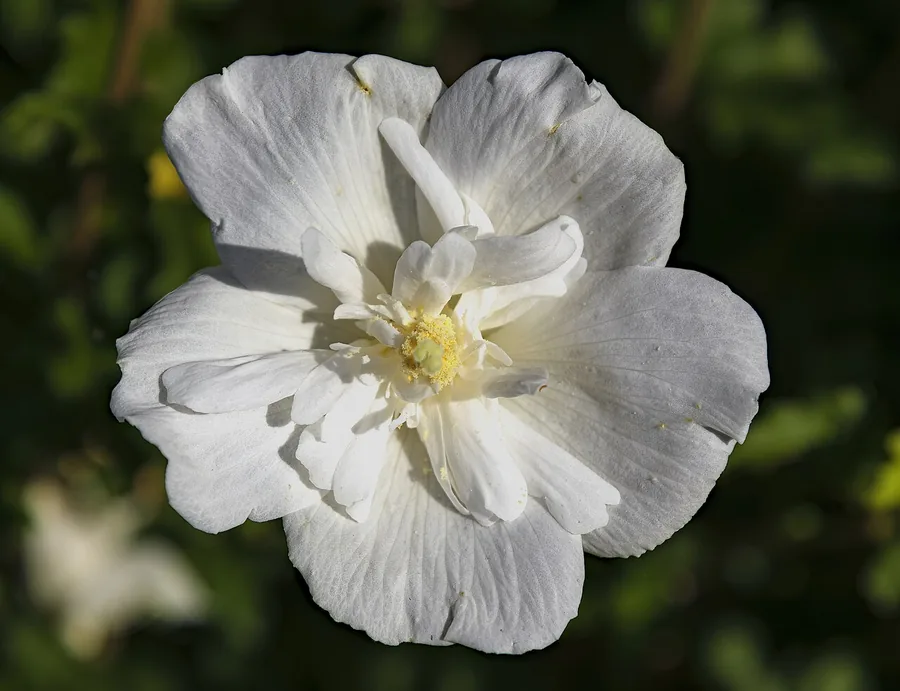
FLOWERS / FRUIT + season + old/new wood: Large (7–10 cm), funnel/hollyhock-shaped single or double flowers in white, pink, lavender-blue, red, or bicolor, with a prominent central staminal column and often a red eye. Blooms from midsummer into autumn — one of the longest flowering periods of any hardy shrub. Flowers are borne on NEW, current-season wood. Seed capsules follow and can self-sow prolifically; remove spent flowers/seed pods to tidy the tree and reduce seedlings.
Look-alikes & how to tell them apart: Tropical hibiscus (Hibiscus rosa-sinensis) has glossy, unlobed, evergreen leaves and is frost-tender (indoor in cold climates) — Rose of Sharon's three-lobed, matte, deciduous leaves and cold-hardiness distinguish it. Hardy perennial hibiscus (Hibiscus moscheutos) dies back to the ground each year (herbaceous), whereas Rose of Sharon is a true woody shrub that keeps its trunk and branches.
Climate & USDA Zone
Hardy in USDA zones 5–9, Rose of Sharon needs a cold winter dormancy and must be grown outdoors. In the ground it is tough, but as a bonsai in a shallow pot its roots are more exposed than a garden plant's — protect the container in hard freezes (mulch, cold frame, or unheated shelter) to prevent the rootball freezing solid. It tolerates heat and humidity well and thrives in long, warm summers, which is when it flowers.
Light
Give it full sun — at least six hours of direct sunlight daily — for compact growth, strong stems, and maximum flowering. In too much shade it grows leggy, produces fewer blooms, and becomes more prone to pests and fungal problems. In extreme-heat climates a little afternoon relief is fine, but err toward more sun.
Watering
Moderate-to-wet: Rose of Sharon likes consistent moisture, especially in summer when it is both growing hard and flowering — letting it dry out causes bud drop and stress. Keep the rootball evenly moist through the growing season, watering whenever the surface starts to dry. However, the mix must drain freely; soggy, airless soil causes root rot and is a common killer in containers. Reduce watering in autumn and keep the rootball just barely moist through winter dormancy.
Soil & Root Care
Use a fertile, free-draining, moisture-retentive bonsai mix such as akadama with pumice and composted bark; it is not fussy about pH. Roots are vigorous and the plant tolerates root work well. Repot in early spring just before the buds break, every 2 years for young or vigorous trees and every 2–3 years for older ones, removing up to about a third of the root mass and refreshing the soil to keep the rootball open and healthy.
Feeding
A heavy flowerer needs steady feeding. Feed regularly from leaf-out through the flowering season with a balanced fertilizer, shifting toward a lower-nitrogen, higher-potassium (bloom) feed in summer to support flowering rather than excessive leaf growth. Ease off in late summer and stop before dormancy. Under-fed trees flower poorly and are more disease-prone.
Pruning & Styling
Flowering wood — critical timing: Rose of Sharon flowers on NEW, current-season wood. This is the key to its pruning forgiveness: prune structurally in late winter to early spring, while dormant, before new growth begins. Because the flowers will form on shoots produced this season, hard late-winter pruning does not remove blooms — it actually encourages stronger new shoots and larger flowers. (Pruning that late simply pushes flowering a little later in summer, not away.)
Through the growing season, pinch and trim new shoots to build ramification and keep the silhouette tight; each cut typically prompts vigorous back-budding. Remove spent flowers and developing seed pods to keep the tree tidy, prolong bloom, and prevent prolific self-seeding. Wire young, flexible shoots; older wood is somewhat stiff but workable. Avoid heavy structural pruning in late autumn, which wastes energy and can expose fresh cuts to winter dieback.
Propagation & Cuttings
Ease: Easy. Best methods: hardwood and softwood cuttings; seed.
Hibiscus syriacus roots readily — hardwood cuttings in winter and softwood cuttings in summer both strike well with hormone. Seed germinates easily (a short cold stratification helps) but named flower forms won't come true, and it self-sows freely. For bonsai the large summer flowers and tough constitution are the draw; cutting-grown plants keep the flower colour, thicken fast, and back-bud strongly after hard pruning, though the big leaves and flowers suit larger bonsai sizes.
Pests
Several insects visit Rose of Sharon, but most are minor. Japanese beetles are the most damaging, skeletonizing leaves and flowers if an infestation is left unchecked — hand-pick or treat promptly. Aphids cluster on soft new growth and flower buds (rinse off, use insecticidal soap or neem). Whiteflies, spider mites, and scale can also appear, especially on stressed or shaded plants; treat with horticultural oil or insecticidal soap and improve light and airflow.
Disease, Fungus & Infection
Rose of Sharon is generally robust but can suffer leaf-spot and leaf fungus in wet, crowded conditions, dieback of stressed branches, and occasionally wilt disease in poorly drained soil. Root rot from waterlogging is the most serious cultural disease. Prevent fungal issues with good airflow, full sun, sensible watering, and prompt removal of fallen leaves and spent blooms; remove dead/dying wood with clean cuts.
Most Common Causes of Death
1. Container root-kill in winter. Hardy in the ground, but a small pot's rootball can freeze solid and die. Prevention: shelter the container (mulch, cold frame, unheated garage/greenhouse) during hard freezes. 2. Root rot from waterlogged soil. Soggy, airless mix suffocates roots. Prevention: use a free-draining mix, never let the pot stand in water, and let the surface dry slightly between waterings. 3. Drought / drying out during flowering. Summer dry-outs cause bud drop and can severely weaken or kill a small specimen. Prevention: keep evenly moist in the growing season; check daily in heat. 4. Insufficient light. Shade produces weak, leggy, poorly flowering, pest-prone trees that decline over time. Prevention: full sun, 6+ hours daily. 5. Severe Japanese beetle or pest infestation. Heavy, untreated infestations defoliate and weaken the tree. Prevention: inspect regularly and treat early. 6. Poorly timed hard pruning into winter. Late-autumn heavy cuts can dieback and weaken the tree. Prevention: do structural pruning in late winter/early spring while dormant. 7. Chronic under-feeding. A heavy bloomer starved of nutrients declines and flowers poorly. Prevention: feed steadily through the growing season.
Seasonal Calendar
- Late winter (Feb–Mar): Dormant. Best time for structural/hard pruning (flowers on new wood, so blooms are not lost). Repot just before bud break.
- Spring (Mar–May): Leafs out (relatively late). Begin feeding and increasing water as growth accelerates. Pinch new shoots to build ramification.
- Early–mid summer (Jun–Jul): Vigorous growth; new wood develops and first flowers begin. Keep evenly moist, feed for bloom, watch for Japanese beetles and aphids.
- Late summer (Aug): Peak, prolonged flowering on new wood. Deadhead spent blooms and remove seed pods. Continue feeding lightly.
- Autumn (Sep–Oct): Flowering tapers; leaves drop with little color. Reduce feeding and watering. Remove remaining seed pods to limit self-seeding.
- Winter (Nov–Jan): Fully dormant. Keep rootball just moist; protect the container from hard freezes.
Close-up photo reference
Compare your tree against these to confirm the species and spot problems early.
_Hibiscus_syriacus_White_Chiffon_Rose_of_Sharon_flower_-_Les_Martels,_Giroussens_Tarn.jpg)
Sources
- Bonsai Resource Center — Hibiscus Bonsai Tree Care & Growing Guide
- Greenzen Bonsai — Creating Stunning Rose of Sharon Bonsai
- Gardening Know How — Pruning Rose of Sharon for Bigger Blooms
- University of Illinois Extension — Rose of Sharon, Shrub Althea (Hibiscus syriacus)
Growing a Rose of Sharon bonsai
We don’t currently stock Rose of Sharon trees. If you already have one — or you are sourcing one elsewhere — these are the supplies its care depends on:
- Bonsai Decorative Crushed Shale Top of Soil Dressing — $4.95
- Bonsai Zen Garden Grooming Rake — $8.95
- Metal Impression Tags Package of 4 — $2.95
Browse all bonsai trees, tools and soil or find a species we stock that suits your conditions.
- All species
- Shop bonsai trees, tools & supplies
- How to Water a Bonsai (Without Killing It)
- Bonsai Soil: What to Buy, What to Mix, and What It Costs
- Why Bonsai Die After Repotting: Diagnosing a Failed Repot
- Pruning vs. Pinching: Shaping Your Bonsai
- Overwintering Bonsai: Cold-Season Care
- Indoor Bonsai Light and Humidity: Making a Windowsill Actually Work
- Root Rot on bonsai
- Underwatering (Drought Stress) on bonsai
- Winter / Frost Damage on bonsai
- Insufficient Light (Etiolation) on bonsai
- Spider Mites on bonsai
- Amur Maple bonsai care
- Common Hackberry bonsai care
- Cotoneaster bonsai care
- Crabapple bonsai care