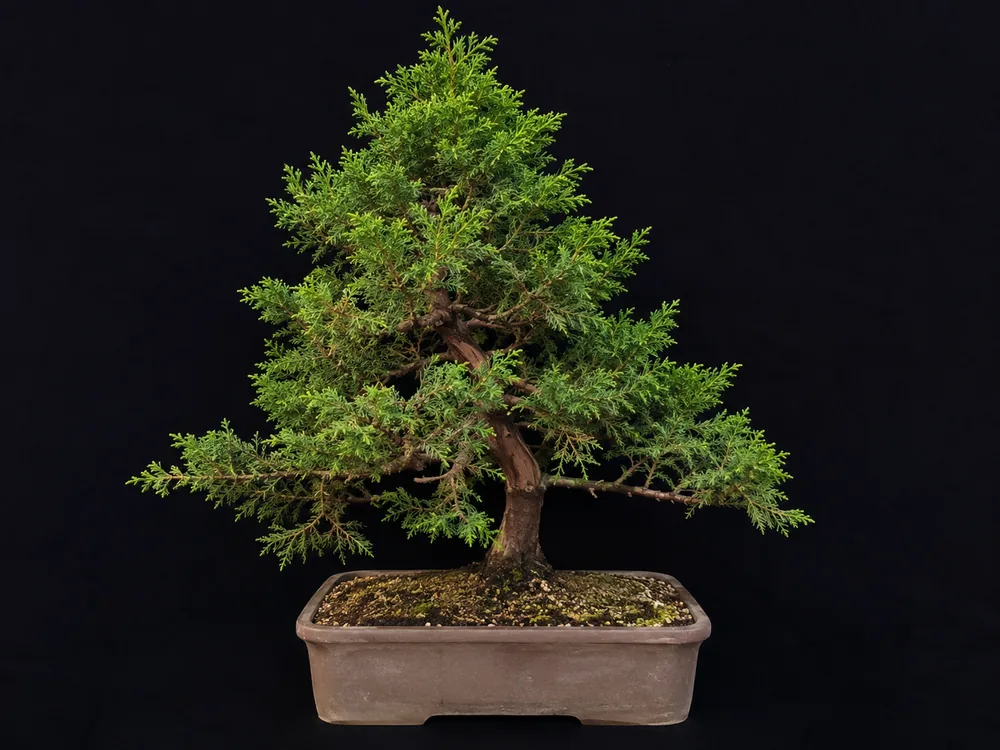
Leyland Cypress Bonsai Care
Cupressus × leylandii
Zones 6 to 10. A famously fast-growing intergeneric hybrid (originally between Monterey cypress and Nootka cypress) best. Most are lost to overwatering.
Cupressaceae (cypress family) · Evergreen coniferous tree — a fast-growing intergeneric hybrid; outdoor bonsai
Leyland Cypress quick reference
| USDA zones | 6–10 (reliably 6–9) |
|---|---|
| Indoor / outdoor | Strictly outdoor — needs full sun, airflow and seasonal change |
| Light | Full sun (6+ hours); tolerates light shade but grows denser and healthier in full sun |
| Water | Moderate / even moisture, but free-draining. Likes consistent moisture; will NOT tolerate waterlogged roots. Not a dry-loving cedar. |
| Soil | Fast-draining bonsai mix with some moisture retention (akadama + pumice + lava) |
| Repot | Every 2–3 years (it is vigorous and roots fast) |
| Frost | Reasonably cold-hardy in the ground; in a pot protect roots and shelter from winter wind/desiccation |
| Mature height (as bonsai) | 20-35m wild; 40-80cm as bonsai |
| Growth rate | Very fast; poor budding on old wood |
| Season of interest | Dense evergreen columnar foliage year-round |
| Leaf reduction | Pinch tips; avoid cutting into bare wood |
| #1 cause of death | Canker (Seiridium / Botryosphaeria) and root rot — both effectively incurable once established |
Overview & Character
The Leyland Cypress is a famously fast-growing intergeneric hybrid (originally between Monterey cypress and Nootka cypress) best known as a hedge and screening tree. It produces flat, feathery sprays of scale-like foliage on a vigorous, columnar frame. That speed is its calling card and its curse: it builds bulk quickly but is also short-lived for a conifer and notably prone to canker and root rot.
Honestly, Leyland Cypress is not a traditional or recommended bonsai subject. Its biggest limitation is the cypress trait shared with most of the family: it does not back-bud reliably on bare, old wood, so once you remove the green foliage from a branch, that branch usually stays bare forever — which makes the slow, refining ramification work that bonsai depends on very difficult. Combine that with its disease-proneness and its eagerness to bolt, and it is a frustrating choice compared with junipers or true cedars. That said, if you have one (or inherit a hedge plant), the care below is real and will keep it healthy. Treat it as a material for cloud/pad styling that you refine by trimming the outer foliage, never by cutting back hard.
Identification
FOLIAGE: Flat, soft sprays of tiny scale-like leaves (not needles) pressed along the shoots, dark green to gray-green, giving a feathery, ferny texture. The flattened sprays are typical of the cypress family.
BARK & TRUNK: Reddish-brown to gray bark, becoming stringy and shallowly furrowed with age. The trunk thickens fast.
GROWTH HABIT / FORM: Vigorous, fast, densely columnar/conical when young, with upright then spreading branches. Explosive vertical growth is the signature.
CONES/FLOWERS: Small, round-ish cones (roughly 1.5–2 cm) with a few scales; many hybrid plants produce few or sterile cones. Inconspicuous compared with the upright barrel cones of true cedars.
Look-alikes & how to tell them apart: Leyland vs arborvitae (Thuja) — both have scale foliage in flat sprays, but Leyland is far more vigorous and tree-like with a coarser, less neatly "fanned" spray; arborvitae sprays are flatter, more fan-like and softer, and Thuja foliage often bronzes in winter. Leyland vs other true cypress (Cupressus) — Leyland's sprays are flattened (a Nootka-parent trait) whereas many Cupressus carry cord-like, all-around scale shoots. Versus the true cedars (Cedrus) the distinction is easy: cedars have spiral needle rosettes and upright barrel cones, while Leyland has scale foliage.
Climate & USDA Zone
Hardy in USDA zones 6–10, performing best in zones 6–9. It tolerates a wide range of soils and climates and is heat-tolerant, but it dislikes both drought stress (which predisposes it to canker) and waterlogging (which causes root rot). In a pot it is more exposed than in the ground, so guard against both extremes and shelter from harsh, drying winter wind.
Light
Full sun is best — it produces the densest, healthiest foliage and the strongest growth in full sun. It will tolerate light/partial shade but grows thinner and is more prone to disease in shaded, stagnant positions. Keep it outdoors in an open, airy spot; it will not survive as an indoor plant.
Watering
Even, consistent moisture — but never soggy. Unlike the dry-loving true cedars, Leyland Cypress likes its soil kept reliably moist and resents drying out completely (drought stress invites canker). At the same time it must have free drainage, because standing water rots the roots. The practical target is a substrate that stays evenly damp but drains freely — water when the surface begins to dry, water thoroughly, and make sure excess runs straight out. In hot weather a vigorous tree in a small pot may need water once or twice daily.
Soil & Root Care
Use a free-draining bonsai substrate that still holds some moisture — a mix of akadama, pumice and lava (with the akadama providing moisture retention) suits it well. Avoid heavy, water-retentive soils that stay wet. It roots vigorously, so repot every 2–3 years in early spring, removing crowded roots and refreshing the soil; ensure the new mix drains instantly. Good drainage is your main defense against the root rots this species is prone to.
Feeding
Feed through the growing season, spring to early autumn, with a balanced fertilizer. Because the plant is already extremely vigorous, go easy on high nitrogen — you do not need to push growth, and forcing soft growth makes it more disease-prone and harder to keep compact. Ease off feeding in late summer/autumn so the wood hardens before winter, and stop during dormancy. Do not feed immediately after repotting.
Pruning & Styling
Critical rule: never cut a branch back beyond its green foliage. Like most of the cypress family, Leyland does not back-bud on bare old wood — if you cut into the leafless interior, that branch will not regenerate and will simply stay bare. All refinement is done by pinching and trimming the outer foliage pads only, keeping green growth on every branch you want to keep. Trim by pinching/finger-trimming the soft tips through the growing season to build and maintain dense pads (avoid shearing with scissors across the scale foliage, which browns the cut tips). Plan the structure early while the branches are young and flexible, because you cannot recover a branch by cutting it back hard later. Wiring works on young, flexible shoots; set structure before branches lignify.
Propagation & Cuttings
Ease: Easy (roots from cuttings; a sterile hybrid). Best method: cuttings.
Cupressus × leylandii is a hybrid and largely sterile, so it is propagated only from cuttings — semi-hardwood cuttings in autumn to winter with IBA, kept humid, root reliably though slowly. Seed is not a practical option. For bonsai, cutting-grown plants are the sole route; like other cypresses it back-buds poorly on old bare wood and grows fast, so establish pads early and prune before the interior thins.
Pests
- Bagworms: the classic Leyland pest — caterpillars in spindle-shaped silk bags that can defoliate a plant in weeks. Hand-pick the bags and treat early in the season.
- Spider mites: in hot, dry, stagnant conditions; cause stippling and bronzing. Improve airflow and treat with horticultural oil/miticide.
- Scale insects and aphids: sap-suckers on foliage and twigs; treat with horticultural oil or insecticidal soap.
Disease, Fungus & Infection
- Seiridium canker: the most destructive disease — dieback of leading and lateral shoots, resin oozing from cracks in the bark, and dark brown/purplish bark patches. Fungicides are not effective; it is essentially incurable. Prune out and destroy cankered branches (sterilize tools between cuts) and keep the tree unstressed and well-watered, since drought stress promotes it.
- Botryosphaeria (Bot) canker: another canker causing branch dieback, again favored by stress.
- Phytophthora root rot: soilborne rot in poorly drained, waterlogged soil — incurable once advanced. Prevention is sharp drainage.
- Armillaria root rot: root rot in wet, stagnant conditions. Prevention is the same — never let the roots sit wet.
Most Common Causes of Death
1. Canker (Seiridium / Botryosphaeria) — incurable; spreads through stressed plants. Prevention: keep the tree healthy and evenly watered (avoid drought stress), prune out and destroy cankers, sterilize tools. 2. Root rot (Phytophthora / Armillaria) — from waterlogged soil; incurable once advanced. Prevention: fast-draining mix and never soggy. 3. Cutting back beyond green foliage — the branch dies bare and never recovers, ruining the design and weakening the tree. Prevention: trim outer foliage only, never into bare wood. 4. Drought stress — drying out completely predisposes it to canker. Prevention: keep soil evenly moist. 5. Keeping it indoors — it cannot survive without sun, airflow and seasons. Prevention: keep it outdoors year-round. 6. Bagworm defoliation — a heavy infestation can kill. Prevention: inspect and remove bags early. 7. Poor airflow / overcrowding — promotes mites and fungal disease. Prevention: open, airy placement and good spacing.
Seasonal Calendar
- Spring: Repotting window in early spring. Resume feeding (lightly). Begin pinching new growth. Watch for emerging bagworms and start canker inspection.
- Summer: Full sun; keep soil evenly moist and water often in heat. Pinch tips for density. Monitor closely for spider mites, bagworms and the first signs of canker dieback.
- Autumn: Ease off feeding so wood hardens. Reduce watering as growth slows. Remove any dead/cankered wood, destroying clippings.
- Winter: Largely dormant. Shelter from drying winter wind and protect the roots from hard freeze in the pot. Water sparingly but do not let it dry out completely. No feeding.
Sources
- Clemson Cooperative Extension HGIC — Leyland Cypress Diseases & Insect Pests
- University of Georgia Extension — Diseases of Leyland Cypress in the Landscape
- NC State Extension Gardener Plant Toolbox — × *Hesperotropsis leylandii*
- Gardenia.net — *Cupressus × leylandii* (Leyland Cypress)
Where to buy a Leyland Cypress bonsai
We don’t stock Leyland Cypress at the moment. These species need similar care and we have them now — they are the closest match in our catalogue.
- Lemon Cypress — similar care, in stock now
- Fire Chief Arborvitae — similar care, in stock now
Browse all bonsai trees for sale or find a species matched to your climate and space.
- All species
- Shop bonsai trees, tools & supplies
- How to Water a Bonsai (Without Killing It)
- Bonsai Soil: What to Buy, What to Mix, and What It Costs
- Why Bonsai Die After Repotting: Diagnosing a Failed Repot
- Pruning vs. Pinching: Shaping Your Bonsai
- Overwintering Bonsai: Cold-Season Care
- Indoor Bonsai Light and Humidity: Making a Windowsill Actually Work
- Root Rot on bonsai
- Underwatering (Drought Stress) on bonsai
- Winter / Frost Damage on bonsai
- Spider Mites on bonsai
- Scale Insects on bonsai
- Lemon Cypress bonsai care
- Douglas Fir bonsai care
- Eastern White Pine bonsai care
- Fire Chief Arborvitae bonsai care